

In Israel, the path to medical school begins with a number 700 familiar to almost every applicant: the psychometric entrance test score, often seen as the gateway to a realistic chance of admission.
Many candidates spend years and thousands of shekels on test-prep courses and improving their high school matriculation grades, only to discover that strong academic scores are just the first stage. After that come additional screening rounds with various tests, written questionnaires, computerized tests, personality assessments, interviews and simulation stations in which applicants must respond to complex scenarios while being observed and evaluated.

Together, candidates say, the system has turned the dream of becoming a doctor into an expensive, exhausting admissions maze, one that creates a clear financial barrier long before medical school even begins.
“Half the money I saved for my studies went only toward trying to get accepted,” one candidate wrote in WhatsApp and Facebook groups for medical school applicants. “This is the cost of an assessment day?!?! 1,900 shekels ($520), and I’m not even sure I’ll pass,” another wrote. A friend added: “The amazing thing is that every year it goes up by another few hundred shekels.”
Because admission chances are so low, most candidates apply to all seven medical faculties available in Israel. The initial price tag is about 3,500 shekels ($950) just for registration fees, and the expenses only grow from there.
After clearing the initial academic threshold, a combined admissions score based on the psychometric exam and high school matriculation results enters a second layer of screening. At this stage, candidates discover that the process is not handled uniformly by the universities themselves. Instead, different medical schools send applicants to different outside testing companies.
The Hebrew University, the Technion and Tel Aviv University use Israel’s National Institute for Testing and Evaluation, the body that also administers the national psychometric exam. Ben-Gurion University requires computerized tests and interviews run by TEMA, a private assessment institute. Bar-Ilan University’s medical school in Safed works with Pilat, another screening company, while the University of Haifa uses Adam Milo, a private evaluation and recruitment firm.
The fragmentation creates chaos and duplicate costs. “After you have already registered for the university and paid each one 500 shekels ($135), you have to pay again for this stage, another 500 shekels ($135), just to try your luck,” says Ariel, a medical school candidate.
Candidates say the pricing also raises questions. While most institutes charge hundreds of shekels, the University of Haifa at one point charged only 45 shekels ($12), leading applicants to ask who oversees the fees and what justifies such wide gaps.
The National Institute for Testing and Evaluation route is considered the most expensive and exhausting. It includes three stages costing up to about 2,350 shekels ($640): a questionnaire, costing 450 shekels ($120), a written exam lasting about two and a half hours that includes open and sometimes intrusive questions; and an assessment day, costing 1,900 shekels ($520), which includes roughly a day and a half of simulation stations.
The candidate enters a room with an actor presenting a complex situation, while a doctor observes and questions the candidate afterward. There are also stations involving dilemmas and interviews. At the end of the process comes a computerized personality test with about 300 questions.
When the demand for payment of 1,900 shekels ($520) for the assessment day was sent out, candidates’ WhatsApp groups filled with despair and anger. “The first stage in the evaluation involves socioeconomic status,” one candidate wrote. Others quickly agreed. “Really, it’s insane... we are captive customers.”
From the moment candidates receive an invitation to the tests, they have only 48 hours to complete a one-time payment of 1,900 shekels ($520). Missing the deadline is their problem. “They want one credit card payment,” one candidate wrote. “Who’s going to tell them I don’t have the credit limit for that?”
‘They asked me whether I had been in therapy’
The personality tests, used by all the medical faculties, are meant to assess traits such as interpersonal communication, teamwork, emotional stability, extroversion and patterns of thinking. Whatever their professional value, candidates say some of the questions are difficult to justify: deeply personal, intrusive and at times on the edge of legitimacy.
One candidate described the tone of some interviews this way: “Someone said a relative had died, and they asked him, ‘Don’t you feel bad that you weren’t with him more?’ Another candidate said a close family member had died, and was told, ‘Are you telling us that so we’ll pity you? It won’t help you.’”

An exhausting, lengthy track and an equally grueling admissions process
(Photo: Shutterstock)
Similar descriptions appeared in candidate groups. “They asked me whether I am feminine or masculine gay in relationships. I won,” one candidate wrote cynically. Another replied: “I think they immediately passed you so you wouldn’t file a lawsuit.”
Another candidate said: “They asked whether I had been in psychological therapy, what it was about and what happened during the therapy, even though it was only for a few months in high school. When I said I didn’t remember, she really insisted on hearing what happened.”
Another candidate said he told interviewers he had been trying to get accepted for eight years. One interviewer responded that this could be seen as an obsession or as a sign that he had not understood that medicine might not be the right path for him. The candidate said the exchange made him deeply uncomfortable, but he chose not to appeal, fearing it could be used against him.
Some candidates defended the system, arguing that the pressure is part of the test. “They want to see how you react when you’re put in a situation that can shake you,” one wrote. Another added: “A yes or no answer doesn’t determine your suitability. What matters is how you present it.”
These costs come on top of the psychometric exam itself, which costs about 700 shekels ($190), and preparatory courses that can run to 10,000 shekels ($2,700) or more. Sivan, a medical school candidate, says a single year of admissions exams and screenings can cost between 10,000 and 12,000 shekels ($2,700-$3,250). With the bar for admission so high, many candidates go through the process more than once.
To keep up with the competition, a private prep industry has grown around the process, offering packages that cost thousands of shekels and promise to teach candidates how to approach the personality tests and “crack” the admissions system. Some courses cost nearly 5,000 shekels ($1,350), while individual simulation sessions can cost hundreds more. A few lower-cost alternatives exist, but candidates say the broader market only adds to the financial burden.
A game of impression management
“When everyone else is paying for coaching, going in without preparation puts you at a disadvantage,” said Gil Lior, a medical student who also teaches an admissions prep course, in an interview on a podcast run by one of Israel’s major test-prep companies. “My advice is to focus on making the best impression on the examiner, not necessarily the impression that feels most authentic to you. It’s essentially a job interview, a game of managing how you come across.”
But not everyone believes prep courses provide an advantage. A doctor who serves as an examiner on admissions committees described how common the phenomenon has become. “People recite the same answers,” he says.
A senior figure in Israel’s university admissions system, which helps set entry requirements for medical schools, was more dismissive. “The prep courses don’t help at all,” he said. “We can tell when candidates arrive with sentences they were taught to recite.”
The pressure to secure a place also pushes candidates to take steps aimed mainly at improving how they are perceived. Because they know they will be asked about social involvement, many begin volunteering less out of commitment and more to tick the right box.
The grueling screening process, strict to some and needlessly harsh to others, is driven by a basic imbalance: too many applicants and too few seats. More than 3,000 candidates are estimated to be competing for 1,540 places in the coming academic year.
That imbalance exposes a national paradox. Israel screens future doctors through a demanding and costly admissions system, even as the country faces a chronic shortage of physicians. Israel has 3.5 doctors per 1,000 people, below the OECD average of 3.9. The shortage is compounded by the retirement of doctors who immigrated from the former Soviet Union in the 1990s, and by physicians leaving the country. Over the past two years, 330 doctors have left Israel after accounting for those who returned.
The shortage is expected to worsen in the coming years because of the Yatziv reform, which disqualified medical schools abroad that did not meet the criteria set by the Health Ministry. “These are universities that accepted anyone with a pulse,” a senior Health Ministry official says sarcastically.
The reform was designed to ensure that doctors meet the professional standard required by Israel’s health system, but it is expected to gradually reduce the number of new doctors by about 800 each year.
To address the shortage, the Health Ministry and universities set an ambitious target: expanding the number of medical students from about 800 a year in the previous decade to 2,000 a year by 2030. The system is moving in that direction, with student numbers rising each year according to the planned roadmap. But officials and medical school leaders warn that the increase is still not enough.
Prof. Eli Pikarsky, dean of the Faculty of Medicine at the Hebrew University of Jerusalem, points to another figure that was not fully factored into the plan: the hundreds of doctors leaving Israel. “The data are discouraging,” Pikarsky says. “A huge, organized and carefully planned effort is being made to expand the number of medical students, but it means very little when you take into account how many doctors are leaving.”
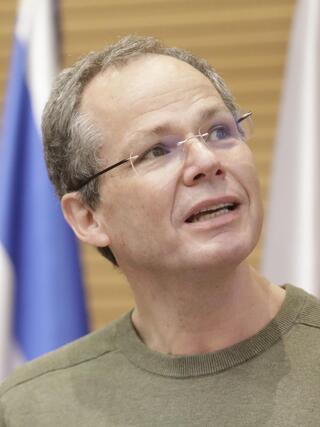 Prof. Eli PikarskyPhoto: Hebrew University
 In his view, the current target of 2,000 new medical students a year should no longer be treated as the ceiling, but as the minimum. Still, he stresses, “the challenge is to do this without compromising the quality of the students.”
His colleague, Prof. Ido Wolf, head of the School of Medicine at Tel Aviv University, says expansion has to be gradual.
“You cannot double a system in one year, because it will collapse,” Wolf says. “That is why the process is being carried out in structured, orderly stages. Teaching capacity is being expanded gradually, and the number of medical faculties is growing."
The Health Ministry also says the next phase will require more infrastructure. To raise the intake to 1,700 medical students a year within the next year or two, universities and hospitals will need additional physical space and training capacity. About 200 million shekels ($54 million) has been allocated for that expansion.
The state pays a fortune to send students abroad
Even with more seats opening, many strong candidates still fail to get into Israeli medical schools, while universities abroad would accept them. But studying overseas is largely an option for those who can afford it, with costs reaching about half a million shekels ($135,000).
To ease that burden, the Health Ministry launched the Ofakim program, which offers medical students abroad a 360,000-shekel ($97,000) subsidy. If they return to Israel and complete their residency in the periphery, the loan becomes a grant.
For critics, the program highlights the deeper absurdity: Israel’s admissions system is so overloaded and expensive that the state is willing to subsidize medical studies abroad, while the costs of testing, preparation and tuition continue to create a socioeconomic barrier at home.
Pikarsky acknowledges that the system favors candidates who arrive with more than strong grades. “There is no doubt that cultural capital helps in this situation,” he says. “It creates tracking, and it may very well be that we are not accepting people because they did not receive that cultural capital at home.”
He points to the military’s fully funded medical track at Hebrew University, known as Tzameret, as evidence of what happens when the financial burden is removed. “The population there is clearly much more diverse,” he says. “More people come from schools in the periphery.”
Universities and the Health Ministry have introduced support and affirmative-action programs for outstanding candidates from the periphery, Ethiopian Israelis and Haredi applicants, without formally lowering the admissions bar. The hope is that these steps will crack the financial wall and ensure Israel’s next generation of doctors is not limited to those who can afford the path.
The Health Ministry said in response that it is working with the Council for Higher Education and the Planning and Budgeting Committee to fund the expansion of medical faculties, with a government target of 1,700 new medical students by 2027. In the most recent academic year, 1,448 students began medical studies.
The ministry added that it is also supporting hospitals financially and regulatorily to expand clinical training capacity, and said current use of core clinical fields meets university demand.
On the Yatziv reform, the ministry said it reviewed the quality of medical training abroad in 2019 and set standards for eligibility to take Israel’s licensing exam. Students who had already begun their studies were given a transition period, but graduates of institutions not approved by the ministry who began after 2019 will not be allowed to take the exam.