

Prof. Yigal Talmi, a founding figure of nuclear physics and a leading member of the country’s first generation of scientific pioneers, died Wednesday, days after his 101st birthday. His death came less than two weeks after the passing of his wife of 77 years, Hannah Talmi, who died at age 100.
Talmi was among the physicists who helped decipher the structure of the atomic nucleus, and theories and computational methods he developed remain in use today. During his doctoral studies, completed in 1951 under Nobel Prize-winning physicist Wolfgang Pauli at the Swiss Federal Institute of Technology in Zurich, Talmi developed a method that greatly simplified calculations in the nuclear shell model, which describes the structure of atomic nuclei.
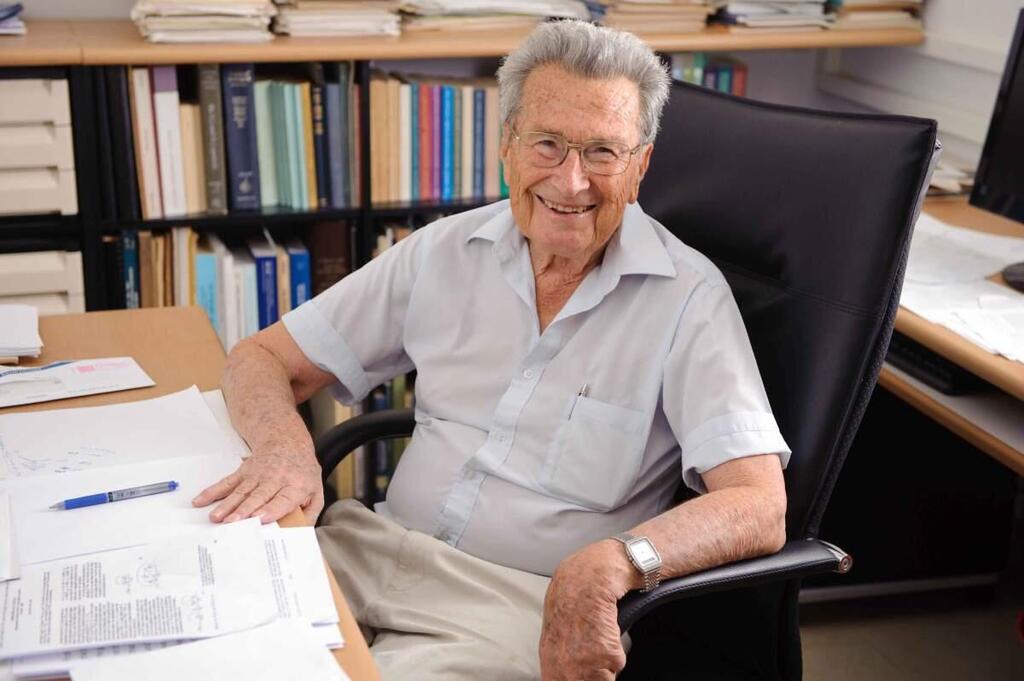
After completing his doctorate, Talmi conducted postdoctoral research at Princeton University under another Nobel laureate, physicist Eugene Wigner. He returned in 1954 and joined the Weizmann Institute of Science, where he was among the founders of the country’s first nuclear physics department.
In 1963, Talmi and Prof. Amos de-Shalit published Nuclear Shell Theory, a book that gained wide international recognition and became a foundational text in the field. A later book, Simple Models of Complex Nuclei: The Shell Model and the Interacting Boson Model, was published in 1993.
Over his career, Talmi received wide recognition at home and abroad for his contributions to nuclear physics. He served as a visiting professor at institutions including MIT, Yale and Princeton. Until his retirement in 1995, he was a professor at the Weizmann Institute and also served as head of the nuclear physics department, dean of the faculty of physics and chair of the institute’s professors committee.
Talmi was a member of the Atomic Energy Commission and its research subcommittee and was elected to the national academy of sciences in 1963. His awards included the Weizmann Prize in 1962, the Israel Prize for exact sciences in 1965, the Rothschild Prize in 1971, the Hans Bethe Prize of the American Physical Society in 2000 and the EMET Prize in 2003.
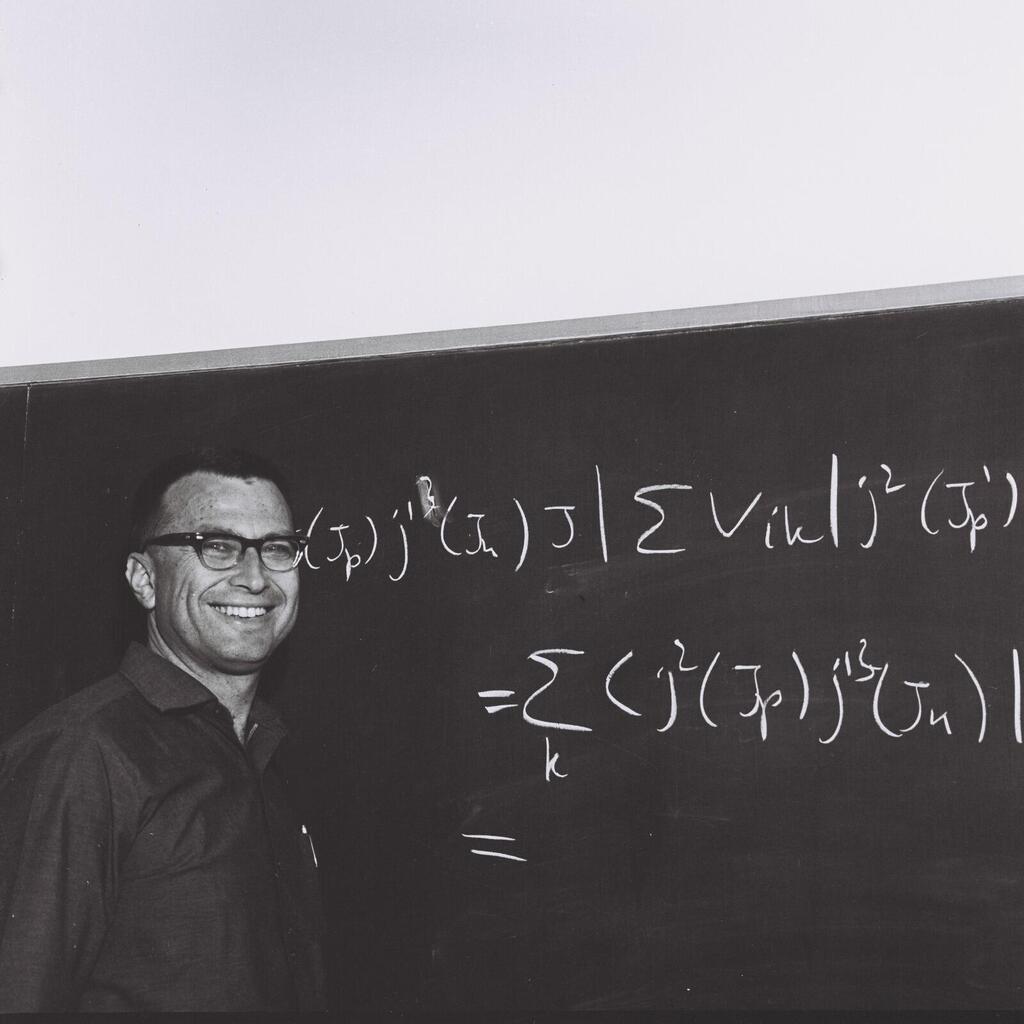
(Photo: Weizmann Institute of Science)
Talmi was born in Ukraine in 1924 and immigrated as a toddler with his parents and older sister in 1925, after Soviet authorities closed Hebrew schools. The family settled in Kfar Yehezkel in the Jezreel Valley, where his father ran the local school. As a child, Talmi developed a deep love of nature, exploring the surrounding landscape and collecting butterflies with his close friend Tuvia Kushnir, who was later killed during the War of Independence.
Talmi initially dreamed of studying biology but turned to physics after discovering, through self-study, that natural phenomena could be described mathematically. During World War II, his parents initially kept him from traveling to study in Tel Aviv, fearing the dangers of the time. He later enrolled at Herzliya Gymnasium and graduated in 1942.
That year, Talmi volunteered for the Palmach but was released in 1943 for health reasons. He went on to study physics at the Hebrew University in Jerusalem, where he formed close ties with fellow students who would later become key figures in the establishment of nuclear physics at the Weizmann Institute.
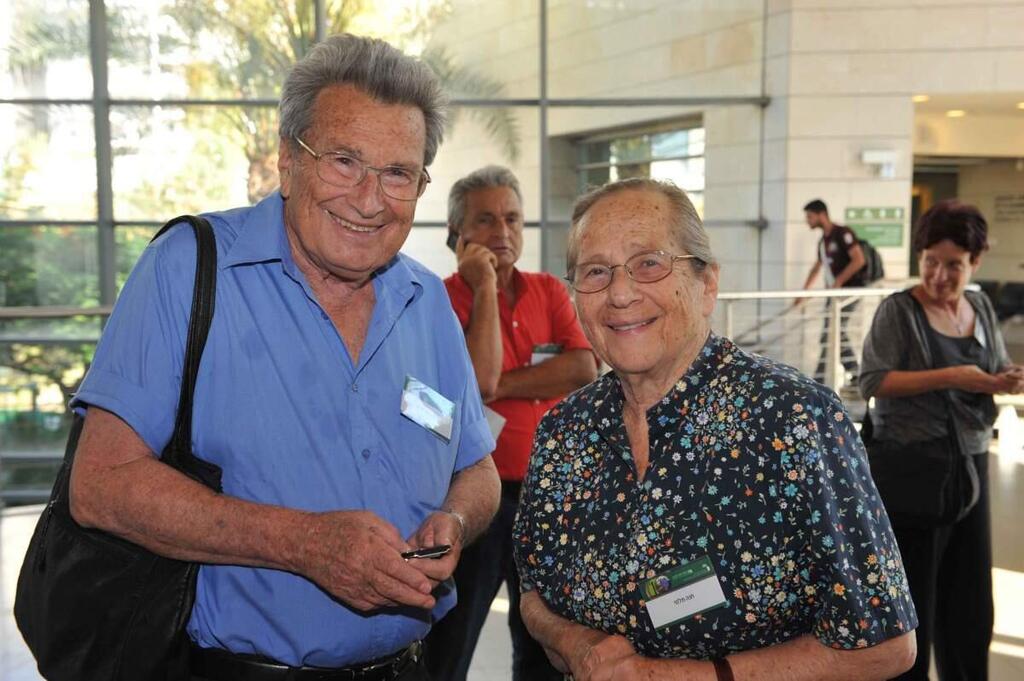
Yigal and Hannah Talmi
(Photo: Weizmann Institute of Science)
During the War of Independence, Talmi fought in the battles of Ramat Rachel and Neve Yaakov before being transferred to the Science Corps. Along with colleagues, he later helped shape a vision under which young scientists would study abroad and return to build a strong scientific base at home. Despite the young state’s economic hardships, several members of the group were sent overseas for advanced studies, including Talmi, who traveled with his wife to Switzerland to study under Pauli.
After returning, Talmi and his colleagues became central figures in shaping the scientific culture of the Weizmann Institute. They encouraged students to take part in research at early stages, breaking with hierarchical European academic traditions and laying the groundwork for a more collaborative and innovative scientific environment.
In later years, Talmi returned to his lifelong love of nature, taking up birdwatching during walks with his eldest son. He is survived by two children: Prof. Yoav Talmi, an ear, nose and throat specialist, and Prof. Tamar Dayan, a zoologist and founding chair of the Steinhardt Museum of Natural History at Tel Aviv University.