

“What frightened me and sent chills through me, after I had evacuated dozens of bodies of Kfar Aza residents murdered on October 7, was the silence. At a time when I myself was in complete inner turmoil, outside there was the silence of death. Decorated sukkahs, abandoned mobility scooters, bicycles and a deafening quiet. No life. No birds. I remember telling myself that my obligation was to return to the kibbutz when it came back to life.”
That is how Dr. Gilad Chen, a specialist in pediatric emergency medicine and head of pediatric emergency services at Emek Medical Center, describes the horror he saw as a combat physician at the start of the 433 reserve duty days he has served since October 7 and continues to serve.
Gallery
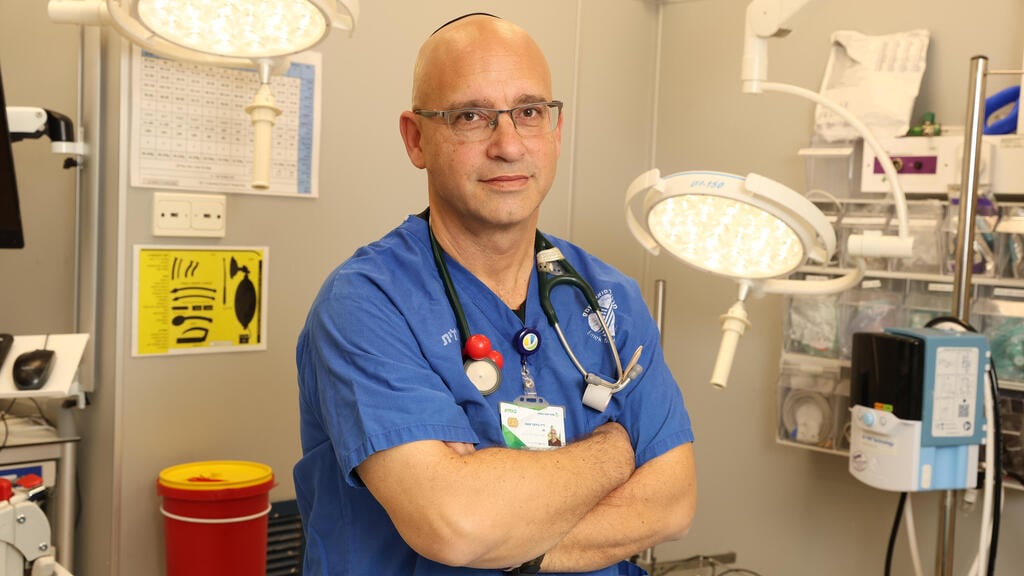
Dr. Gilad Chen, head of pediatric emergency medicine at Emek Medical Center, reflects on Oct. 7
(Photo: Elad Gershgoren)
Even his civilian life, marked by difficult challenges and hardships alongside successes, did not dull his emotions or make him more resilient. If anything, perhaps the opposite is true. He was born 53 years ago to a religious Zionist family, and when he was 7, the family moved to the United States for his gynecologist father’s subspecialty training.
“We lived there for years, and at least in terms of language I integrated quickly, because we also spoke English at home in Israel, thanks to my American mother.”
When he was 15, his physician father completed his commitments and chose to return to Israel, and the family packed up and made aliyah. Even with the passage of time, Chen said the return was deeply difficult.
“I was in shock over everything. I did not know how to speak Hebrew, and above all my American accent bothered me. For six months, I stayed silent, I did not utter a word, until I managed to regain an Israeli accent.”
In the army, he served as a combat medic in the Paratroopers Brigade, later instructed medics and advanced to become the course commander.
“My paternal grandfather was also a doctor who served in the British army, entered Bergen-Belsen and later testified at the Eichmann trial. In Israel, he headed the anesthesiology department at Ichilov, so for everyone in the family — except me — it was obvious that I would continue the tradition and become a doctor, but that was not my plan.”
Visiting Gomez’s grave on his wedding anniversary
The turning point came in August 1994, when the IDF sent medical teams to assist during the civil war in Rwanda.
“I was attached to the second rotation, which was sent to establish a field hospital and treat the wounded. The team before us had built a hospital there from nothing — with an emergency room, operating rooms, pediatric clinics and more. Some may say it was by chance, I would argue otherwise: I found myself in the pediatric ward, working with two other medics alongside senior doctors. We functioned far beyond the normal abilities of a medic, and there — when I barely even had a high school diploma — I realized I wanted to become a pediatrician. By the way, the two medics who were with me also became doctors in that same specialty.”
A friend who had been discharged a year before him and started medical school in Budapest suggested he join him, and because the studies were in English, the challenge was relatively manageable. At the end of his first academic year, at age 26, he married Libi, who had completed bachelor’s and master’s degrees in business administration and chose to work in complementary medicine and yoga instruction. To this day, he credits her with playing a central role in his life.
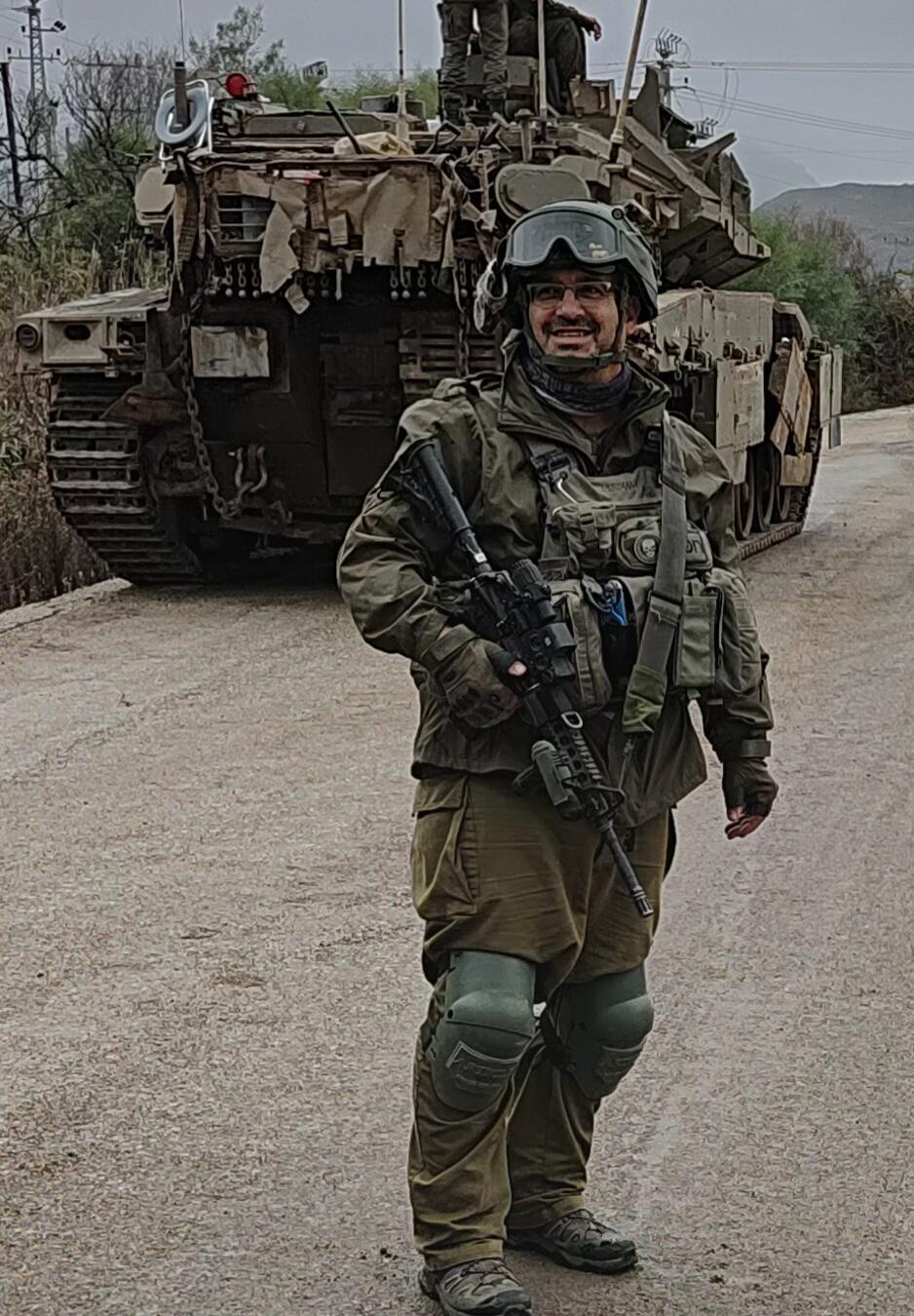
Dr. Gilad Chen during reserve duty
(Photo: Private album)
After finishing his studies, he returned to Israel and was accepted for residency at Sheba Medical Center.
“By the time of the Second Lebanon War, I was already a reserve doctor. My medical team was on the helicopter that landed in southern Lebanon with 35 paratroopers and doctors. As the helicopter lifted off on its way back to Israel, a missile was fired at it and it crashed, killing all five crew members, including pilot Daniel (Danny) Gomez. I was horrified when I learned that Danny — the son of a friend of mine, also a doctor — had been killed. The tragedy itself was terrible enough, but the date made it even more painful, because it fell exactly on our wedding anniversary. Since then, every year, Libi and I go up to Gomez’s grave and from there go celebrate.”
During his residency, he learned from a mentor about a new subspecialty that had been recognized in Israel only two years earlier: pediatric emergency medicine.
“I was captivated very quickly, because I was exposed to a broad and varied field.”
The family, now with three children, flew to Australia, where Chen completed a fellowship at a leading medical center in Sydney and stayed on for an additional year as an attending physician.
“When I was accepted, the head of pediatric emergency medicine called me in for a clarifying conversation in which she ‘warned’ me about the hard work ahead. I smiled to myself — how hard could it really be, after doing 10 or 11 shifts a month and three weekends at Sheba? One Sunday, when I showed up for work as usual after a weekend shift, people looked at me in confusion and the senior doctor did not understand what I was doing there. The department director quickly informed me that after a shift I was entitled to three days off. A dream.”
Returning to Israel, now with four children, was challenging.
“For the eldest, who was in third grade, and the next one, who was in kindergarten, it was difficult at first, but over time they adjusted.”
After working at Rambam Health Care Campus, he received an offer that was hard to refuse: to establish a pediatric emergency medicine unit at Emek Medical Center.
“When I arrived, I was the only senior physician, and today I have residents and six specialists, three of whom trained in Sydney, so we easily built a homogeneous team that knows and works according to the same strict standards.”
‘There was complete chaos there’
The devastating news of October 7 reached him in synagogue, kugel in hand.
“One of the worshippers was called up, and ever since I became a doctor, I carry my phone 24/7, so I immediately checked whether anyone was looking for me. Around 8 a.m., the commander called and asked me to be on alert. For about 30 years, I served in reserve duty in a divisional medical unit, Division 98, that was attached to the Paratroopers Brigade’s commando formation, and as is customary in the IDF, a combat doctor ages out at 46. I hurried to sign a volunteer extension, and since then I have served continuously.”
At the same time, his daughter, an intelligence officer, was also called up. He said the feeling was like the Yom Kippur War, and only later did they understand the scale of the chaos that sidelined his team for days.
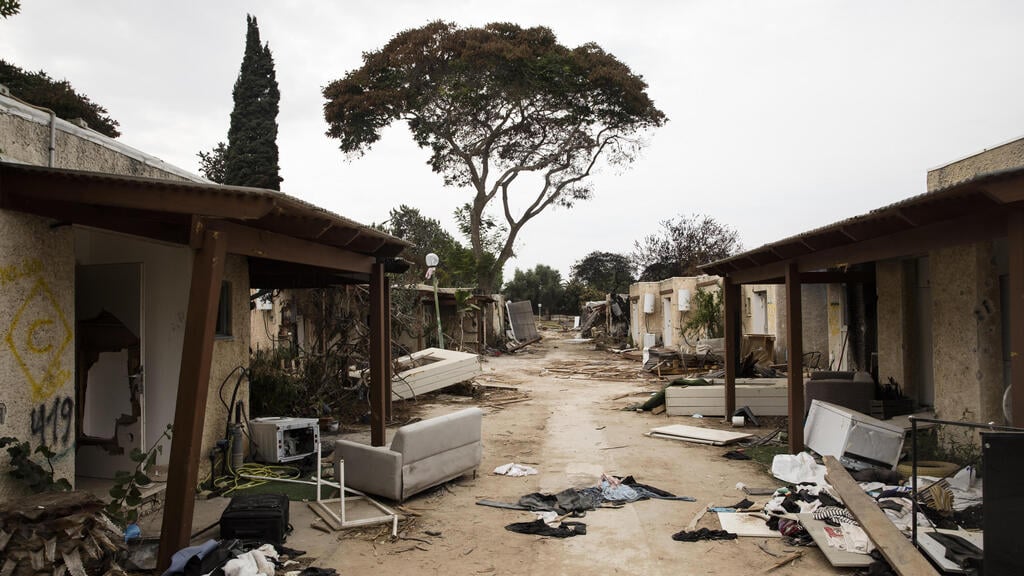
Kfar Aza after the Oct. 7 massacre
(Photo: Amir Levy/Getty Images)
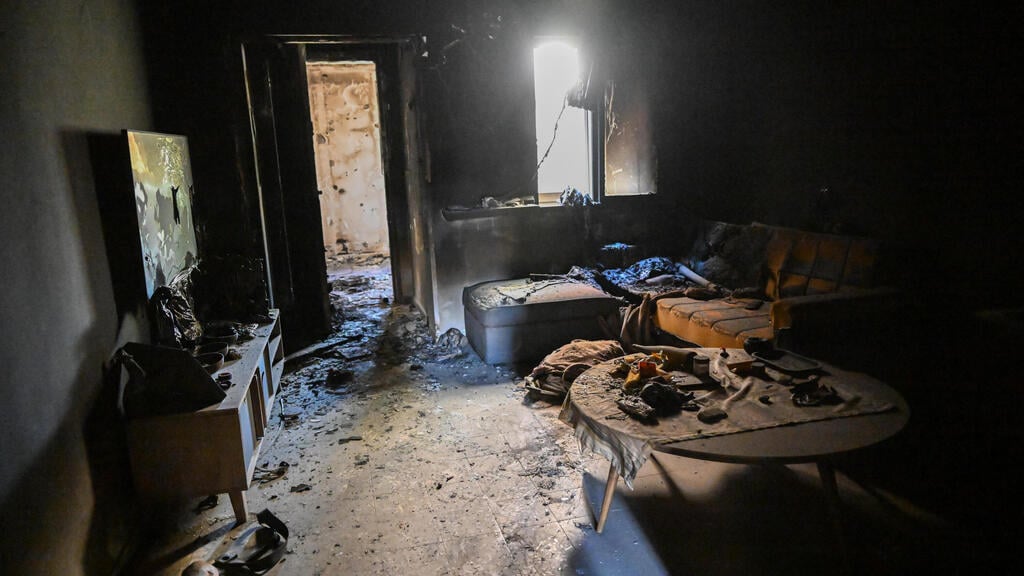
Homes were burned with their residents inside
(Photo: Alexi J. Rosenfeld/Getty Images)
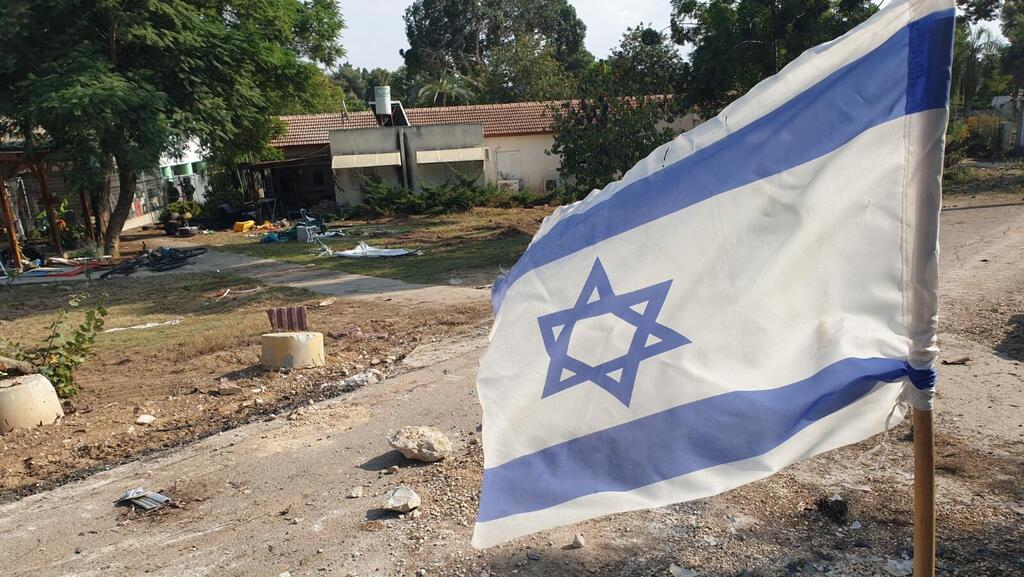
The flag that survived the Kfar Aza massacre
(Photo: Private album)
“We went south, exposed to all the difficult scenes. When I asked a medical officer in the Southern Brigade where to continue, she answered honestly that she did not know. I heard forces all around me and we were inactive. There was complete chaos there — unbelievable. On the morning of Oct. 8, when the refrigerated trucks began to arrive, we were sent to evacuate bodies in Kfar Aza.”
As they approached the kibbutz entrance, they were told to pull back because fighting with Nukhba terrorists was still underway there.
“We moved to Kibbutz Saad, and only on Oct. 10, after the IDF had cleared the homes, did we enter the kibbutz to examine bodies that had already been lying in the heat for 72 hours. Some of them were outside, in the sun.”
He said he would never forget the scenes he encountered.
“At the entrance to one of the homes, breakfast was set out on the table, and when I went into the rooms, I found a mother lying in a protective position over her son — and both of them had been shot.”
The sight of an 80-year-old woman who had been shot, her foreign caregiver who had also been abused, the dead children and the members of the emergency response team — all of it, he said, went into the pack weighing on his heart.
Shuttling between the unit and the hospital
“For four straight days, we were in Kfar Aza, and during that time, we evacuated 62 residents who had been brutally massacred and 18 IDF and Shin Bet fighters. Eighty bodies in four days. We were physically and mentally exhausted, hungry and unwashed — and out of nowhere came a small ray of light in the form of a sandwich made by civilians. Mine was labeled ‘omelet’ with a drawing of a heart. It was the tastiest omelet sandwich I have ever eaten and ever will. To this day, I still keep that comforting note. When we left there for the next point on the route, the dissonance was especially extreme — civilians were waving and shouting ‘heroes’ at us, and we did not understand the situation.”
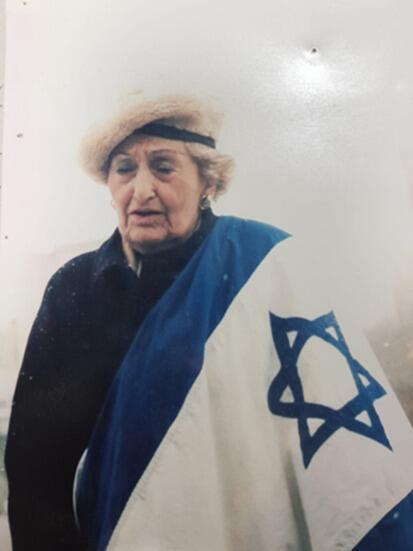
He apologized to his late grandmother, Leah Fox-Chen, a Holocaust survivor
(Photo: Private album)
During one of his reserve rotations in Khan Younis, his son was due to enlist.
“The enlistment date was April 7, 2024. Both of us understood there was no way I would make it. I apologized. The day before, the commando disaster struck, costing the lives of four soldiers in an encounter with terrorists in Khan Younis. I went to the battalion commander and told him, ‘I just held four dead children in my hands, there is no way I am not going to my son’s enlistment’ — and I managed to get out for a few hours.”
Later, Chen’s unit moved north for the war against Hezbollah.
“We trained, and later entered the battlefield as the ground equivalent of Unit 669. Since then, I have been shuttling between the unit and the hospital.”
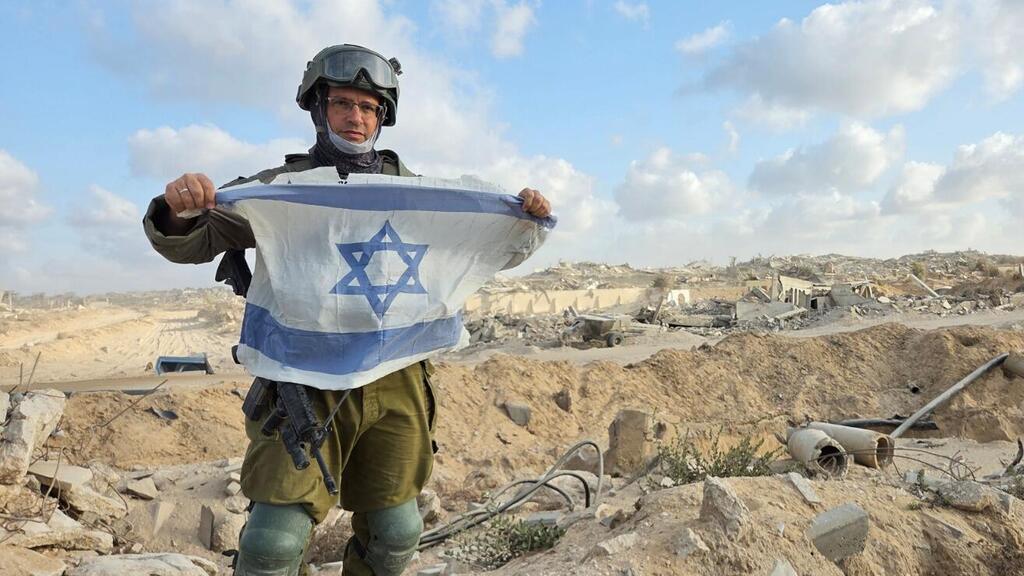
Dr. Gilad Chen in northern Gaza, October 2025
(Photo: Private album)
Asked which experience was etched into him most deeply, he answered: “For me, the peak was those four days of evacuating bodies in Kfar Aza. As I was leaving one of the houses, I saw a whole Israeli flag, not desecrated, flying from one of the poles. I took it down, put it in my vest and said to those who had been murdered, ‘After the hostages return and after the kibbutz comes back to life, I will return the flag.’”
At that moment, he said, he apologized to his late grandmother, Leah Fox-Chen, a Holocaust survivor.
“I accompanied my beloved grandmother on one of the March of the Living visits to Auschwitz, when she was wrapped in an Israeli flag. I stood proudly beside her and promised her: ‘Never again. We are strong. We have a state.’ And now, within the very state that was established, this disaster happened.”