

It is early morning in the Sonoran Desert. Long before the sun begins beating down on the towering 30-foot steel wall separating the United States from Mexico, the line is already stretching and winding through the Andrade border crossing in California.
Hundreds of people, elderly visitors leaning heavily on walkers, retirees in wheelchairs, travelers pulling suitcases and working-class Americans, make their way through the narrow corridor enclosed by wire fencing and metal barriers.
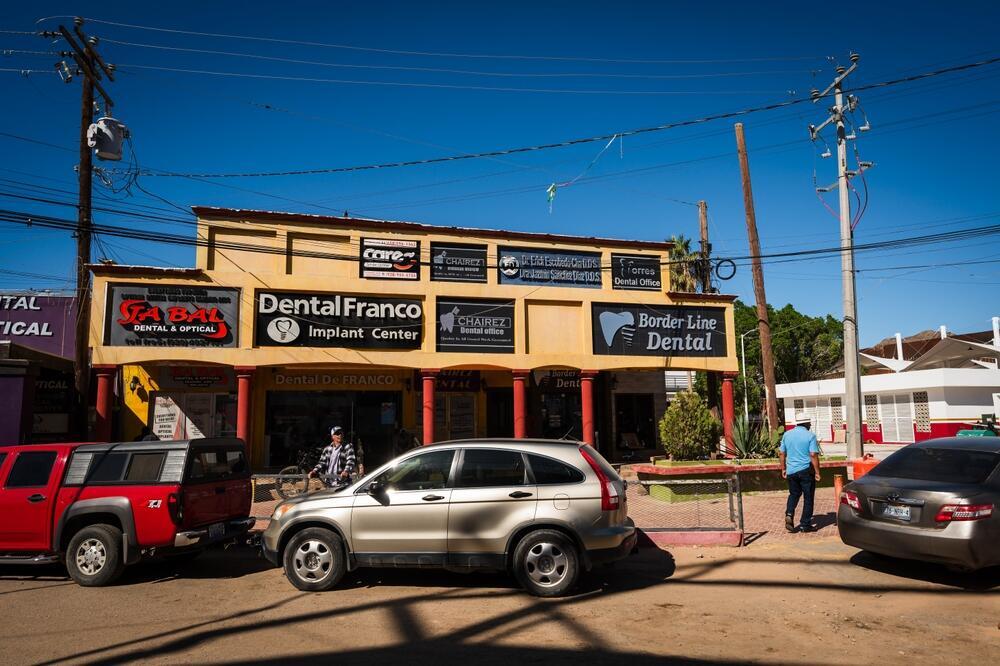
They are heading each morning to a small, remote Mexican town called Los Algodones. But the crowds, which number more than a million a year, are not coming for golden beaches, ancient ruins, all-inclusive resorts or frozen margaritas. They are here for something more mundane, painful and expensive: root canals, dental implants and crowns.
Welcome to “Molar City,” the undisputed capital of global dental tourism. If hair transplants have become synonymous with Turkey and cosmetic surgery with South Korea, dental work has increasingly found its destination in Mexico. Los Algodones stretches across just a few blocks, yet estimates put the number of dentists working there anywhere from 350 to more than 1,000. With a population of just over 5,400, it has one of the highest concentrations of dentists per capita anywhere in the world.
For Israelis accustomed to complaining about the cost of private dental care, comparing quotes and looking for discounts through their health funds, the American reality can seem almost dystopian. Tens of millions of people in the United States live without dental insurance, and even those who are insured often have limited coverage that can leave them facing bills of tens of thousands of dollars when surgery or complex restorative work is needed.
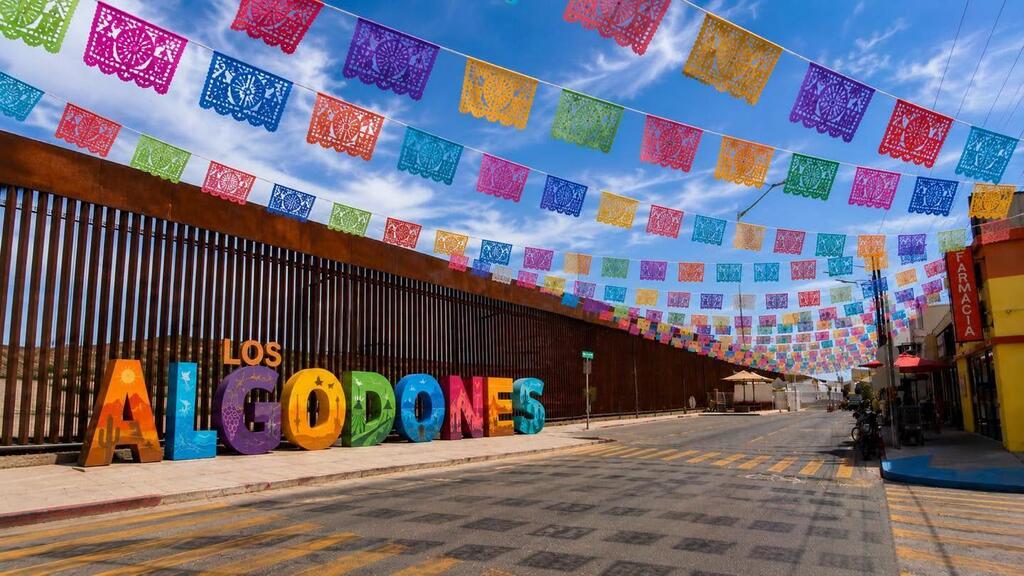
(Photo: Medios Algodones)
From vice town to Molar City
The moment visitors pass through Mexican customs, the quiet of the desert gives way to colorful chaos. The main streets, led by Calle 2, are crowded with so-called jaladores, street touts who try to steer patients toward local clinics.
“Hey, friend, looking for a dentist? Pharmacy? Optician? Twenty percent off a root canal!” they shout in fluent English at passersby, alongside billboards declaring the town the “dental capital of the world.”
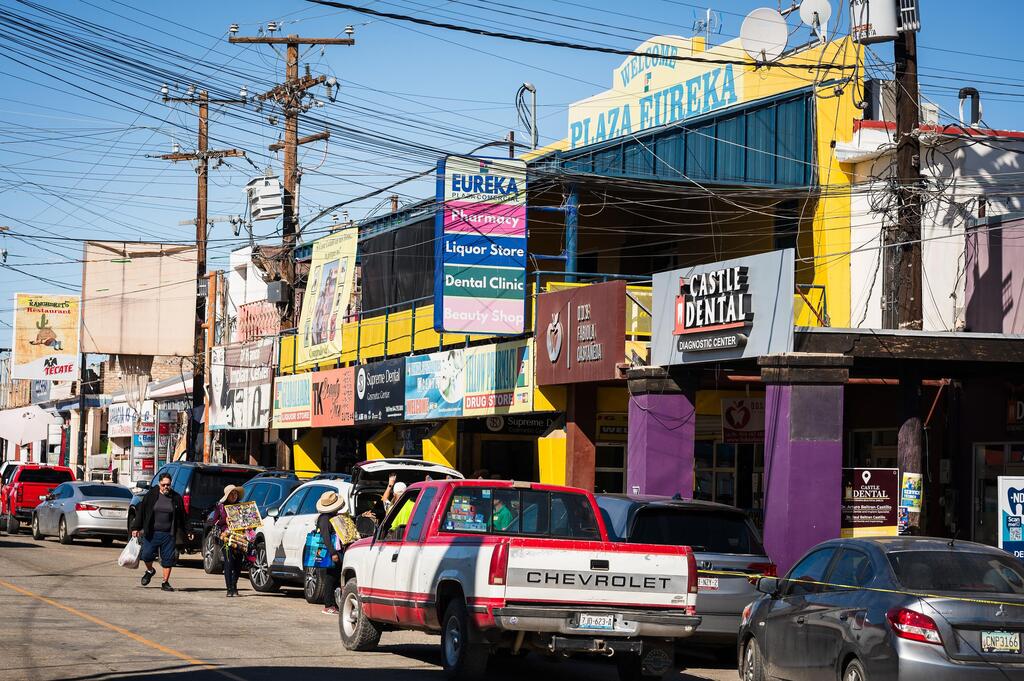
Between gleaming clinics are taco and burrito stands, eyeglass stores offering cheap vision exams, beauty salons and the famous Purple Pharmacy. Its distinctive plastic bags are carried by many tourists returning to the United States, filled with prescription medications sold for a fraction of the price across the border.
The town’s history reads almost like a Western that took an unexpected turn. Los Algodones, whose name means “the cotton plants” in Spanish, was built on the Colorado River floodplain. During Prohibition in the United States in the 1920s, it was a desert vice town with 48 bars and strip clubs within a 10-minute walk of the border, drawing Americans in search of cheap alcohol and questionable entertainment.
The transformation began in 1969, when Dr. Bernardo Magaña, newly graduated from dental school in Mexico City, opened a clinic directly opposite the border inspection point. Business flourished, and other dentists gradually followed. In the 1980s, Magaña became mayor, shut down the brothels, fought crime with help from regional authorities and helped turn the town into a medical center for tourists.
Where bars and clubs once stood, hundreds of dental clinics now operate alongside laboratories capable of producing crowns within hours and specialist practices offering complex treatment.
To understand why hundreds of thousands of Americans cross the border each winter and allow strangers in another country to work on their teeth, it is enough to listen to the stories in the waiting rooms.
Take Brian Quaid, a carpenter and cabinetmaker from Seattle. He sat in one clinic with his mouth still numb from Novocain and his face bruised after hours of treatment. “I spent nine straight hours in the chair yesterday,” Brian said, barely able to move his lips. “They did 22 crowns and four root canals, and today they did a deep cleaning.”
Asked what would persuade someone to undergo so much concentrated discomfort in a foreign country, his answer came down to simple and painful arithmetic. “In the United States, this would have cost me $50,000. Here in Mexico, I’m getting the whole thing done for around $5,000.”
The price differences can be enormous. A root canal in Los Algodones can cost around $200 and a crown about $300, while prices across the border can run into the thousands. More complex dental implants typically range from about $1,200 to $1,700.
‘It feels like a factory’
At Sani Dental, one of the city’s largest and best-known clinics, which employs 35 dentists and dozens of other staff members, the experience can resemble a highly efficient dental factory.
The clinic is equipped with 3D dental scanners, digital panoramic X-ray machines and a three-story laboratory capable of rapidly producing implants and dentures. Patients are often offered transportation and even free accommodation at Hacienda Los Algodones, a hotel owned by the clinic’s operators, if they spend a certain amount on treatment.
In the hotel dining room, decorated with yellow arches and an old Spanish style, breakfast can look like a giant support group. Retirees known as “snowbirds,” Americans from colder northern states who migrate south to Arizona during the winter, swap stories about extractions, bridges and crowns over plates of eggs and refried beans.
Mexico pioneered the dental tourism trend. The streets of Los Algodones
(Photo: David Buzzard / Shutterstock)
Among them are Billy and Nancy Martinez, a retired couple from Colorado. He worked as a heavy snowplow driver and she as a customer service representative. Nancy had spent her life embarrassed by her crooked smile and the gap between her front teeth, but every time the couple managed to save enough for cosmetic dental work, a more urgent expense appeared.
Once, all of their savings went toward costly cataract surgery for their elderly dog. Only in Mexico did they feel they could finally afford the treatment Nancy wanted.
New Yorker journalist Burkhard Bilger, who set out to compare the cost of restoring his own teeth, received a quote in Los Algodones of $14,000 for extensive work that included more than 20 crowns and an implant.
About a month later, he visited a celebrity dentist in Beverly Hills whose clients include members of the Kardashian family and Miley Cyrus. The diagnosis was the same. The price: $119,000, more than eight times as much.
Casinos and painkillers
So why is everything so much cheaper across the border? The reasons are fairly straightforward. Labor, technicians and real estate cost significantly less in Mexico than in the United States. Mexican dentists also do not necessarily begin their careers carrying hundreds of thousands of dollars in student debt, because the state subsidizes their education in exchange for a year of service providing free treatment to the community. Their malpractice insurance costs are also considerably lower than those faced by American dentists.
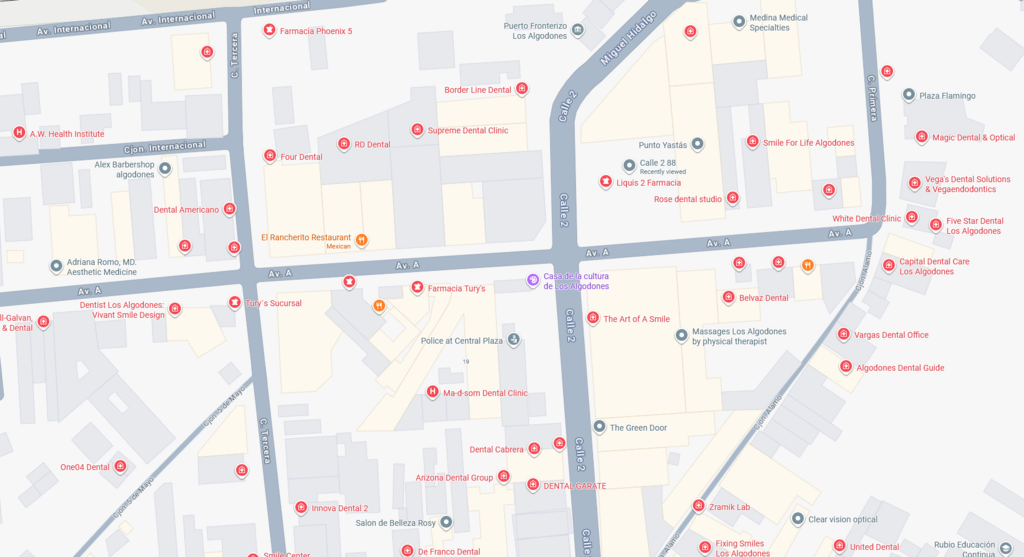
Dentists and pharmacies in downtown Los Algodones
(Photo: google maps)
But the low prices come with risks. The American Dental Association acknowledges that Mexico has excellent dentists who use high-quality materials, but advises patients to thoroughly research providers before undergoing treatment in another country. If complications occur or treatment fails, an American patient’s legal options may be limited, while repairing the damage back home can become extremely expensive.
The pace of work also draws criticism. Many clinics treat large numbers of patients each day, often through long treatment sessions. Local dentists, however, argue that the sheer volume of procedures can make them more skilled.
“When you have a surgeon doing 500 implants a year, compared with an American dentist doing 80 on average, the Mexican dentist’s hands are much more experienced and the work is better,” one diagnostic dentist in town said.
As the sun begins to set over the desert, after hours of drilling, anesthetic injections and plastic molds, patients slowly make their way back toward the border crossing.
They look different from when they arrived that morning. Some walk with swollen cheeks and bandages. Others carry bags filled with medication and painkillers. Many feel they have managed to bypass a system they simply could not afford at home.
In the evening, they can sometimes be seen again at the Quechan tribal casino just across the border. Elderly visitors sit before flashing slot machines, some carefully touching their faces or struggling to speak while the anesthetic has yet to wear off. Others are waiting for another round of treatment the following day. They compare prices for crowns and implants almost as though discussing the cost of new gadgets, showing one another their new teeth.
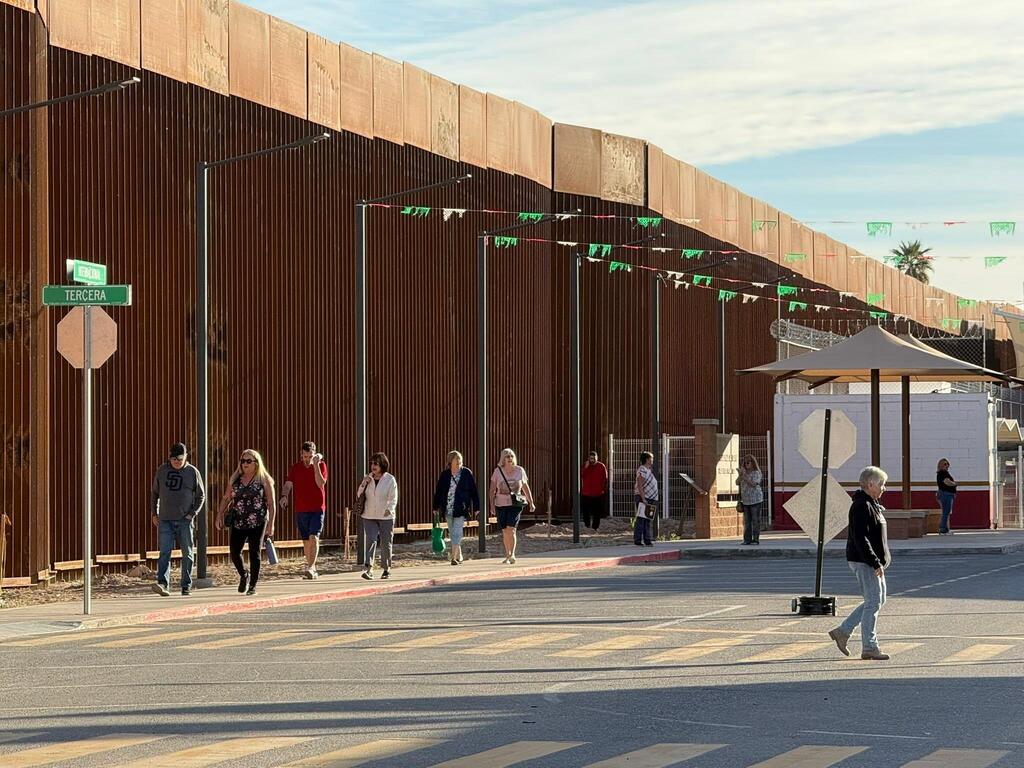
The border crossing in Los Algodones
(Photo: Medios Algodones)
This dry, dusty and peculiar town in the middle of the Mexican desert has become a striking symbol of the failures of a health care system that can leave older Americans choosing between living with severe dental pain and facing potentially ruinous bills.
Yet just a short walk from the United States, in a place where cheap liquor once flowed through dark bars and disreputable clubs, hundreds of thousands of people now find an alternative they can actually afford.
Here, with cash dollars and no small amount of courage, they buy back something more basic: the ability to smile without embarrassment and without mortgaging the house.
For Nancy Martinez, at least, the road to that new smile was hardly smooth. During treatment, she swallowed a temporary crown. The replacement fell out too. Eventually, her permanent crowns were fitted, white and smooth, though she looked more exhausted than delighted.
Billy, meanwhile, underwent three root canals during the same visit, along with a facial treatment and plasma injections into his scalp.
Before they left, he pulled a small bag from his pocket containing two old implants that had been removed from his jaw. Back in Colorado, he said, they had cost him $8,000.
Now he planned to turn them into a necklace for Nancy.
“What an adventure,” he laughed.
Nancy carefully ran her tongue across her new crowns.
Asked whether it had all been worth it, she smiled.
“Yes,” she said. “But we’ll have to wait and see.”