

Close your eyes and try to calculate: how much time has passed since the moment it was declared that we are returning to routine? Or more precisely, since a ceasefire was announced?
As of the time of writing, it was only yesterday.
Gallery
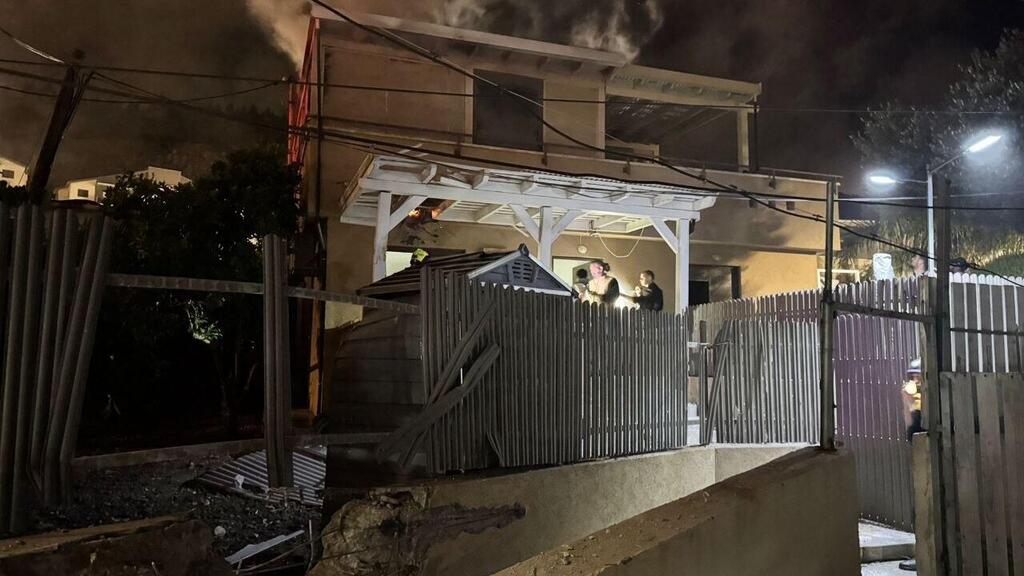
'Return to routine' feels like a term that does not fit reality; impact site in Kiryat Shmona
(Photo: MDA operational documentation)
And yet, if someone told me weeks had passed, I would probably believe them.
Perhaps because the feeling is not of a gradual transition, but of a sharp jump — from zero to 100, back to zero, then to 100 again. Sirens, shelters, alertness — and then suddenly quiet. Then the thoughts return. Then another attempt to function as if everything is clear.
Except nothing is really clear.
“Return to routine” feels like a term that does not fit reality.
This is not routine — it is a ceasefire. And a ceasefire is not stability; it is a pause with a question mark. A moment in between. A breath you are not sure you are allowed to fully release.
And as we try to convince ourselves that things have calmed down, the north is still under fire.
So how exactly do we return? And to where? Perhaps that is part of the difficulty.
There was an expectation of a soft landing, of somehow “getting back to ourselves.” In practice, we got a sudden stop — almost the screech of brakes — followed by a demand to keep going.
It is not simple. And it is OK that it is not simple.
It is not normal that one day we were running to shelters in the middle of the night, and the next day we are sitting eight hours at work.
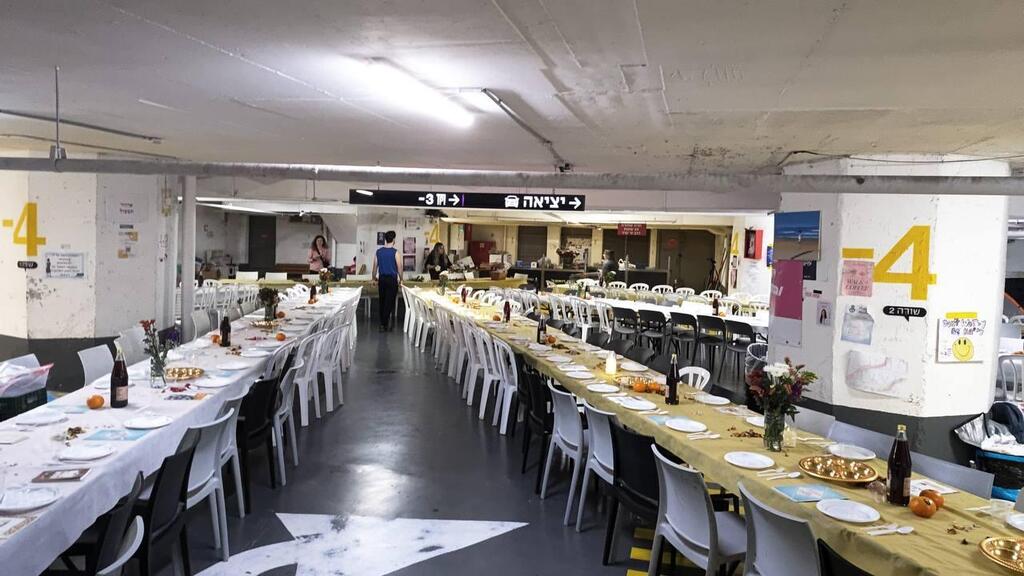
Passover celebration in the parking lot of Dizengoff Center during Operation Roaring Lion
It is not normal that our children slept in the parking lot of Dizengoff Center (a large shopping mall in Tel Aviv), and are now preparing for matriculation exams.
It is not normal for the body and mind to make such a sharp transition and behave as if everything is under control.
And there are those who say this out loud — and that is a good thing.
It is OK to feel not OK
When it seems the dust is settling, not everyone actually gets up.
Not everyone gets up right away — and not everyone gets up at all.
Precisely now, it is important to pay attention to those who remain a bit behind. Those who need a little more time. Those who need someone to knock on the door.
Not because something dramatic happened — but simply to make sure they are there.
Because there are those who need us more precisely now. Precisely when the quiet seemingly returns, something inside begins to move.
You do not always see it. You do not always know how to explain it. And sometimes we do not allow ourselves to feel it.
But the truth is — it is OK to feel not OK.
This is a familiar mechanism.
As human beings, we are wired to survive. The body knows how to switch into action quickly, to keep us functioning even in extreme situations.
But it is less good at switching off. Less good at stopping — especially when it is expected to move instantly from emergency to routine.
It does not work that way. Not in the body, and not in the mind.
Sometimes during the event itself, and sometimes shortly after, everything may seem fine — even too fine.
Over-functioning. Getting things done, returning to routine, meeting people, moving forward.
It is easy to think: we got through it.
But then it comes — quietly, without great drama.
A little harder to concentrate. Something small triggers a reaction. Fatigue that does not pass. Moments of emptiness.
And for some, it hits harder.
Do not rush to assume everything is back to normal
One of the people who asked you to look out for them during the war is me.
I have been coping with mental health challenges all my life, living alone, far from my parents.
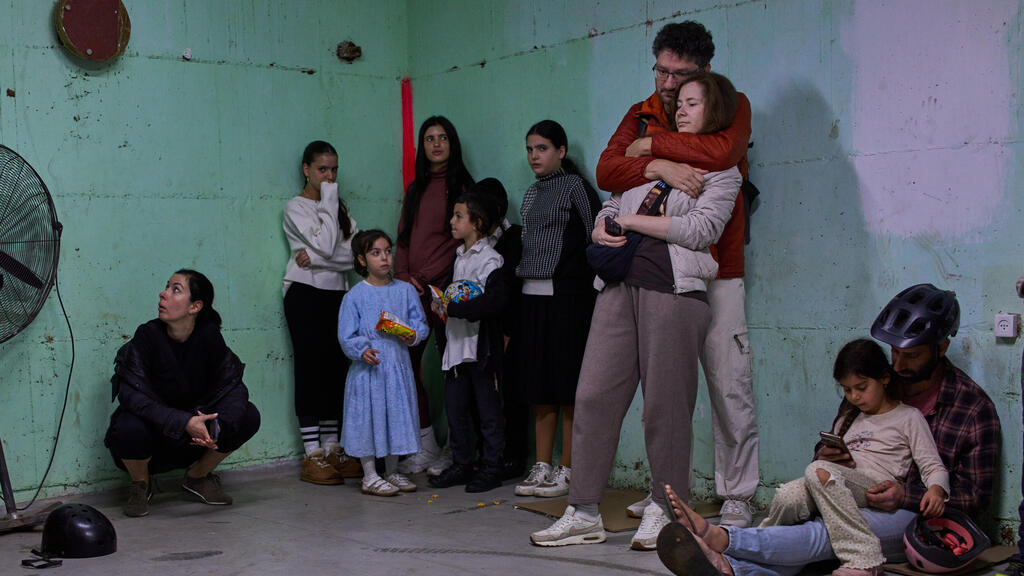
Shelter in Tel Aviv during a siren
(Photo: AP Photo / Oded Balilty)
Sleepless nights, anxiety attacks, avoidance, apathy, anhedonia (the inability to feel pleasure or interest in activities that were once enjoyable) — all of these are familiar to me, regardless of whether an Iranian missile is currently on its way or not.
There were periods when these were my routine, even on days when things were good. That is simply the reality I have learned to live with.
And perhaps because of that, precisely during these abnormal days, it was easier for me to cope.
I knew how to manage because I know myself — but also in relation to society, it was easier.
It was easier to say I was having an anxiety attack. Easier to ask for quiet in the shelter.
There were more people asking, sending messages, offering help — even to complete strangers.
And in a strange way, within all this, I seemed calmer. More “OK.” Because for me, the abnormal did not begin there — and it does not end now.
 Noam Nov
 So do not rush to assume everything has returned to normal.
And remember — for not everyone, “normal” is a place of calm.
Sometimes what looks like recovery is simply an effort to hold on.
It is worth pausing. Asking. Checking in.
Even now — especially now.
No grand gestures are needed. Just keep paying attention and keep being there.
Because our resilience as a society is not measured only in wartime — but also in what happens afterward. Or perhaps more accurately — in what happens in between.
Noam Nov is a lecturer, consultant and content developer at Amitim for Rights, part of the Israel Association of Community Centers.