

After decades in which UFO research was largely relegated to popular culture, the US government is seeking to bring the subject into the scientific mainstream. Israeli-American astrophysicist Prof. Avi Loeb of Harvard University was recently selected to lead a scientific council examining unidentified aerial phenomena, effectively making him the Trump administration’s chief “UFO hunter.”
In an interview with the ynet studio, Prof. Loeb said the inquiry would consider explanations ranging from advanced technology developed by rival countries to the far more remote possibility that some objects originated with an extraterrestrial civilization.
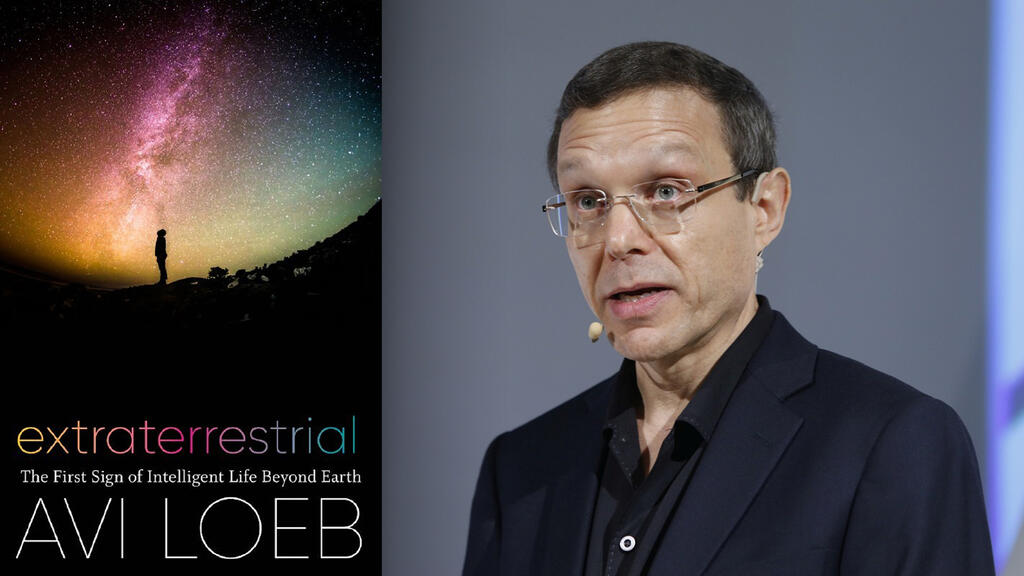
According to Prof. Loeb, the government’s decision to involve outside scientists suggests that officials have encountered objects they cannot readily explain. “The only way to interpret it is that they are seeing objects they cannot identify, but they do not necessarily think those objects were made by humans,” he said.
“If they were certain that they were, they would define them as a national security threat. These objects are appearing near strategic sites, and the government would report on them through classified channels to the Defense Department rather than involve scientists like me.”
Prof. Loeb said that even if the objects ultimately prove to be human-made, identifying them would still serve a clear national security purpose. “If these are objects sent by foreign countries, it is important for US national security to identify them and determine their origin and nature. That is the minimum,” he said.
But the alternative, however unlikely, could have far greater implications. “If even one object among all of them came from an extraterrestrial civilization different from our own technological civilization, it would be the most important scientific discovery ever made,” Prof. Loeb said.
One of the UFO videos released by the Pentagon
(Video: Pentagon)


Such a finding, he added, could fundamentally change humanity’s understanding of its place in the universe. “It would teach us about new science and new technologies, and it would also indicate that perhaps we are not at the top of the cosmic food chain, because we may have a neighbor that is more intelligent than we are.”
‘This is not a matter of belief’
Prof. Loeb, who has spent recent years investigating mysterious objects from space through Harvard’s Galileo Project, rejected the idea that the search for extraterrestrial technology is based on faith or speculation. “This is not a matter of belief,” he said. “I am a scientist, and science is not based on beliefs or opinions on social media. It is based on evidence.”
Astronomical data, Prof. Loeb said, suggest that life elsewhere in the universe is at least plausible. “We know that roughly one in 10 stars has a planet similar to Earth at about the same distance,” he said.
“For me, if similar conditions exist in millions or billions of planetary systems resembling our solar system, it is like finding homes on our street that resemble our own. Under similar conditions, it is very likely that those homes contain living beings, just as Earth does.”
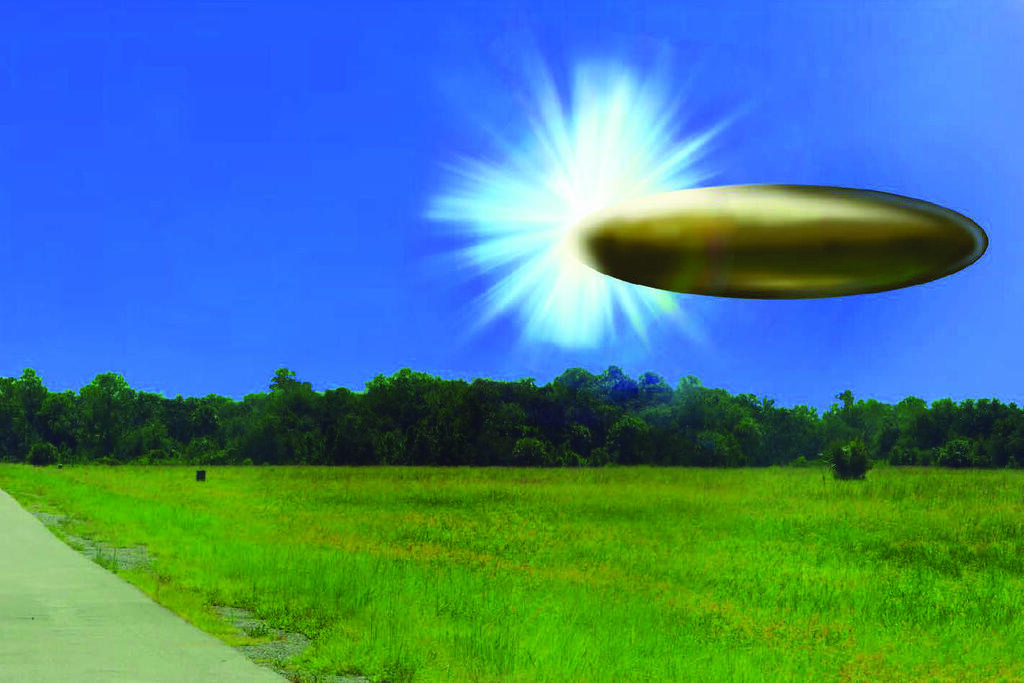
An FBI laboratory graphic depicting matching eyewitness reports from September 2023 of a metallic, bronze-colored ellipsoidal object, reportedly 40 to 60 meters long, that emerged from a bright light in the sky and vanished instantly
(Photo: Pentagon)
Prof. Loeb acknowledged that much of the scientific community remains more skeptical. “Most of the scientific community, I have to say, is not open to this idea,” he said. “They think it is highly speculative. I think it is very plausible that this is what is happening.”
‘Fireballs that split apart, and no one knows what they are’
Prof. Loeb said researchers are particularly interested in reports of fireball-like objects, some of which have come from US intelligence agencies. “There have been reports in recent years from intelligence networks, the FBI and the Pentagon of fireballs that sometimes split into smaller balls, and it is unclear what they are,” he said.
The objects, Prof. Loeb argued, do not appear to match known technologies. “They do not look like a natural phenomenon we have seen before, and they also do not look like drones because they behave differently from the technologies we know,” he said.
Nor, he added, can every report be explained as routine military activity. “They do not appear to be military flares, because the fireballs remain visible for hours, and the reports come from highly credible people and highly credible sources.”
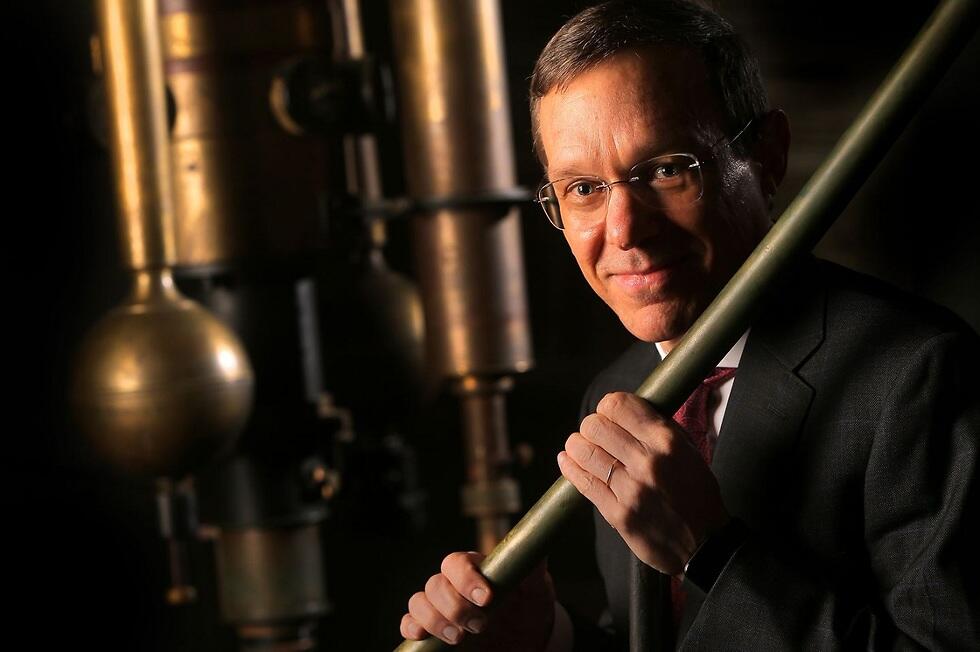
Prof. Loeb
(Photo: GettyImages)
The council’s first objective, Prof. Loeb said, will be to examine the available information scientifically and determine what additional evidence is required. “If there is not enough data, which is often the case in science, we remain uncertain because the evidence is insufficient,” he said. “The idea is to advise the government on which instruments to use in order to solve this mystery.”
Prof. Loeb compared the work to a detective investigation. “The more data we have, the more clearly we can reach a definitive conclusion about the origin and nature of these objects.”
Prof. Loeb also referred to a recent fourth release of US government files that included an account of a 1949 conference at Los Alamos National Laboratory. According to Prof. Loeb, prominent scientists at the gathering, including Manhattan Project physicist Edward Teller, seriously discussed reports of green fireballs appearing over Los Alamos and other nuclear facilities.
“There is clearly a very long history of reports about unidentified objects, and serious people discussed them,” he said. “But history does not need to repeat itself. We now have an opportunity in which the government is, for the first time, turning to the scientific community and asking for advice on how to address and resolve this issue.”
Prof. Loeb said the shift followed President Donald Trump’s decision to open government files related to the phenomena. “Previously, the government simply refused to cooperate with groups of scientists, so I feel privileged to lead the scientific investigation into this subject,” he said.
‘Stories about alien bodies are science fiction’
Prof. Loeb also addressed past claims by Israeli illusionist Uri Geller, who has said that he saw frozen alien bodies at a US intelligence facility. “No, I have not seen evidence of that,” Prof. Loeb said. “There are many stories in human history, and most of them turned out to be untrue.”

Prof. Loeb
(Photo: Amit Shaal)
Such accounts may attract attention, he said, but they are no substitute for scientific evidence. “It is red meat that he provides to an audience that likes hearing such stories, but it is science fiction. These are stories,” Prof. Loeb said.
“Science is the only way we have to learn something new about the reality in which we live. The way forward is simply to gather data, as in a detective story.”
‘I do not need approval from social media’
Prof. Loeb dismissed suggestions that investigating UFOs could damage his scientific reputation. “No, quite the opposite,” he said. “First of all, I do not need approval from social media. What I am saying is that we should examine these fireballs and not pay attention to the crowd.”
What matters, Prof. Loeb said, is not public opinion but physical reality. “People in general, and what they say, do not interest me. What interests me is the physical reality in which we live.”
Prof. Loeb compared the controversy to earlier scientific revolutions. “The fact that Earth revolves around the sun did not change because the Vatican placed Galileo Galilei under house arrest,” he said. “Earth had revolved around the sun 4.5 billion times before the Vatican even existed. What matters is finding the evidence that will show us the truth.”
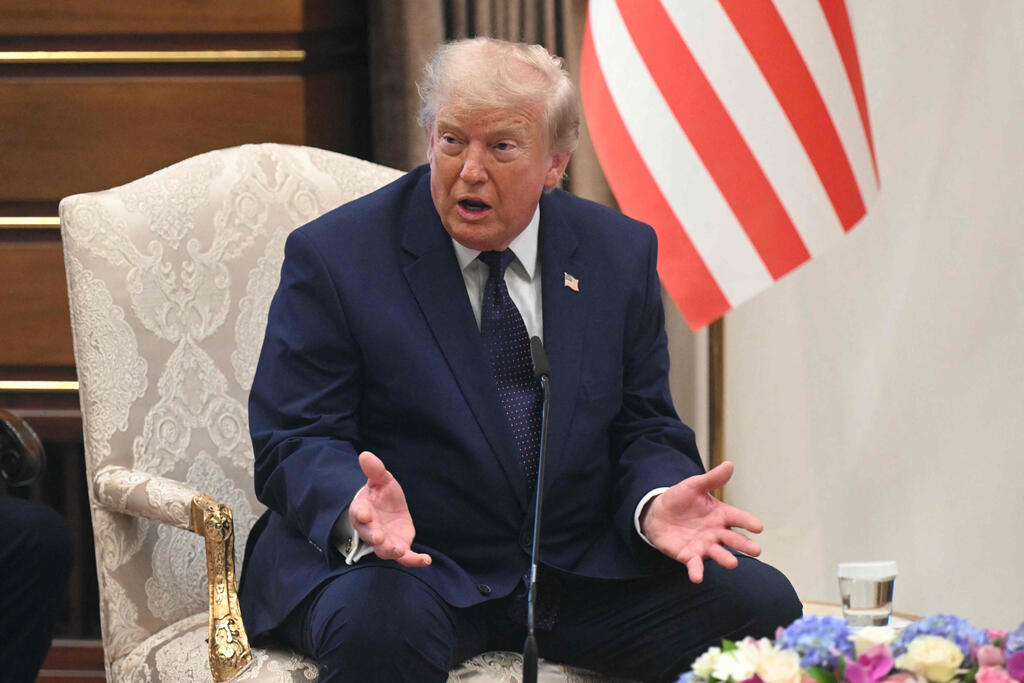
President Donald Trump
(Photo: SAUL LOEB / AFP)
Prof. Loeb said he did not know why the Trump administration selected him, but believed the decision was likely connected to his work over the past five years. “It is very likely because I demonstrated an interest in this subject and led a project called the Galileo Project at Harvard University,” he said.
Prof. Loeb also suggested that the US government may hold information that has not yet been made public. “It is entirely possible that the US government has data we have not seen indicating that there are objects not built by humans, and that it needs a scientist to bring the subject into the mainstream discussion,” he said.
Even if every object ultimately turns out to have a human origin, Prof. Loeb said he would not consider the effort a failure. “If, in the end, it turns out that all the objects were made by humans, I will still feel that I did not waste my time, because I contributed to the national security of the United States,” he said.