


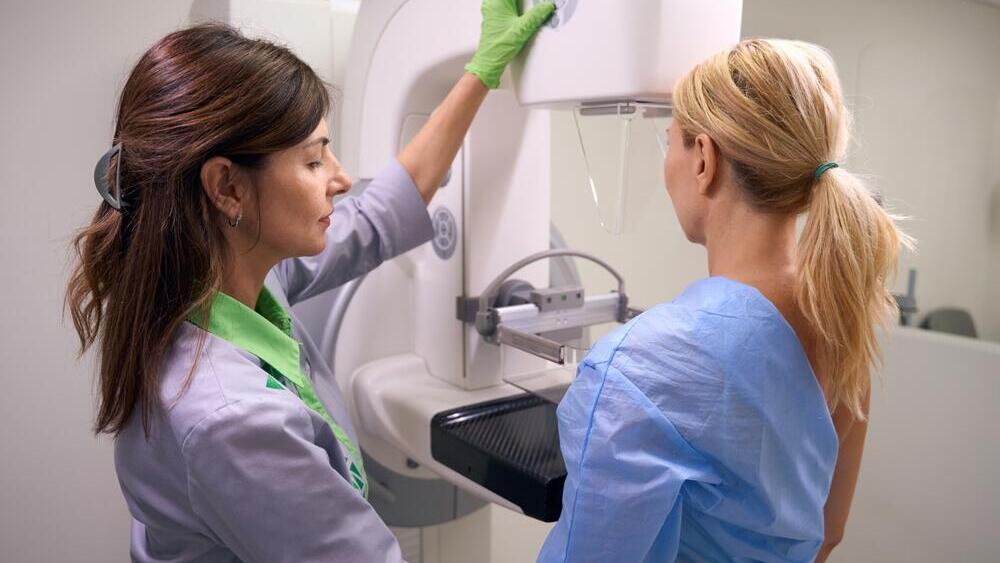
Mammography tests, designed for the early detection of breast cancer, may also contain additional information relevant to identifying cardiovascular disease: breast arterial calcifications (BAC). These are calcium deposits in the walls of arteries within the breast that can be seen on routine mammography images and that studies have linked to an increased risk of heart disease.
According to researchers at Mount Sinai in New York, breast arterial calcifications appear in more than 10 percent of mammograms. The underlying assumption of the research is that if calcification is present in breast arteries, calcification may also exist in other blood vessels in the body, including the coronary arteries.
It is important to distinguish BAC from other types of breast calcifications. Macrocalcifications are usually benign and not associated with cancer, while microcalcifications may, in some cases, indicate malignancy. About 50 percent of women develop benign breast calcifications during their lifetime. Arterial calcifications are a separate finding, confined to the arteries themselves.
Predictor of cardiac events
“Since 2019, evidence has shown that breast arterial calcifications are a risk factor for cardiovascular disease in women, and in recent years, a growing body of data suggests this is a significant risk factor,” says Dr. Oren Caspi, head of the heart failure unit at Rambam Health Care Campus. “However, it is still not definitively clear, although the data point in that direction, whether this is an independent risk factor beyond other cardiovascular risk factors.”
 Dr. Oren CaspiPhoto: Rambam Medical Center
Dr. Arnon Makori, head of the imaging division at Assuta Medical Centers, explains that “today, we encounter these findings during breast imaging tests, mammography using tomosynthesis technology, which is three-dimensional breast imaging, both as a screening test and as a diagnostic exam. As part of the screening program, these tests make it possible to identify breast arterial calcifications.”
According to Makori, this is a finding that can be seen at an early stage and may serve as a predictor of cardiac events such as myocardial infarction or heart attack. “It is another tool at our disposal that allows early detection of atherosclerosis through a mammography exam that was originally intended for breast diagnosis,” he says.
 Dr. Arnon MakoriPhoto: Assuta Medical Centers
At present, he adds, this finding is not formally established as part of the screening program, but when an abnormality is identified, it is sometimes noted in the report. “There is very significant potential here,” Makori says. “I believe that in the not-too-distant future, artificial intelligence software integrated into screening mammograms will be able to identify, quantify and predict calcifications and accordingly assess heart disease risk and help prevent heart attacks, especially among a population that does not currently receive sufficient attention in this area: women.”
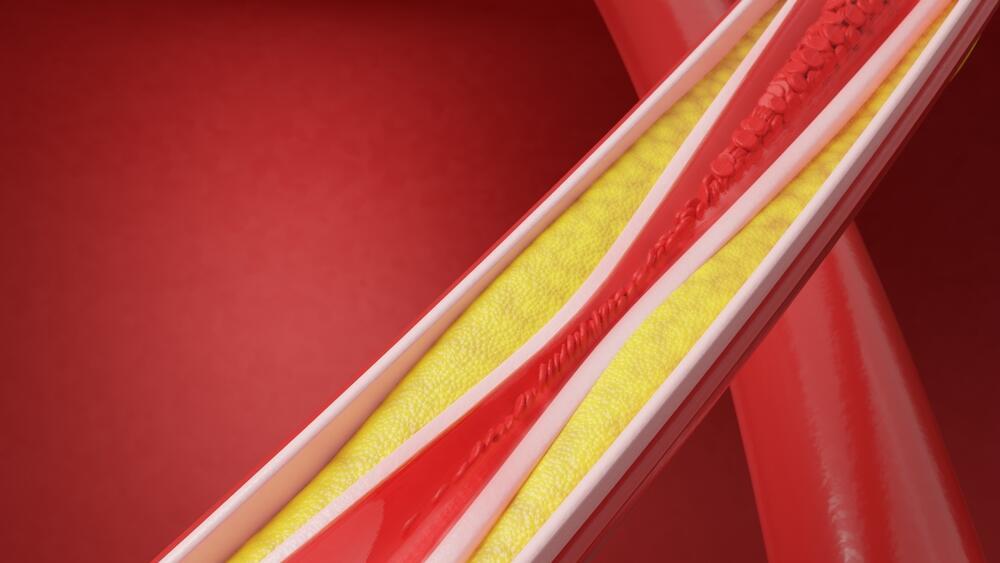
Calcium deposits in the walls of arteries within the breast are linked to an increased risk of heart disease
(Photo: Shutterstock)
He stresses that women also suffer heart attacks and that their symptoms are sometimes atypical. “This is what is known as ‘opportunistic screening,’ a situation in which a test performed for one purpose allows screening for additional findings. This is an important component of screening programs, and it is important that experts in the field be aware of its significance.”
The link between breast arterial calcifications and heart disease
Since 2021, Mount Sinai has been conducting a large-scale study examining the connection between BAC and heart disease. The study includes a diverse sample of 14,875 women aged 40 and older, and researchers estimate that about 12.5 percent of women in the health system have breast arterial calcifications, including women with known heart disease.
In the second phase of the study, 1,888 women with BAC were randomly divided into two groups. One group received proactive notification of the finding, an explanation of its possible link to heart disease and a referral to consider preventive cardiology counseling. The second group received a standard mammography report, with information about the calcifications provided only six months later. The study’s results are expected to be published in about a year.
The association between breast arterial calcifications and heart disease is also supported by previous studies. A review published in 2018 in the Journal of Cardiovascular Imaging proposed using mammography as a possible screening tool for heart disease. A 2022 study in Circulation: Cardiovascular Imaging found a link between BAC and heart disease among postmenopausal women aged 60 to 79. Another study from 2024, published in JACC: Advances, found that breast arterial calcifications had particularly high predictive value for heart disease among younger women aged 40 to 59.
“In an article published in JACC, it was found that breast arterial calcifications are a risk factor for the development of heart failure as well, not only for cardiovascular disease and mortality,” Caspi adds. “There is physiological plausibility for this, since arterial calcification is sometimes associated with stiffness of the heart muscle, and there may be a connection in this regard as well, although the issue is still under scientific review and the evidence is not conclusive.”
Physicians emphasize that BAC is a possible risk factor, not a definitive diagnosis. The precise clinical significance of the degree of calcification for each patient is still unclear, and further research is needed to determine in which cases additional cardiac evaluation is warranted.
Still, since mammography is already performed in women aged 40 and older, an age group at increased risk for heart disease, some argue that this presents an opportunity to use an existing test to identify early clues to cardiovascular problems. According to experts, the main challenge is raising awareness among medical professionals and providing clear guidelines on how to act when such a finding appears in a mammography report.
“In principle, arterial calcification, wherever it occurs in the body, is known to increase the risk of cardiovascular disease,” Caspi explains. “In this case, it is an incidental finding, what is known as an incidental diagnosis: the breast tissue is being examined, and during the mammography exam, the presence of arterial calcification is identified.”
At present, this finding is not routinely reported, even in the United States. “As more evidence accumulates, the need to include it in regular reporting will increase,” Caspi concludes. “Because cardiovascular disease is often detected in women at a later stage, identifying early indicators could allow earlier intervention and influence the course of heart disease. In general, cardiovascular disease and heart failure are diagnosed in women at a more advanced stage compared with men.”