

For most of us, the daily diet includes plenty of grains in various forms without our giving it much thought. In the morning, they might be in a slice of bread, breakfast cereal, crackers or even a pastry. At lunch, they appear as pasta or rice, while snacks and cookies provide more throughout the day. In recent years, we have been led to believe that because grains are carbohydrates, we should try to cut them out almost entirely. But a new study suggests that we do not need to give up the carbohydrates we are accustomed to eating to become healthier. Instead, we may simply need to change the type we eat.
The study, published in the European Heart Journal, found that whole-grain consumption was associated with improvements in a range of cardiovascular disease risk factors, including cholesterol, blood pressure, blood sugar levels, body weight and waist circumference. For most measures, the most pronounced improvements were seen with consumption of about 60 to 100 grams of whole grains a day by dry weight, roughly equivalent to four to six servings.
The research was a large systematic review and meta-analysis that included data from 87 randomized controlled trials involving more than 6,500 participants. The researchers did not limit themselves to asking whether whole grains were beneficial. They also conducted a dose-response analysis to determine the amount at which changes began to appear.
For some measures, benefits began to appear with consumption of about 30 to 40 grams of whole grains a day, while more pronounced improvements in many measures were seen at around 60 to 100 grams a day. These included modest reductions in total cholesterol and LDL, sometimes known as "bad" cholesterol, along with some improvement in systolic blood pressure, fasting blood sugar, weight and waist circumference.
 Luda NevoPhoto: Vitali Nikolaev
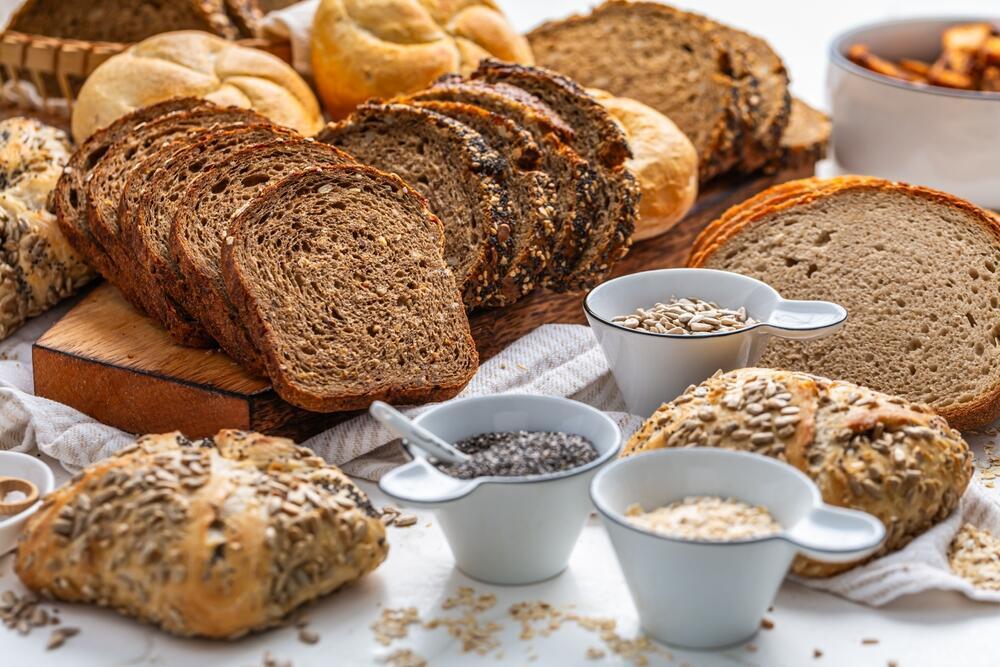
But it is important to understand the message correctly: This does not mean adding more and more carbohydrates to your diet. Quite the opposite. For most people, the most practical change is simply to replace some of the refined grains already in their diet with whole grains. Instead of white bread, choose whole-grain bread. Instead of white rice, choose brown rice, bulgur or another whole grain. Instead of regular pasta, choose whole-wheat pasta. This way, we are not necessarily eating more but improving the quality of the carbohydrate sources already in our meals.
So how much whole grain should you eat?
Reaching the amount examined in the study is often much easier than it might seem. A serving could be, for example, a slice of whole-grain bread or a serving of cooked whole grains. A day that includes oatmeal in the morning, two slices of whole-grain bread in a sandwich and, later, a meal containing brown rice, bulgur or whole-wheat pasta could already come close to the amount examined in the study.
There is, of course, plenty of room for variety. Oats, brown rice, bulgur, buckwheat, barley, whole rye and products made with whole wheat make it possible to spread whole-grain consumption throughout the day. There is no need to eat five or six slices of bread to reach the target amount. Quinoa can also be included as a high-quality source of carbohydrates, although botanically it is not a grain.

Spread whole grains throughout the day
(Photo: Shutterstock/Alena_Kos)
Legumes such as lentils, chickpeas, beans and peas are also an excellent choice as part of a healthy, fiber-rich diet. But it is important to be precise: They are not considered servings of whole grains and therefore should not be counted among the grain servings discussed in the study.
There is another important caveat: Not every product with the words "whole grain" on the package is necessarily a healthy choice. When discussing the benefits of whole grains, it is important to consider the food as a whole and how heavily processed it is. A product may contain whole-wheat flour or whole grains while also being high in added sugar, salt, fat and other ingredients. Sweetened breakfast cereals, snacks, cookies, crackers and pastries do not automatically become healthy foods simply because whole grains have been added to them.
Whenever possible, it is preferable to choose whole grains in simpler, less processed forms, such as oats, brown rice, bulgur, buckwheat, barley and whole-grain bread with a relatively simple ingredient list. With whole-wheat pasta and packaged products, too, it is worth looking at the overall nutritional picture rather than relying solely on the claim on the front of the package.
This point is particularly important in light of large studies in recent years that have found an association between high consumption of ultra-processed foods and an increased risk of a range of health problems, including cardiovascular disease. So if you are replacing refined grains with whole grains, it is worth choosing foods that are not only more "whole" but also, whenever possible, less processed.

Pay attention to the fine print, too
(Photo: Shutterstock/Odu Mazza)
One of the strengths of the new study is that it analyzed dozens of randomized controlled trials rather than relying solely on studies in which people were asked what they typically ate. In addition, for some measures, including body weight, waist circumference and total cholesterol, the researchers rated the certainty of the evidence as high.
Still, it is important to keep the findings in perspective. The change in each individual measure was generally modest and many of the trials included in the analysis were relatively short. More importantly, the researchers examined risk factors rather than actual medical outcomes such as heart attacks, strokes or death. What can be said with confidence is that whole-grain consumption may simultaneously improve several measures associated with cardiometabolic risk.
Is more necessarily better?
The researchers did not identify a point at which whole grains became harmful. However, there was less data available at very high levels of consumption, making it difficult to determine whether the benefits continue to increase. There is no reason to assume that people should keep increasing their intake without limit.

Make the right choices
(Photo: Shutterstock/Anatoliy Cherkas)
From a digestive standpoint, it is also best to make the change gradually. Whole grains generally contain more dietary fiber, so people accustomed to a low-fiber diet may experience bloating, gas, abdominal discomfort or changes in bowel movements if they suddenly switch to consuming large amounts. It is better to increase consumption gradually, drink enough fluids and, for those with sensitive digestive systems, adjust the types and amounts of food to individual needs.
The bottom line is not that we should start counting every gram of oatmeal or treating whole grains as a "magic food." The message is much simpler: Look at the carbohydrates you already eat and, whenever possible, choose whole-grain, less processed alternatives. Even this relatively modest dietary change may improve several cardiovascular risk factors.
The author is a clinical dietitian with Maccabi Healthcare Services.