

The European Association for the Study of Diabetes (EASD) conference in Milan, Italy, turned into a heated boxing ring between pharmaceutical giants Novo Nordisk and Eli Lilly, makers of weight-loss injections and pills. Within a matter of hours, the companies released studies and statements touting the advantages of their products over their rivals.
Eli Lilly said Mounjaro produced greater weight loss than Wegovy. It also said its new weight-loss pill, orforglipron, marketed as Foundayo, delivered better results than Novo Nordisk’s oral semaglutide. Novo, meanwhile, said Ozempic provided better heart protection for people with diabetes.
Gallery
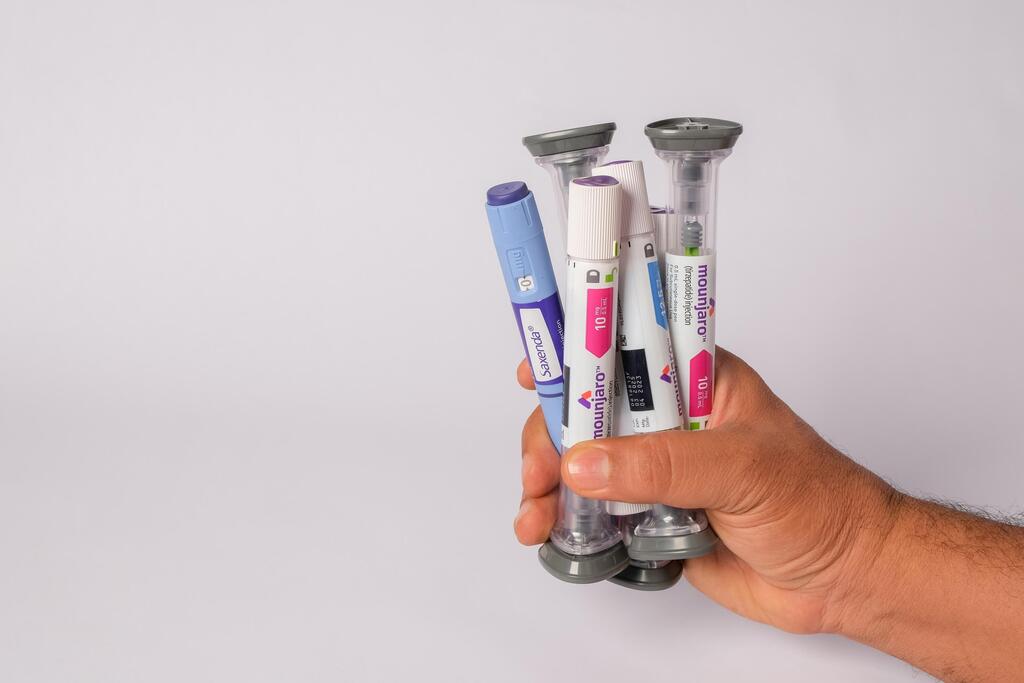
The battle of the pharmaceutical giants over GLP-1-based weight-loss drugs
(Photo: Mohammed_Al_Ali / Shutterstock.com)
So what is really behind the data, and how significant are the differences between the drugs?
When it comes to weight loss, the answer had been relatively clear, at least when comparing the established doses. Then came a higher dose of Wegovy, putting the question back on the table.
In the SURMOUNT-5 trial, Mounjaro was compared directly with Wegovy in 751 adults with obesity or overweight who did not have diabetes. After 72 weeks, participants taking Mounjaro had lost an average of 20.2% of their body weight, compared with 13.7% among those taking Wegovy. In absolute terms, that amounted to an average loss of 22.8 kilograms (50.3 pounds) versus 15 kilograms (33.1 pounds).
Novo Nordisk has since developed a higher, 7.2-milligram dose of Wegovy, three times the standard 2.4-milligram dose, known as Wegovy HD. Eli Lilly now says its weight-loss injection Mounjaro also outperforms the higher dose.
The researchers did not compare the two drugs head-to-head, however. Instead, they combined data from two separate trials. According to that comparison, patients taking 15 milligrams of Mounjaro lost an average of 4.5 percentage points more of their body weight than patients taking Wegovy HD, while those taking 10 milligrams of Mounjaro lost 3.2 percentage points more.
But the picture is more complicated. In an analysis that examined only the period during which patients continued receiving the medication, the difference narrowed to 1.8 percentage points and was not statistically significant. Rates of treatment discontinuation because of side effects were similar for the two drugs.
“In the absence of a head-to-head trial comparing tirzepatide 15 mg against semaglutide 7.2 mg, this indirect comparison offers useful evidence for physicians as they make treatment decisions,” said Prof. John Wilding of the University of Liverpool, one of the researchers involved in the comparison.
The battle for patients’ hearts
In the cardiovascular arena, Novo Nordisk went on the offensive.
The company examined U.S. insurance data covering more than 600,000 adults with type 2 diabetes who were treated with 1 milligram of Ozempic. It compared two groups: about 186,000 patients whose dose was increased to 2 milligrams and about 23,000 who switched from Ozempic to Mounjaro.
According to the analysis, the group that remained on the higher dose of Ozempic had a 6% lower risk of major cardiovascular events. The events measured were death from any cause, heart attack and stroke.

Which injection is more effective at preventing cardiovascular disease?
(Photo: Shutterstock)
“These data may help inform healthcare professionals facing a critical challenge: whether to increase the dosage or switch to another therapy for an adult with type 2 diabetes who is already treated with semaglutide,” said Dr. Michael Radin, a senior medical director at Novo.
The patients, however, were not randomly assigned to the two groups. Doctors decided whose dose would be increased and who would switch medications, meaning the groups may already have differed at the outset.
Only about 31% of those who switched to Mounjaro reached a dose of 10 milligrams or more during follow-up, and Novo itself noted that the data could not establish a definitive causal relationship.
An academic study published last year paints a different picture. Researchers at Mass General Brigham, a Harvard-affiliated health care system in Boston, compared the two drugs in patients with type 2 diabetes using U.S. insurance data. They found that both reduced the risk of heart attack, stroke and death, with no statistically significant difference between them. The study was published in the journal Nature Medicine.
Eli Lilly points to its own large randomized trial, SURPASS-CVOT, which included more than 13,000 patients with type 2 diabetes and cardiovascular disease. Unlike Novo’s analysis, participants in this trial were randomly assigned to groups, reducing the likelihood that differences between the groups resulted from physicians’ treatment decisions.
Researchers compared Mounjaro with Trulicity, an older GLP-1 drug, and found that the risk of major cardiovascular events among Mounjaro patients was 8% lower than among those taking Trulicity. The difference demonstrated that Mounjaro was not inferior to Trulicity but did not establish that it was superior.
No randomized trial directly comparing Mounjaro and Ozempic for cardiovascular protection has yet been published.
The battle over pills
At the same time, Eli Lilly opened another front. It presented an indirect comparison between Foundayo, its new pill, and 25-milligram oral semaglutide — the same active ingredient used in Ozempic — in patients with type 2 diabetes.
According to the company, after one year, patients taking Foundayo lost 1.5 percentage points more of their body weight, while their A1C levels, a measure of average blood sugar over the previous several months, fell by 0.3 percentage points more.
The 25-milligram dose of oral semaglutide is not approved in the United States for the treatment of diabetes, and the manufacturer has applied for approval.
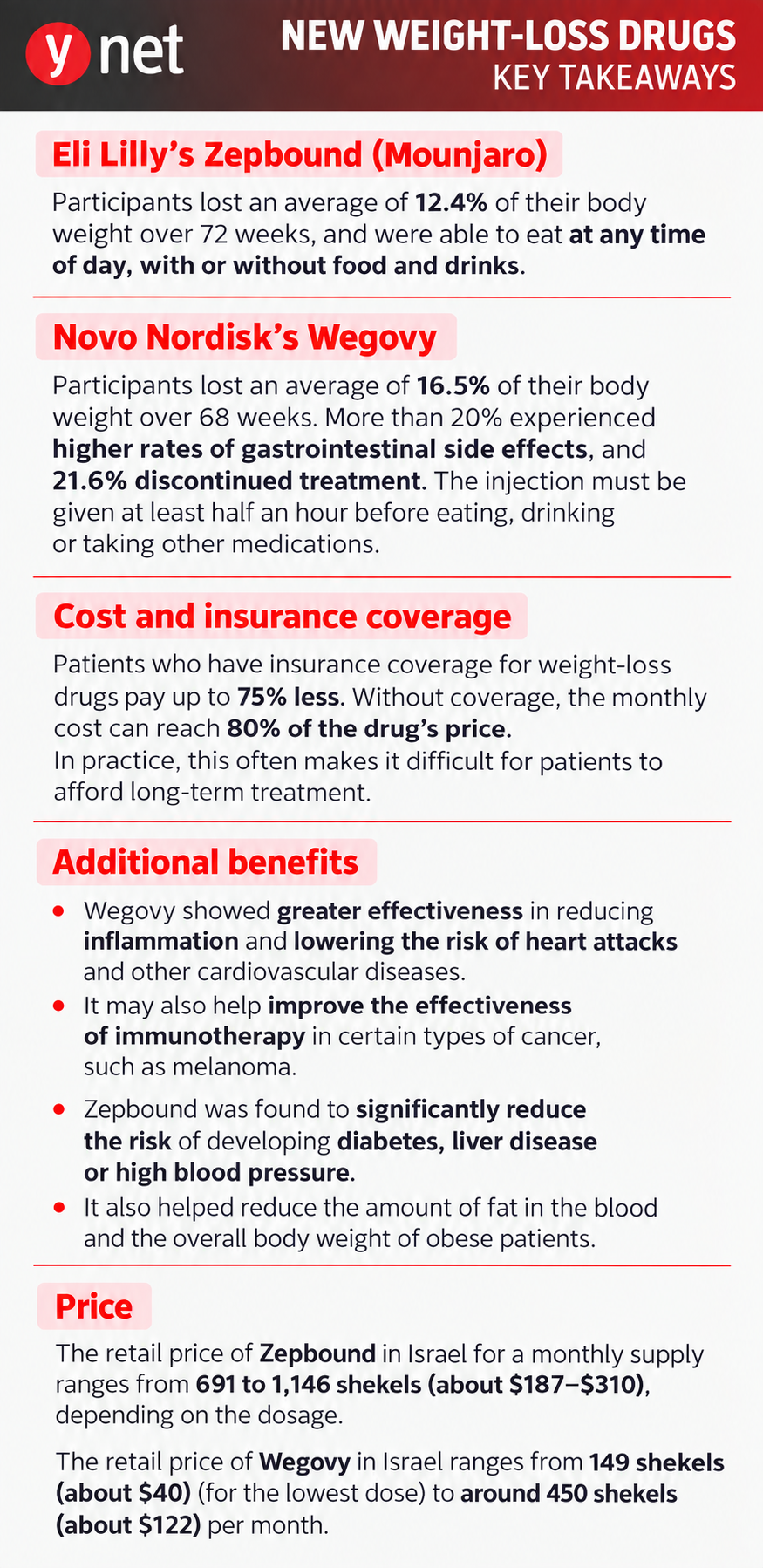
It is worth noting that the comparison involved patients with diabetes rather than people with obesity, for whom the Wegovy pill is intended. The pill, which contains the same dose of semaglutide, was launched in the United States in January and became a hit: More than 1 million Americans began taking it within four months. It was approved in Europe in July, with its rollout beginning in Germany in September.
Rachel Batterham, a senior vice president at Lilly, described the findings more cautiously than the headline of the company’s announcement: “Results from this indirect treatment comparison suggest that Foundayo may deliver A1C and weight lowering that is similar to the 25 mg dose of oral semaglutide.”
A direct comparison does exist, though against a lower dose. In the ACHIEVE-3 trial, 17.2 milligrams of Foundayo reduced A1C by an average of 2.2 percentage points, compared with 1.4 percentage points with 14-milligram oral semaglutide. Body weight fell by 9.2% compared with 5.3%.
Foundayo has been approved in the United States for the treatment of obesity and is still being studied for diabetes.
The bottom line is that, for weight loss, Mounjaro currently produced greater weight loss in a head-to-head trial against the established doses of Wegovy. There is still no direct comparison with Wegovy HD. When it comes to heart protection, both companies are making their case, but a definitive answer would require a direct trial that has yet to be published.
There is another, more sobering bottom line for readers in Israel. Although obesity is recognized as a disease and a global epidemic, weight-loss injections have failed to gain inclusion in Israel’s state-funded health basket for adults who need them to prevent their condition from worsening. Last year, the weight-loss injection Wegovy was added to the health basket for the treatment of adolescents.
The weight-loss pills that have recently reached Israel are also too expensive for many patients who cannot afford them.
- The information in this article does not constitute a recommendation or a substitute for medical and/or professional advice or treatment, which should be provided on an individual and personalized basis.