

The headlines that spread online following the hantavirus outbreak aboard the cruise ship MV Hondius — which claimed the lives of three passengers — alarmed many around the world: Hantavirus can remain in men’s semen for six years and become a sexually transmitted disease.
But the science behind those headlines is far more complex, and the reality is far less alarming.
Gallery
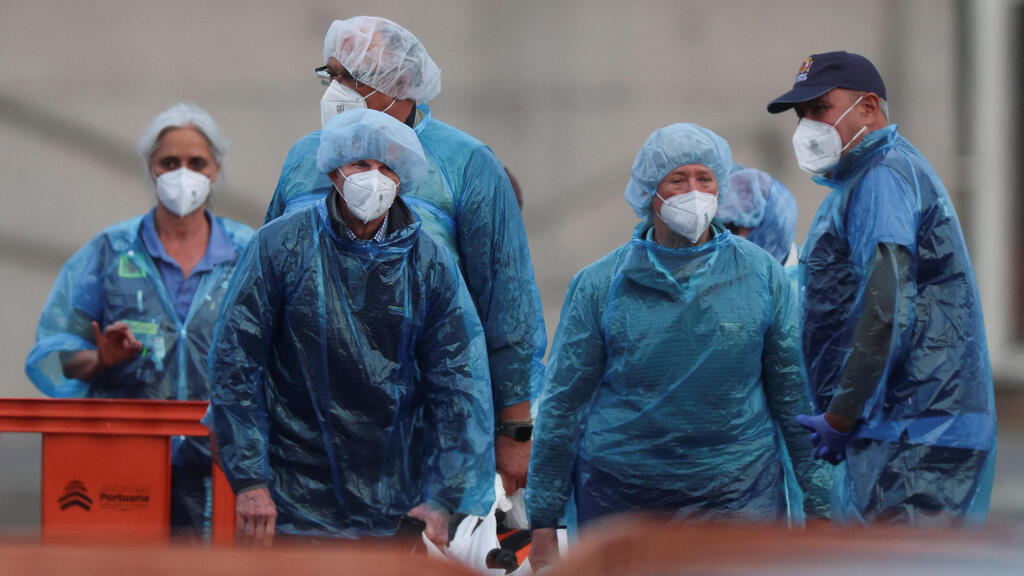
Evacuation of the Dutch cruise ship MV Hondius in Tenerife, in the Canary Islands, after a hantavirus outbreak
(Photo: REUTERS / Hannah McKay)
One man, one surprising finding
The basis for all the headlines is a not-especially-new study published about three years ago in the scientific journal Viruses by researchers from Switzerland’s Spiez Laboratory, a government institute specializing in biological threats. The study followed a 55-year-old Swiss man who was infected with the Andes strain of hantavirus after hiking from Ecuador to Chile between September and November 2016, and fell ill upon returning to Switzerland that December. He survived the disease.
Six years after his recovery, researchers tested samples of his seminal fluid and found traces of the virus’s genetic material, RNA, 71 months after infection. A full genome analysis, conducted once at the start of the illness and again six years later, found only minimal genetic changes — two point mutations and one small deletion. That finding suggests, according to the researchers, extremely limited viral replication over the years. “Our results show that Andes virus has the potential for sexual transmission,” they wrote at the time. The man’s blood also contained high levels of neutralizing antibodies, meaning he was most likely still fully immune to the virus.
PCR — and the catch
Noam Levitan, who holds a doctorate in biology from the Weizmann Institute of Science, explains why the latest headlines around the world should be treated with caution and skepticism. “Tests that detect genetic material, such as PCR, cannot distinguish between the presence of intact, active virus particles that can infect cells and people, and broken remnants of viral RNA,” Dr. Levitan wrote in a post he published. “No matter how much they looked and tried, the researchers were unable to find live viruses in the seminal fluid that could infect.”
And that is exactly what happened in the study itself: The researchers tried to isolate live virus from the semen samples, using several different cell systems and at different stages after infection, and failed in all of them. They themselves noted that the failure does not prove there were no infectious particles, since hantaviruses are known to be difficult to isolate. But even if the genetic material is present, its existence alone is not evidence of danger. David Safronetz, head of the special pathogens unit at the Public Health Agency of Canada, told Scientific American: “Just because the RNA is present doesn’t mean that that individual is actively infectious. The virus could be inside the immune cells within the body that killed it, but we’re still able to detect the genomic materials.”
The seeds of calamity were not found in hantavirus
(Photo: Shutterstock)
The DNA was not affected
“For seminal fluid to be infectious, it has to contain viruses,” Dr. Levitan explains. “The researchers showed that the genetic material they found was almost not present in the seminal fluid itself. It exists inside cells found in it — but not inside their genetic material, the DNA.”
A biological explanation for the phenomenon was offered to Scientific American by Prof. Steven Bradfute, an immunologist at the University of New Mexico: “There are certain sites in your body, like semen or the eye, called immune privileged sites. Sometimes there’s not as much clearance of pathogens from those areas, but we don’t know if that means it’s infectious or just [represents] the RNA.”
According to the original study in Viruses, at least 27 different viruses are capable of persisting in human seminal fluid, with the testes serving as a kind of “refuge” where pathogens survive even after the body has defeated them everywhere else. The reason is simple: The immune system does not attack sperm cells, because they are essential for reproduction.
The comparison to Ebola is not exactly accurate
The Ebola virus, for example, is transmitted through the seminal fluid of men who have recovered from the disease, and the World Health Organization has set clear protocols for this: semen testing every three months, two consecutive negative results before release from isolation, and until then, abstaining from sex or using a condom. In 2021, an Ebola outbreak in Guinea was traced by researchers to a man who survived the 2014-2016 epidemic and infected a partner years later.
But Dr. Levitan stresses that the comparison between Ebola viruses and hantaviruses is problematic. “In the case of the Ebola virus, it is indeed possible to become infected from seminal fluid — researchers have succeeded in isolating live Ebola viruses from semen samples from survivors, and there are known cases in which people were infected through sexual intercourse. Andes virus, from the hantavirus group, is barely transmitted from person to person, no cases of transmission through sexual intercourse have been documented, and it appears to be infectious during the acute stage of the disease, apparently through droplet transmission.”
What is known about hantavirus
Hantavirus is usually transmitted from rodents to humans — in the case of the Andes strain, from a rat found in Chile and Argentina. Once it reaches humans, the virus can cause severe cardiopulmonary syndrome, with a mortality rate of 25% to 40%, making it, according to the World Health Organization, “a disease of major public health importance.” The disease begins with nonspecific symptoms — fever, chills, muscle aches, nausea and headache — and in about half of cases develops into a severe cardiopulmonary stage with pulmonary edema, rapid heart rate and a drop in blood pressure, and sometimes heart failure that can lead to death within hours. There is no specific treatment for the disease.
Hantavirus has not undergone a dangerous mutation
(Photo: lightspring/Shutterstock)
The Andes strain is unique among hantaviruses because person-to-person transmission has been documented — but it is very difficult and appears to occur only during the acute stage, through droplets. The accepted scientific theory, which has not yet been definitively proven, is that the virus spreads through droplets of saliva and other fluids carrying a high viral load.
First case in Canada
Overnight, British Columbia authorities confirmed the first suspected case of hantavirus in Canada. Dr. Bonnie Henry, the province’s health officer, said that one of the four Canadians who were aboard the MV Hondius and have been in isolation since May 10 developed mild symptoms — fever and headache — two days ago. Test results that came back over the weekend were positive, but Henry stressed that, for now, it is a “presumptive positive” result. The samples were sent to the national laboratory for final confirmation.
Henry said the result was clearly disappointing, but not unexpected, and that officials had prepared for such a scenario. The patient is in stable condition and continues to have only mild symptoms. The patient’s partner, who is also in isolation, tested negative but remains in the hospital for monitoring. The couple were transferred to a hospital in Victoria, and the samples were sent from there for confirmation.
A reason to breathe easier
Relatively reassuring news came from France: The British newspaper The Guardian reported that France’s Pasteur Institute said a full sequencing of the virus found in a French passenger from the MV Hondius showed that it matched known viruses from South America. Jean-Claude Manuguerra, head of the institute’s emergency biological intervention unit, said the viruses identified in the ship’s patients were identical to one another and 97% similar to Andes viruses circulating in South America — including those found in rodents in the region. The remaining gap appears to be normal natural variation, with no evidence of changes that would increase the likelihood of infection or the risk posed by the virus.