


Pope Leo XIV announced Sunday that he will undergo surgery in the coming days to remove a lung nodule discovered during recent medical examinations. He made the announcement following the Angelus prayer, addressing worshippers gathered in St. Peter's Square at the Vatican.
"Recently, during medical examinations, doctors found a localized nodule in one of my lungs. It was detected at a very early stage," the pope said. He explained that his doctors had recommended removing the nodule surgically and that he had decided to follow their advice. He thanked the faithful for their support and asked them to pray for him. According to Vatican News, the surgery will take place at Rome's Gemelli Hospital.
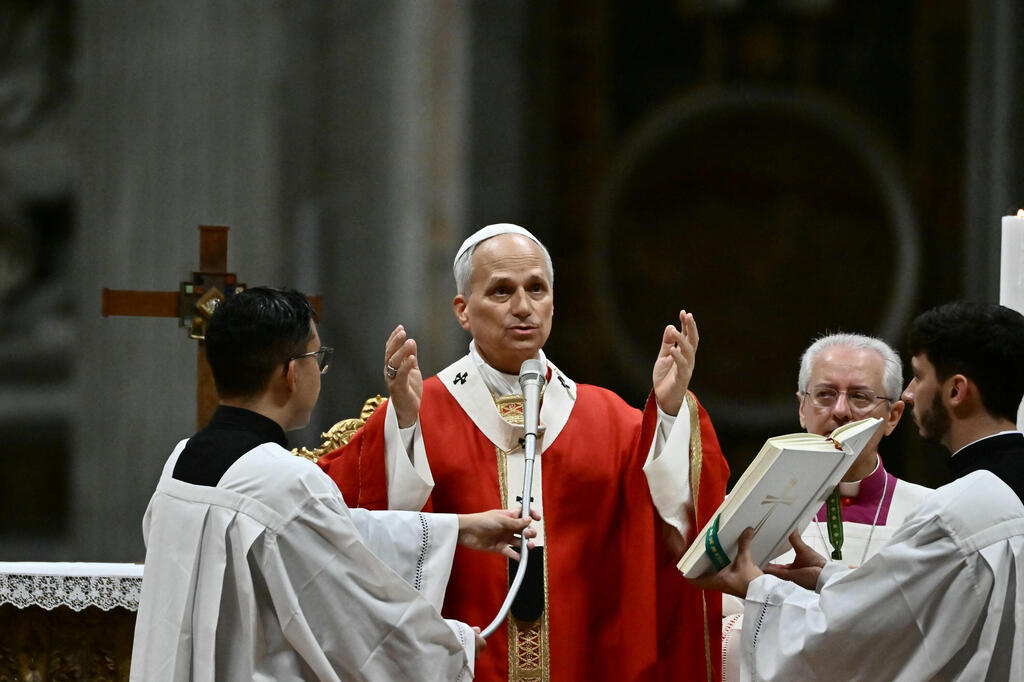
Vatican spokesman Matteo Bruni said the procedure is scheduled for early this week and that the pope is expected to remain hospitalized for approximately seven days afterward. However, the Vatican has not disclosed whether the nodule is suspected of being malignant or provided details about the type or extent of the operation.
Leo XIV was elected pope in May 2025, becoming the first pontiff born in the United States. According to the Associated Press, he has no known history of serious health problems and maintains an active lifestyle, including playing tennis and swimming. He is scheduled to visit Uruguay, Argentina and Peru from November 6 to 17, although it remains unclear whether the surgery and recovery will affect those plans.
Most lung nodules are not cancerous
"A nodule is an abnormal finding that differs in its characteristics from the surrounding tissue, and it can appear in various organs throughout the body," explains Dr. Michael Kassirer, director of the Pulmonary Medicine Institute at Assuta Beersheba.
"In the lung, a nodule is a lesion measuring less than three centimeters, surrounded by normal lung tissue. It's an extremely common finding, usually discovered incidentally during chest imaging. Only a minority of nodules turn out to be malignant, but the larger the nodule, and the closer it gets to three centimeters, the greater the likelihood of malignancy."
A lung nodule can sometimes be the earliest sign of lung cancer, long before the disease causes noticeable symptoms. That possibility makes early detection particularly important. "Lung cancer is a very deadly form of cancer, and the goal is to diagnose and treat it at an early stage," Kassirer says.
He explains that this is also the purpose of lung cancer screening programs conducted in Israel and other countries among people at increased risk. "The aim is to identify those nodules at a stage when there are still no symptoms, allowing us to detect cancer early and provide treatment."
How do doctors assess the risk?
Not every lung nodule requires a biopsy or surgery. Doctors make that decision by evaluating the characteristics of the nodule alongside the patient's medical history and overall health.
"I don't know what specifically appeared on the pope's CT scan," Kassirer emphasizes. "When we identify a nodule, we consider its location, appearance and whether its borders are regular or irregular. If previous imaging is available, we sometimes also have information about how quickly it has grown. We take all those factors into account and assess whether the nodule could represent the beginning of a malignant tumor."
The greater the suspicion of cancer, the more extensive the investigation may become. "The approach can range from monitoring small nodules to performing a PET-CT scan, which allows us to see whether the nodule is metabolically active, and eventually to a biopsy," he explains.
A PET-CT scan measures metabolic activity in tissue, but it cannot determine on its own whether a nodule is cancerous. Increased activity can also occur in cases of inflammation or infection.
A biopsy involves removing a tissue sample for examination, but it is not always possible to perform one safely. "There are different biopsy techniques, but sometimes the nodule is inaccessible, access is very limited or the procedure carries significant risks," Kassirer says. "If, on the one hand, the estimated risk of malignancy is high, and on the other, obtaining a biopsy is difficult, sometimes we proceed directly to surgery. That's an accepted approach."
 Dr. Michael Kassirer
In such cases, surgery can serve two purposes: diagnosing the lesion and treating it. "If the probability of malignancy is sufficiently high, and surgery would be the treatment anyway, it may make sense to operate. That allows us both to determine what the lesion is and to remove it," he explains.
"Of course, there's a price to pay. You may perform an operation that later turns out to have been unnecessary because the lesion is benign, or because it's inflammation or a granuloma, a localized collection of inflammatory cells."
That uncertainty presents doctors with a difficult balance between preventing unnecessary procedures and avoiding a delay in diagnosing lung cancer. "That's the challenge: taking the clinical information and imaging findings, translating them into a risk assessment and deciding how to proceed with the investigation," Kassirer says.
Surgery through small incisions
A patient's age alone does not determine whether they are fit to undergo surgery. Lung cancer is frequently diagnosed around the age of 70, meaning the pope's age is not particularly unusual in this context.
"What's more important is the patient's biological age, underlying medical conditions and ability to undergo the operation successfully," Kassirer says.
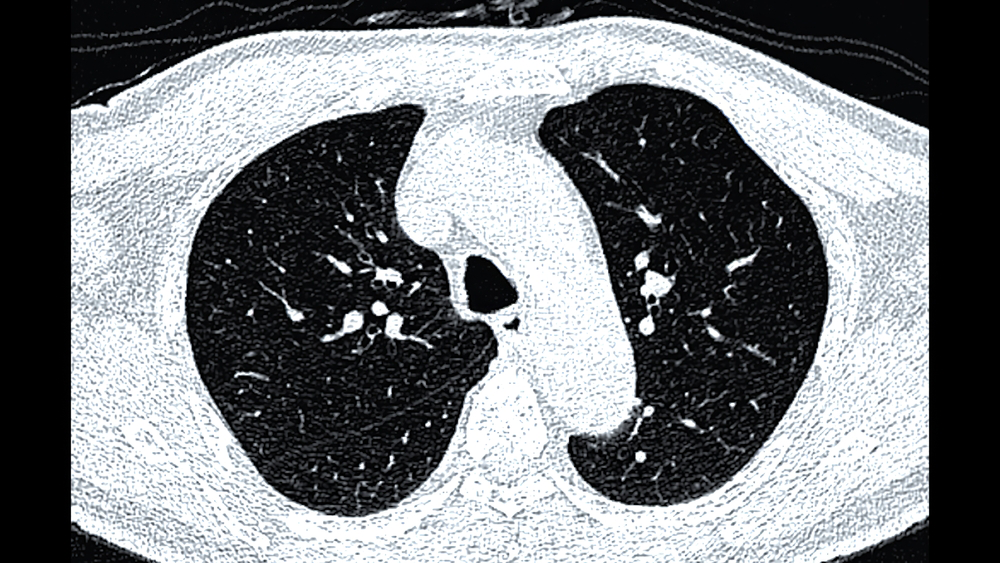
CT scan showing a lung nodule
(Photo: shutterstock)
According to Kassirer, procedures to remove lung nodules are often performed using minimally invasive techniques rather than traditional open surgery.
One such method is video-assisted thoracoscopic surgery, or VATS. "A camera and surgical instruments are inserted through one to three small incisions. The surgeon operates the instruments from outside the body, while they work inside the chest cavity and remove the appropriate section of lung," he explains.
"Today, there's also the option of performing the operation using a robotic system." Compared with traditional open surgery, these techniques are associated with fewer complications, he says.
"In the past, this was a much bigger operation, associated with higher rates of complications. Today, many patients undergo the procedure successfully."
When lung cancer is detected at an early stage and the patient is suitable for surgery, the chances of successful treatment and potentially a cure following removal of the tumor can be high.
Although the nature of the pope's lung nodule remains unknown, Kassirer believes the case illustrates an important lesson about early detection. "It demonstrates the enormous importance of diagnosing lung cancer early and conducting screening tests among high-risk populations," he says. "It's possible that the current pope will also be remembered for raising awareness of early diagnosis and helping save the lives of lung cancer patients."