

In a first-of-its-kind step in Israel, Israeli startup Mentaily, developer of LIV, an artificial intelligence-based platform that helps identify, prioritize and initially assess mental health conditions, received regulatory approval Monday from the Health Ministry’s Medical Devices Division to perform psychiatric triage in Israel.
The system is a decision-support tool and does not replace a mental health professional. It is designed to assist in the initial assessment process and help prioritize cases according to urgency and severity.
LIV, which won first place in the mental health category of the 2024 Leading Health Initiative of the Year competition by the Reboot Forum, in cooperation with ynet and Yedioth Ahronoth, simulates a conversation between a patient and an avatar in a manner similar to an initial psychiatric interview, or psychiatric triage.
The conversation can be conducted from a smart device, either by voice or typing. At the end, the treating professional receives a summary that includes background, main complaints, medical and psychiatric history, differential diagnosis and recommendations for further evaluation or treatment.
According to the company, the system is currently intended for two main tracks: the general population and security forces or people exposed to prolonged stress and trauma. The company says it is working with the Defense Ministry’s Directorate of Defense Research and Development, government ministries and additional security bodies, and that the system is already being used in medical and community institutions, including public hospitals, health maintenance organizations, rehabilitation centers and government organizations.
The tool was developed against the backdrop of a prolonged shortage of mental health professionals and rising demand for psychological and psychiatric care, a trend that has worsened in Israel since October 7.
In an interview with ynet, Dr. Asaf Caspi, deputy director of Sheba Medical Center’s psychiatric division and one of the venture’s founders, said that “the goal is not to replace the therapist, but to empower him.”
The tool, he said, is meant to allow the clinician “to be more available for the patient, to look him in the eyes and not at the keyboard, to be more attentive and more empathetic.”

Not instead of a professional, but in addition
(Photo: Shutterstock)
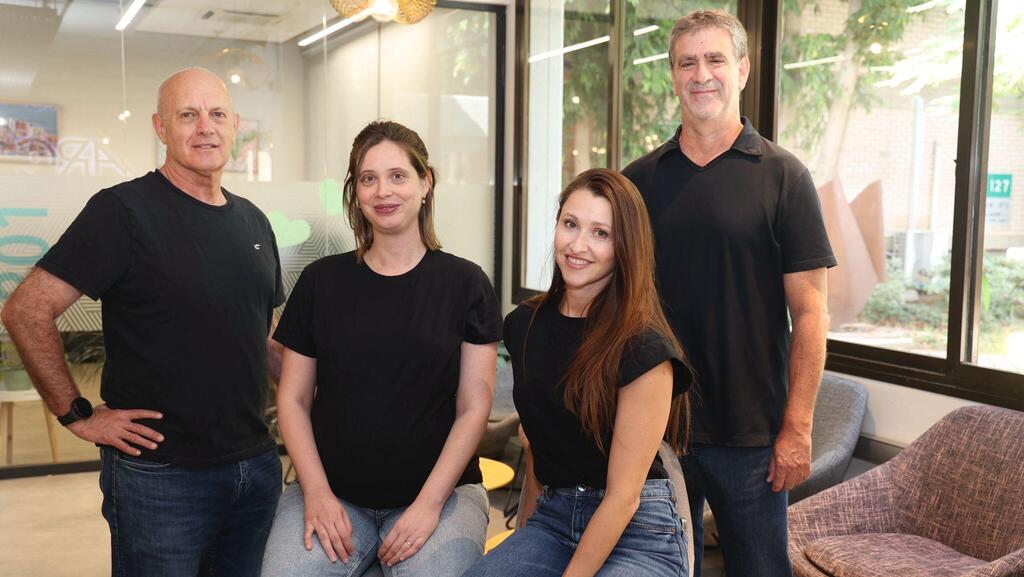
Mentaily was founded in 2024 by Iris Stein, who serves as the company’s CEO, Guy Yachin, Professor Mark Weiser and Dr. Caspi. The company grew out of Sheba’s ARC innovation arm, in cooperation with Microsoft and later with KPMG. It currently employs about 20 people and has received grants totaling $2 million.
Clinical research data that has not yet been published and was obtained by ynet points to promising results. In two studies conducted in Israel among 385 patients from diverse populations, researchers found about 90% agreement between the system’s assessments and those of psychiatrists, as well as about 96% detection capability for high-risk conditions, including acute distress.
Each patient underwent two separate assessments, one by a psychiatrist and one by the system, with the order of assessments varied between patients to prevent bias.
Another notable finding concerned the human dimension. Patients rated the system’s perceived empathy at 4.2 out of 5, and in some cases described the interaction with it as more empathetic than a human assessment. Researchers attributed this, among other things, to the fact that the system is perceived as nonjudgmental, and patients tend to share information with it that they might hide from a human examiner.
Alongside its activity in Israel, the company is seeking to expand in the United States and is advancing clinical, research and commercial collaborations with bodies in the U.S. defense health system, including Walter Reed and the Henry Jackson Foundation, as well as with the U.S. Defense Department and community mental health centers. The company has also signed an agreement with a NATO-affiliated clinic that provides services to thousands of NATO service members and their families.
“After two years of intensive development and research, and two clinical studies involving hundreds of patients, receiving regulatory approval is real news,” said CEO Iris Stein. “The Health Ministry’s approval is a significant milestone for Mentaily. The fact that the solution developed here in Israel is now also advancing toward implementation tracks and collaborations in the U.S. with government health and security bodies proves that Israeli innovation can turn a crisis into a point of light with international impact.”
Avner Halperin, CEO of Sheba Impact and deputy director of Sheba’s ARC innovation arm, said that “receiving regulatory approval for Mentaily’s technology demonstrates how work by clinicians alongside technology companies can produce a rapid solution to an acute national need.”
Following the Health Ministry approval, he said, Sheba believes the technology can be expanded into additional health systems around the world.
First published: 13:39, 04.27.26