

As the health system prepares for the possibility of another campaign against Iran, hospitals across the country have in recent days been bracing for a renewed descent underground — this time in a different manner, incorporating lessons learned from the previous days of war with Iran.
Beneath the physical protection from the missile threat, patients and medical staff were forced to contend with unprecedented medical and emotional challenges, which the system bore with quiet heroism during last year's war.
Gallery
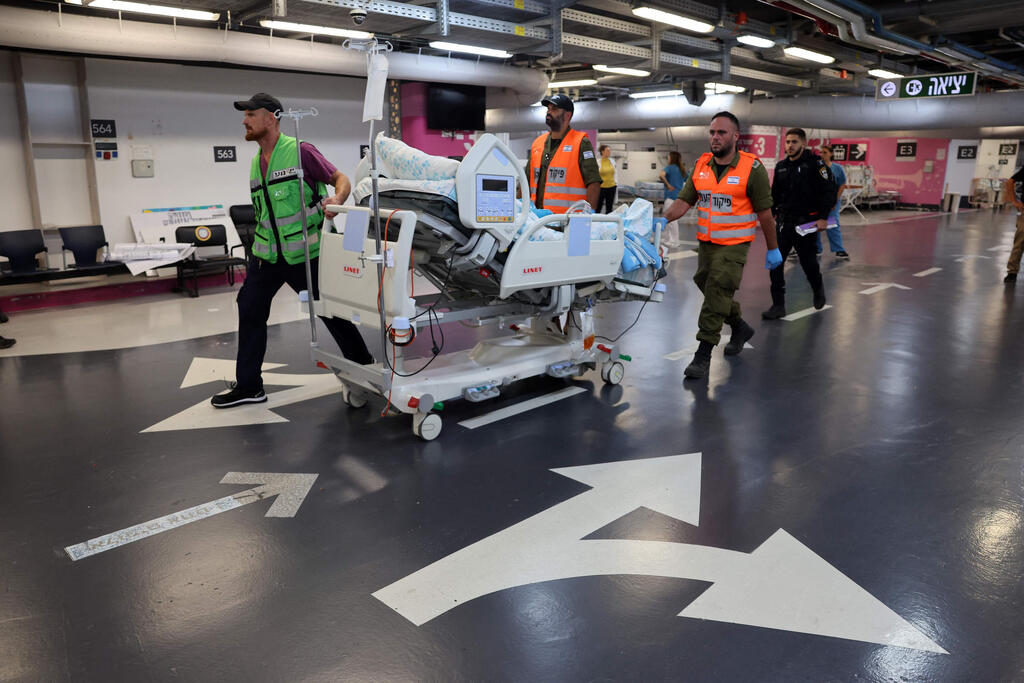
Underground makeshift hospital at Rambam Health Care Campus in Haifa
(Photo: Jack GUEZ / AFP)
Two internal Health Ministry documents circulated to hospitals in recent days and obtained by ynet analyze the difficulties the system faced in June 2025 and present a series of recommendations ahead of the next campaign: from safeguarding patient privacy and protecting the resilience of medical teams to addressing the danger of severe infections in crowded spaces.
Far from public view, in the depths of parking garages and basements that overnight became hospital wards, a human and medical drama unfolded during the last campaign that has yet to be fully told. As explosions echoed above, medical teams waged a heroic battle underground — not only for their patients’ lives but for their dignity and humanity under extreme conditions of congestion. The internal documents now coming to light record the heavy toll of underground hospitalization and outline a series of unusual measures intended to improve the system’s performance in the next confrontation.
At the start of last year's 12-day campaign against Iran, known in Israel as Operation Rising Lion, the Health Ministry instructed hospitals to reduce inpatient populations by roughly half and transfer the remaining patients to fortified compounds in order to preserve operational continuity.
The threats Israel faced in the previous campaign against Iran — including direct missile strikes that penetrated the country's robust air defense array and even hit Soroka Medical Center in Be'er Sheva — created an unprecedented global event. Never before had a national health system been required to relocate such a vast mass of patients, medical staff and life-saving equipment to basements and parking garages under intense time pressure and amid air raid sirens.
The move required rapid and creative responses: basements and parking garages underwent thorough cleaning and swift construction work, and electrical, lighting and communications infrastructure was installed. The system’s resources — and above all its doctors and nurses — were called upon to demonstrate extraordinary fortitude and inexhaustible resilience.
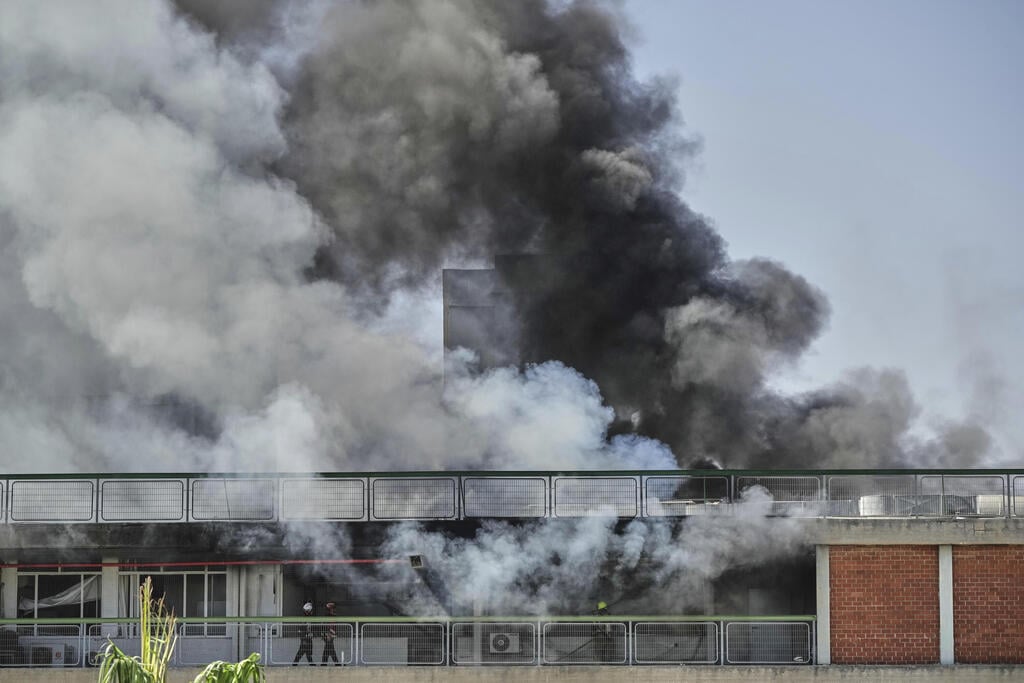
Smoke billowing over Soroka Medical Center after taking direct impact from an Iranian missile during last year's war
(Photo: AP Photo/Leo Correa)
Staying in those spaces was challenging. The underground areas were marked by heavy crowding, shared workspaces that were alternately brightly lit or dim and limited access to basic sanitary facilities.
A broad study conducted in real time by Prof. Sharon Toker of the Faculty of Management at Tel Aviv University, at the initiative of the Health Ministry’s Medical Division, now provides a snapshot of conditions in those compounds. The study examined feelings, resilience and levels of burnout, identified challenges and gathered ideas for improvement from the field. About 1,500 employees from four different hospitals participated, describing what they experienced during the 12 days of the confrontation.
The findings paint a picture of significant and unusual hardship, but also point to the exceptional endurance of patients and caregivers who were forced to remain together for long days in crowded shared spaces. The issue cited most frequently in the study was the violation of patient privacy. The report describes how patients in the most sensitive conditions — including women, elderly evacuees from nursing facilities and children — lay exposed without sufficient separation, their beds nearly touching.
The loss of privacy was seared not only into personal space but also into the most intimate and vulnerable moments of daily care. Within this shared space, medical dramas unfolded: invasive procedures and even full resuscitations were often carried out in full view of other patients and their families, who unwillingly became witnesses to the distress of their neighbors in the basement.
Provide patients with eye masks
A severe shortage of sanitary facilities and accessible restrooms led to hygiene challenges that developed within days. In addition, hospitalized patients faced a heavy sensory burden: constant fluorescent lighting that never turned off and blurred the distinction between day and night, and the cumulative, unrelenting noise of medical devices that disturbed their rest.
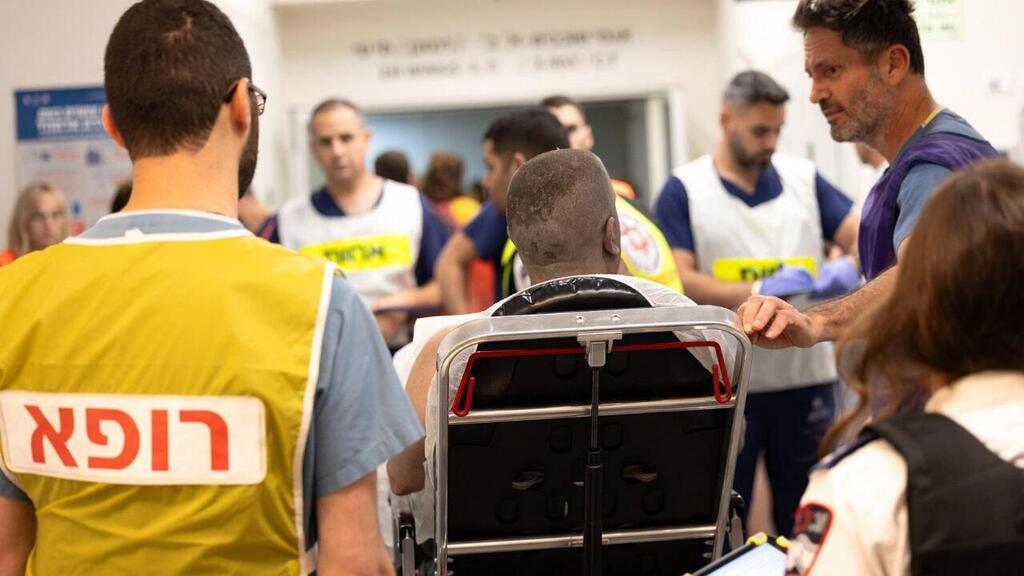
Injured civilians receive medical treatment at Sourasky Medical Center in Tel Aviv after Iranian missile strike
(Photo: Sourasky Medical Center)
To address the violation of privacy and the sensory overload, and to preserve human dignity even deep underground in the next confrontation, the Health Ministry is proposing a series of practical solutions for hospitals to implement in advance, some of which can be carried out immediately. These include pre-installing ceiling tracks for hanging privacy curtains between beds and using rigid, disinfectable partitions. To ease the acoustic burden, the recommendation is to create noise insulation between beds.
To counter the loss of a sense of time, the ministry recommends switching to a flexible lighting system that can be dimmed during rest hours, installing clocks in the wards to prevent confusion and delirium, and providing patients with eye masks to improve sleep conditions. At the same time, it recommends routing medical alerts to vibration devices carried by staff and considering limiting visitors to one person per patient.
Medical teams, who formed the backbone of the system during the crisis, also bore a heavy burden and were required to function under extreme conditions. Nurses and physicians were forced to remain underground for extended periods, making personal and professional sacrifices while having limited access to breaks. The immense strain and absence of daylight led to an increase in symptoms of depression and a decline in their sense of professional efficacy.
Recognizing that staff resilience is the system’s most valuable resource, the new recommendations include structural changes on their behalf: allocating a dedicated and separate rest room within the underground complex, designating staff-only restrooms and establishing a structured nurses’ station outside the patient area.
To safeguard their mental health, the need for organized breaks is emphasized, including going outside into open air twice per shift, implementing rotations to reduce continuous time spent underground and ensuring ongoing access to psychological support.
'Protect those who remain hospitalized'
Alongside the harsh living conditions, the overcrowding created another significant threat: the risk of spreading resistant bacteria and infections. In the absence of optimal conditions, the underground treatment areas became a potential hotspot for transmission.
A document issued in recent days by the National Center for Infection Prevention and distributed to hospitals outlines the immense difficulty of maintaining sterility in a compressed space where different departments, medical disciplines and even patients evacuated from outside institutions are mixed together. Staff have had to contend with a lack of basic separation between “clean” and “contaminated” equipment areas and with a shortage of handwashing sinks.
The primary concern is the rapid spread of fungi and multidrug-resistant organisms such as Candida auris and CPE, which could exact a deadly toll in an environment where isolating patients as required is difficult.
The solution now proposed for the lack of running water in underground treatment complexes is a shift to dry bathing. Instead of showers, the recommendation is that patients — particularly those who are ventilated or carriers of resistant organisms — be cleaned using disinfectant-soaked wipes, without soap and water below the jawline. If a shortage of wipes develops, the Health Ministry provides instructions for preparing them locally.
The document also analyzes how to manage airborne diseases such as tuberculosis or measles in a closed basement, where air isolation is difficult if not impossible. The stringent solution, if it is not possible to separate a contagious patient into an isolation room, is for the patient to wear a surgical mask and for others in the same space to wear N95 masks.

Dr. Hagar Mizrahi
(Photo: Shlomi Amsalem/GPO)
“Because of the proximity and crowding, infections are what concern us most on the medical level. The beds are so close that it takes only one family member touching a curtain to potentially transmit infection to additional patients,” said Dr. Hagar Mizrahi, head of the Health Ministry’s Medical Division.
The first solution, she said, is aggressive preventive action. “The first rule is preventing crowding — discharge, discharge, discharge. One arm is discharge to the community, a second arm is home hospitalization, in order to protect those who remain hospitalized.”
“Our goal is to preserve staff resilience over time so they can continue providing high-quality care to patients and to give them breathing space. To allow teams a period of time to come up from underground for brief recovery and to allocate a clean, staff-only area,” Dr. Mizrahi added.
Unusually, the detailed solutions and proposals in the documents are not binding directives but rather principles and recommendations for improvement. “It very much depends on the underground layout of each institution,” Dr. Mizrahi said. “We cannot set things in stone when I know that in some places it simply will not work. We are giving hospitals the principles, and they will adapt the implementation to their specific layout.”