

Last Friday morning, 28‑year‑old Boris Shtonda from Tel Aviv completed a 4.5‑kilometre swim off Tel Aviv’s shore, then fitted his prosthetic leg and went for a long run. The Duvdevan commando who lost his leg in fighting in Gaza and underwent 19 surgeries is now training for an Ironman competition — one of the most grueling athletic challenges. In a studio interview with ynet, he said: “No excuses. Don’t invent reasons why you can’t — invent reasons why you can, and figure out how to do it.”
For him, this weekend’s grueling training regimen is all part of preparation for the Ironman. “After people tell me ‘Wow, what a commitment,’ I remind myself — so what? I don’t have a leg. The important thing is the mind works, you’re focused and you know what you’re doing, why you wake up in the morning.”
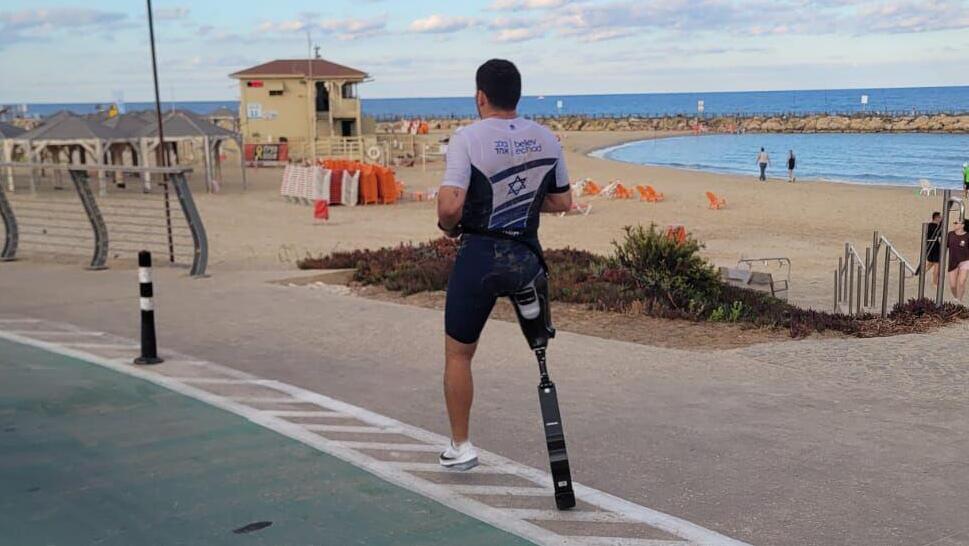
Shtonda served with the Duvdevan unit and was wounded during the battle in Beit Hanoun. He lost his leg above the knee and has had 19 surgeries. “Not everyone believed he would live; few believed he would walk again,” wrote MK Hili Tropper after meeting Shtonda at the beach. “But Boris shatters every barrier. He’s already won a test of true iron will.”
In his rehabilitation journey, Shtonda has set increasing athletic goals. “I always say — I can because I actually can and believe in myself,” he explains. “I want to do something that inspires people to start getting up, to start moving, to actually do the things.”
He has already climbed Mount Kilimanjaro twice and even got married during his recovery. Now his focus is on the next big challenge: the Ironman triathlon (3.8 km swim, 180 km bike, 42.2 km run) — “It takes 14‑15 hours. A normal person training for this takes a year to a year‑and‑a‑half, sometimes two. A person who lost a leg, especially above the knee, must still meet all these goals. No excuses.”
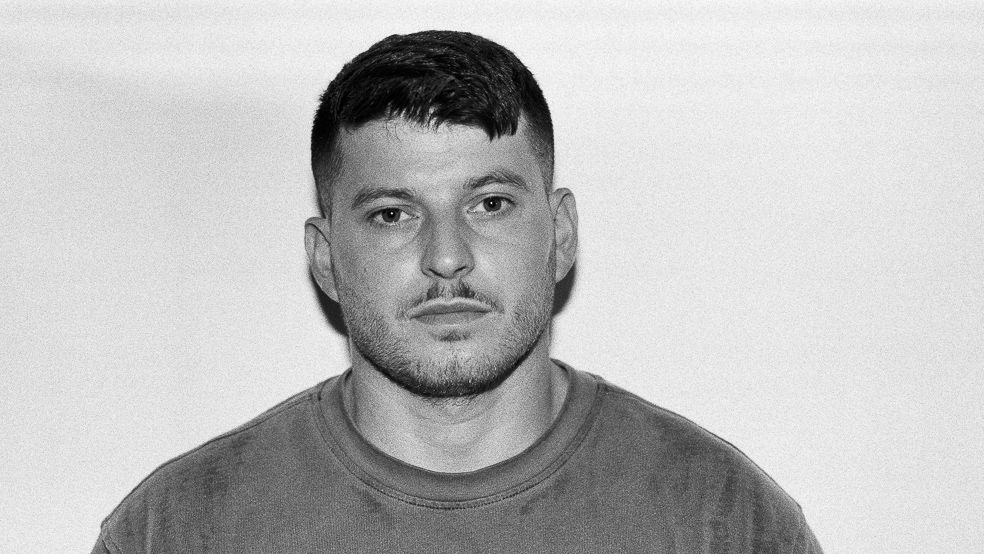
Boris Shtonda
(Photo: Amit Sufa)
He is registered for the “Half Ironman” on April 19 in Valencia, Spain, which he regards as training for his ultimate target: the full Ironman “I want to do the Ironman in Hawaii or somewhere beautiful. We’ll see how it works,” he says.
Shtonda has been training for over six months as part of the “Step By Step” programme of the “In One Heart” charity, which supports nine wounded soldiers pursuing different sporting goals: some with leg injuries, others with arm injuries or open‑wound trauma. “Each has our own challenge and we all set athletic goals — marathon, triathlon. I set myself the Ironman,” he says. The trainer is Tom Marmarelli, a veteran Ironman champion who designed a tailored training program. Marmarelli said: “Over nine months of close coaching, the fighters receive full support — training, nutrition, mental coaching and professional guidance. At the end, they fulfill a personal dream — marathon or Ironman. I’m coaching them personally.”
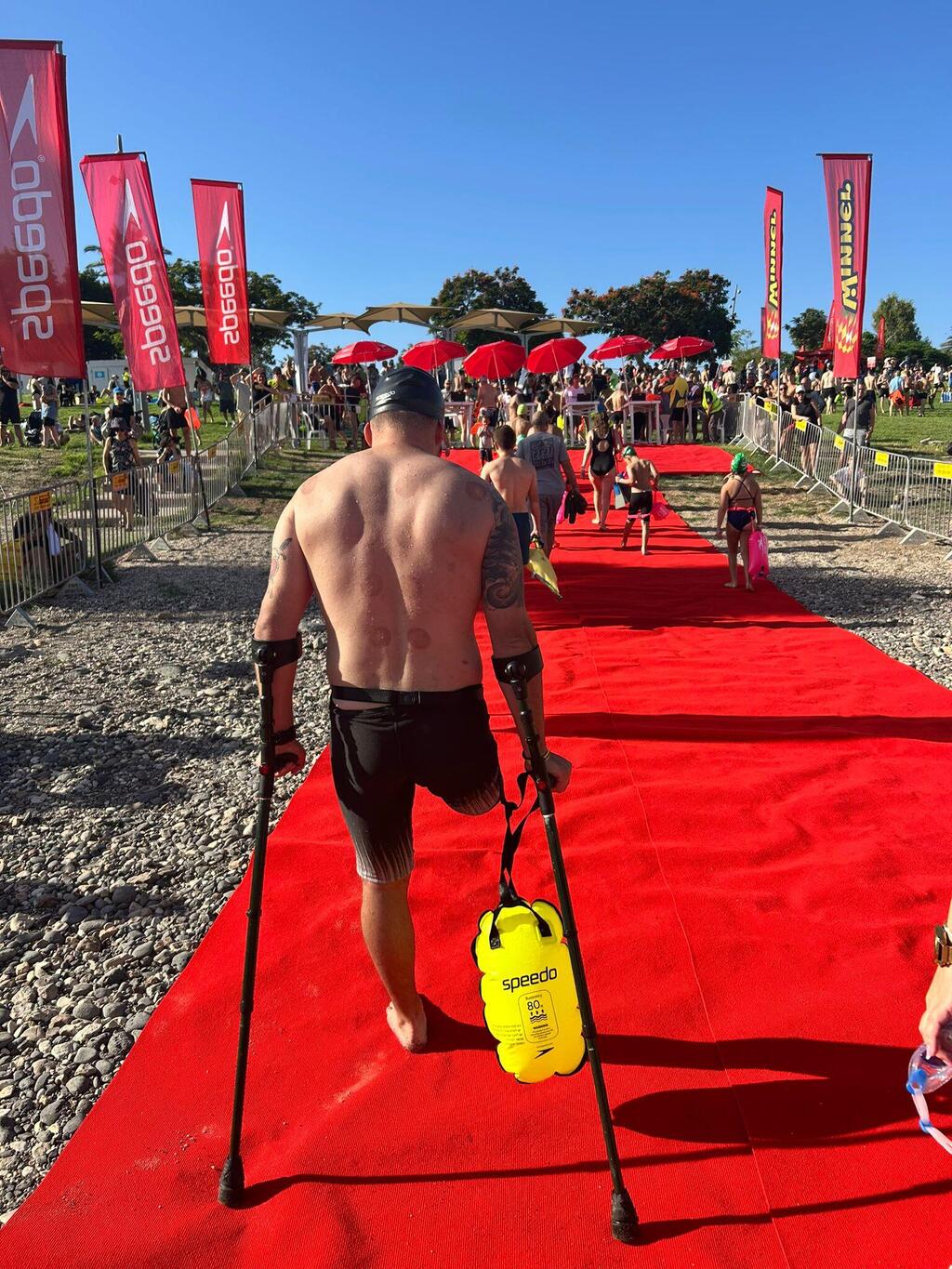
'To rehabilitate yourself, you need to set a challenge'
(Photo: Private album)
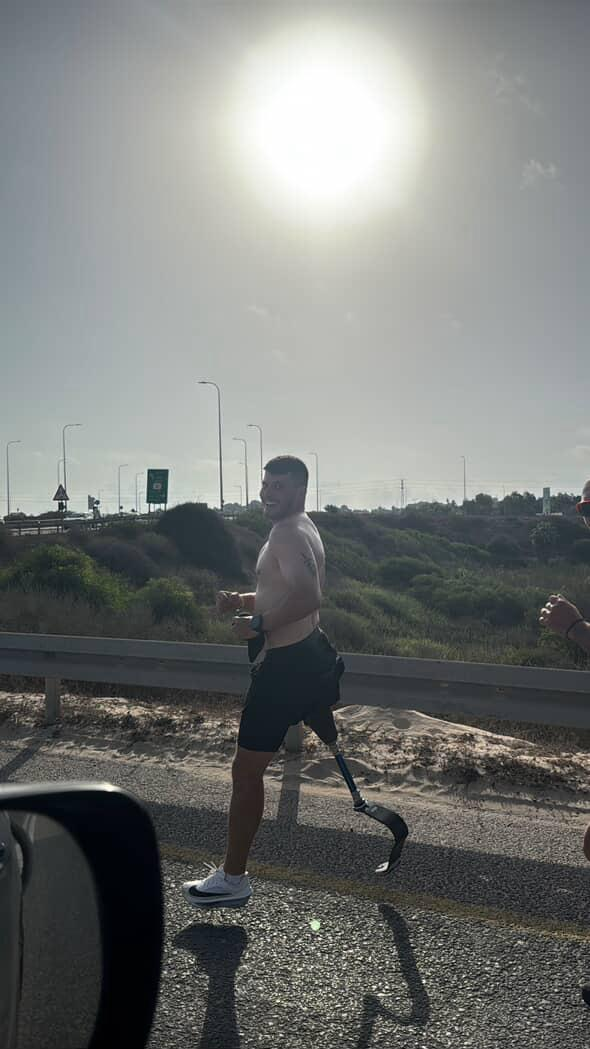
An inspiring rehabilitation journey
(Photo: Private album)
Shtonda says his swim on Friday from Charles Clore Beach to Metzitzim Beach was part of the preparation. “How do you swim 4.5 km in the open sea with no leg? It’s not simple,” he says.
He emphasises that rehabilitation depends primarily on personal responsibility: “In the end, to rehabilitate yourself you must do it — no one else will help you overcome this. You must set yourself a challenge, commit to it, and succeed.”
Asked about his motivation, he simply said: “The mind is the most important thing. You must know why you get up in the morning. Life is beautiful. Life is amazing. Challenge yourself every day anew.”