


When Boris Shtonda raised his prosthetic leg under the wedding canopy in Jerusalem last month and brought it down with a forceful stomp, the glass didn’t just break—it shattered. “He didn’t just break the glass,” said one guest through tears. “He shattered every limitation we thought existed.”
Shtonda, 27, is a Ukrainian-born Israeli soldier who lost his leg during the war in Gaza. His journey from the battlefield to a hospital bed and finally to a wedding celebration, has become a story of recovery, resilience and unexpected love.

Born in Ukraine, Shtonda made aliyah to Israel at age 12 and served in the IDF’s elite Duvdevan unit. On October 7, 2023, while vacationing in Japan after climbing Mount Fuji, he received word of the Hamas-led attacks that ignited the war. By October 11, he had returned to Israel and was back in uniform with the 551st Brigade’s 697th Battalion.
On November 2, he was wounded by shrapnel in the neck but refused to leave his unit. “I couldn’t leave my team,” he said. “We were in it together.” Eight days later, on November 10 in Gaza’s Beit Hanoun, a 13-kilogram (29-pound) explosive device detonated near him.
“Four of my brothers-in-arms were killed instantly,” he recalled. “I was thrown into the air. I knew the moment I hit the ground—my leg was gone.” IDF combat medic Omri Kedem reached him under fire, applied a tourniquet and stabilized him for evacuation.
Shtonda was flown to Shaare Zedek Medical Center in Jerusalem and placed in a medically induced coma. He woke five days later to find his leg had been amputated. “The physical pain was awful,” he said. “But the worst part was that I couldn’t move. I was completely dependent. At 27, I had become like a baby.”
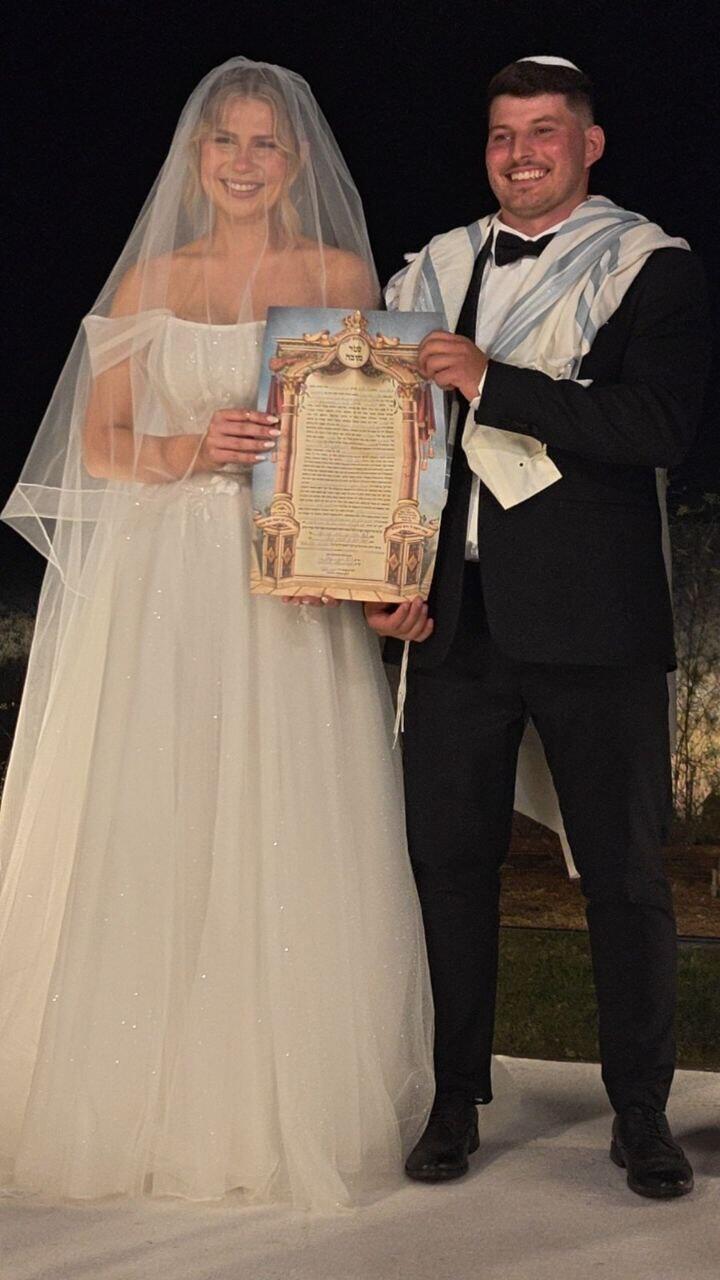
Anna and Boris Shtonda at their wedding
Then came Anna. The two had never met. A mutual friend told her about Shtonda and something compelled her to visit. The first time, they barely spoke. On her next visit, he asked her to return. By the third, they were laughing. “She saw something in me I had forgotten was there,” Shtonda said.
Their bond grew into a relationship and eventually into a partnership for life. Helping him along the way was “Belev Echad”, an Israeli nonprofit founded by Rabbi Uriel and Shevy Vigler. The group supports wounded IDF soldiers not only with logistical help and advanced medical technology but also with emotional and psychological healing.
Get the Ynetnews app on your smartphone: Google Play: https://bit.ly/4eJ37pE | Apple App Store: https://bit.ly/3ZL7iNv
“They weren’t there with cameras or reporters,” Shtonda said. “They were just… there.” Belev Echad provided him with a service dog and arranged for him to travel to New York to receive a state-of-the-art prosthetic leg, which allowed him to regain independence and pursue his passion for sports.
“This prosthetic also helps me do a whole bunch of sports and I am so grateful,” Shtonda said. The organization also made it possible for him to snowboard again, something he never thought he’d do after the injury. “I’m an amputee. But because of them, I was back on the snow. I felt alive.”

Rabbi Uriel Vigler, who personally accompanied Shtonda through parts of his recovery, said, “When we met Boris, we didn’t just see a wounded soldier—we saw a whole soul, a fighter who had lost much but still had infinite strength within.
“Belev Echad exists exactly for these moments—to step in where the system stops and remind our soldiers that they are never alone, that they are loved and valued. Seeing Boris under the chuppah, smiling, whole—that’s the moment you understand this work truly changes lives.”
Co-founder Shevy Vigler added, “Belev Echad isn’t about numbers or procedures—it’s about people. It’s about presence. With Boris, as with every soldier, we focused on who he still is, not what he lost. That means therapy, support, and healing experiences—but most of all, just being there. His wedding wasn’t just a celebration. It was a statement to everyone who’s lost hope: life wins.”
On July 22, 2025, Shtonda married Anna. Surrounded by family, friends and fellow wounded soldiers, he walked down the aisle on his prosthetic leg. When the time came to break the glass, he did it his way—with the very leg he fought to walk on again.
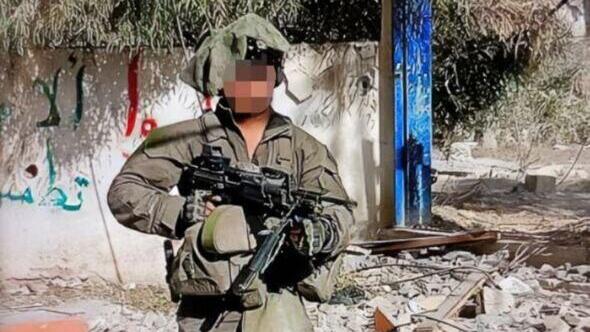
Boris Shtonda
Anna looked into his eyes and said, “You met me when everything was broken. And somehow, we built something whole.” Shtonda replied, “You came when I didn’t even know how to hope. Now we begin again—together.”
Today, Shtonda still lives with pain and remembers his fallen comrades. But he defines himself by what he’s built, not what he’s lost. “I lost a leg,” he said. “But I found a life. I found someone to share it with. And I found people who believed in me—before I believed in myself.”