


Most of us can say whether we have gained or lost weight, or even how many steps we took today. The more health-conscious may also know their resting heart rate, and perhaps what their smartwatch thinks about their sleep quality.
But there is a lesser-known number that can say a lot about the body’s true fitness: VO₂ max, or, in less intimidating terms, maximal oxygen consumption. Why has this metric become one of the most talked-about concepts in fitness and longevity, how is it calculated and, more importantly, how can it be improved? ynet explains.
Gallery
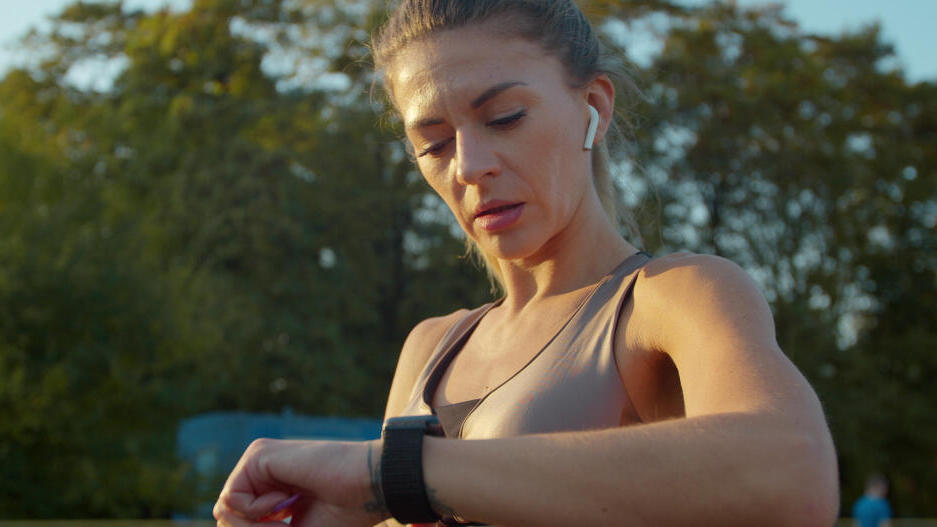
VO₂ max has become one of the most talked-about fitness metrics
(Photo: Shutterstock/AlpakaVideo)
Not just the heart, and not just the lungs
“In recent years there has been a very significant increase in interest in longevity,” says Sharon Vosko, an exercise physiologist at the Levinsky-Wingate Academic Center. “People are asking how not only to extend life expectancy but also to stay healthy over the years. Within that conversation, VO₂ max has become one of the most discussed measures.”
So what exactly does the number measure? “Maximal oxygen consumption represents the greatest amount of oxygen our body can take in, transport and use during maximal physical exertion,” he explains. “It is essentially the most accepted measure of cardiorespiratory fitness. It is not a measure of heart function or lung function alone. It reflects the integrated performance of the entire system involved in taking in oxygen, transporting it and using it in the active muscles.”
Sounds complicated? To explain that cooperation, Vosko suggests imagining three interconnected gears. “The first gear represents the respiratory system. When we inhale, we draw air into the lungs, and about 21% of that air is oxygen. The second gear represents the cardiovascular system, whose job is to carry oxygen-rich blood to the muscles, organs and different tissues of the body. The third gear represents the muscles, which take up oxygen from the blood and use it to produce energy and create movement.”
None of those gears works alone. The lungs may take in oxygen efficiently, but if the heart cannot pump it effectively, performance is impaired. Likewise, an efficient cardiovascular system is not enough if the muscles cannot use the oxygen delivered to them. VO₂ max is, in effect, the number that summarizes how well those three systems work together as the body approaches the limits of its capacity.
That ability does not reflect physical fitness alone. It has also been linked to a long list of health indicators. “Some even regard it as one of the strongest predictors of health and longevity,” Vosko says.

Dozens of studies involving millions of participants
(Photo: Shutterstock/pics five)
Put simply, VO₂ max reflects how well the body uses oxygen to produce energy during exertion. That is why it is considered one of the central measures of physical fitness and, in recent years, one of the metrics attracting the most interest among researchers studying health and longevity.
“It is discussed a great deal today, partly because of a review published in 2024 in the British Journal of Sports Medicine that included data from more than 20 million people,” Vosko says. “The conclusion was that cardiorespiratory fitness is one of the strongest predictors of illness and mortality. There are dozens of cohort studies involving millions of participants, and they consistently find an association between higher maximal oxygen consumption and lower mortality, less heart disease, less diabetes and less chronic illness.”
Lab test, running test or smartwatch?
All of that sounds promising, but how do you turn it into an actual number? Unlike weight, heart rate or daily step count, VO₂ max cannot be measured through one simple data point.
“There are two accepted methods,” Vosko explains. “The first is laboratory measurement. You perform a maximal exercise test, usually on a treadmill or bicycle, while connected to a metabolic system that can precisely measure oxygen consumption throughout the test. Every minute, we increase the intensity.”

Smartwatch readings should be taken with caution
(Photo: Shutterstock/PeopleImages)
“As the intensity rises, the value also increases because the energy cost of the effort rises. The goal is to reach the point where we continue increasing the intensity but oxygen consumption no longer rises. That is the point we define as the person’s maximal oxygen consumption.”
The test itself is relatively short and generally lasts seven to 12 minutes, depending on the protocol and the person’s fitness level. But, of course, not everyone has access to a laboratory and specialized equipment. That is where field tests come in. They do not directly measure VO₂ max but estimate it based on performance.

Men generally have higher values than women
(Photo: Shutterstock)
“One of the best-known tests is the Cooper test,” Vosko says. “Over 12 minutes, the person runs as far as possible. The distance is then entered into a formula or calculator, which provides an estimate of maximal oxygen consumption.”
Behind the measurement is a well-known physiological formula called the Fick equation. According to the equation, oxygen consumption is determined by two main factors: the amount of blood the heart pumps per minute and the difference between the oxygen content of arterial blood and the amount left in venous blood after it has passed through the tissues.
“Arterial blood is rich in oxygen, while venous blood contains less oxygen,” Vosko explains. “The greater the difference between them, the more oxygen the muscles have managed to extract from the blood delivered to them. Multiplying cardiac output by that difference is how oxygen consumption is calculated.”
And then, of course, there is the smartwatch, which can provide a number almost at the press of a button. But Vosko says it should be treated with caution. “Some smartwatches can provide an estimate of VO₂ max, but it is important to emphasize that the watch cannot actually measure it. So the values we receive do not necessarily reflect reality. Sometimes they are too optimistic, and sometimes they are lower than the true value, so they should be taken with a grain of salt.”
The good news: It can be improved at any age
Got a number? Great. But unlike measures with a relatively uniform normal range, VO₂ max must be interpreted according to the characteristics of the person being tested, particularly age and sex.
“In every age group there are categories for low, average, above-average or excellent fitness, based on different norms. Men and women have different values, and men generally have higher values than women in the same age group,” Vosko says.
In other words, the number alone does not tell the whole story, and there is little point in automatically comparing it with that of a younger person, someone of the opposite sex or a trained athlete.
And here is the good news: Even if the result is not particularly impressive, it is not destiny. “The beauty of maximal oxygen consumption is that we absolutely can improve it,” Vosko says. “The potential for improvement depends on where you start. The lower a person’s initial fitness level, the greater the potential for improvement. We are talking about improvements of up to around 20%, although there are cases in which the improvement is even greater.”

'You don’t need to be an elite athlete to benefit'; Sharon Vosko
(Photo: Courtesy)
For people who have been hospitalized for extended periods and begin from a very low level of physical fitness, the potential improvement can be even greater, he says. By contrast, recreational athletes who already start from a relatively good level will have less room to improve.
But the health benefit is not reserved only for those who achieve high values.
“Because of the extensive discussion around maximal oxygen consumption and life expectancy, there has been something of a race to achieve the highest values possible,” Vosko says. “But the greatest health benefit may actually come from moving from low fitness to moderate fitness. In other words, you do not need to be an Olympic athlete or an elite athlete to benefit.”
How to improve the numbers
That brings us to the practical question: How can maximal oxygen consumption actually be improved?
“In the past, we thought interval training was the most effective way to improve the value,” Vosko says. “Today we know that lower-intensity training performed at higher volume also has significant potential for improvement. So it is best to combine different types of training.”
Those workouts can include brisk walking, running, cycling, swimming or any other aerobic activity that can be performed continuously and sustained over time.
“We are talking about activity around the aerobic threshold. For someone who is untrained, we recommend starting with low- to moderate-intensity exercise, with the main emphasis on extending the duration of the workout. You can start with two or three sessions a week, with a recovery day between them, rather than doing them on consecutive days.”
As fitness improves and the body adapts to the workload, both the frequency and intensity of training can gradually increase.
“You can build up to four to six workouts a week and increase the pace in some of them,” he says. “That could mean moving to faster running, walking on an incline, swimming at a faster pace or incorporating sprints in the pool.”
And how quickly can you see a change? Again, it depends on the starting point.
“In people with poor fitness, improvement can be seen within about two weeks,” Vosko says. “Over a year of training, you can continue to see an upward trend in oxygen consumption. For people who already exercise regularly, the potential for improvement is lower, so a measurable change may require several months of training.”

Combined training is important
(Photo: Shutterstock/pics five)
Still, aerobic activity alone is not enough.
“It is important to do combined training. It does not have to take place in the same workout, but it is advisable to include both aerobic activity and resistance training in order to gain the maximum benefits.”
The number matters, but it is not the whole story
VO₂ max can provide valuable information about fitness and how the body functions, but it cannot by itself sum up a person’s health.
“We need to stop and ask a very basic question: Can we really assess our health using one physiological measure, important as it may be? Does that measure truly tell us the whole story, or is it only one part of a much more complex biological and physiological puzzle?” Vosko says. “Not everything that improves athletic performance necessarily improves health, and by the same token, not everything that improves health necessarily leads to maximal physical performance.”
Studies that have found a link between high cardiorespiratory fitness and health and longevity should also be interpreted cautiously.
“They show a strong association between oxygen consumption and quality of life, but most of them demonstrate correlation rather than causation,” Vosko explains. “We have to understand that people with high values are usually more physically active, maintain a healthy body weight, eat a higher-quality diet, smoke less and, in general, lead healthier lifestyles. It is reasonable to assume that the health advantage results from the combination of all these factors, and not necessarily from maximal oxygen consumption alone.”