


Five days after the October 7 massacre, as Israel was still coming to terms with the scale of the attack, the woman preparing to become president of the American Psychological Association drew a comparison between Palestinians in Gaza and George Floyd, the Black man murdered by a Minneapolis police officer in 2020 whose death became a symbol of the fight against racism in the United States.
Cynthia de las Fuentes, then president-elect of one of the world’s most influential professional psychology organizations, wrote in an internal October 12, 2023, email that “George Floyd is representative of Gazans” and that “the themes of domination and submission are clear in both cases.” She also compared members of the police to adherents of a “by any means necessary” approach to achieving the goals of Zionism, which she likened to the missions of “other terrorist groups.” She added: “Not all police and not all Jews.”
Gallery
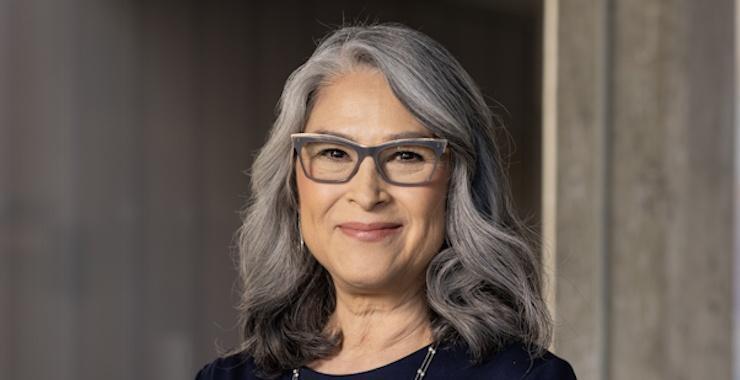
Cynthia de las Fuentes, former president of the American Psychological Association
(Photo: APA)
The exchange is among the most striking documents cited in an investigation released October 29 by the Republican majority staff of the U.S. House Committee on Education and Workforce. Based on internal APA documents and correspondence, the report alleges that senior officials repeatedly failed to confront antisemitism, dismissed complaints from Jewish psychologists and accommodated figures and groups accused of promoting anti-Israel or antisemitic rhetoric.
The association, best known to millions of students and researchers for the APA academic citation style, says it has more than 190,000 members, publishes more than 90 scientific journals and plays a major role in setting professional and ethical standards. Its Commission on Accreditation recognizes more than 1,300 psychology training programs across the United States. The APA rejects the report’s conclusions and says it unequivocally condemns antisemitism in all its forms. It is now also confronting a federal advisory recommendation that recognition of its accreditation commission be suspended for one year.
‘Violence on both sides’
One of the central episodes in the House report concerns the APA’s official response to the Hamas-led October 7 attack. According to internal correspondence cited by investigators, APA leaders sought input before publishing their statement from the American Arab, Middle Eastern and North African Psychological Association, known as AMENA-Psy. Its incoming president objected to describing the assault as a terrorist attack, writing that the wording needed to change and arguing that the draft contained problematic and racist language that would upset Middle Eastern and North African members. Its sitting president urged the APA to emphasize “violence on both sides” and Palestinian suffering to balance the focus on Israel, while another message argued that terrorism language was one-sided and overused against Arabs.
The APA’s final statement condemned the “violent attack by Hamas on Israel” but did not use the word “terrorism.” According to the House report, another internal brainstorming draft referred to “acts of terror on both sides.” Days after October 7, AMENA-Psy issued its own statement that the House report says characterized the Hamas assault as a justified “resistance action” and expressed solidarity with Palestinians in what it described as a decolonial struggle for justice. The report says the APA later continued consulting AMENA-Psy on antisemitism-related matters, internally describing the organization as an “antisemitism stakeholder.”
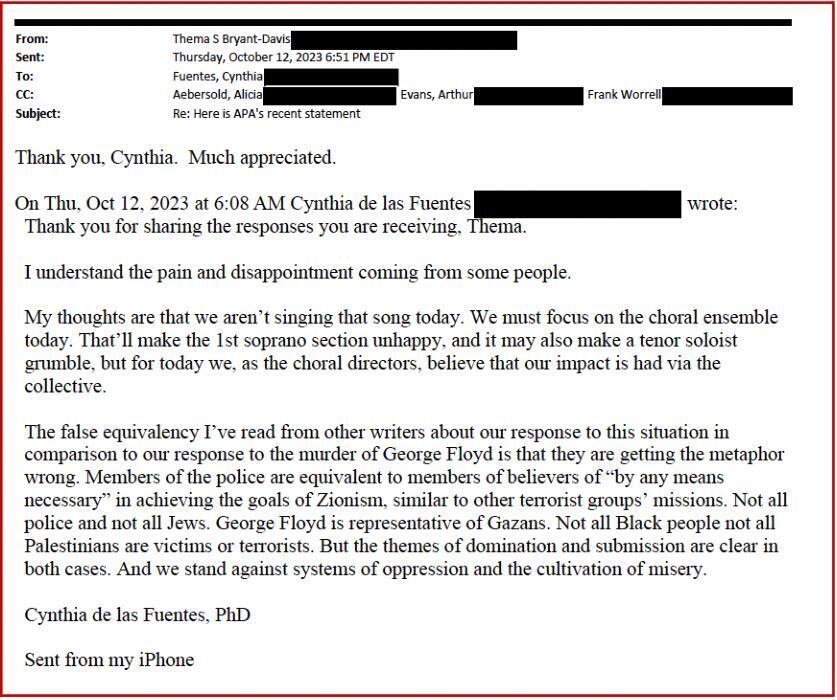
Internal email in which Cynthia de las Fuentes compared George Floyd to Palestinians in Gaza
The debate also spread through professional mailing lists associated with APA divisions. According to the report, members described Hamas’ actions as the Palestinians’ only signs of “life and resistance,” defended the humanity of Hamas fighters and argued that Hamas deserved “kudos” for protecting civilians. New York therapist Lama Khouri described claims that Hamas sought to exterminate Jews as “quite hilarious,” according to the report. In another exchange, members questioned whether expressions of solidarity with Israel could violate listserv rules because of their effect on other participants’ sense of safety.
‘The Jews who are so angry at us’
In June 2025, a Jewish psychologist contacted APA leadership with concerns about antisemitism and the treatment of Jewish colleagues. Maysa Akbar, then the association’s chief diversity officer, responded internally with a single word: “Sigh!” A similar reaction followed a May 2025 letter from Democratic Rep. Ritchie Torres raising concerns about antisemitism at the organization. According to the House report, a former APA president responded internally with another “sigh.” After the medical advocacy organization Do No Harm criticized the APA over antisemitism in 2025, then-senior communications official Kim Mills wrote internally: “I wonder if the Jews who are so angry at us know they are now feeding hatred from this horrible group.” When the Anti-Defamation League later sent the APA a questionnaire about antisemitism, the association declined to respond. Mills wrote that it was biased and “clearly aimed at finding fault” with the APA, according to the report.
A request from the Biden White House also prompted hesitation. In 2024, the APA was asked to recommend psychologists specializing in trauma who could be available during a screening of Screams Before Silence, a documentary about sexual violence committed by Hamas terrorists during and after October 7. One official worried that supplying names could insert the organization into “the politics of the film and audience.” Another recommended passing the request to the D.C. Psychological Association instead.
In another internal exchange, de las Fuentes was preparing 2024 remarks that discussed antisemitism and the Holocaust. Her predecessor, Thema Bryant, noted that antisemitism appeared several times while Islamophobia appeared only once and questioned why the Holocaust was named as one of history’s most horrific acts without mention of the thousands killed in Gaza.
The psychologist APA leaders continued to praise
Another name appearing repeatedly in the House report is Lara Sheehi, a psychologist who formerly served as president of the APA’s psychoanalysis division. Jewish students at George Washington University accused Sheehi of discrimination and retaliation in 2023, but an independent investigation commissioned by the university found no evidence that classroom discourse crossed the line into antisemitic speech and said it could not substantiate the central allegations. Sheehi subsequently left George Washington University and took a position at the Doha Institute for Graduate Studies in Qatar.
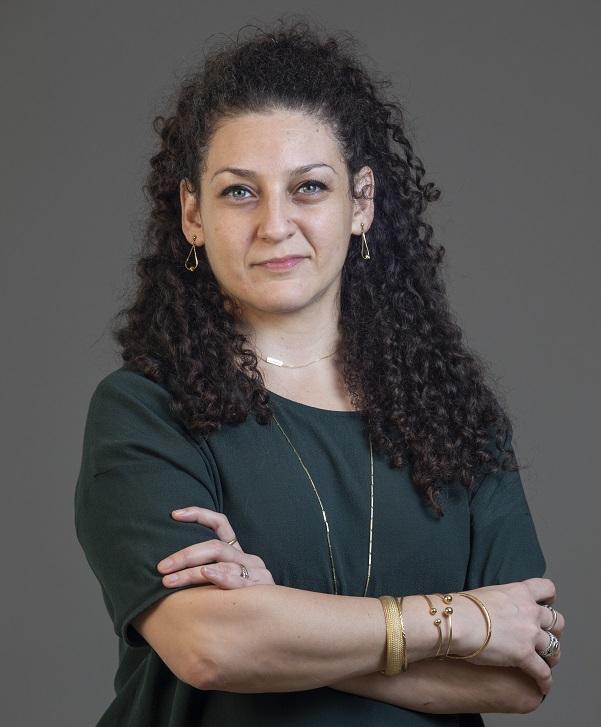
Lara Sheehi, former president of an APA psychoanalysis division
(Photo: Doha Institute for Graduate Studies)
In a July 2026 interview, the interviewer raised Elias Rodriguez, the man accused of killing Israeli Embassy employees Yaron Lischinsky and Sarah Milgrim in Washington, while discussing whether people sometimes dismiss what the interviewer called an individual “resistance operation” as a false-flag operation. Sheehi called it a “great question” and responded more broadly about psychological operations, confusion and what she described as the tendency to “miss acts of resistance.” She did not explicitly state that Rodriguez’s alleged attack itself was a legitimate resistance operation.
Despite the controversies surrounding Sheehi, APA-approved continuing education programs continued to feature sessions led or moderated by her as recently as February 2026, according to the House report. The report also cites warm correspondence between Sheehi and senior APA leaders. After the APA published its statement on October 7, Sheehi praised the wording and argued that people who failed to recognize what she called Israel’s “all out genocide” were experiencing “internalized racism.” Bryant, then APA president, responded by praising Sheehi’s “heart, truth, challenge, and compassion.” De las Fuentes expressed gratitude and wrote that she hoped to learn from her.
In another exchange, an APA official cautioned against signing the ADL’s Workplace Pledge to Fight Antisemitism because the organization had previously criticized Sheehi, according to the report. In February 2024, Sheehi warned APA leaders about possible protests by Jewish psychologists at the association’s convention, calling the situation a “PR nightmare.” She also objected to a Jewish psychologist’s description of Jews as the indigenous people of the land, calling the argument “dangerous, ahistorical propaganda.” De las Fuentes thanked her for the warning.
The minority that was not recognized
Another dispute has centered on an effort by the Association of Jewish Psychologists to receive formal recognition as an Ethnic Psychological Association, similar to organizations representing other ethnic and racial groups within the APA. According to the House report, opponents argued that many Jews had been “conscripted into whiteness” and benefited from white privilege, and therefore did not experience the same structural oppression as other minority groups. One opponent said the proposal was rooted in “anti-black logics.” The APA’s Committee on Ethnic Minority Affairs argued that recognizing a Jewish association without taking what it called “urgent, unapologetic action on Palestine” and explicitly supporting AMENA-Psy could reinforce inequities and weaken solidarity among marginalized groups, according to the House report. The APA has not formally rejected the Jewish association’s application. Its Council of Representatives postponed a decision in February 2026 and delayed it again in August.
One APA document also questioned reliance on the contributions of Sigmund Freud and Albert Ellis, stating that their work “may be influenced by factors such as white/economic/male privilege.” Freud, the founder of psychoanalysis, fled Nazi-controlled Austria in 1938. Four of his sisters were murdered in the Holocaust.
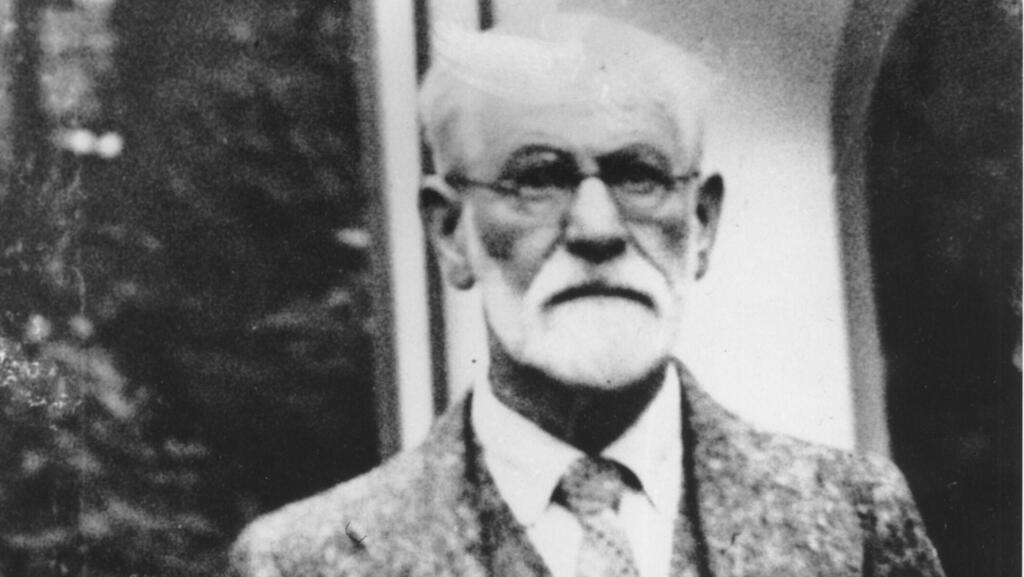
Sigmund Freud: An APA document questioned reliance on his contributions to psychology
(Photo: AP)
In February 2026, the APA Council of Representatives voted 127-37, with five abstentions, to adopt a new resolution on antisemitism. The resolution explicitly condemns antisemitic attitudes and actions and rejects holding Jews collectively responsible for Israel, requiring Jews to denounce Israel or applying assumptions of dual loyalty. It also discusses what it calls the weaponization of antisemitism to suppress legitimate political expression. Republican investigators argue that the latter provision weakens protections for Jewish members and note that the Collaborative of Jewish Psychologists, an advisory body created by the APA, did not approve the final version. The APA says the resolution strengthens its framework for combating antisemitism and reflects contemporary research and current manifestations of anti-Jewish hatred.
‘I don't have sources for you’
The dispute also reached the association’s scientific publications. An article published in American Psychologist, the APA’s flagship journal, referred to what its authors called “Zionist psychologies,” arguing that such approaches legitimize the Israeli “settler colonial project.” According to correspondence cited in the House report, when the journal’s editor-in-chief asked co-author Devin Atallah for references supporting the concept, Atallah replied: “I do not have references for you on Zionist psychologies.” He then suggested that the editor educate himself about anti-Zionism on his own. An editor involved in preparing a special issue on antisemitism later resigned, arguing that the article contained politicized language and lacked the scholarly rigor expected by the journal, while material dealing with antisemitism was being held to stricter standards.
Similar disputes emerged at professional conferences. At a 2024 AMENA-Psy conference attended by senior APA figures, a session on pro-Palestinian university encampments said it would analyze “psychological warfare by Zionist agitators, police, and administrators.” The APA facilitated continuing education credits for sessions at the conference, including one addressing the ethical and legal issues surrounding advocacy for the Boycott, Divestment and Sanctions movement against Israel.
At the APA’s 2026 convention, Roy Eidelson, a Jewish psychologist and outspoken anti-Zionist, was selected for the organization’s “100 Psychologists Rising” initiative. According to the House report, a third-party investigator had concluded in 2025 that Eidelson violated the APA’s meeting code of conduct and civility statement during a confrontation with a Jewish member. Eidelson rejects the report’s broader contention that antisemitism has spread throughout the APA. He argues that antisemitism means prejudice, discrimination or hostility toward Jews and should not be conflated with criticism of Israel or support for Palestinian rights.
‘They were working against us behind the scenes’
The House Committee on Education and Workforce opened its investigation in December 2025 under Republican Chairman Tim Walberg following complaints from Jewish psychologists. The October 29 report is a majority staff report reflecting the Republican committee leadership’s findings, not a bipartisan congressional finding. The APA rejects its conclusions. Current APA President Wendi Williams and CEO Arthur Evans Jr. say the organization unequivocally condemns antisemitism, has held listening sessions with more than 120 Jewish psychologists and stakeholders, created a Collaborative of Jewish Psychologists to advise its leadership, strengthened oversight of professional discussion forums and introduced additional measures aimed at addressing antisemitism.
The controversy is unfolding alongside a separate federal accreditation dispute. On September 24, the National Advisory Committee on Institutional Quality and Integrity recommended that the U.S. Department of Education suspend federal recognition of the APA Commission on Accreditation for 12 months, citing what it characterized as a failure to address pervasive antisemitism within accredited programs. The recommendation is not final. The APA strongly rejects that characterization and says complaints presented to the panel concerned only two of its more than 1,300 accredited programs and that its accreditation commission was already examining those cases. APA leaders have warned that suspension could threaten access to some federal funding for psychology training programs and create complications for students and the mental health workforce.
For some Jewish psychologists who spent years pressing the organization to address their concerns, publication of the internal correspondence brought both relief and disappointment. Dr. Miri Bar-Halpern, an Israeli psychology lecturer at Harvard Medical School who testified before the federal accreditation advisory committee, said she feared a backlash after the report became public. “No one should need Congress in order to ask their profession to show empathy,” she said.
Fordham University psychology professor Dean McKay, who also testified about antisemitism concerns in the profession, said some of the officials named in the report were people he had previously approached for help. Those officials, he said, had appeared willing to assist. “I hoped they were truly working on our behalf and in good faith,” he said after seeing the internal correspondence. “Instead, I think they were working against us behind the scenes.”