

After lengthy debates, public controversy and opposition from professionals, the Council for Higher Education approved the establishment of pre-clinical medical studies in the southern city of Eilat — but it will not set up an independent medical faculty.
The pre-clinical stage of medical studies lasts about three years, during which students learn the basic sciences that underpin the understanding of the human body and disease. Graduates of the program will later join a university providing academic backing and begin clinical rotations in hospitals, as all medical students do.

This compromise was proposed in the past given the lack of infrastructure in Eilat to support a stand-alone medical faculty. The new track will likely operate under the academic umbrella of an Israeli university — most probably Ben-Gurion University, which already has a campus in the city. The council said priority would be given to an Israeli institution, but if no local university steps in, an exception would allow a foreign university to open the program. Charles University in the Czech Republic, which has expressed interest, is seen as the leading candidate.
A foreign university would need to meet strict conditions, including recognition by the Organization for Economic Cooperation and Development, compliance with European Union medical degree requirements, and approval from Israel’s Health Ministry under the “Yatziv Reform.” That reform shut down a number of overseas medical schools and limited recognition to institutions where Israelis have studied for years and whose graduates already work in the Israeli health system.
Any program would follow the foreign university’s curriculum. Graduates would be required to pass Israeli licensing exams, just like all students who complete medical training abroad.
The council said the decision “aims to strengthen the health and academic system in Eilat, provide young people across Israel with an opportunity to enter a leading track in medical studies, and reduce the need for Israelis to study medicine overseas.”
Education minister: A step to close gaps
Education Minister Yoav Kisch, who chairs the council, called the move “a significant step in strengthening Israel’s health care and higher education systems, especially in Eilat. Over the past year we have opened three medical faculties, and we remain committed to expanding medical studies to address the shortage of doctors and reduce the need for Israelis to study abroad. This is part of a broad effort to reduce disparities in access to higher education, particularly in medicine. We will continue working to ensure a high academic standard and a quality program integrated into the national health system that also meets local needs.”
Kisch has pushed the issue three times before the council, despite opposition from its planning and budgeting committee, headed until recently by Professor Yossi Mekori, a physician. Mekori proposed instead to upgrade Yoseftal Hospital in Eilat, securing commitments from Ben-Gurion and Ariel universities to send students there for training. A separate committee led by Professor Yonatan Halevy reaffirmed the council’s longstanding policy against opening foreign medical faculties in Israel due to quality-control concerns. Observers say Kisch revived the debate following Mekori’s departure.
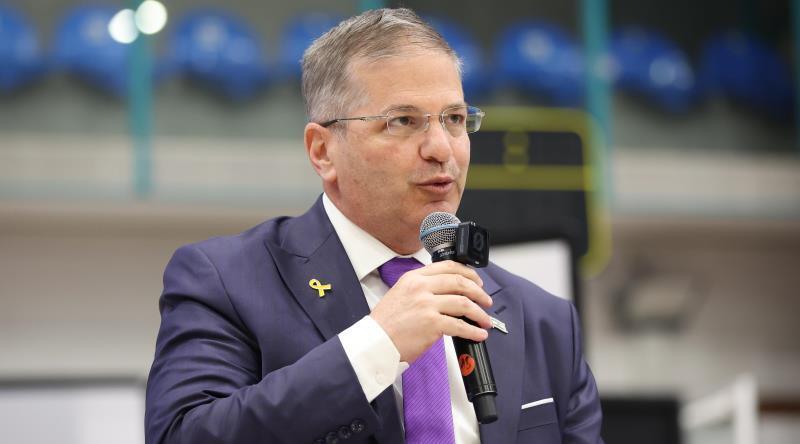
Education Minister Yoav Kisch
(Photo: Rdad Jabara)
Earlier this year, Kisch invited Israeli medical faculties to submit proposals for Eilat. The Forum of Deans of Medical Faculties — representing all nine medical schools in Israel — unanimously responded that “the current state of medical infrastructure in Eilat does not allow for an independent six-year medical school.” They pointed to the city’s limited hospital services, small population of about 60,000, and staffing shortages.
Even before Tuesday’s decision, the forum noted plans to expand Ben-Gurion University’s pre-medical program in Eilat, suggesting it may ultimately take responsibility for the new track.
Private initiative and city support
The push for a medical faculty in Eilat originated with Dr. Moshe Cohen, CEO of Medical Doctor, a company that prepares Israelis for medical studies abroad. The plan envisions up to 300 international students studying at Yoseftal Hospital under private tuition. Clalit Health Services, Israel’s largest HMO, would provide sponsorship and training in specialties not available locally. Charles University in Prague has been in talks to operate the program.
Cohen welcomed the decision: “I initiated this project four years ago together with Mayor Eli Lankri and Clalit. Establishing a medical faculty in Eilat will correct years of neglect and greatly improve health services and educational opportunities in the city. The faculty will also provide opportunities for residents of the south and disadvantaged communities. Donors and investors will help create an iconic building with a medical high-tech and biotech hub. This decision is nothing short of historic.”

Mayor Eli Lankri
(Photo: Meir Ohyaon)
Mayor Eli Lankri also praised the move, calling it “a historic development that can change reality for tens of thousands of residents who have long suffered from a severe shortage of medical services. We expect an Israeli university to take the lead, but if not, we will continue to promote an international faculty. This is a first but significant step toward a real solution that will strengthen Eilat’s health system, address a longstanding challenge, and turn Israel’s southern gateway into a center of medical innovation and research.”
Broader expansion of medical schools
The approval of pre-clinical studies in Eilat comes alongside other efforts to expand Israel’s medical student body. Last year the council approved the country’s first private medical school, at Reichman University, with tuition set at about 100,000 shekels ($26,000) per year.
Seven months ago, new medical schools were approved at the Weizmann Institute of Science and the University of Haifa. The Weizmann program was designed to admit 42 Israeli students annually — all fully funded with tuition waived and living stipends — but the Iranian missile strike on the campus forced a dramatic cut. Only 19 students began in August. Meanwhile, 66 students will soon start at Haifa’s new medical faculty.
These moves come against the backdrop of concerns that Israel may lose about 400 new doctors next year due to the Yatziv Reform, which bars licensing of graduates from unrecognized foreign medical schools. In 2024, only 28 percent of Israel’s new doctors were trained domestically. The Health Ministry has set a goal of 1,700 new Israeli-trained medical students annually by 2027.
Despite the strain of the war and pressure on the health system, the number of new medical licenses in 2024 reached a record 2,637, up 7 percent from 2023 and 48 percent from 2020.