

“On public transport, in bars, at every gathering — everyone is talking about Ebola,” Gloire Mombasa, a resident of Mongbwalu, a mining town in eastern Congo at the center of the outbreak, told The Guardian. “The fear is that the disease will reach more and more areas.”
Ebola virus outbreak in the Democratic Republic of the Congo
(Video: Reuters)


That fear is entirely justified. Congo’s health minister, Samuel-Roger Kamba, said on state television that about 131 deaths and 513 suspected Ebola cases have been recorded so far in Ituri province in eastern Democratic Republic of Congo — a sharp increase from the weekend. The World Health Organization declared an international health emergency Sunday, and experts warn that the official figures are far from reflecting the true scale of the outbreak.
Overnight, it was reported that Dr. Peter Stafford, an American doctor with a Christian organization who treated patients in Bunia, tested positive for the virus. The CDC said he and six other Americans would be transferred to Germany for monitoring and treatment. Germany confirmed it would treat Stafford. On May 18, the United States invoked Title 42, a public health law restricting entry during an epidemic. In the modern era, the law had been used only once before, at the start of the COVID pandemic.
The virus that hid for weeks
The outbreak apparently spread for weeks before authorities identified it. The health worker considered “patient zero” fell ill April 24 and died at a hospital in Bunia, the capital of Ituri province. The critical problem was seemingly technical: The first samples were tested for the Zaire strain — the common Ebola strain for which there is a vaccine — and came back negative.
Gallery
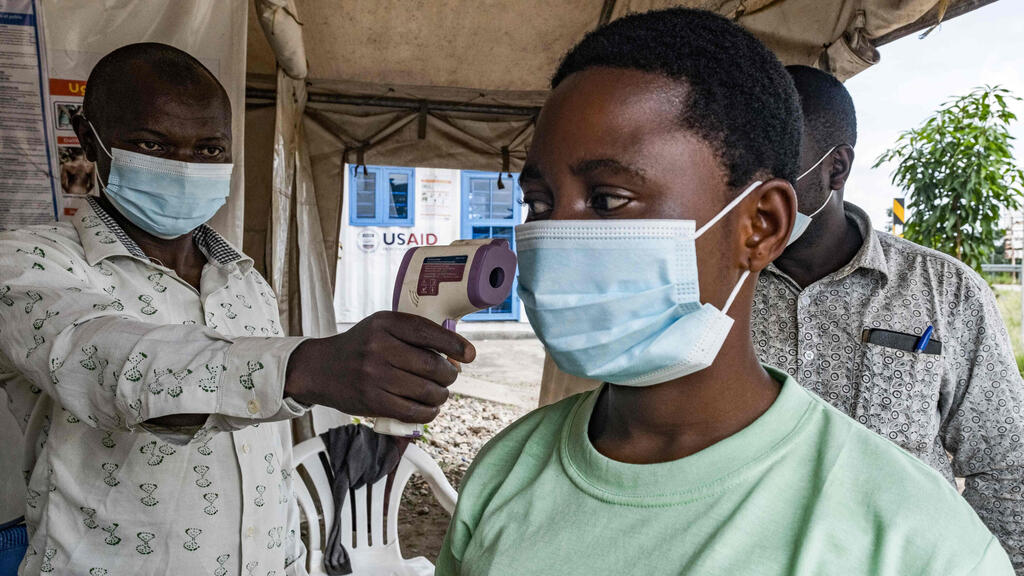
Checks at the Uganda-Congo border crossing due to the Ebola outbreak
(Photo: Badru Katumba / AFP)
Weeks passed and people continued to die, until the outbreak was officially confirmed May 15 and the real strain was identified: Bundibugyo.
“The initial tests were looking for the wrong strain, we got false results and lost weeks of response time,” said Dr. Matthew Kavanagh, director of Georgetown University’s Center for Global Health. “We are chasing a very dangerous pathogen.”
Bundibugyo is a rare Ebola strain that has caused only two outbreaks to date, in 2007 and 2012, both in the Congo Basin region. The current outbreak is far larger than its predecessors. Its fatality rate ranges from 25% to 40% — lower than some other Ebola strains, but far deadlier than most known infectious diseases.
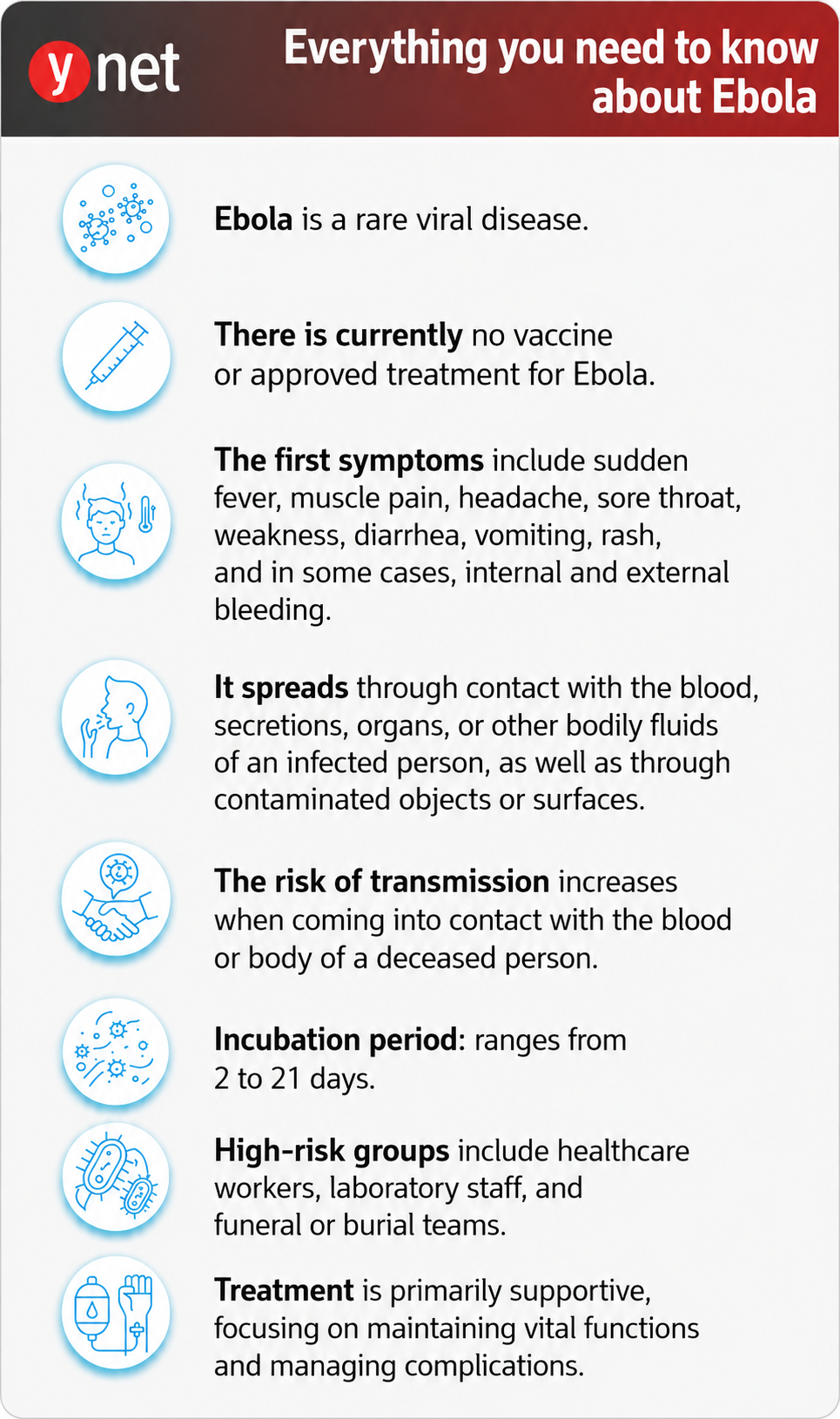
The gravest problem: There is no approved vaccine or treatment for the Bundibugyo strain.
“There is nothing even close to being ready for clinical trials,” said Dr. Celine Gounder, an infectious disease specialist who treated patients in West Africa in 2014. “Caregivers are back to the most basic tools.”
Without a targeted drug, treatment comes down to supportive care: fluids, pain management, preventing secondary infections — and stopping chains of transmission through case detection, isolating exposed people and safe burials.
A warning sign
The virus spreads through direct contact with bodily fluids — blood, vomit, sweat — and especially with bodies.
“Ebola is a disease of compassion,” said Dr. Craig Spencer of Brown University, who contracted Ebola himself in 2014. “It mostly strikes those caring for the sick. Doctors, nurses, family members — they are among the first to be infected and die.”
In Bunia and Mongbwalu, the fear is tangible. Noella Lomu, a Bunia resident who once lived in Beni, an area that experienced previous outbreaks, is sewing masks at home to protect against the virus.
“I know the consequences of Ebola. I know what it looks like,” she said.
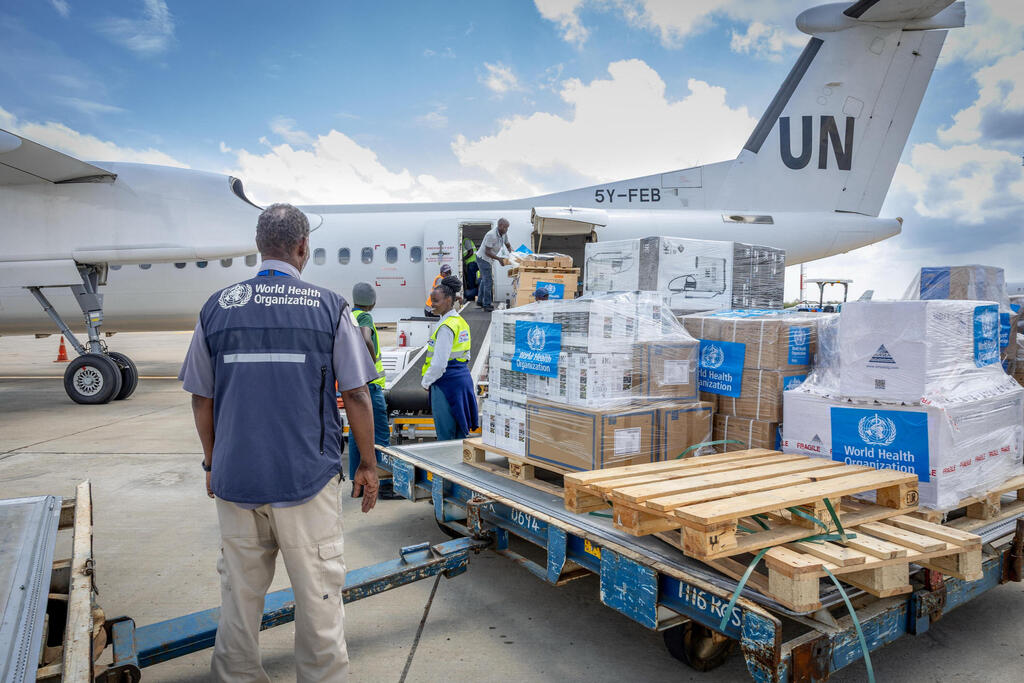
WHO flies aid from Kenya to Ebola-hit hotspots
(Photo: World Health Organization / Handout via Reuters)
“We are shocked by Ebola’s return to our region,” Dieudonné Losedakena, a Bunia resident, told The Guardian. “Several dozen have died. For us, it is heartbreaking.”
Alongside the human toll, residents also fear economic collapse.
“We live in a poor area and people live hand to mouth,” said Claude Kassona from the Irumu area. “A health emergency like this hits us in the pocket too.”
From Mongbwalu and Bunia, the disease has already spread beyond Ituri. In Uganda, two separate cases were confirmed in the capital, Kampala — two people who arrived from Congo with no connection to each other. One of them died.
“Two unrelated cases appearing simultaneously in a capital city are usually a warning sign that the outbreak in Congo is far broader than what can be seen,” said Professor Adrian Esterman of the University of Adelaide.
In Goma, which is controlled by Rwanda-backed rebel forces, a case was identified in a woman who traveled from Bunia after her husband died of the disease.
The international effort to control the outbreak
A WHO spokesman told AFP that the organization’s emergency committee convened today to discuss the outbreak. WHO Director-General Tedros Adhanom Ghebreyesus said he was “deeply concerned by the scale and speed” of the outbreak.
“We will convene the committee today to receive recommendations on temporary measures,” he said.
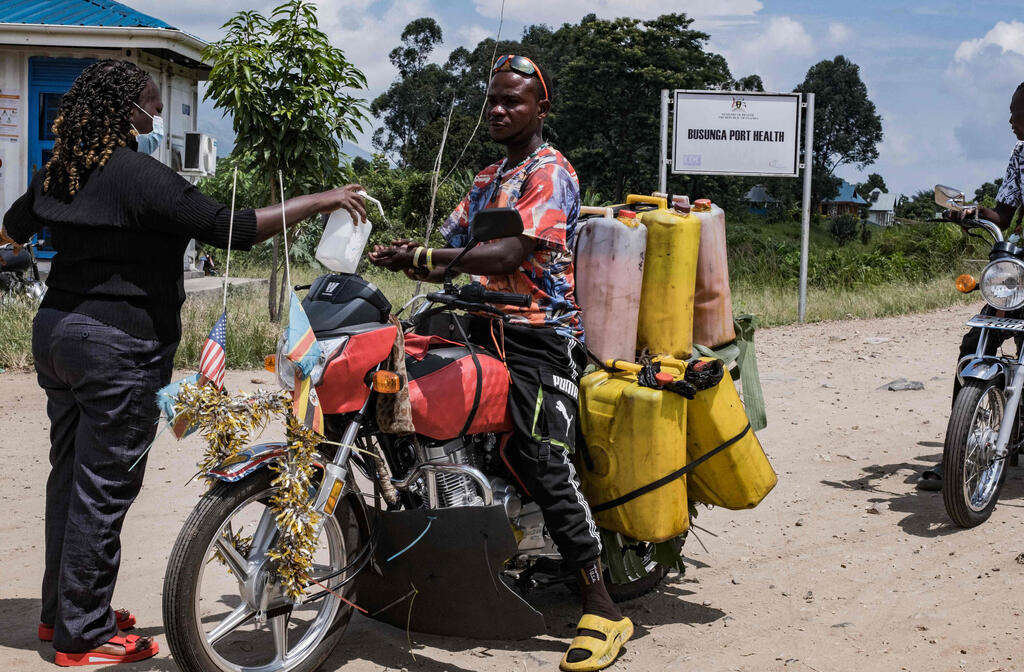
Washing hands with disinfectant at the Uganda-Congo border crossing amid Ebola outbreak
(Photo: Badru Katumba / AFP)
On Sunday, the WHO declared an international health emergency, the organization’s second-highest alert level.
The WHO has already sent 35 experts and seven tons of emergency medical equipment to Bunia. Congo has announced the opening of three new treatment centers in Ituri. The CDC has deployed more than 30 staff members on the ground and is recruiting more.
But the outbreak zones are among the hardest places to operate: crumbling infrastructure, more than 270,000 displaced people and ongoing fighting between armed groups.
“Years of fighting and aid cuts have pushed the health system in eastern Congo to the breaking point,” said Heather Kerr, director of the International Rescue Committee in Congo. “We must act quickly.”
Dr. Jean-Jacques Muyembe, one of the experts who helped identify the Ebola virus in 1976, said materials for a vaccine against the Bundibugyo strain are expected to enter clinical trials in late May or June.
For now, experts note, the existing tools — case detection, contact tracing, protection of medical staff and safe burials — are what stopped each of Congo’s 16 previous Ebola outbreaks.
An international expert panel led by the WHO met Tuesday to discuss vaccination options for the outbreak. According to Reuters, the agenda includes examining Ervebo, Merck’s vaccine approved for the Zaire strain, which showed some protection against Bundibugyo in animal trials.
“When dealing with an outbreak of a strain for which there are no countermeasures, we will recommend the best approach,” said Dr. Mosoka Fallah, deputy director for science at Africa CDC.
“Every Ebola outbreak that has occurred in Congo has been interrupted,” said Dr. Lina Moses of Tulane University. “The tools work. The question is whether we can implement them fast enough.”
First published: 13:23, 05.19.26