

Dr. Stacy Norton was 7 years old when her mother died of colorectal cancer, one of several relatives in her family who developed aggressive tumors at unusually young ages. Decades later, the Houston physician rolled up her sleeve to join a clinical trial for an experimental vaccine that researchers hope could one day protect her, and perhaps her children, from cancer.
Norton is among an estimated 1 million Americans diagnosed with Lynch syndrome, an inherited genetic defect passed down from a parent that places carriers at particularly high risk of colorectal cancer and several other malignancies. People with the condition are often advised to undergo colonoscopy every year, far more frequently than the general population, so doctors can detect and remove precancerous polyps.
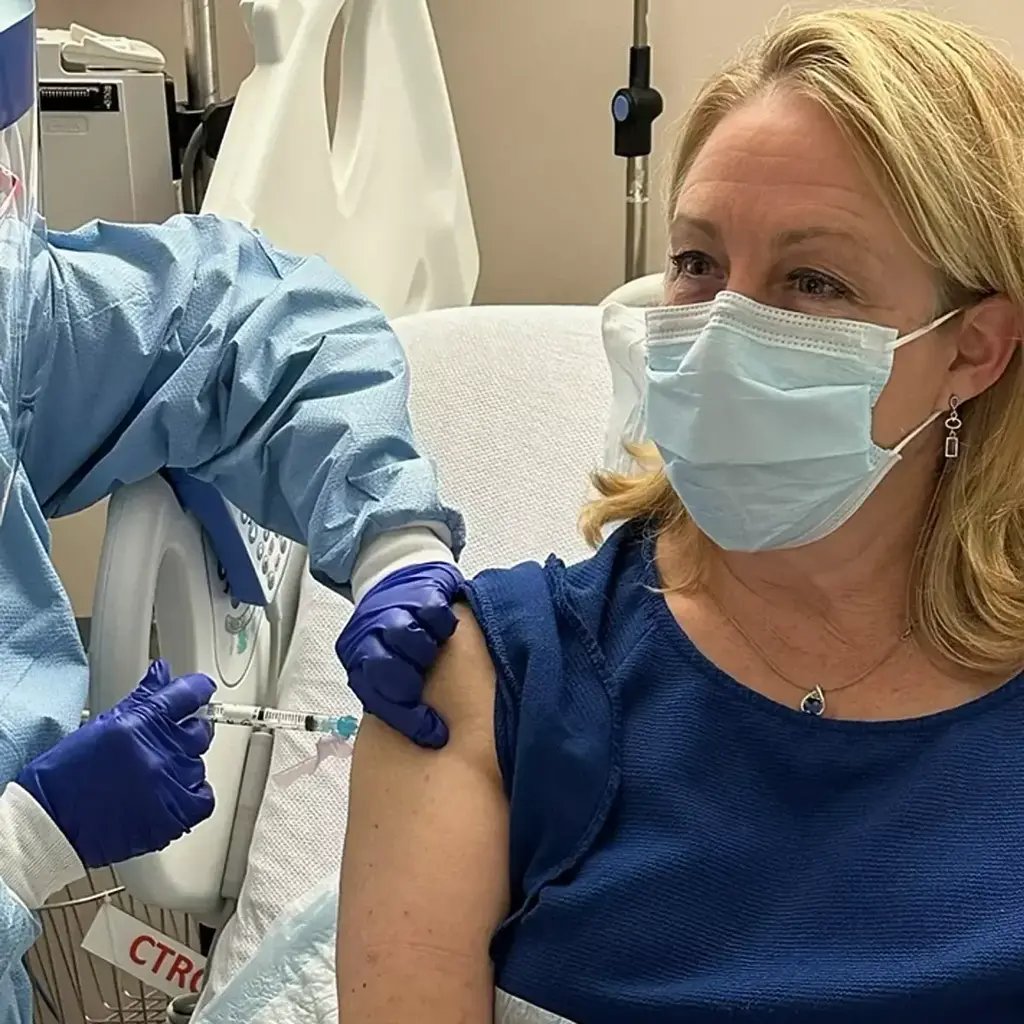
Scientists are now trying to go one step further: developing vaccines that teach the immune system to recognize and attack cancer-related changes before a tumor forms. Three experimental vaccines targeting Lynch syndrome are currently in development. Two have already entered early clinical testing in the United States, while a third trial is getting underway in Britain.
The vaccine Norton received has shown enough promise that Dr. Eduardo Vilar-Sanchez of MD Anderson Cancer Center, who led a study published about six months ago, expects a larger trial to begin early next year.
“It gives me hope,” said Norton, 59, an obstetrician-gynecologist at Houston Methodist Willowbrook Hospital. She has already survived another cancer linked to Lynch syndrome, and both of her children, now in their 20s, inherited her mutation.
If the vaccine ultimately proves effective, she said, “maybe they won’t have to have a colonoscopy every year for the rest of their lives.”
What causes Lynch syndrome?
Everyone has DNA mismatch-repair genes, which function much like a spell-checking system by correcting mistakes that occur when cells divide. In people with Lynch syndrome, one of these genes does not work properly, making it harder for the body to prevent the accumulation of mutations that can eventually lead to cancer, often before age 50.
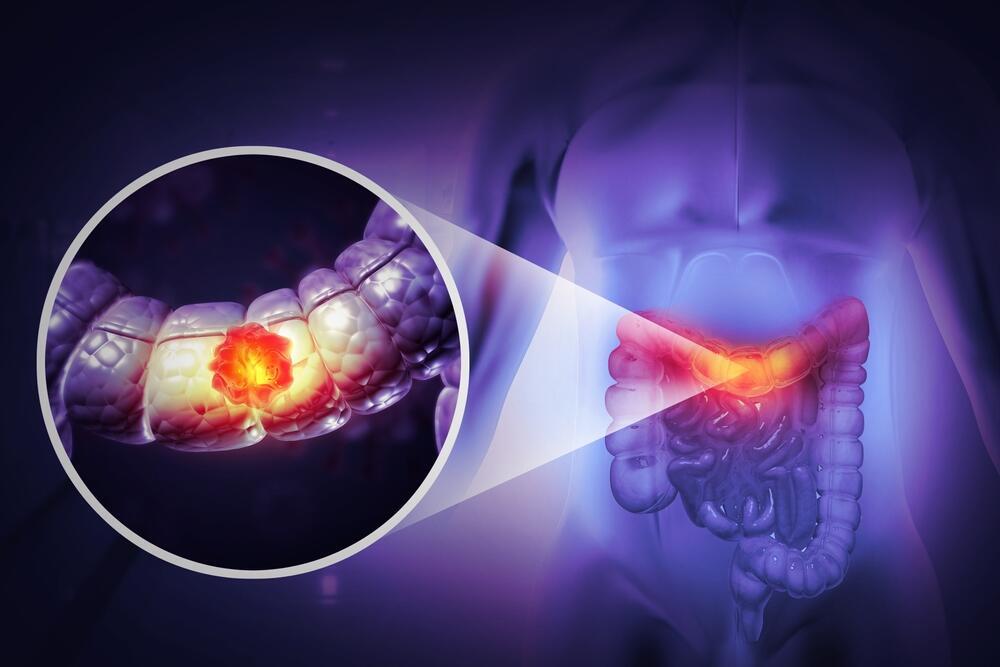
Colorectal cancer is the most common consequence. While the average person faces about a 5% lifetime risk, that risk can rise to as high as 80% in people with Lynch syndrome, depending on the specific gene mutation they inherited, Vilar-Sanchez explained.
The syndrome also substantially increases the risk of endometrial cancer and is associated with cancers of the pancreas, stomach and ovaries, certain skin cancers and some brain tumors. Norton’s sister died at age 25 from one of those brain cancers.
Norton knew several relatives had developed colorectal cancer, but genetic testing did not confirm that she had Lynch syndrome until she was in her 40s. She then moved from having a colonoscopy every few years to undergoing one annually.
Because of her medical background and familiarity with the syndrome’s additional risks, Norton also chose to undergo a preventive hysterectomy. During the surgery, doctors discovered that she already had early-stage cancer.
Teaching the immune system to recognize cancer
Two vaccines already in routine use can prevent cancers caused by infections: the hepatitis B vaccine and the HPV vaccine. Both work by preventing viral infections that can later lead to tumors.
Preventing a genetically driven cancer is considerably more complex because there is no outside pathogen for the immune system to target.
Tumors caused by Lynch syndrome “tend to accumulate hundreds of mutations that create new proteins not produced by our normal cells,” Vilar-Sanchez said. “You can train the immune system to recognize those proteins.”
Norton and 44 other Lynch syndrome carriers participated in an early trial of a vaccine developed by Swiss biotech company Nouscom. The vaccine is designed to teach the immune system to recognize 209 abnormalities commonly found in precancerous lesions associated with the syndrome.
The vaccine triggered activation of tumor-killing T cells. A year later, colonoscopies found fewer precancerous lesions and no advanced polyps, according to the MD Anderson team’s report in Nature Medicine.
“Can we stimulate the immune system even more” to keep pace with the rate at which Lynch syndrome promotes tumor formation, asked Dr. John Marshall, an oncologist at Georgetown University and adviser to the Colorectal Cancer Alliance who was not involved in the study. “This first paper suggests that, yes, maybe we can.”
For Norton, the findings were particularly striking. Her colonoscopies one and two years after vaccination showed no polyps at all, the first time that had happened since 2014. She was also among participants who received a booster dose a year later, with additional results expected this fall.
Researchers at the University of Oxford are now beginning an early trial using a similar approach with an mRNA vaccine developed by Moderna, whose technology was also used in its COVID-19 vaccine.
Scientists are also awaiting results from a somewhat larger study comparing ImmunityBio’s Tri-Ad5 vaccine, which targets several cancer markers, with a placebo group.
‘Early results are encouraging’
Dr. Gali Perl, head of the Oncology Day Hospital Unit at the Davidoff Cancer Center at Beilinson Hospital, described the research as a potentially important shift in cancer prevention.
“This is a fascinating development in the field of cancer prevention,” Perl said. “Instead of relying only on surveillance aimed at detecting and removing precancerous lesions, researchers are trying to move one step earlier and teach the immune system to recognize and attack cells carrying changes characteristic of the cancerous process, before a tumor develops.”
But she cautioned that the current evidence is still preliminary.
“The present study is still small and was designed first and foremost to assess the vaccine’s safety and its ability to generate an immune response,” she said. “It is therefore too early to determine that the vaccine actually prevents cancer.”
Still, she added, the findings are encouraging.
(Photo: shutterstock)
“Participants developed a T-cell response against targets associated with tumors typical of Lynch syndrome, and follow-up also showed early signs that may indicate a reduction in the development of precancerous lesions.”
The next major step, Perl said, will be testing the approach in larger, controlled trials to determine whether the immune response translates into a meaningful reduction in precancerous lesions and, most importantly, cancer itself.
Researchers will also need to establish how long any immune protection lasts, what vaccination schedule works best and which Lynch syndrome carriers are most likely to benefit.
“For people with Lynch syndrome, this is an especially significant area of research,” Perl said. “Today, surveillance and preventive interventions play a central role in managing their risk. If such a vaccine is eventually shown to reduce cancer risk, it could add another layer of protection alongside existing surveillance and perhaps change the way we think about cancer prevention in populations at high genetic risk.”
Colorectal cancer rising among younger adults
About 158,000 people are diagnosed with colorectal cancer each year in the United States, most of them over age 50. Cases among younger adults have been rising, although the reason remains unclear.
Lynch syndrome affects about 1 in 279 people. Most carriers do not know they have it, but more are being identified as genetic testing is increasingly considered for people with family histories of Lynch-associated cancers or those who develop certain tumors at unusually young ages. Identifying one carrier can also reveal that other relatives may be at risk.
For people at average risk, U.S. guidelines recommend beginning regular colorectal cancer screening, through colonoscopy or other approved methods, at age 45.
Regardless of age, medical evaluation is recommended for warning signs including blood in the stool or rectal bleeding, persistent changes in bowel habits such as diarrhea or constipation, unexplained weight loss, abdominal cramping or persistent pain.