

Israel's Health Ministry on Monday morning circulated an updated emergency readiness document to hospital directors, HMO executives, and Magen David Adom. The guidelines, issued in light of ongoing unrest in Iran and the potential for regional escalation, emphasize that there is currently no change to the official alert level.
“The lessons of the war and Operation Rising Lion highlighted the need to accelerate transitions from routine to emergency mode,” the document states. Signed by Dr. Sefi Mendelovich, deputy director-general of the Health Ministry, it details pre-approved emergency directives that can be implemented immediately upon a change in alert status. These initial instructions will be followed by additional directives tailored to evolving circumstances, as assessed by the National Health Emergency Command Center.
The ministry stressed that this is a precautionary measure and that the health care system remains at Alert Level B, with no active preparations currently required.
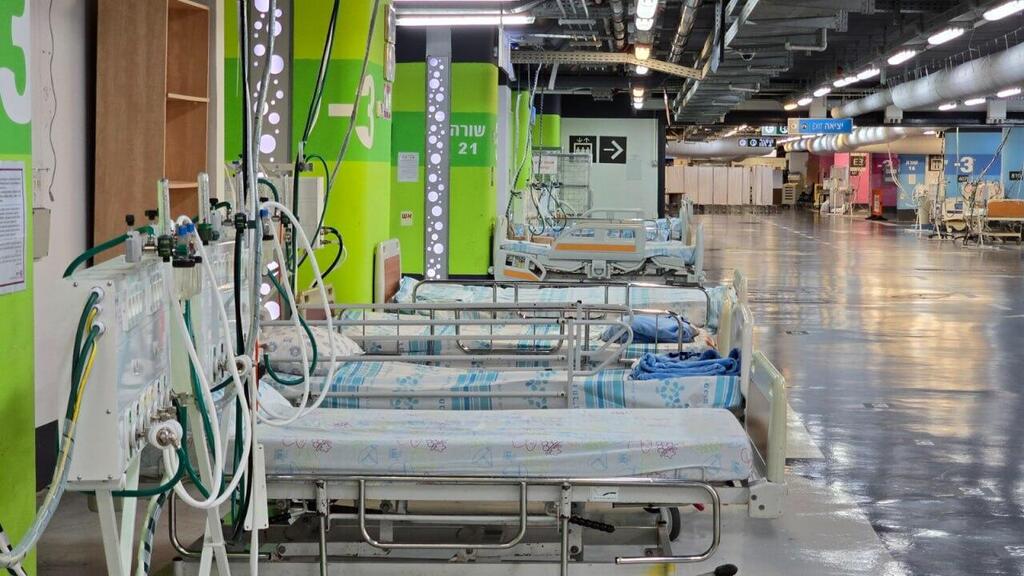
Rambam Hospital can operate in the underground parking lot
(Photo: Rambam Medical Center)
In the event of a shift to “Essential Activity” (Level 4 – Red Alert) nationwide, the health care system would immediately activate emergency headquarters, transition to 12-hour shifts, suspend outpatient and elective services and prepare for mass-casualty incidents. Hospitals would begin a rapid 50% patient reduction and evacuate visitors where possible, with care relocated to protected areas, including underground facilities.
Hospitals are also instructed to prepare for expanded in-home hospitalization services, ensure communication systems are operational, and confirm readiness of wireless and satellite devices. In the community, mental health hotlines and telemedicine services will be expanded.
Guidelines also address continued care facilities—geriatric, psychiatric and rehabilitative institutions—emphasizing swift patient discharges to the community and readiness to accept transfers from general hospitals.
For the mental health sector, the ministry plans to activate the national resilience center and all local resilience centers, coordinate with municipalities, and release videos offering initial psychological support in emergencies.
The blood services division is aiming to stockpile 12,000 units of blood, though Magen David Adom is currently facing shortages and urging the public to donate in anticipation of possible emergency scenarios.
The Health Ministry reiterates that these steps are part of preparedness and vigilance measures and do not reflect a change in the current risk assessment.