

"A year ago, following my severe injury, I was in a terrible abyss. I felt that everything I had built had fallen apart in my hands. Then I came to the farm. You were a lifeboat in the middle of the sea for me; the connection with the animals saved me and my family," wrote an IDF soldier wounded in the war to the team of social workers at the Therapeutic Riding Center of Israel (TRCI) in Tel Mond.
The therapeutic farm, which serves populations with complex special needs, and in the last two years also Israelis displaced from the Gaza border region, including families and children in states of anxiety and trauma, post-trauma casualties from the war, bereaved families and also Magen David Adom and ZAKA rescue teams exposed to a complex reality – is a pioneering and leading association in the field of therapeutic riding and dog training in Israel.
Gallery
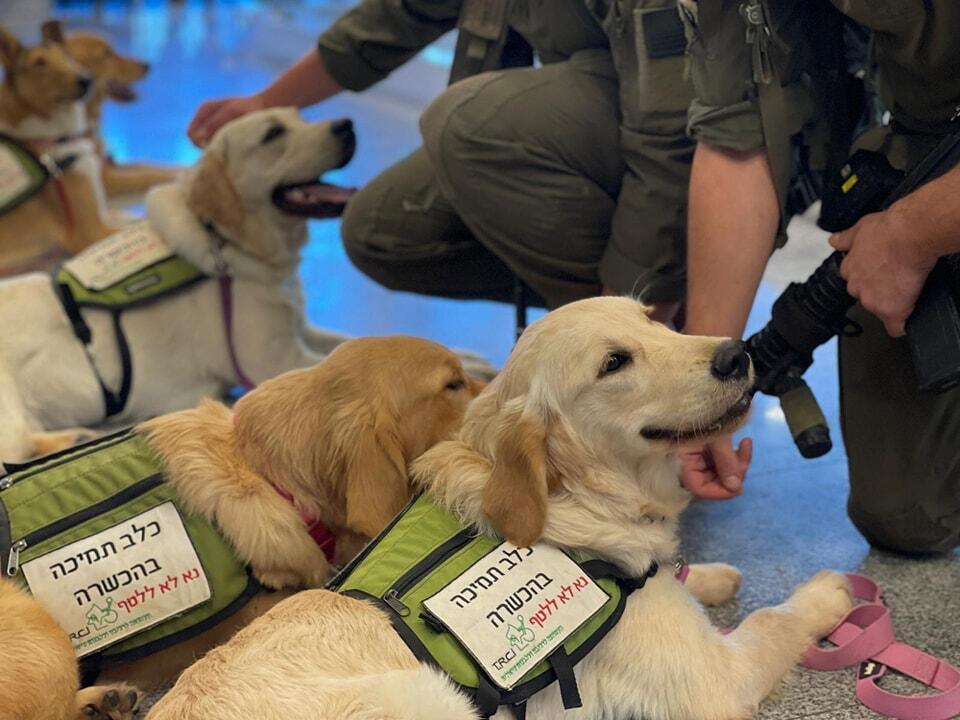
'Service dogs are the highest level of emotional support that can be provided'
(Photo: Therapeutic Riding Center of Israel)
The association implements and develops a variety of treatment methods for trauma and complex emotional states, with the therapy itself being performed with the help of horses and dogs, man's best friends, bringing a profound message to those who need it.
"The collaboration between the association and the Defense Ministry, which began even before the war, deepened following it, based on the understanding that service dogs are the highest level of emotional support that can be provided, out of a desire to expand the range of influence of therapeutic dogs on humans, and to enable those who need the connection also emotionally and not just therapeutically-physically," explains Dr. Dorit Brafman, CEO of the association for the past 20 years, a Ph.D. in social work, and head of the master's program in social work at Ariel University.
"The program is very special because the person who trains the puppy is the patient himself. He receives the puppy after it has spent a short period with a foster family, and with the help of a broad professional support network that we provide – which includes accompanying trainers – he learns everything necessary to train the dog and make it a part of his life."
"Our social workers also accompany the patients throughout the program, which lasts for a year," describes Barfman. "The process is intentionally gradual and patient to allow for optimal adjustment of the dog to the patient – and vice versa."
What is special about the emotional support dog?
"While a regular service dog serves only its owner, in the case of our patients and the unique program we built for them, the dog doesn't just become the patient's, but actually belongs to the entire family and affects its well-being."
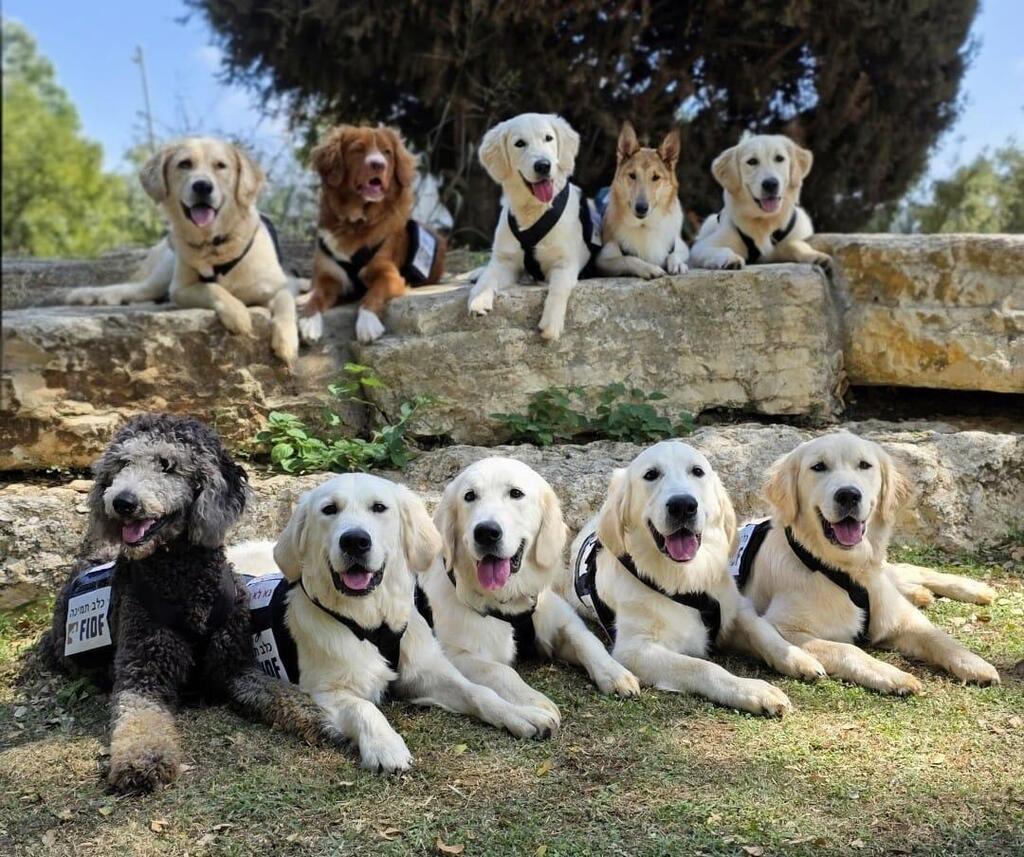
Service dogs at the Therapeutic Riding Center of Israel (TRCI) in Tel Mond
(Photo: Gal Barkat)
"The program operates in collaboration with Friends of the Israel Defense Forces (FIDF) and with Sheba Medical Center. The puppies are trained by the association's staff to serve as emotional support dogs for soldiers dealing with PTSD, and we receive many reactions from family members of patients who describe how the dog's presence in family life changes them for the better."
Unconditional acceptance
On October 7, 2023, out of the great national shock, TRCI staff realized they could not continue their regular activity, and that they possessed tools that could help populations affected on that terrible day.
Thus, the decision was born to open the association's gates to anyone seeking to calm down and connect with the animals at the farm, horses and dogs, to soothe the soul. "The response to our invitation to come to the farm, to spend time with the horses and dogs, to care for them in our green spaces, was immediate. In the first weeks of the war, dozens of families from northern and southern Israel who were evacuated to the center came to us and received treatment with the help of horseback riding or dog therapy."
"All these families became part of our circle of patients and received the assistance completely free of charge. Some came simply to stay in the place and relax. And indeed, we provided broad emotional support in the difficult situation we were all in, including easing anxieties in evacuated children from the North and South who were in complex emotional states at the start of the war, and later also for the children of reservists who came to us. We provided the response both in groups and individually, depending on the situation," says Brafman.
Therapeutic riding and therapeutic dog training are two techniques in animal-assisted therapy common today in Israel and globally. They are recommended in many cases as part of a rehabilitation process after neurological damage, and/or as complementary therapy to improve the condition and quality of life of children and adults with a wide range of special needs.
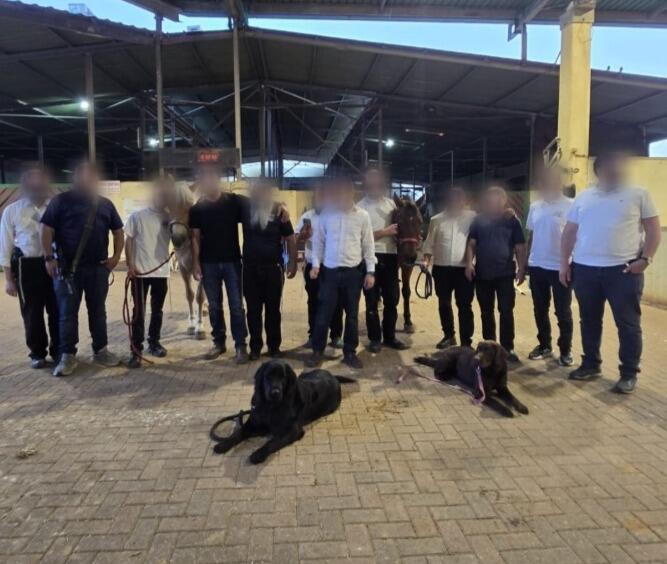
ZAKA volunteers at the TRCI
(Photo: Therapeutic Riding Center of Israel)
The basis of these techniques is the recognition of the proven benefits of animal assistance in processes of improving the physical, social, emotional or cognitive functioning of the person needing assistance.
The animals are in an active state where they initiate contact and connection with the patient and accept them unconditionally, which provides a sense of personal security and trust in the relationship, giving the patient an opportunity to express deep emotional aspects. Additionally, the bond created between the animal and the patient does not require the use of words to create closeness, which is an important component in treating people struggling with communication or language difficulties.
The treatment methods implemented by the professional team combine educational, psychological, physiological and rehabilitative components, with an emphasis on building and implementing a holistic therapeutic response that provides the broadest possible support for the needs and difficulties of each patient, through a personal program built for them with the help of a multidisciplinary team, composed of leading professionals in their fields with long years of experience in the therapeutic program.
Treating the caregivers
Another important and unique area the association decided to help with is establishing a therapeutic program for the caregivers themselves. During the war, the association submitted a therapeutic program to the National Insurance Institute called "Rescuing the Rescuers," within which ZAKA and Magen David Adom volunteers came to the farm for over a year, undergoing profound treatment frameworks with the help of horses and dogs.
"To see the ZAKA people with the dogs, and to understand how much this connection gives them strength to cope with the complex reality, was an emotional and amazing thing," testifies Brafman.
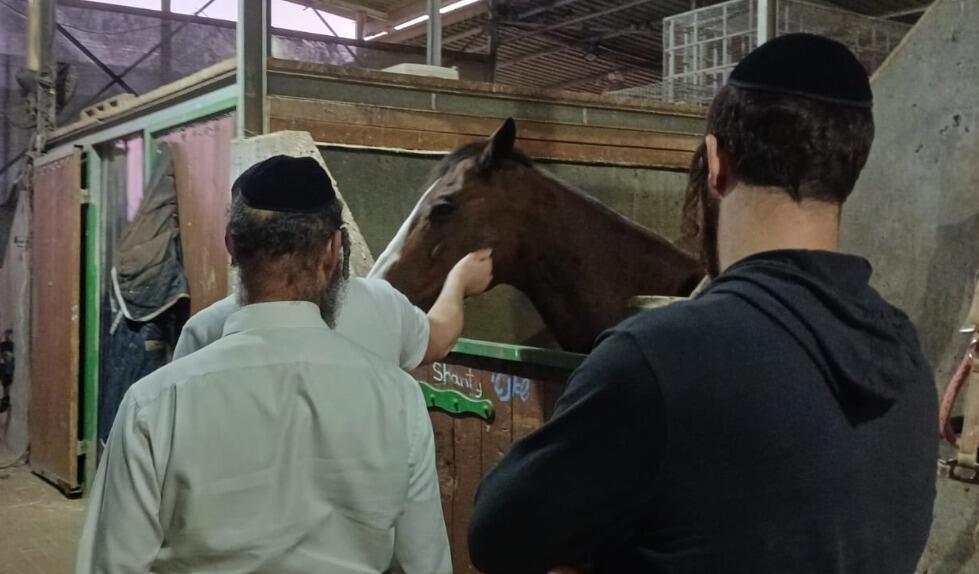
ZAKA volunteers at the TRCI
(Photo: Gal Barkat)
Shlomo Yehoshua Levi, a ZAKA volunteer who was in the Gaza border region on that terrible Saturday and was exposed to sights that the soul struggles to contain, is one of those who took part in a group therapy session at the farm: "The association members were the first to treat us after we rushed to the scene on October 7 and saw everything. We thought we were strong people, that we would treat ourselves and be fine. We quickly understood that we needed external help and guidance from professionals, and slowly they managed to restore our ability to understand that we were harmed and to deal with this complexity through the dogs, horses, and conversations with the therapists."
"It's a wonderful place, and I can say, I think also on behalf of my other group members, that the first step in the treatment that has been helping us and our families for over two years – we took it here, and I am very grateful to the team for that."
Dr. Barfman, how did you feel when you saw the process Shlomo and his friends were going through with you?
"It was still in the middle of the war and the battles. All of us at the farm had a feeling that we were partners in a broad healing of our society, by providing emotional assistance to those who care for the general public, and giving strength to the rescue personnel during such a difficult period for them and the country. Among the hardest we've known."
The wide range of treatments later led to the training of emotional support dogs for patients from past wars, for whom the situation triggered reactions and who needed an immediate support framework.