

Three passengers have died, eight people are sick and the cruise ship MV Hondius is stranded off the coast of Cape Verde in the Atlantic Ocean, awaiting permission to dock. Spain’s government said Tuesday night that it would accept the World Health Organization’s request to receive the ship’s passengers in the Canary Islands, but the islands’ regional leader said Wednesday morning that he strongly opposed the move.
According to a BBC report, the ship’s British doctor is among two crew members who have fallen ill and require evacuation on a hospital aircraft. A German national passenger is also awaiting evacuation.
Gallery
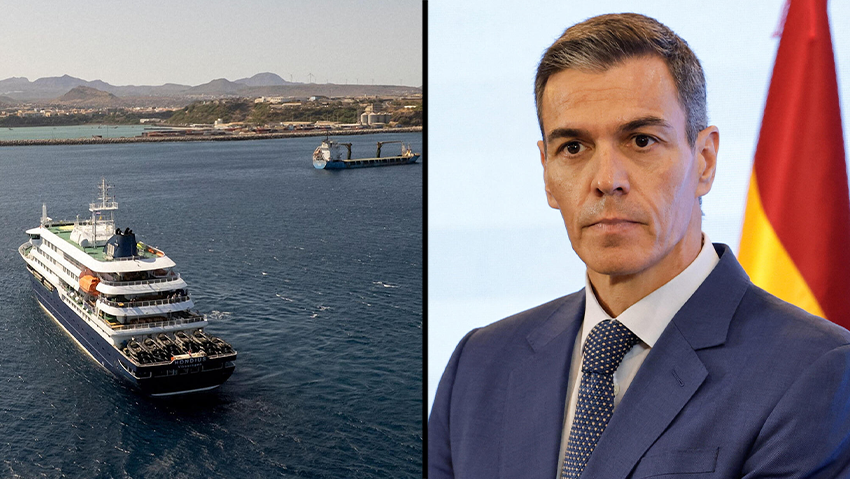
The cruise ship where three passengers died amid a hantavirus outbreak; Spanish Prime Minister Pedro Sánchez
(Photo: Reuters / Tingshu Wang, AFP)
"This decision is not based on any technical criteria, nor is there sufficient information to guarantee public safety," Canary Islands President Fernando Clavijo told radio station COPE, adding that he had requested an urgent meeting on the issue with Prime Minister Sánchez.
Clavijo, a member of the conservative People’s Party, the main opposition to Sánchez’s party, had argued earlier that the ship should be handled in Cape Verde itself, before returning to the Netherlands.
Spain’s Health Ministry, led by Mónica García, defended the decision to allow the ship to dock, saying the Canary Islands are “the closest location with the necessary capabilities” to handle the situation.
Before the current uproar in Spain, WHO Director-General Tedros Adhanom Ghebreyesus sent Sánchez a letter of thanks, saying the rapid evacuation of passengers was a “humanitarian necessity” and warning against “unnecessary restrictions without public health justification.”
Tears on the cruise: Three passengers die from deadly virus as others remain confined to cabins
(Instagram)


The ship left the port of Ushuaia, Argentina, in early April on a voyage that included stops in Antarctica, South Georgia, Tristan da Cunha, St. Helena and Ascension Island before reaching the Cape Verde area, about 310 miles west of Africa, on May 3. About 147 passengers and crew members from 23 countries are on board.
Another case in Switzerland
The first death occurred on April 11. A 70-year-old Dutch man who developed fever, headaches and diarrhea on board on April 6 died after his condition deteriorated into respiratory distress. No microbiological tests were conducted on him.
His 69-year-old wife was evacuated to St. Helena and then to South Africa, where she died at a hospital in Johannesburg and was confirmed to have hantavirus. The couple had traveled in South America, including Argentina, before boarding the ship.
On April 27, a 69-year-old British passenger who tested positive for the virus was evacuated from Ascension Island to South Africa, where he remains hospitalized in intensive care in serious but stable condition.
On May 2, a German passenger who developed pneumonia died. Hantavirus has not yet been confirmed in her case. According to the WHO, eight cases have so far been linked to the outbreak: three laboratory-confirmed cases and five suspected cases.
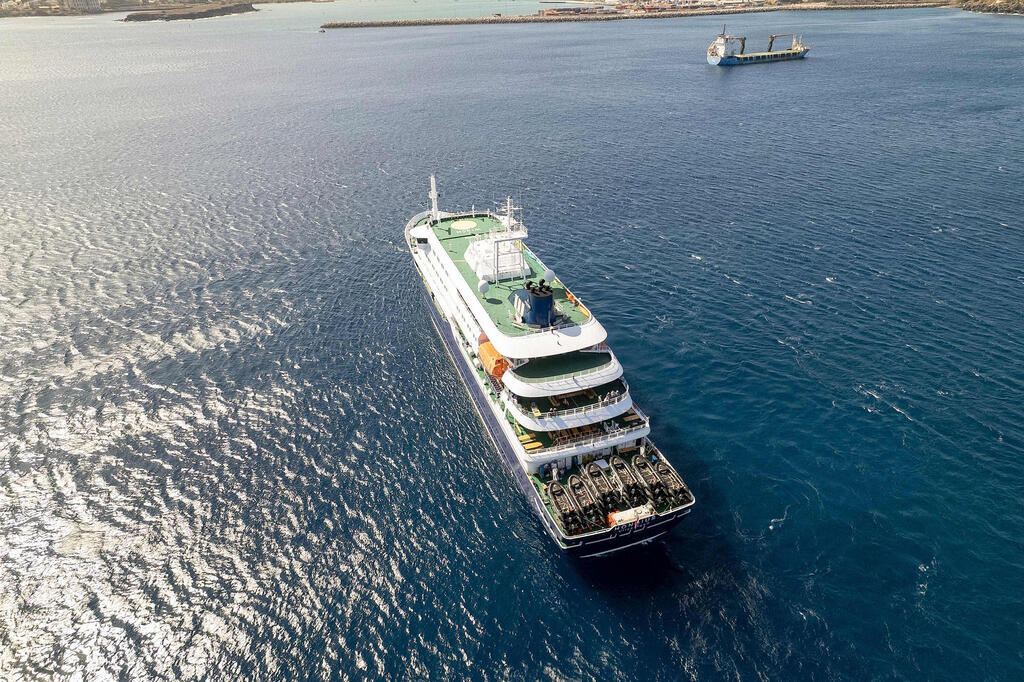
The MV Hondius cruise ship is stranded west of Africa. Archive
(Photo: AFP)
Two crew members requiring urgent care, including the ship’s British doctor, along with another German passenger, were evacuated from the vessel by air ambulance. Initial reports said they would be taken to the Canary Islands, but the WHO later said the three were on their way to the Netherlands for medical care and further testing. At the same time, Oceanwide Expeditions said two Dutch infectious disease specialists were heading to the ship and would remain on board after it leaves the Cape Verde area.
The WHO is also monitoring more than 80 passengers who were on an April 25 Airlink flight from St. Helena to Johannesburg, the same flight taken by the sick Dutch woman before her death.
Meanwhile, the medical picture is becoming clearer: South Africa’s Health Ministry confirmed that the two hantavirus cases identified in the country are linked to the Andes strain, the only strain in the hantavirus group capable of spreading from person to person, though only through close and prolonged contact.
At the same time, Switzerland’s government said a passenger who returned from the ship is now hospitalized in Zurich, but added that there is no danger to the Swiss public.
The WHO also said that despite concerns over possible person-to-person transmission, the overall risk to the public is still considered low.
How it unfolded: The latest timeline
April 6: A Dutch passenger developed fever, headaches and diarrhea on board.
April 11: His condition deteriorated. He developed respiratory distress and died.
April 24: His body was taken to St. Helena. His 69-year-old wife, who had also developed symptoms, was evacuated with him.
April 25: The woman’s condition deteriorated during the flight to Johannesburg.
April 26: The woman died at a hospital. Tests confirmed she had hantavirus.
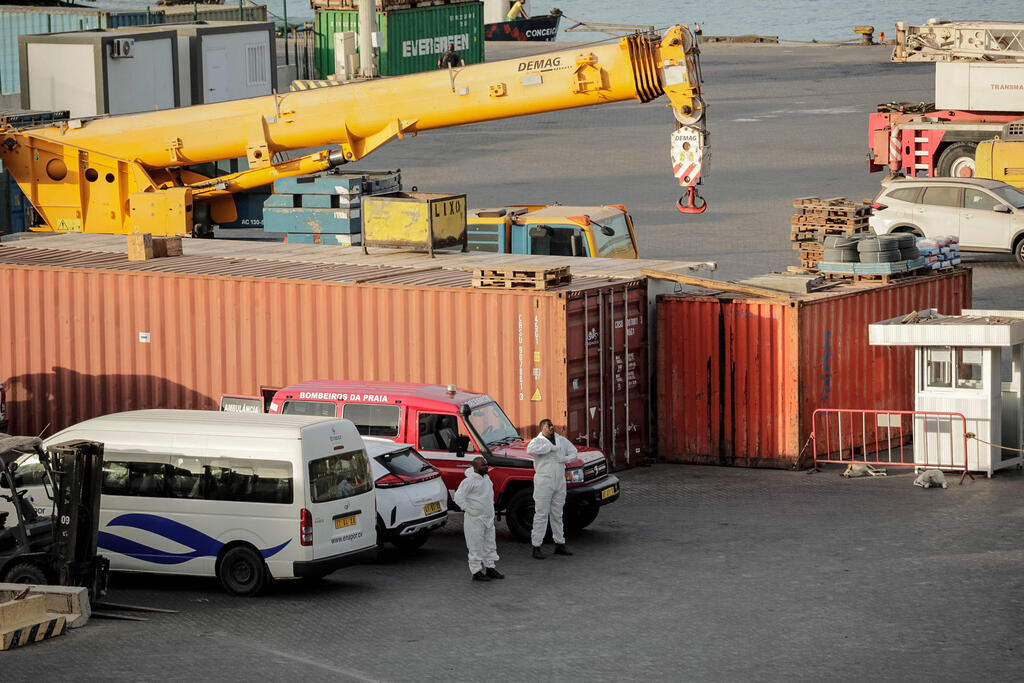
A port in Cape Verde prepares for the crisis aboard the cruise ship, where three people died of hantavirus
(Photo: AFP)
April 27: A 69-year-old British passenger became seriously ill and was evacuated to South Africa. He also tested positive for the virus and is hospitalized in intensive care in serious but stable condition.
May 2: A German passenger who developed pneumonia died. A passenger connected to her is ill and requires evacuation.
May 3: The ship reached the Cape Verde area.
May 5: The WHO said there may be human-to-human transmission on board and noted that, according to its information, there are no rodents on the ship.
May 6: Spain approved the ship’s entry to the Canary Islands. The Canary Islands’ regional leader objected. The ship’s doctor was evacuated by air ambulance to the Canary Islands. Switzerland said a passenger who returned from the ship was hospitalized in Zurich.
Hantavirus is named after the Hantan River in South Korea, where it was first identified. In the U.S., it was first documented in 1993 after an outbreak in the Four Corners region of the West, where a doctor with the Indian Health Service noticed an unusual pattern of deaths among young patients. Since then, fewer than 900 cases have been reported in the U.S.
There is no treatment or vaccine for the virus. The death rate from the lung disease caused by the virus is about 35% to 38%, rising even higher among older adults and people with weakened immune systems.