

Prime Minister Benjamin Netanyahu warned that Israel faces a challenging geopolitical reality and may need to adapt to an economy with “autarkic features.” He invoked an ancient analogy: “to be Athens and super-Sparta.”
Netanyahu’s comparison at the Accountant General’s Conference in Jerusalem this week immediately drew attention to the ancient city-state of Sparta, often remembered for its isolation and militarism. But historians caution that the parallels may not be as straightforward as the prime minister suggested.

Sparta, located in Laconia in southern Greece’s Peloponnese, was one of antiquity’s most powerful city-states, known for its rigid military culture and austere way of life. Unlike Athens, with its democracy, culture, and trade, Sparta was ruled by two kings, a council of elders, and overseers who tightly controlled citizens’ lives.
The Spartans deliberately limited contact with the outside world. According to Dr. Lee Mordechai, a historian at the Hebrew University of Jerusalem: “They feared that money, wealth and luxury would cause social division. To prevent this, they banned gold and silver coins and used heavy iron currency that was worthless outside Sparta. This contributed to their relative isolation from Greek trade.”

Illustration of a Spartan warrior
(Photo: Serhii Bobyk/Shutterstock)
The legendary lawmaker Lycurgus is credited with this policy, designed to preserve Sparta’s unique society and shield it from outside influence. Mordechai noted that such isolation would be impractical today: “In the modern era, even the most isolated states depend on foreign trade.”
Sparta’s social order was hierarchical: citizen-warriors at the top, free non-citizens in surrounding villages and the helots, a majority population of serfs. The ruling elite feared foreign ideas — such as democracy, and pluralism — could spark revolt among the helots. Military training began in childhood, aimed at producing disciplined soldiers loyal to the state.
The Spartan way of life became synonymous with toughness and simplicity. The word “laconic” derives from Laconia, their homeland, and “Spartan education” still describes a harsh, minimalist approach.
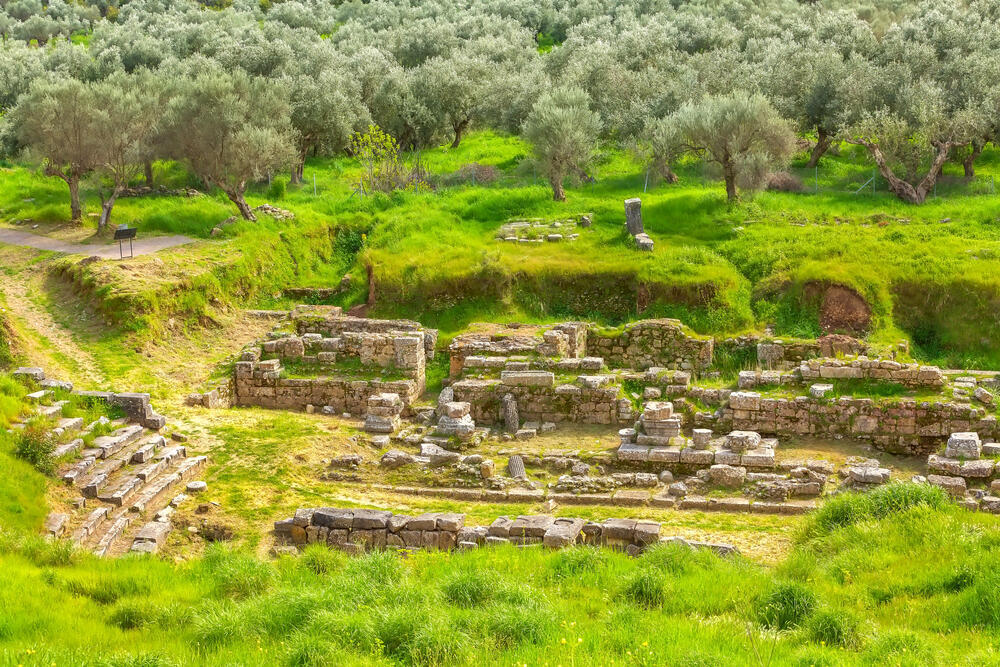
Sparta ruins
(Photo: Nataliya Nazarova/ Shutterstock)
Netanyahu’s analogy may have been intended to highlight Israel’s resilience despite being smaller than its adversaries. Mordechai pointed to the famous Battle of Thermopylae in 480 B.C., where King Leonidas and his 300 Spartans fought to the death against a massive Persian force. “The battle became a symbol of bravery in Western culture. Perhaps Netanyahu sought to present Israel as surviving and prevailing despite disparities in size and power,” he said.
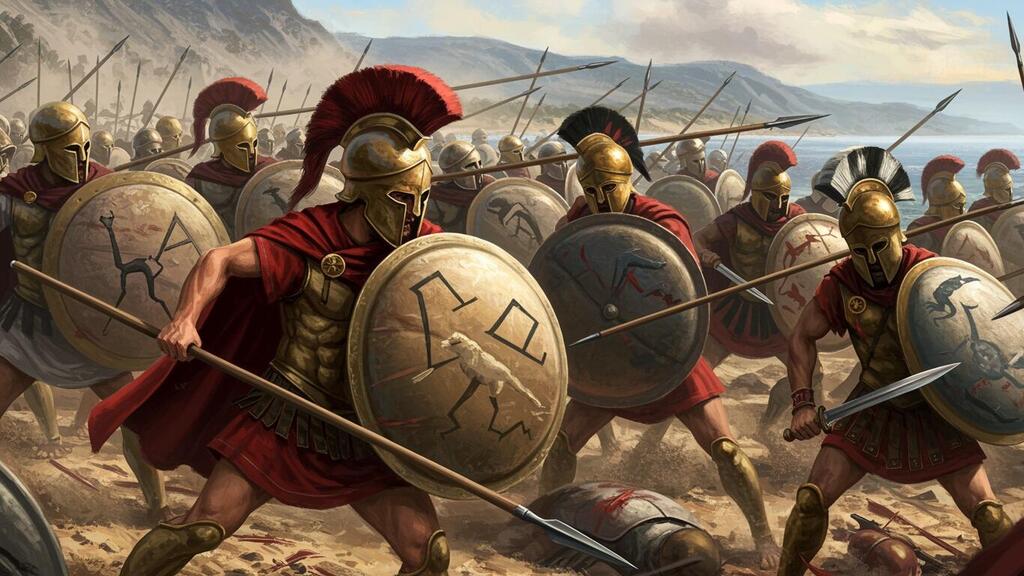
(Photo: Shutterstock AI)
Yet the analogy has limits. “Sparta was not truly small, but it did maintain military dominance for a time,” Mordechai said. “Ultimately, its isolation contributed to its decline, as it blocked the economic and cultural growth that could have sustained it. By the 4th century B.C., Sparta’s power waned, and by 192 B.C. it was absorbed into the Achaean League, then later into the Roman Republic. Still, its reputation as a nation of hardened warriors endures.”
In contrast, modern Israel exists in a globalized world. Mordechai argued that while the prime minister’s rhetorical flourish may aim to project strength, “the comparison to Sparta — as a small, isolated state surrounded by enemies — is less fitting.”