

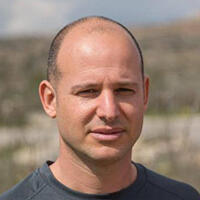
When an IDF soldier seriously wounded in battle opens his eyes in the hospital, the first thing he looks for is an anchor. After hours or days of shock, pain and an evacuation by helicopter under fire, the first person he sees standing beside his bed is a uniformed soldier from the IDF’s RAM 2 medical support system. For Col. Dr. Avi Shina, 48, commander of the IDF Medical Services Center, the system is measured precisely in those moments.
Shina is now concluding three complex years in the role, bringing with him 22 years of military service. His previous positions included medical officer of the Givati Brigade during the Second Lebanon War, commander of training programs at the IDF Medical Corps school, medical officer of the 36th Division and chief medical officer of Central Command. Alongside his military career, he works as an obstetrician-gynecologist at Sheba Medical Center. But even that extensive experience did not prepare him for the war that began on October 7.
Gallery
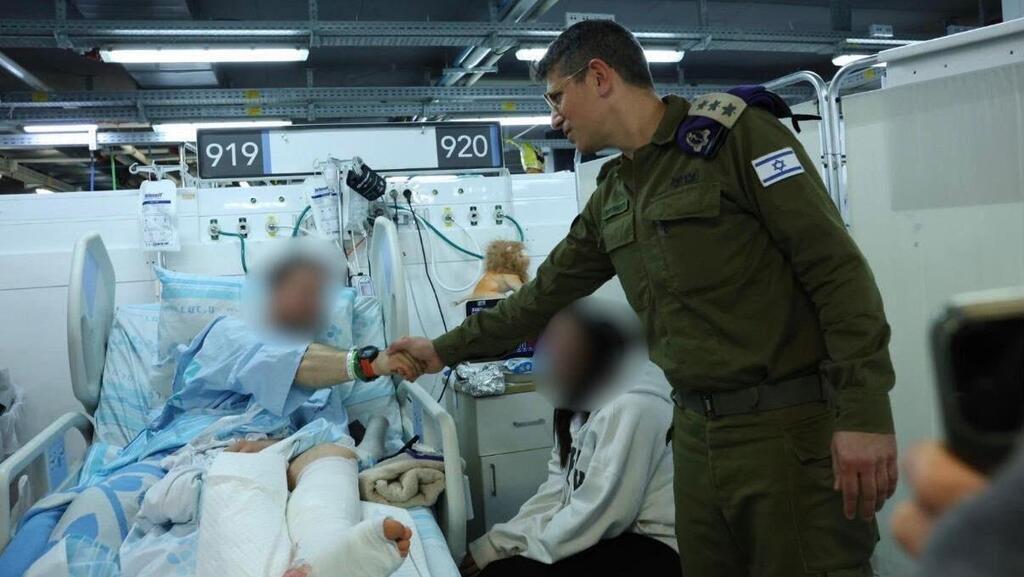
Col. Dr. Avi Shina, commander of the IDF Medical Services Center, with a wounded soldier
(Photo: IDF Spokesperson's Unit)
Data collected by the center under his command reflect, on one hand, the heavy toll of more than 8,900 wounded personnel and, on the other, an impressive return-to-service rate of about 77%. That includes roughly 3,600 combat soldiers out of 4,600 wounded, about 400 combat support troops out of 500 and another 3,000 soldiers in other roles.
But beyond the statistics and structural changes he led, Shina chooses to focus on what happens when the operating room lights go dark and wounded soldiers are left alone.
“The number of wounded at the beginning of the war was enormous. It was something we had never faced before,” he said. “The moment of injury is extremely significant, but it is only the beginning.”
“RAM 2 units are based in hospitals and receive the wounded soldier. It is important that, just moments after being wounded, he sees someone in uniform at the hospital. A soldier is brought in, flown out and lands at the hospital. He has no idea what is happening, then suddenly he sees a female soldier. It gives him an anchor. He sees something he recognizes.”
The upheaval and profound sense of dislocation emerge when the soldier is discharged and must return home, where the supportive environment disappears.
“There is a gap. Ultimately, soldiers are very comfortable in the hospital. There is a ‘positive commotion.’ Commanders are there, friends come to visit. There is a support system,” Shina said.
“One wounded soldier told me, ‘Here I’m a monster, but I’m surrounded by other monsters and I feel comfortable. When I go home, I’ll be a monster alone.’ That sentence really stayed with me.
“That is why we established the Recovery and Rehabilitation Center. It looks at wounded soldiers from every angle and provides holistic care. We created a social services department that gives wounded soldiers all the support they need, so they know there is one place caring for them until they are ready to return to service.”
The expanded system did not stop there. Officials at the Medical Services Center also identified profound anxiety among career soldiers and combat troops seeking to return to their units.
“We understood that the journey does not end there. It continues with the return to the unit,” Shina said. “When we tried to reassign career soldiers, we saw their fear about going back. The soldier asks, ‘Will they let me leave for tests and treatments, or will I have to fight every time I need to go?’
“The combat soldiers who asked to return are obviously in relatively good condition, but they still need further treatment. Every wounded soldier has a ‘tail’ of additional medical care. They were worried they would not be allowed to attend their medical appointments.
“We established a department within the center with two nurses whose sole responsibility is caring for soldiers returning to their units. The combat soldiers know those nurses are their point of contact. That is how we continue supporting them after they return.”
‘A mixture of joy and sorrow’
Another significant change Shina led during his tenure involved broader medical care and mental health services.
“Wounded soldiers have special needs. We are very proactive and ask whether there are signs of distress. That did not happen in the past,” he said. “We understood that mental health expertise had to become more diverse, so we brought in officers with a wider range of backgrounds.
“People who are home alone after an injury have a difficult time. That is why we created support groups and required them to meet.”
Despite the military failure of October 7, Shina said the system under his command had been well prepared and has since expanded significantly.
“The war is not going anywhere,” he said.
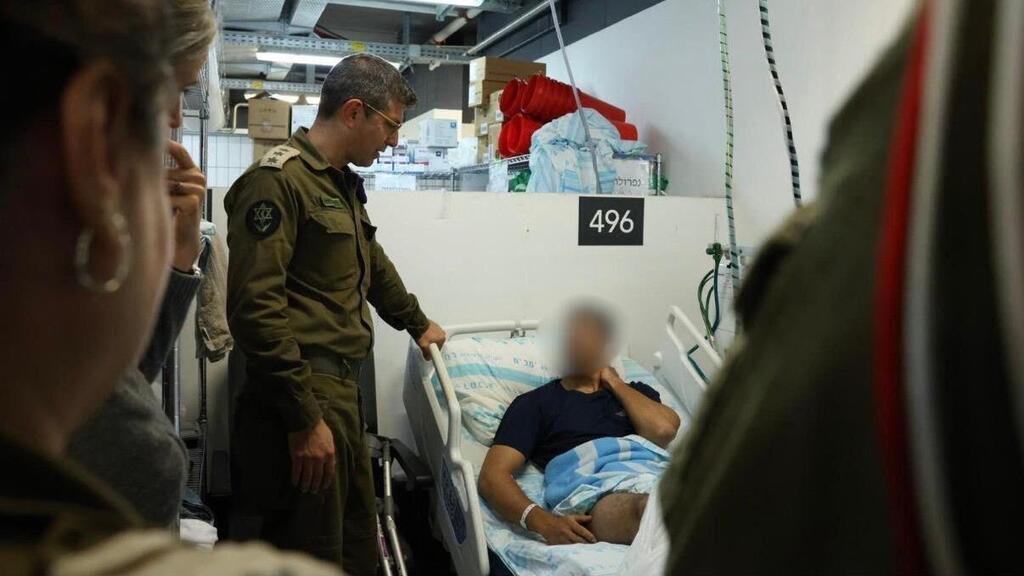
Col. Dr. Avi Shina with a wounded soldier
(Photo: IDF Spokesperson's Unit)
Looking ahead to an increasingly lethal battlefield, the outgoing commander also pointed to a major vulnerability.
“We will have to make a significant leap in the treatment of head injuries,” he said. “It begins at the point of injury, where we will need to improve the precision of treatment and provide better head protection. In rehabilitation, we still have a great deal of work to do. The battlefield is becoming more lethal and it will become even more lethal.”
After 22 years in uniform, Shina reflected on the toll borne by the wounded and their families.
“There are families whose lives are completely destroyed because of the sacrifices they are forced to make,” he said. “You meet them at the most difficult point in their lives. Alongside the success stories, there were also very difficult cases. These are families that paid an extraordinarily heavy price.
“You sit beside a wounded soldier and his parents and you see the pain and the cost.”
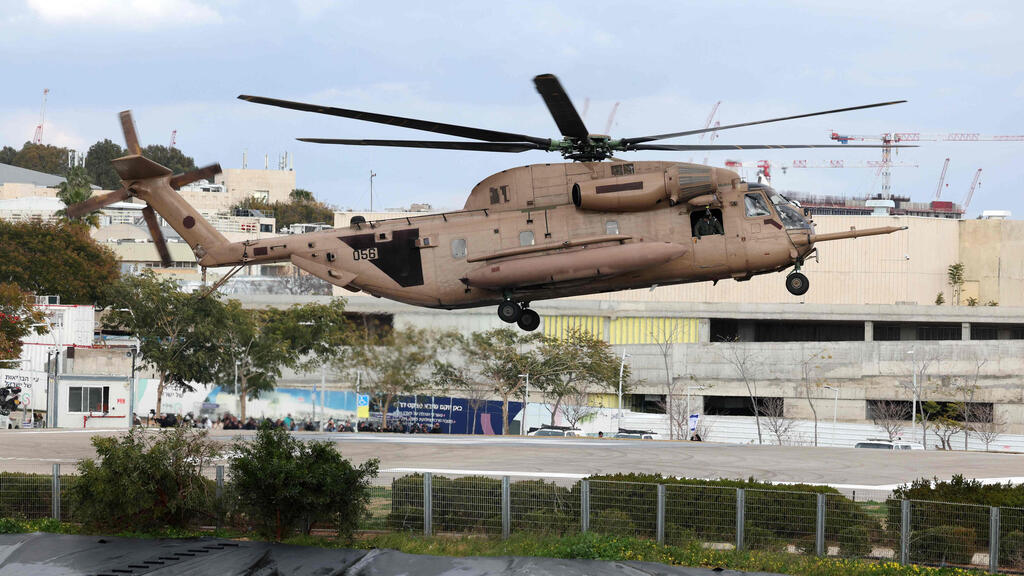
A helicopter carrying released hostages lands at Sheba Medical Center
(Photo: Jack Guez/AFP)
He also has not forgotten the care provided to hostages released from captivity, a mission he described as the high point of his military service.
“We had the privilege of treating the hostages,” he said. “It is impossible to prepare fully for that mission because it is so emotionally turbulent, but we carried it out with humility and professionalism.
“The hostages, understandably, had a very complex relationship with the military, and we knew how to prepare for that. Every hostage returned in a different condition.
“The emotions were deeply mixed. On one hand, there was immense pride that they were returning. On the other, there was the pain of our failure as a military and as a country. It was a difficult feeling, a mixture of joy and sorrow.”