

Many of us became familiar with the vagus nerve over the past two years, as stress levels soared and therapists urged us to find ways to calm both body and mind.
For those who are still unfamiliar with how it works, the vagus is the longest nerve in the human body. It begins in the brainstem and innervates the internal organs, including the heart, lungs and digestive system. It connects body and brain, regulates breathing, influences mood and emotions, and promotes relaxation.

It turns out this nerve also plays a significant role in activating the female sexual system, which for many women requires calm and a sense of safety in order to open up to intimacy and desire.
So yes, there is a reason people jokingly tell men to bring a bottle of wine, light a candle and do the dishes, in other words, activate a woman’s vagus nerve, before expecting a passionate night in bed.
How the nervous system shapes desire
One of the researchers who has extensively studied the vagus nerve in the context of female sexuality is Yochi Keshet, a lecturer and practitioner of Chinese medicine, reflexology and nutrition. She runs a holistic clinic and heads the reflexology program at Reidman College.
Before anything else, Keshet explains, the body has several nervous systems, two of which, the sympathetic and parasympathetic systems, complement each other and operate in constant balance.
“While the role of the sympathetic system is to activate us, for example when we wake up in the morning, sending blood to the limbs, increasing heart rate and promoting movement, the parasympathetic system is always working alongside it, signaling how much balancing response is needed to calm the body,” she explains.
“A good example is breathing. Every time we inhale, the sympathetic system activates, heart rate increases and blood flows through the body. But immediately afterward, when we exhale, the parasympathetic system takes over and signals relaxation. Throughout our lives, we constantly move between these two positive tensions, between action and rest.”

Yochi Keshet
And how does this relate to sex?
“It relates to the fact that female and male sexual systems are innervated and activated differently,” Keshet says. “While the female sexual system needs to be very relaxed and open in order to engage in intimacy, the male sexual system needs alertness and adrenaline.”
“In other words, for optimal sexual function, the female sexual system needs to be activated by the vagus nerve, through the parasympathetic system that creates calm, while the male sexual system needs activation by the sympathetic system, the one that produces arousal and readiness.”
To illustrate her point, Keshet takes us back to the early days of the war and to the evacuation hotels, where she arrived with her therapeutic teams and encountered men and women in opposite states of extremity.
“The evacuated men often wanted sex as a way to release tension and heightened alertness,” she says. “The women, meanwhile, could not understand where this was coming from. They were in anxiety and survival mode, which puts them in the opposite physiological state.”
In response, therapists asked hotels to open their gyms and sent the men to discharge stress through physical activity. When the men returned calmer and capable of approaching their partners with gentleness, opening a bottle of wine or offering a relaxing bath instead of energetic sex, they were speaking the body’s language, one it could understand. The chances for intimacy then increased.
“Lack of attentiveness to the body and misunderstanding its signals can also lead to health problems for women,” Keshet says. “For example, situations in which a woman does not want to have sex but complies with her partner despite her body signaling tension and closure can result in urinary tract infections the next morning.”

'To have sex, a man needs more stimulation, while a woman needs more relaxation'
(Photo: Shutterstock)
Why does this happen?
“Because the body speaks to us,” Keshet says, “and this is its way of trying to prevent us from having sex in situations or with partners that are not good for us at that moment.”
She describes a common scenario from her clinic: a couple deeply in love but in the middle of a heated argument they cannot resolve. He suggests, “Let’s sleep on it.” She remains tense because the emotional friction is unresolved. He then suggests, “Let’s hug, have sex, release it.” She cannot, because her entire system is still in high alert.
“I see this clearly in the clinic, when women develop urinary tract infections following sex that was not synchronized with their body’s language,” she says.
Stress shuts sex down
Keshet also points to a well-known phenomenon: women who cannot have sex while under stress or feeling unsafe, as the body responds with vaginismus, an involuntary contraction of the vaginal muscles.
“So bringing flowers is nice,” she says, “but what really matters is that a man ensures the woman in front of him is happy, calm and open. The male sexual system is driven by adrenaline from the sympathetic system, which increases blood flow and activity. A man needs that activating system to achieve an erection, while a woman needs the calming system. These are two entirely different physiological formats.”
She sums it up simply: “To have sex, a man needs more stimulation. A woman needs more relaxation.”
Understanding through the body: the woman’s ‘star position’
In her classes, Keshet teaches students about the meaning of the “star position” and how it communicates the woman’s body language. Imagine a woman lying on her back, eyes closed, breathing deeply, legs open and lifted toward the pelvis, arms extended outward.
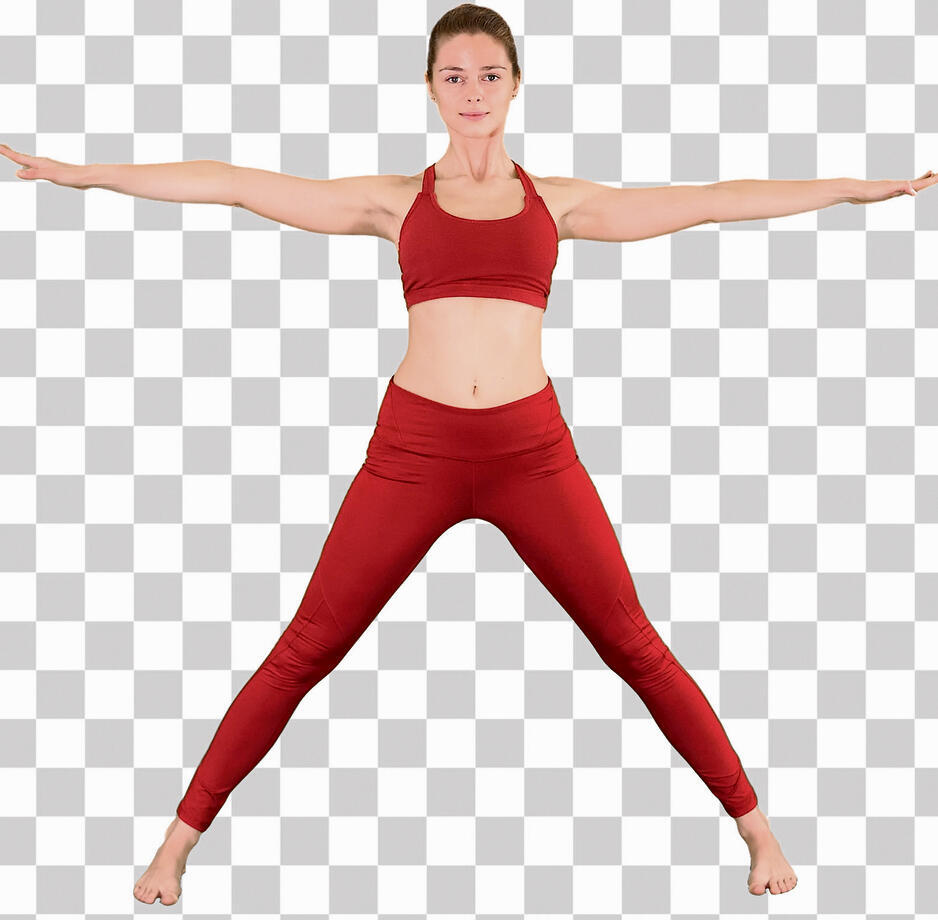
The woman’s ‘star position’
(Photo: FunKey Factory, Shutterstock)
This body language sends one clear message to the brain: everything is calm. There is no danger. No tension. The vagus nerve activates and signals that sex is possible.
“The brain immediately understands body language,” Keshet explains. “By contrast, even if I verbally tell my brain dozens of times that I am relaxed, but my body is clenched, legs closed and breathing shallow, there is no chance the brain will believe I am ready for sex.”
“But if I dim the lights, lie on my back in the star position, relax my muscles and breathe deeply, I signal openness and ease. The brain believes me. Otherwise, there is no chance I would be lying like this. Without words, a bodily message is delivered.”
Completely understood, through the body.