


A child has died of measles in New York State, marking the first known measles-related death there in more than 30 years, as an outbreak across the United States reaches levels not seen since 1991.
Authorities announced Monday that the child died in Lewis County, a rural area in northern New York State, hundreds of miles from Manhattan. The area is home to a longstanding Amish community, with about 400 members living in the town of Lowville, where the first infections were concentrated. All 11 people diagnosed in the town in early October were unvaccinated, and none of the infected children attended public school. Authorities have not disclosed whether the child who died belonged to the Amish community, the child's age or vaccination status. Health officials asked that the family's privacy be respected.
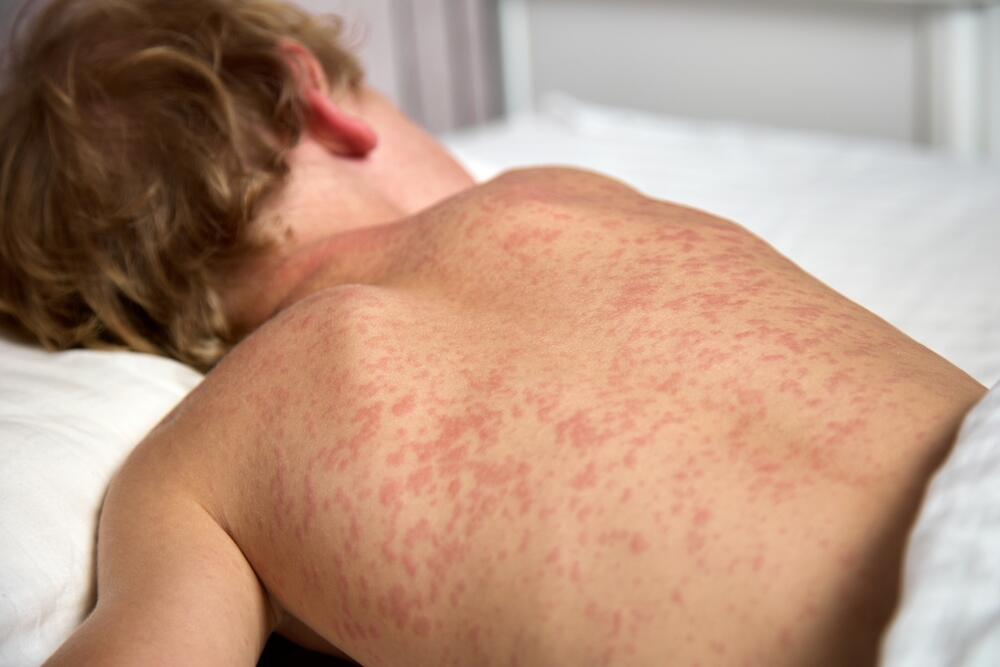
The outbreak in the county, which has fewer than 30,000 residents, began in late September. Until this year, not a single measles case had been reported there since authorities began publishing county-level data in 1994. Those infected include children and adults, some from the same family. The number of confirmed cases in the county has risen to 15, all among unvaccinated individuals, according to official data.
The outbreak in New York State has particularly affected Amish and Mennonite communities, conservative Christian groups, some of whose members maintain traditional lifestyles, avoid certain modern technologies and have low vaccination rates. In some communities, children attend small schools outside the public education system. Infection clusters have also been linked to major outbreaks among Amish communities in neighboring Pennsylvania and in Ohio. Meanwhile, a legal battle is underway over New York State's requirement that students be vaccinated, including those attending religious schools. Amish parents and educational institutions argue that the mandate violates their religious freedom. After losing in lower courts, they appealed to the U.S. Supreme Court, which has yet to decide whether to hear the case.
Although some Amish oppose vaccination on religious grounds, researchers who study the community explain that resistance generally stems from family traditions, distrust of modern medicine and practices passed down through generations, rather than an explicit religious prohibition. According to a 2022 survey conducted in Pennsylvania, only about three in 10 Amish families reported vaccinating their children, compared with a large majority of Mennonite families.
However, the current outbreak is beginning to change attitudes. Clinics serving traditional communities in Pennsylvania report growing demand for vaccines, with one clinic administering about 450 measles vaccine doses during vaccination drives. Doctors say increasing numbers of families who previously resisted vaccination are now seeking it voluntarily. At the same time, experts warn that distrust of the health care system, which deepened during the COVID-19 pandemic, continues to complicate those efforts.
The previous outbreak and the Israeli connection
As in some Amish communities, vaccine hesitancy also exists among certain ultra-Orthodox Jewish communities in the United States and Israel, although Judaism has no blanket prohibition against vaccination, and many rabbis actively encourage it. In 2018 and 2019, New York was at the center of a major measles outbreak concentrated partly in ultra-Orthodox communities in Brooklyn and Rockland County, north of New York City. Some of the initial infections were linked to travelers arriving from Israel, which was experiencing a major measles outbreak at the time.
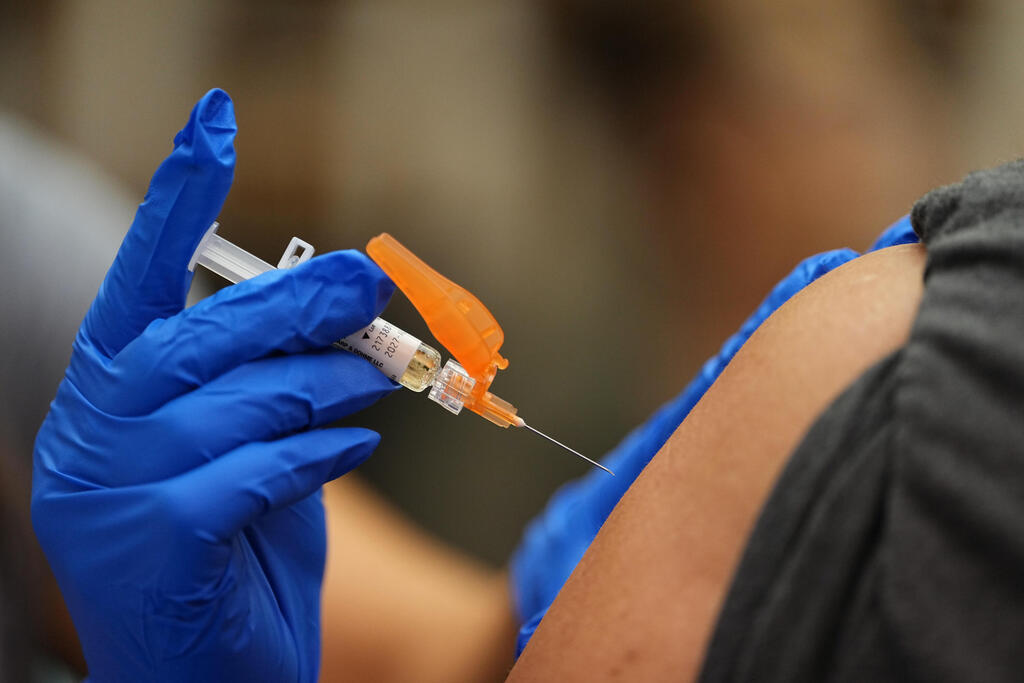
Measles vaccination
(Photo: AP Photo / Matt Rourke)
More than 1,000 people were infected in New York during that outbreak, prompting the state to eliminate religious exemptions from mandatory school vaccinations in June 2019. Diplomatic officials reported at the time that Israel's image had suffered serious damage and that antisemitic incidents had increased. The outbreak also prompted a large-scale vaccination campaign in ultra-Orthodox communities, conducted in cooperation with rabbis and local organizations, which helped raise vaccination rates.
New York Governor Kathy Hochul said Monday that she was heartbroken by the child's death. "As a mother and grandmother, I cannot imagine what this family is going through," she said. Hochul blamed the Trump administration for eroding public confidence in vaccines and warned that the death illustrated the consequences of undermining decades of progress against preventable diseases. In early October, she declared a statewide disaster emergency in response to the outbreak, allowing paramedics, midwives and additional medical professionals to administer vaccines.
The debate over vaccination has also become a political issue in the United States. Health Secretary Robert F. Kennedy Jr. has long been associated with the anti-vaccine movement. During the previous outbreak in Brooklyn, Kennedy was among the lawyers representing parents who challenged the vaccination mandate imposed by New York City in 2019. The courts ultimately rejected those challenges. In 2021, Kennedy also appeared at a fair in Lancaster County, Pennsylvania, home to the largest Amish community in the United States, where he claimed the government was attempting to force community members to get vaccinated. Now, as health secretary, Kennedy has faced criticism over his approach to routine vaccinations and his claims about their safety. President Donald Trump has also revived claims about a possible link between vaccines and autism, despite extensive research over the years finding no such connection.
According to New York State Health Department data, 178 measles cases have been diagnosed in the state since the beginning of 2026, including 170 outside New York City. Across the United States, 4,852 cases have been recorded this year, more than double the total for all of 2025. The situation is particularly severe in neighboring Pennsylvania, where authorities reported 1,433 infections, 269 hospitalizations and five measles-related deaths as of Monday. Overall, the country is experiencing its highest measles case count in 35 years.
A 26-year public health achievement at risk
The scale of the outbreak could have another historic consequence. Next week, from November 10 to 13, an expert commission of the Pan American Health Organization (PAHO), the regional arm of the World Health Organization in the Americas, will convene to review, among other issues, whether the United States should retain its status as a country that has eliminated measles.
The United States has held that status since 2000, when continuous domestic transmission of the virus was declared to have ended. To retain the designation, a country must demonstrate that it has not experienced uninterrupted local transmission of the virus for a year or longer. Health experts believe the United States could lose its elimination status because of the prolonged outbreaks, marking a significant reversal of one of the country's major public health achievements. Neighboring Canada lost its status last year after sustained transmission of the virus resumed.
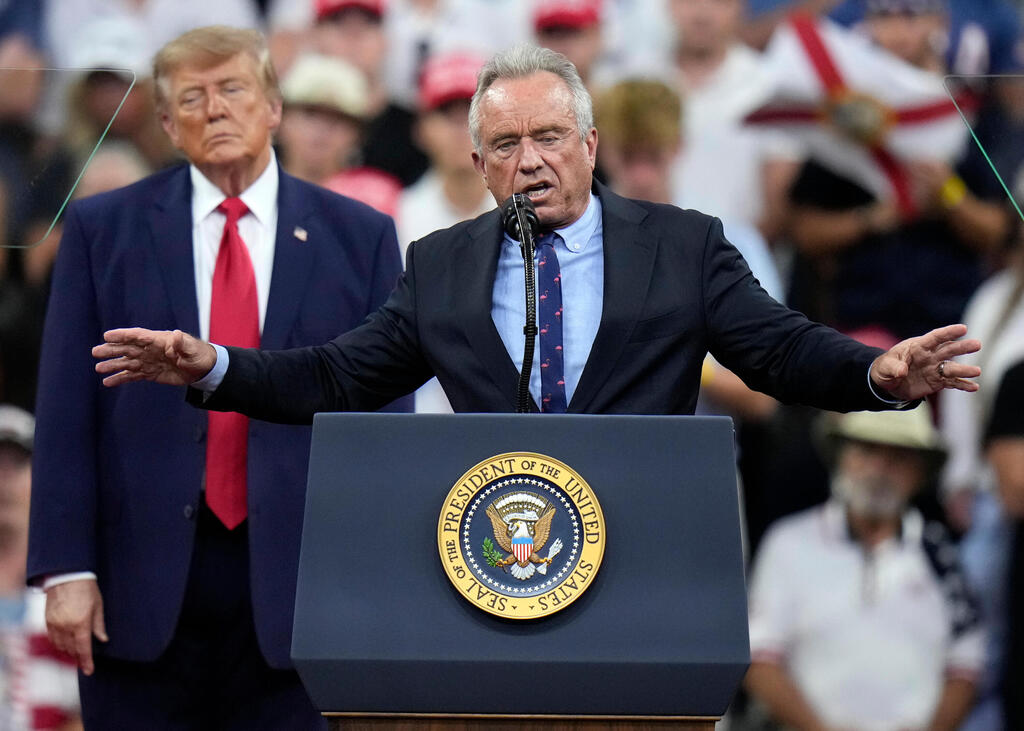
US Health Secretary Robert F. Kennedy Jr. and President Donald Trump
(Photo: AP Photo / Chris O'Meara)
Measles is considered one of the most contagious diseases known to medicine. The virus spreads through the air when an infected person coughs or sneezes and can remain airborne in an enclosed space for up to two hours after that person leaves. For someone who is unvaccinated, simply entering a room previously occupied by an infected person can sometimes be enough to contract the disease.
The illness typically begins with a high fever, cough, runny nose and red eyes, followed by a rash that spreads from the face to the rest of the body. In children, measles can cause pneumonia, brain inflammation and even death. About one in 20 children with measles may develop pneumonia, while approximately one in 1,000 may suffer encephalitis, or inflammation of the brain. In rare cases, a fatal neurological disease can also develop years after the initial infection.
Health experts attribute the resurgence of measles primarily to declining vaccination rates. Two doses of the measles, mumps and rubella (MMR) vaccine provide approximately 97% protection against measles. In Israel, the vaccine is administered as part of the routine childhood immunization schedule in a four-component formulation that also protects against chickenpox (MMRV).
In Lewis County, where the child died, only 78.7% of children had received at least one dose by age 2, compared with the New York State average of 80.9%. Health authorities are now recommending early vaccination for infants as young as six months who are at risk of exposure, even before the age at which the first routine dose is normally administered.