

The death of singer Esther Shamir at age 71 from metastatic breast cancer serves as a reminder of how prevalent — and how deadly — the disease remains. According to the U.S. National Cancer Institute (NCI), about 20% to 30% of women diagnosed with early-stage breast cancer will eventually develop metastatic disease, sometimes years after they were considered cancer-free. The metastatic form — cancer that has spread to other organs — is often diagnosed too late.
Metastatic breast cancer is defined as cancer that has spread beyond the breast and nearby lymph nodes to distant organs. This process does not happen overnight. Individual cancer cells can remain dormant in the body for years before beginning to grow at a new site. The most common sites of metastasis are the bones, lungs, liver and brain, each with distinct symptoms.
Bone metastases typically cause pain and increase the risk of fractures. Lung metastases can lead to shortness of breath. Liver metastases may cause fatigue and loss of appetite. Brain metastases — relatively rare but among the most serious — can result in headaches, vision problems and changes in memory and concentration.
"Despite the major success of early detection, it is important to understand that even after successful treatment of early-stage breast cancer, the disease can return in some women," said Larisa Ryvo, director of the Institute of Oncology at Samson Assuta Ashdod University Hospital. "That is why women diagnosed at an early stage now receive additional therapies aimed at reducing the risk of recurrence."
'A difficult and shattering moment'
Metastatic breast cancer is not a single uniform disease. Tumors are classified according to three biological markers tested through biopsy: estrogen receptors, progesterone receptors — hormones that some tumors use to fuel growth — and a protein called HER2, which accelerates cancer cell division.
More than 70% of breast cancers are hormone receptor-positive. About 20% to 25% are HER2-positive, with some overlap between the two groups. Roughly 15% are known as triple-negative breast cancers, meaning they lack all three markers. This is the most aggressive and difficult subtype to treat because it lacks a clear biological target for precision therapies. The classification is not merely academic — it determines which treatments may work, which will not and what prognosis can be expected.
According to the NCI, the five-year survival rate for metastatic breast cancer is only 31%, compared with 99% for localized breast cancer that has not spread. Survival varies significantly depending on the cancer subtype and the location of metastases. Patients with bone-only metastases generally live longer than those with metastases in the liver, lungs or brain.
However, those figures are not fixed. An analysis published in 2024 that followed patients over nearly three decades found that women diagnosed between 2018 and 2022 lived, on average, about 1.5 years longer than women diagnosed in the late 1990s — and treatments have advanced further since then.

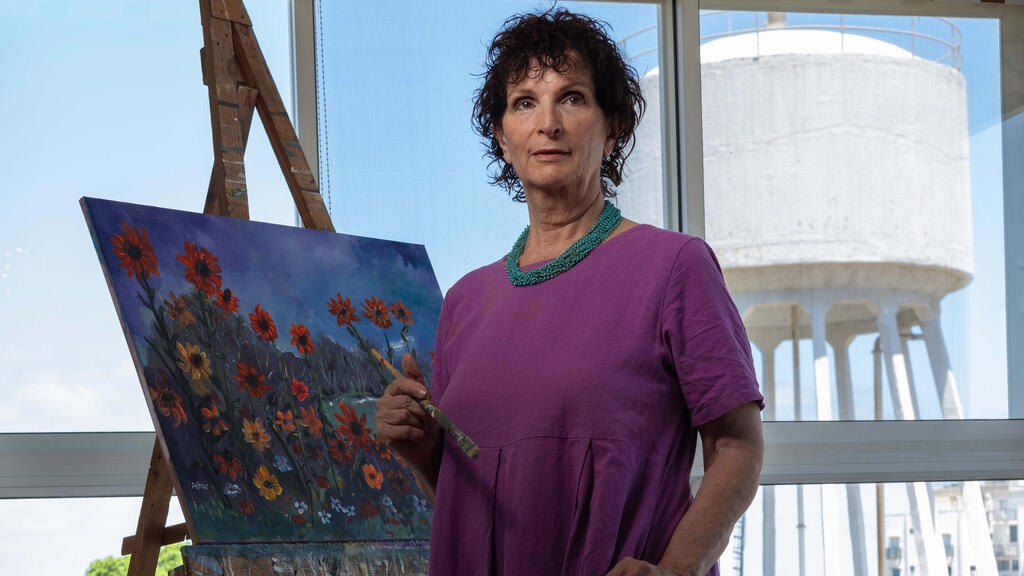
Dr. Larisa Ryvo, director of the Institute of Oncology at Samson Assuta Ashdod University Hospital
(Photo: Assuta Ashdod)
"When the disease returns in metastatic form, it is currently not considered curable," Dr. Ryvo said. "It is a difficult and shattering moment for patients and their families. However, it is important to know that metastatic breast cancer treatment has undergone a true revolution over the past decade. In many cases, treatments are able to significantly extend life while maintaining a good quality of life."
An increasing number of physicians now speak of metastatic breast cancer not necessarily as a terminal illness, but as a chronic condition that many patients can live with for years.
The key role of early detection
A vast gap exists between survival rates for breast cancer diagnosed at an early stage and those diagnosed after metastasis. Research presented a year ago at the annual meeting of the Radiological Society of North America (RSNA) found that the 10-year survival rate was 82.7% among women whose cancer was detected through mammography, compared with just 66.1% among women diagnosed through other means.
The conclusion is simple: routine mammography saves lives. "The most important message is that early detection saves lives. It is not a slogan," said Dr. Ryvo. "In Israel, most breast cancer cases are diagnosed at an early stage, and the earlier the disease is detected, the greater the chances of recovery. That is why it is extremely important to adhere to recommended screening tests, especially mammography."
Women who are not considered high-risk are advised to undergo mammography according to standard age-based guidelines. Women at elevated risk — including carriers of BRCA mutations, those with a significant family history of breast or ovarian cancer, or women who previously received chest-wall radiation — require closer monitoring and may begin screening at a younger age, including MRI scans.
Dr. Ryvo added that genetic testing is now recommended for certain populations and is covered by Israel's national health basket. "Women of Ashkenazi Jewish descent and women of Ethiopian descent have a higher prevalence of BRCA mutations," she said. "These tests, funded through the public healthcare system, help identify women at increased risk and allow for personalized surveillance and prevention programs."
Liquid biopsy — a blood test that detects fragments of cancer-cell DNA circulating in the bloodstream — may identify minimal residual disease one to two years before metastases become visible on conventional imaging, according to studies published in Nature. While the test has not yet become standard clinical practice, recent research suggests it is moving closer to that status.
Three trends transforming treatment
Until about a decade ago, metastatic breast cancer treatment relied mainly on traditional chemotherapy, which attacks rapidly dividing cells, both cancerous and healthy. That picture has changed dramatically.
The first is CDK4/6 inhibitors, a class of drugs that disrupt a key mechanism cancer cells use to divide. When the mechanism is blocked, tumor growth is halted. These drugs have become standard first-line treatment for hormone receptor-positive metastatic breast cancer, which accounts for about 70% of cases, and have demonstrated significant survival benefits.
The third breakthrough is immunotherapy
(Photo: Shutterstock)
The PATINA trial, published in the New England Journal of Medicine six months ago, expanded their use to so-called double-positive breast cancer — positive for both hormone receptors and HER2. The study found that adding palbociclib (Ibrance) to standard treatment improved progression-free survival by more than 15 months: 44.3 months compared with 29.1 months in the control group.
The second major advance is antibody-drug conjugates, a technology that links an antibody capable of identifying cancer cells with a chemotherapy drug, allowing highly targeted delivery while minimizing damage to healthy tissue.
Enhertu (trastuzumab deruxtecan), originally approved for HER2-positive breast cancer, was expanded two years ago for use in patients with low HER2 expression after studies demonstrated improved outcomes compared with chemotherapy. Another drug in the same family, Datroway (datopotamab deruxtecan), received FDA approval last year for hormone receptor-positive breast cancer, further expanding treatment options.
The third breakthrough is immunotherapy, which removes the "brakes" cancer cells place on the immune system, enabling the body to attack tumors on its own.
"Whereas chemotherapy was once our primary option, many patients today receive biological therapies, targeted treatments, advanced hormonal therapies and in some cases immunotherapy," said Dr. Ryvo.
The KEYNOTE-355 trial, published in the New England Journal of Medicine, showed that Keytruda (pembrolizumab) combined with chemotherapy is an effective first-line treatment for patients with PD-L1-positive triple-negative breast cancer. Among patients with particularly high PD-L1 expression, the study found a 27% reduction in the risk of death.
Room for hope
Israel's 2026 healthcare basket included several important additions for breast cancer patients. Among them was Enhertu for women with HER2-low metastatic breast cancer, after the drug demonstrated significant effectiveness and reduced mortality compared with chemotherapy.
In addition, the approved indication for Truqap (capivasertib) was expanded for patients with advanced or recurrent hormone receptor-positive, HER2-negative breast cancer whose disease progressed after previous therapies.
Last month, the FDA approved a new drug called Veppanu (vepdegestrant), the first therapy based on PROTAC technology, which physically degrades estrogen receptors in cancer cells rather than simply blocking them. The drug was approved for patients with estrogen receptor-positive, HER2-negative metastatic breast cancer carrying a specific ESR1 mutation whose disease progressed after hormonal therapy and CDK4/6 inhibitors.

Israel's 2026 healthcare basket included several important additions for breast cancer patients
(Photo: Shutterstock)
In the VERITAC-2 clinical trial, the drug reduced the risk of disease progression by 43% compared with standard hormonal treatment. Median progression-free survival was five months versus 2.1 months in the control group.
Meanwhile, Datroway continues through the regulatory process. The FDA recently granted the drug Priority Review for first-line treatment of triple-negative breast cancer in patients who are not candidates for immunotherapy. A decision is expected in the coming months.
Another emerging target is B7-H4, a protein overexpressed in some breast cancer tumors. A new drug under development, emiltatug ledadotin, is designed to target this protein and has received fast-track designation from the FDA. The therapy may offer particular hope for patients with triple-negative breast cancer who have exhausted existing treatment options.
"The modern treatment approach focuses not only on extending life, but also on preserving quality of life," Dr. Ryvo concluded. "Our goal is for patients to continue living their lives, working, creating, raising children and grandchildren and engaging in the things that give their lives meaning. Alongside recognition of the challenges posed by the disease, there is also genuine hope based on the scientific and therapeutic progress we have seen in recent years."