

In this week's portion, Parashat Ki Tisa, a drama unfolds in two simultaneous arenas. The first is at the summit of Mount Sinai. Following the Revelation and the Ten Commandments described in Parashat Yitro, Moses ascended into the cloud to receive the stone tablets. As the Tabernacle's instructions concluded, the climax arrived: "And He gave to Moses... two tablets of testimony, tablets of stone, written with the finger of God."
However, the Torah then pivots from the mountain peak to the bottom - to what was transpiring at that very moment within the camp. The people, seeing that Moses "delayed" in descending, gathered around Aaron and demanded: "Make for us gods who will go before us; for this Moses, the man who brought us up from the land of Egypt, we do not know what has become of him."
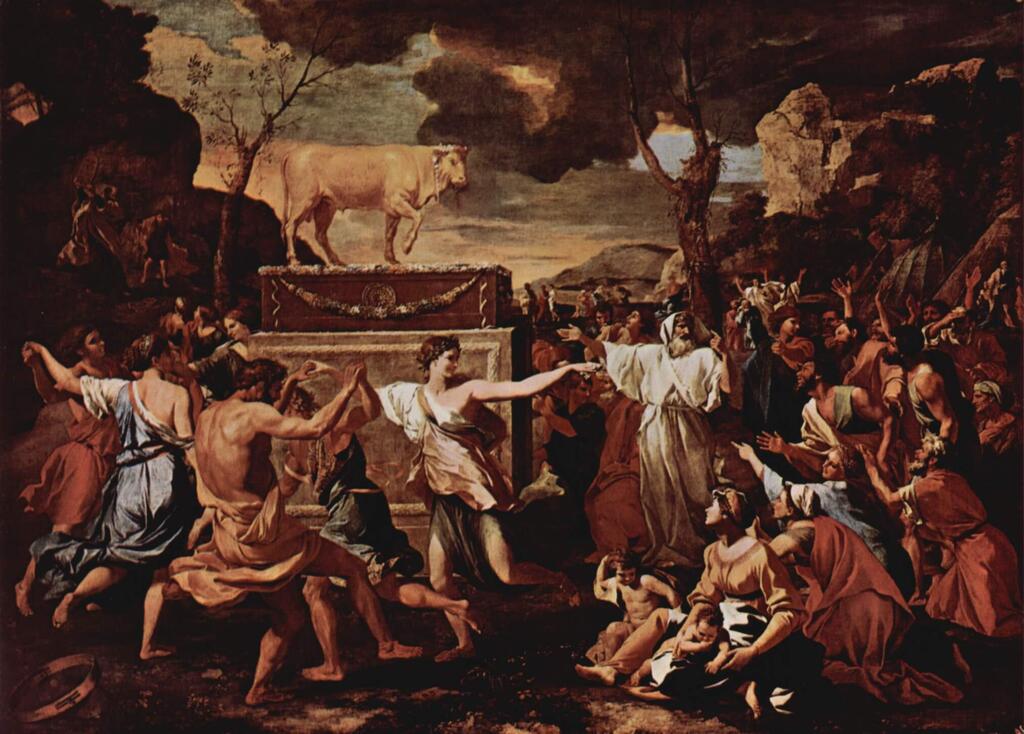
Aaron complied, fashioning a Golden Calf from their jewelry. Despite Aaron's attempt to frame the following day as a "festival to Hashem," the people rose early to offer sacrifices, eat, drink and "revel"- a term often associated with sexual abandon.
This crisis, where the people’s trust in Moses shattered, seems to contradict God’s earlier promise: "Behold, I come to you in a thick cloud... that the people may hear when I speak with you, and they will also believe in you forever."
To understand this, we must re-evaluate the meaning of "believing in Moses." While most commentators, such as Abarbanel and Sforno, focus on the quality and continuity of Moses’s prophecy, a few others, like Rabbi Joseph Bekhor Shor and Rabbi Abraham, the son of Maimonides, suggest a different focus: recognizing Moses as a legitimate "messenger" through whom the "Torah" was sent.
The prophet vs. the leader
The fundamental question is whether Moses should be viewed as a prophet or a leader. A prophet brings God’s word accurately for a specific moment. Moses, however, was a leader who established a vision and a system. His leadership was revolutionary; he did not merely lead a physical exodus from Egypt but introduced a spiritual agency - the ability for a person to advance and live with security through the laws of the Torah, even in times of uncertainty.
When the people asked for an idol because "the man Moses" was missing, they revealed that they had not internalized his deep leadership ethos. They were looking for a "technical leader" - an idol or a prophet who would simply "go before them" and tell them what to do based on omens, rather than a system of values to live by.
Moses, as a founder-leader, was meant to be the mediator of a national constitution. He was not there to predict what would happen, but to define what is good. While a prophet addresses a specific situation, a founding leader establishes a normative regime of laws and ethics that empowers the entire nation to act independently.
One significant event that ended with a great error demonstrates that Moses was actually a leader rather than a prophet. When he sent the spies to scout the Land, he did not predict the disastrous outcome of the mission.
This was because his prophecy was not about revealing data, but about establishing principles of freedom and human action, which he himself engaged in.
Responsible leadership operates within the realm of uncertainty, utilizing political and diplomatic tools. A failure in this arena does not diminish the quality of his prophecy; it illustrates that leadership must act within human reality.
Idolatry as a national threat
When Moses saw the Golden Calf, he broke the tablets because he realized the people's perception of him was fundamentally flawed, rendering the ethical instructions in his hands irrelevant. His response was to reinforce national order, calling, "Who is for Hashem, come to me!" This was an appeal for human, elective action based on a realistic analysis, rather than following specific instructions from above.
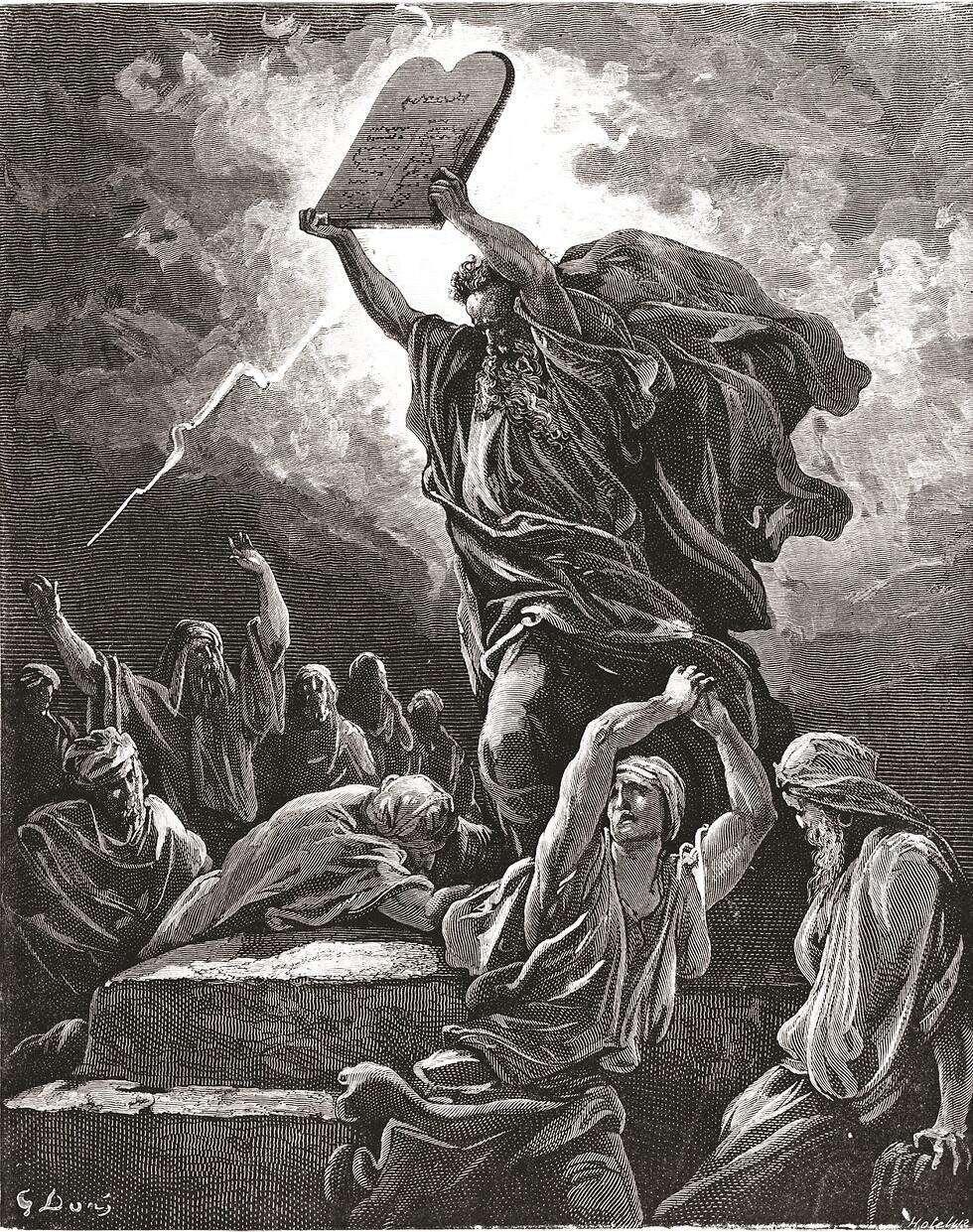
Moses Breaking the Tablets of the Law
(Illustration: Gustave Doré)
Idolatry, in this context, is more than a religious error; it is a rebellion against human leadership and the national covenant. It represents an abandonment of a binding national order in favor of "unrestrained license."
Historically, this recurred when Jeroboam established golden calves in the Kingdom of Israel as a purely political move to solidify his rule, echoing the words of our Parasha: "Behold your gods, O Israel, who brought you up from the land of Egypt."
Consequently, idolatry is not merely a private religious sin. It is an existential threat to the character and uniqueness of the people of Israel as a "treasured nation." Adopting foreign gods signifies assimilation and the loss of national-faith identity.
This leads to a loss of motivation to act, create, take civic responsibility or even lead under conditions of uncertainty. Sinking into "efficient" practices that offer sharp, clear and immediate answers - such as "what will happen tomorrow" or "what action should be taken right now" through mediums and sorcerers - does not develop the Divine image within man.
In moments of confusion and uncertainty regarding what is happening now and what will come next, one should not search for this or that external means to provide a response. Instead, we must look inward toward the nation's values that have proven themselves over thousands of years, and unite around liberty as the arena that motivates action. We must act with human initiative and in the spirit of the Torah, naturally drawing strength from our identity as the treasured nation.
The last week has been marked by covenant and human agency. Zionism restored Mosaic human agency to our people. Covenant and the bedrock laws of our society have both engendered national mutual responsibility and the Torah-inspired values that power us as a people.
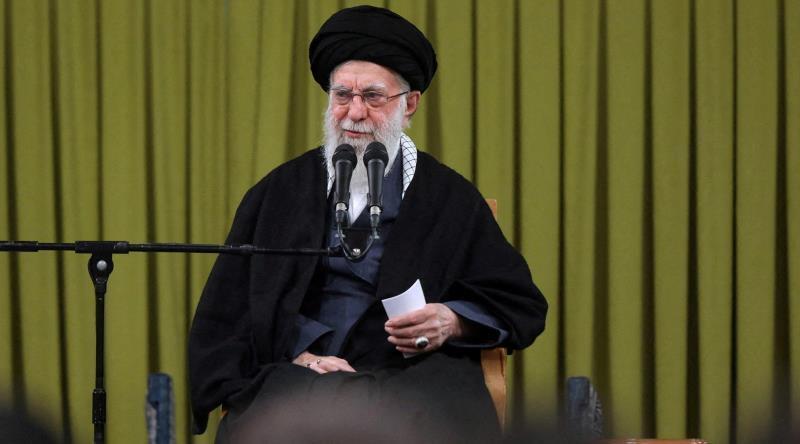
Iranian Supreme Leader Ayatollah Ali Khamenei - a modern-day Golden Calf
(Photo: Reuters)
Two covenantal countries and peoples, the United States and Israel, are leading the world into battle against pure evil and the doctrine of Wilayat al-Mutlaqa al-Faqih, which argues that the “jurist” (in this case, the ayatollah) has the final say on all public matters, and obedience to them is crucial.
This idolatrous doctrine, elevating the human leader essentially to the level of God, includes political and social authority to make binding, state-level decisions, including ruining a country and terrorizing the world at mass scale.
It is incumbent on us that also in peacetime and rebuilding, we find the same strength, agency and covenant to build a model society, region and world for all of our children and grandchildren.