

Yom Kippur will begin on Wednesday evening, Oct. 1, 2025 (the eve of the 10th of Tishrei), and end on Thursday evening, Oct. 2.
Fast times

Beginning of the fast – Oct. 1 (Wednesday):
Jerusalem: 5:48 p.m.
Tel Aviv: 6:05 p.m.
Haifa: 5:57 p.m.
Beersheba: 6:06 p.m.
Petah Tikva: 5:45 p.m.
Modi’in: 6:07 p.m.
Netanya: 6:04 p.m.
Ashdod: 6:04 p.m.
Ashkelon: 5:56 p.m.
Safed: 5:57 p.m.
Tiberias: 5:55 p.m.
Eilat: 5:55 p.m.
Kiryat Shmona: 5:52 p.m.
Gaza: 5:58 p.m.
End of the fast – Oct. 2 (Thursday):
Jerusalem: 6:59 p.m.
Tel Aviv: 7:01 p.m.
Haifa: 7:00 p.m.
Beersheba: 7:01 p.m.
Petah Tikva: 7:01 p.m.
Modi’in: 7:00 p.m.
Netanya: 7:01 p.m.
Ashdod: 7:02 p.m.
Ashkelon: 7:02 p.m.
Safed: 6:58 p.m.
Tiberias: 6:58 p.m.
Eilat: 7:00 p.m.
Kiryat Shmona: 6:58 p.m.
Gaza: 7:02 p.m.
'Shabbat Shabbaton'
The Torah describes Yom Kippur as a “Shabbat of Shabbats.” It is marked by complete cessation: not only from work, as on the weekly Sabbath, but also from physical activities such as eating and drinking, washing, anointing with oils or creams, wearing leather shoes, and marital relations. The day is intended for prayer, repentance and inner reflection.
Work and daily activity
Work is prohibited as on Shabbat. The final meal before the fast, called the seudah mafseket, must end before candle-lighting. Riding bicycles and watching movies are also considered weekday activities that should be avoided, though not on the same level as prohibited work. Acts of harm to others, such as throwing stones, are strictly forbidden.
Fasting
According to Jewish law, no food or drink is permitted. Brushing teeth and rinsing the mouth are also avoided. However, preserving life overrides fasting: people who are ill, pregnant, postpartum, breastfeeding or serving in the military may be exempt, based on rabbinic and medical guidance. Chief Rabbi David Yosef has ruled that soldiers engaged in combat or operational activity must not fast, since they cannot endanger themselves or compromise their mission.
For those who must eat or drink, halacha prescribes doing so in small measured amounts (shiurim): every nine minutes up to 27 grams of food (about two biscuits) or up to 37 milliliters of liquid.
Washing and anointing
Bathing and applying creams or ointments are not allowed, except for washing hands after sleep or using the restroom, limited to the fingertips. Infants may be cleaned as needed.
Footwear
Leather shoes are not worn. Fabric or plastic shoes are permitted. Sneakers made of leather are also prohibited. Soldiers, medical staff and others who require sturdy footwear for duty are permitted to wear leather shoes if necessary.
Marital relations
Couples abstain not only from intimacy but also from physical closeness, similar to laws observed during a woman’s menstruation.
Preparation for Yom Kippur
On the eve of Yom Kippur, it is customary to recite shortened selichot prayers, immerse in a mikvah or natural water, eat festive meals throughout the day and conclude with the seudah mafseket. Candles are lit as on Shabbat, with blessings for Yom Kippur and shehecheyanu. Many wear white and don a tallit even at night.
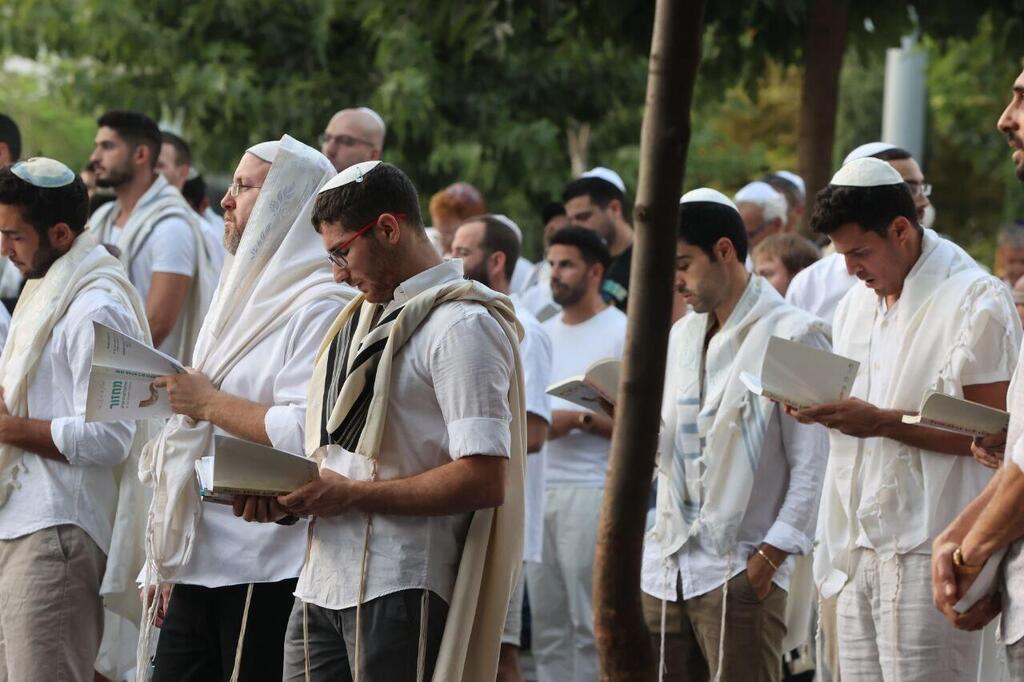
(Photo: Moti Kimchi)
Prayers
Kol Nidre: The fast begins with the moving annulment of vows, a symbolic declaration recited before the congregation.
Maariv (Evening Service): Includes special additions such as vidui (confession) and penitential poems.
Shacharit and Musaf (Morning and Additional Services): Torah readings focus on the High Priest’s service in the Temple and the special sacrifices. The Musaf includes the dramatic “Avodah” service reenactment. The memorial prayer (Yizkor) is recited before Musaf.
Mincha (Afternoon Service): Includes the reading of the Book of Jonah.
Ne’ilah (Closing Service): The fifth and final prayer unique to Yom Kippur, recited at sunset. It ends with the shofar blast at nightfall.
End of the fast
After Yom Kippur, evening prayers are recited, followed by the custom of Kiddush Levanah (sanctification of the new moon). Many begin building the sukkah immediately after breaking the fast, preparing for the next holiday, Sukkot.
For those praying alone
Those unable to join a congregation are instructed to adapt their prayers: omitting sections that require a quorum, reciting confessions and selichot individually, and blowing the shofar at the appropriate time after sunset.