

With Hanukkah approaching, many halachic questions arise — especially for those who find themselves away from home. One common question is: What should you do in a hotel where there is no Hanukkiyah? Rabbi Yosef Tzvi Rimon, author of "Hanukkah - Halacha from the Sources to Practical Law," explains that there is no obligation to use a formal menorah. If needed, one may simply place candles side by side, ideally about 2 cm apart. However, both for safety and to fulfill the mitzvah with aesthetic dignity (hidur mitzvah), it’s customary to buy a menorah, even a simple one.
Another frequent question is whether women are obliged to light Hanukkah candles. According to halacha, the primary obligation is on men, but because women were also in danger during the time of the Hasmoneans, they are obligated in the mitzvah. Unmarried Ashkenazi women should light with a blessing; those who customarily do not may rely on lenient opinions.

It’s customary that married women fulfill their obligation through their husband’s lighting (as codified in the Mishnah Berurah), but a married woman who wishes to light may do so, provided she intends not to fulfill her obligation through her husband. Among Sephardim, only the head of household lights.
You can light with motor oil
In the wake of IDF deployments across various fronts, the sheer number of Hanukkah questions has surged. The Military Rabbinate notes that a 24‑hour halachic hotline (052‑9414‑414) is available for soldiers facing practical dilemmas — for example, lighting candles when wind consistently extinguishes flames.
In a video produced for Hanukkah, Military Rabbi Daniel Kind explains: “If you light candles where wind repeatedly blows them out, it’s considered a flaw in the lighting. According to the Mishnah Berurah, that’s like lighting candles that cannot burn for a half‑hour; you would need to relight them without a blessing. Therefore, you must ensure the flame lasts a half‑hour.”
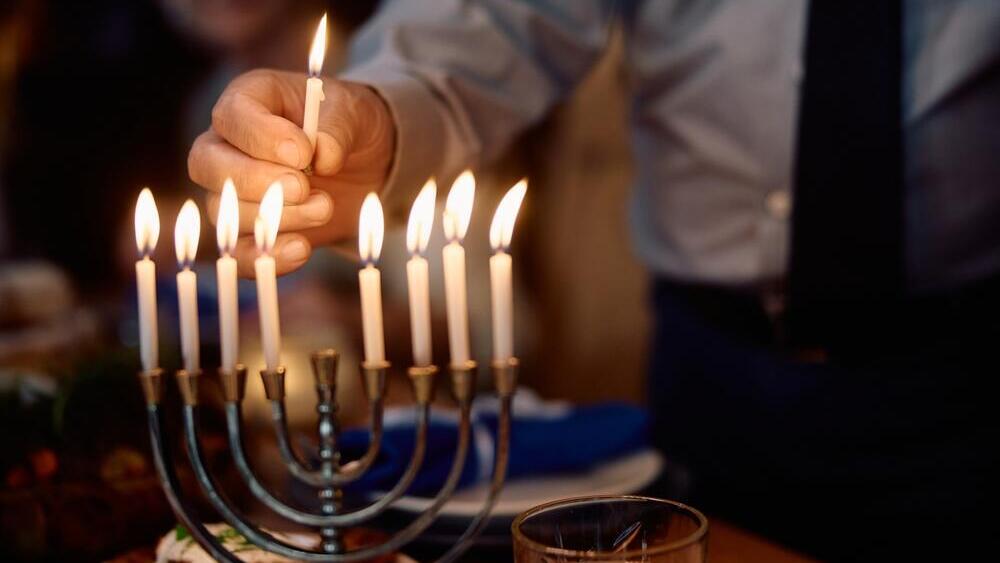
(Photo: Drazen Zigic / Shutterstock)
Following the outbreak of the Sword of Iron War, the military rabbinate even developed a “tactical menorah," a plastic enclosure that protects flames so they can burn for the required time and reduces the risk of fire.
If lighting Could Expose Soldiers’ Location
Rabbi David Stav, chairman of the Tzohar organization, states that if lighting candles could expose the location of soldiers, it is forbidden. Although halacha generally requires candles to be placed near a window or doorway to publicize the miracle, the Talmud explicitly allows lighting on one’s table inside the home under danger (“in a time of danger they place [candles] on his table”). In such cases, candles should be lit inside the home.
Stav also notes that halacha permits lighting Hanukkah lights not only with wax or olive oil but with any type of oil, including military engine oil.
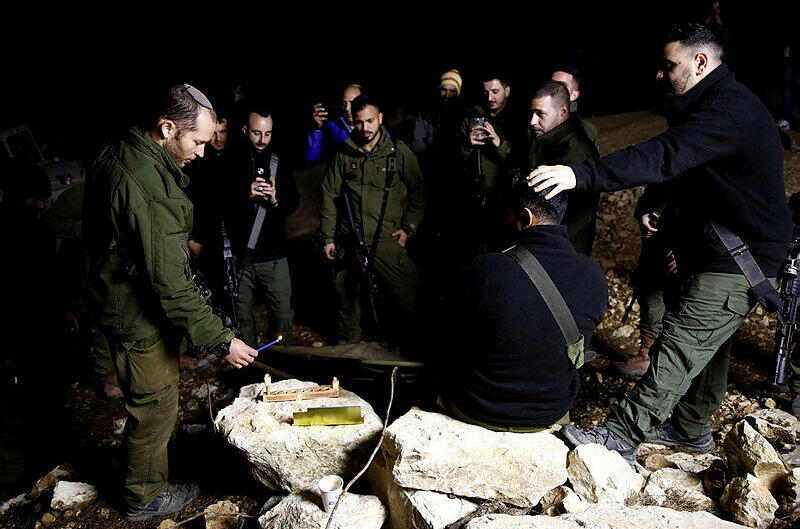
An Israeli soldier lights candles as soldiers gather to celebrate the first day of Hanukkah, near the Israeli-Lebanon border in 2024
(Photo: Shir Torem/ Reuters)
Yeshiva students and menorah obligations
Another question often raised by young people studying in a yeshiva is whether they should light candles where they learn, or rely on their parents’ lighting at home. Rimon explains that there is a difference between Ashkenazim and Sephardim:
Ashkenazim may certainly light on their own — just as each household member traditionally lights at home.
Sephardim, who customarily rely on the head of household, may either rely on their family’s lighting or light without a blessing. Ideally, they should participate in someone else’s lighting with a symbolic coin (prutah), or join an Ashkenazi lighting with a blessing.
Regarding the location within the dormitory, Rimon advises: “If it’s possible to light by a window where people pass by, that’s preferable. But the most important consideration is safety; if that is not secure, do not light by the window.”
Hanukkah for soldiers
For soldiers away from a fixed base, Stav notes: “In principle, soldiers who are not at a permanent base are exempt and may ask parents or partners to light for them.”
For those at a permanent base, a halachic booklet by the Military Rabbinate’s Religious and Logistics Division states: "Unmarried Ashkenazi soldiers sleeping in an established base are considered residents and must light Hanukkah candles.
"Sephardi soldiers fulfill the obligation through their family’s lighting at home and may not light their own menorah at base.
"Married Ashkenazi soldiers should intend not to fulfill the obligation through their wife’s lighting at home, and either light before their wife or hear her blessings afterward.
"If the wife is not at home, some Sephardi authorities allow the husband to rely on the lighting of his father‑ or father‑in‑law, though giving a small coin to the father is recommended."
The Military Rabbinate also emphasizes that soldiers in the field, under open sky, or on an open deck without basic living conditions are exempt and should ask their parents to light at home.
No obligation to eat doughnuts or latkes
Finally, it’s worth noting: there is no halachic obligation to eat doughnuts (sufganiyot) or latkes on Hanukkah. However, there is an ancient Jewish custom to eat foods cooked in oil in memory of the miracle of the oil.
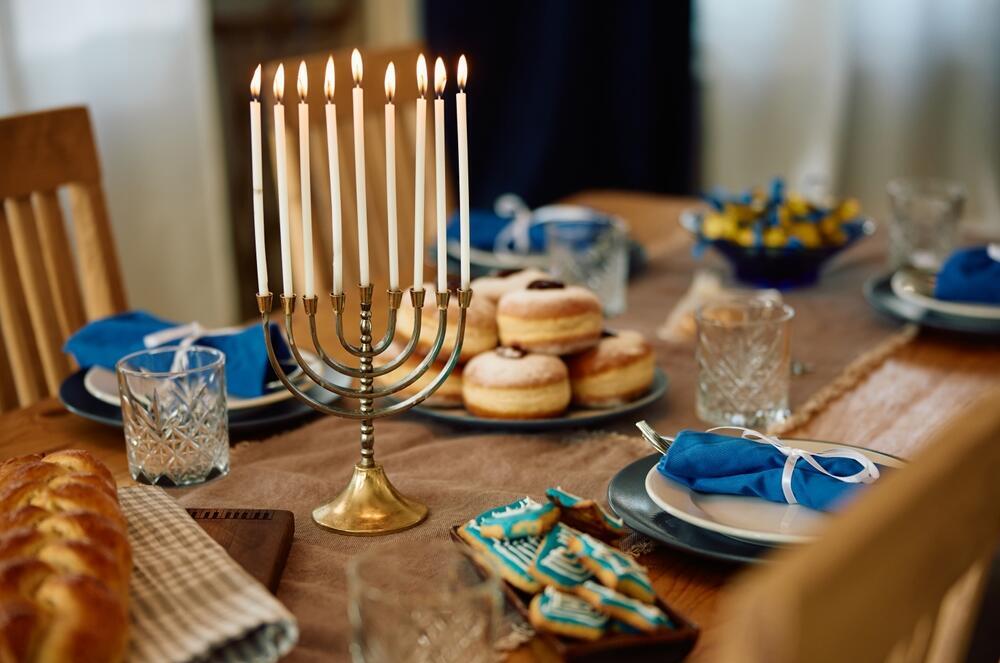
(Photo: Drazen Zigic / Shutterstock)
In the 12th century, Rabbi Maimon’s father wrote: “One should not be lenient with any custom, even a minor one… and it is fitting to eat foods that publicize the miracle God performed for us in those days. And the custom spread to make doughnuts on the eve of Al‑Sfang (the 19th).”
So if you ate a bite of doughnut or latke, or even fried an egg in olive oil, you fulfilled the custom.
In the 14th century, Rabbi Nissim Ben Rabbi Reuven Girondi documented a custom of eating dairy on Hanukkah in memory of the heroine Judith, who, according to tradition, used cheese to seduce and slay a Jewish enemy. For whatever reason, today the doughnut/latke custom persists on Hanukkah, while dairy foods remain associated with Shavuot.
Hanukkah abroad: Hotels and safety concerns
This year’s Hanukkah also raises complex halachic and safety issues for many Israelis traveling in Europe. The combination of increased concern about displaying Jewish symbols in public and strict hotel fire safety rules that prohibit open flames has led to urgent inquiries to Zomet Institute for practical guidance.
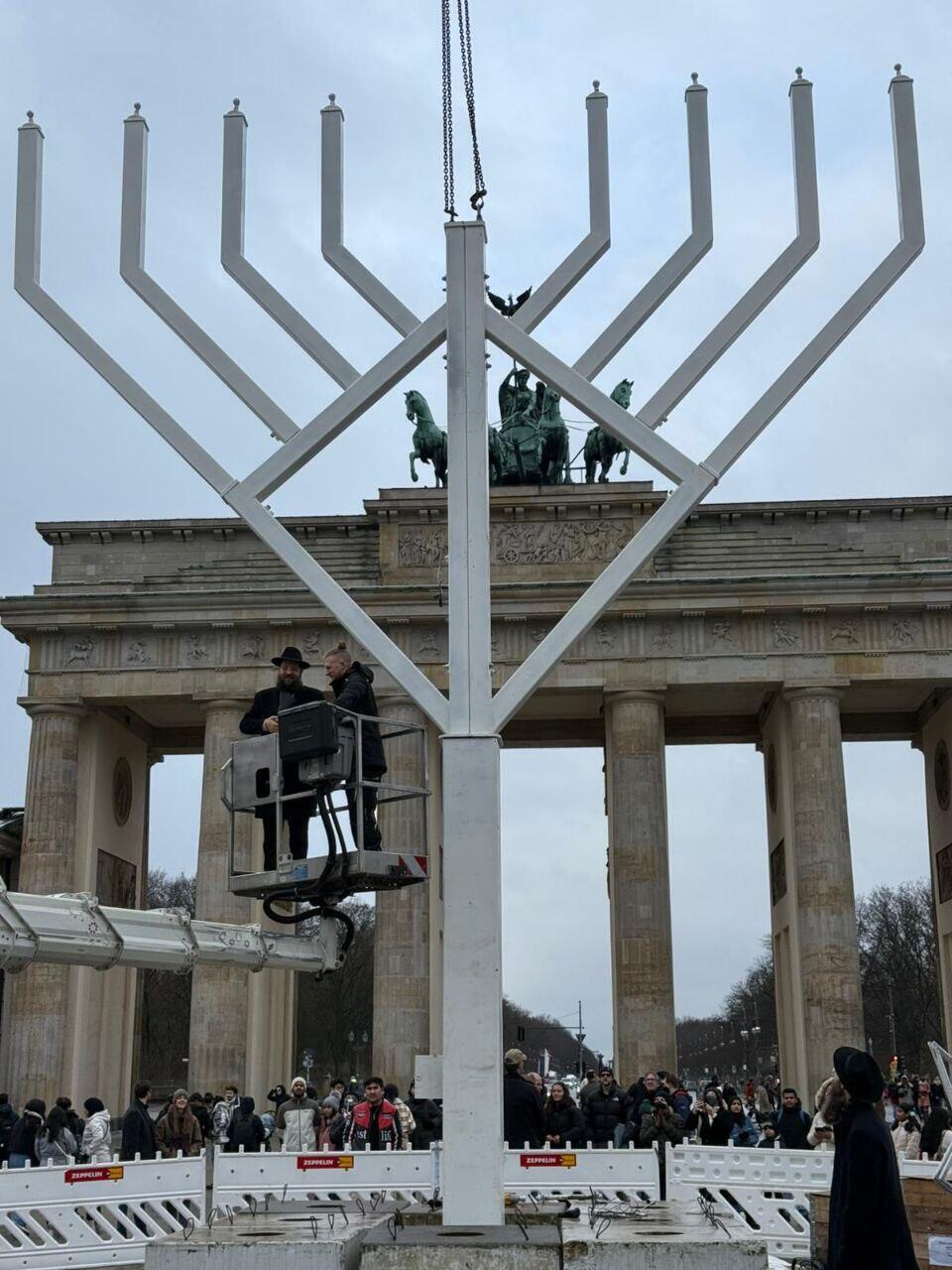
Lighting a public menorah at the Brandenburg Gate in Berlin
(Photo: Courtesy of Chabad)
Rabbi Menachem Perl of Zomet Institute states that the current reality in Europe changes the halachic considerations. “The concern about antisemitism abroad today can indeed be defined as a danger to light in one’s place of residence,” according to Perl. The issue becomes more complex when hotel policies conflict with halachic needs: “All the more so if the hotel forbids lighting in the room. We have enough enemies in the world; we don’t need to ‘anger’ the hotel staff as well.”
Perl rejects relying solely on public lightings in city squares as a halachic substitute. “Public lighting is not meant to fulfill the obligation of lighting itself, but to publicize the miracle. It is not a substitute for personal or family lighting,” he said.
A practical solution for travelers
Perl offers a solution for travelers stuck between hotel fire rules and safety concerns by invoking the halachic principle of sha’at ha‑daḥak (a time of pressing need). “When one cannot light a regular candle, it is preferable in sha’at ha‑daḥak to light Hanukkah lights using electric lamps powered by filament bulbs or even a Tzomet Institute “liner,” according to Perl, adding that: “One may even recite a blessing on them.”