


In a medical emergency, a few seconds can make a difference. But when someone in Israel dials 101, the response does not begin only when an ambulance reaches the scene.
It begins on the phone.
Behind every call to Magen David Adom’s emergency dispatch system is a call taker with medical training — a medic or paramedic capable of gathering critical information while simultaneously helping the person on the other end of the line take action.
Inside Magen David Adom’s emergency dispatch system


In other words, the person answering 101 is not simply dispatching an ambulance. The emergency response has already started.
The first seconds of a 101 call
When a call comes in, one of the first things the call taker asks for is the caller’s name and phone number. That means that if the call is disconnected, MDA can call back.
At virtually the same time, two other pieces of information become crucial: Where are you, and what happened?
As the caller explains the emergency, MDA’s system can begin assigning available emergency teams near the location. Meanwhile, because the call taker has medical training, instructions can begin immediately.
That distinction is central to the system.
( Photo: Screenshot)
“All call takers are medics or paramedics,” according to MDA. “So they have medical training and they start giving you instructions on how to act right away.”
For someone facing a cardiac arrest, severe allergic reaction or another life-threatening emergency, those instructions can be critical during the minutes before a medical team arrives.
What if you don’t know exactly where you are?
An emergency does not always happen at home or at a familiar address.
A person may be driving on a highway, hiking, visiting an unfamiliar area or simply too distressed to explain exactly where they are.
MDA has a system designed for precisely that situation. If a caller cannot provide a clear location, an SMS or WhatsApp message can be sent containing a link that allows them to share their location.
That information can then help emergency teams find the patient.
At the same time, the dispatcher continues dealing with the medical emergency itself.
In the case of a reported cardiac arrest, for example, medically trained personnel can explain how to perform chest compressions. During a severe allergic reaction, they can guide a caller in administering an EpiPen and assisting the patient while emergency teams are on the way.
The goal is straightforward: do not waste the time between the emergency call and the arrival of the medical team.
More than an ambulance dispatch center
The same system becomes particularly important during a large-scale incident.
If a serious road accident is reported, for example, MDA's dispatch center can receive information from callers including pictures and video from the scene. That can help personnel understand the scale of the incident and determine what kinds of teams — and how many — should be sent.
“It’s not just a dispatch that picks up your location and what’s happening and transfers it away,” the video explains. “It’s actually an integrated part of MDA’s network.”
Information coming from the public, emergency teams in the field and MDA headquarters can all contribute to the picture developing inside the dispatch center.
And that means treatment effectively begins from the moment the call is answered.
What if you don’t speak Hebrew?
For new olim and visitors to Israel, one of the biggest concerns during an emergency can be language.
What happens if you need an ambulance but cannot explain what is wrong in Hebrew?
According to MDA, callers who speak another language — including English, Russian or Arabic — can be transferred to medically trained personnel who speak that language.
(Photo: Screenshot)
The My MDA app also allows users to set a preferred language and provides text translation capabilities.
That can be particularly important for new immigrants. Knowing the emergency number 101, having the app available and understanding that language assistance exists can remove one significant layer of uncertainty during an already stressful situation.
From routine to national emergency in minutes
The system is also designed to expand rapidly when Israel moves from an individual emergency to a national one.
MDA says the fundamental workflow does not change during a national emergency. What changes is the scale.
The organization increases the number of emergency crews operating in the field and the number of call takers working inside its dispatch centers.
October 7 provided an extreme example.
The underlying emergency process remained the same that morning, according to the video, but the operational capacity in the field and dispatch centers doubled within minutes.
“The organization goes from zero to 100 in a matter of minutes,” the video explains.
Making lifesaving decisions under that level of pressure requires more than knowing how to answer a phone.
MDA dispatchers combine medical knowledge, field experience and specific training for high-stress situations. They are trained to extract essential information from callers who may be panicking, dispatch teams without unnecessarily delaying for additional details and respond when communication is difficult.
Technology behind the call
Alongside the human response is a significant technological operation.
During wartime, MDA uses sensor-based systems that can provide information about missile impact sites. That data can be cross-referenced with incoming emergency calls, alerts, reports from teams in the field and information flowing through headquarters.
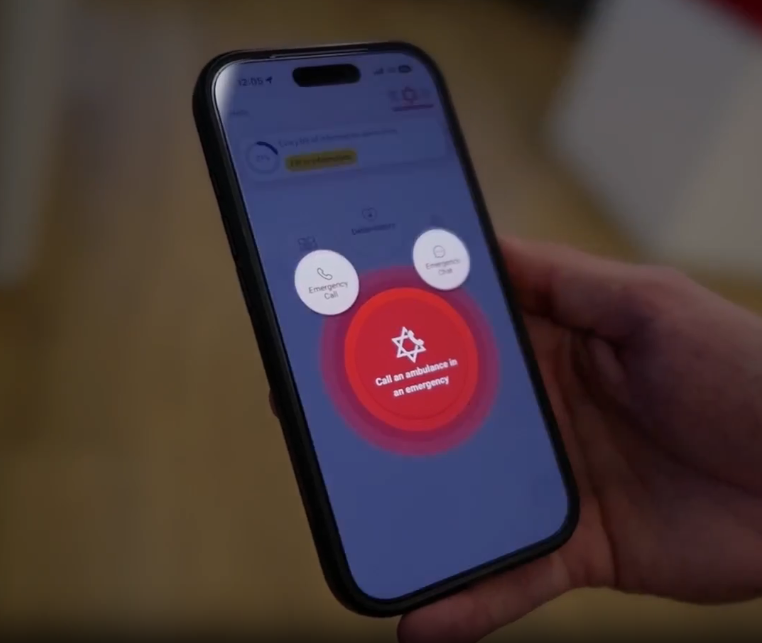
(Photo: Screenshot)
All of it can be displayed within MDA’s dispatch systems, helping personnel develop a real-time picture and decide where emergency resources are needed.
It reflects a broader philosophy within the organization: technology should not exist simply for the sake of innovation. It should help medical teams make better decisions, faster.
“They say that Israel is a startup nation,” the video notes. “Magen David Adom does exactly that.”
MDA says it continually works to incorporate new technologies into both its dispatch centers and field operations, connecting the people answering the calls with the teams responding on the ground.
What olim should know about calling 101
For someone beginning a new life in Israel, the emergency medical system may be one of those things they hope never to need. But knowing how it works before an emergency happens can matter.
The essentials are simple: in a medical emergency, call 101. Give your phone number and location as clearly as possible. Explain what has happened. Listen carefully to the medical instructions you receive, and if you cannot identify your location or communicate comfortably in Hebrew, tell the dispatcher.
Most importantly, do not assume that nothing can happen medically until an ambulance arrives.
Behind that 101 call is an integrated system connecting trained medical personnel, technology, dispatchers and emergency teams in the field.
From the first phone call to the arrival of the medical team, every part of that system has the same objective: making the right decision at the right moment.
Or, as MDA puts it, “Every single day is a beautiful day to save lives.”