


Tisha B’Av marks not only the date on which, according to Jewish tradition, the Temples were destroyed, but also the disappearance of their sacred vessels. The fact that many of these objects were made of gold, sacred to the Jewish people and immensely valuable, has long fired the imagination of writers and filmmakers.
The best-known example is Steven Spielberg’s 1981 film Raiders of the Lost Ark, in which Harrison Ford’s adventuring archaeologist Indiana Jones sets out to find the Ark of the Covenant. The television series Warehouse 13, centered on a secret government facility housing historical artifacts with supernatural powers, also refers to the Ark as an exceptionally dangerous object, alongside other relics from the biblical period.
Documentary filmmakers have pursued the mystery as well. In The Ark of the Covenant: The Bible’s Origins, director Thierry Ragobert followed excavations led by Prof. Israel Finkelstein at Kiryat Yearim in search of clues to the Ark’s disappearance. The documentary series Secrets of Archaeology explored whether the Temple vessels reached the Vatican, were seized by the Vandals or had been hidden earlier in caves in the Judean Desert.
The mystery began with the First Temple
“Some of the Temple vessels disappeared as early as the destruction of the First Temple,” Prof. Eyal Regev, a historian and archaeologist specializing in the Land of Israel during the Second Temple period at Bar-Ilan University, told ynet. In 586 BCE, the Babylonians conquered Jerusalem and burned the Temple. The Book of Jeremiah recounts that they looted its valuables, including the lampstands.
What about the Ark of the Covenant?
“It was not mentioned, and its absence appears to have opened the door to ancient traditions claiming that the Temple vessels were hidden before the Babylonians could reach them,” Regev said.
Regev explained that the Second Book of Maccabees, which recounts the Hasmonean revolt, includes a lengthy letter attributed to Judah Maccabee and addressed to the Jews of Egypt, urging them to celebrate Hanukkah. “The letter refers to traditions surrounding the dedication of the sanctuary in the days of Moses and Solomon, as well as a ‘sacred fire’ that was placed on the Temple altar in the days of Nehemiah after being discovered in a hiding place, a fire that symbolized the Divine Presence,” he said.
“It also states that the prophet Jeremiah, acting on a heavenly command, ordered the exiles to hide the Tabernacle tent, the Ark of the Covenant and the altar of incense in a cave. He prophesied that these objects would be revealed only after the ingathering of the exiles, when the glory of God would appear as a cloud.
“Another work, preserved for centuries in the writings of the Church Fathers, says that although the Babylonians plundered the Temple, the Ark of the Covenant and the tablets were taken by Jeremiah. That book is attributed to Eupolemus, who was apparently Judah’s diplomatic envoy to Rome following the alliance concluded with the Romans in 161 BCE.”
What conclusion do you draw from these traditions?
“The fate of the lost Temple vessels, and particularly the Ark of the Covenant, preoccupied the Maccabees,” Regev said. “They probably hoped that following the rescue of the Temple from Antiochus and its rededication, God would reveal the location of these objects and allow them to complete the mission of restoring the Temple to its former glory.”
Regev, whose books include The Temple in Early Christianity: Experiencing the Sacred, noted that the destruction of the Second Temple also gave rise to traditions about sacred vessels being hidden. “There is an apocryphal work known as 2 Baruch, attributed to Baruch son of Neriah, Jeremiah’s scribe,” he said.
“The book, written shortly after the destruction of the Second Temple, describes the concealment of the vessels. It says that while the Chaldeans were besieging Jerusalem, Baruch stood on the city wall and saw an angel descend from heaven into the Holy of Holies.
“The angel took the Temple curtain, the high priest’s ephod, the cover of the Ark of the Covenant, the altar of incense and other sacred objects. The book says the angel placed them within the earth until the end of days so that foreigners would not seize them.”
The location of the hidden Temple vessels also occupied the Jewish sages, Regev said. “For example, the Mishnah in Tractate Shekalim records a tradition that the Ark was concealed in the Wood Chamber in the Temple courtyard,” he said.
“It recounts: ‘It once happened that a priest who was occupied there noticed that one of the paving stones differed from the others. He went and told his colleague, but before he could finish speaking, his soul departed, and they knew with certainty that the Ark had been hidden there.’”
As a historian, where do you believe the Temple vessels actually are?
“From the range of these traditions, one might conclude that the Ark of the Covenant and additional Temple vessels are waiting for us somewhere in the area of the Temple Mount,” Regev said. “If we wait patiently for the complete redemption, they will probably be found at precisely the appropriate time.”
Do not look for the Temple treasures in the Vatican
Archaeologist Zachi Dvira and his longtime colleague Dr. Gabriel “Gabi” Barkay, who died earlier this year, did uncover artifacts from the Temple periods. For years, they found historical objects in earth removed from the Temple Mount by the Muslim Waqf through the Temple Mount Sifting Project.
Asked what became of the vessels from the Second Temple, Dvira said he believed the Jewish rebels did not hide them. “In my assessment, the rebels, who were confident in their ability to repel the Romans, did not conceal the Temple vessels,” he said. “They also used some of them for military survival during the final stages of the siege.”
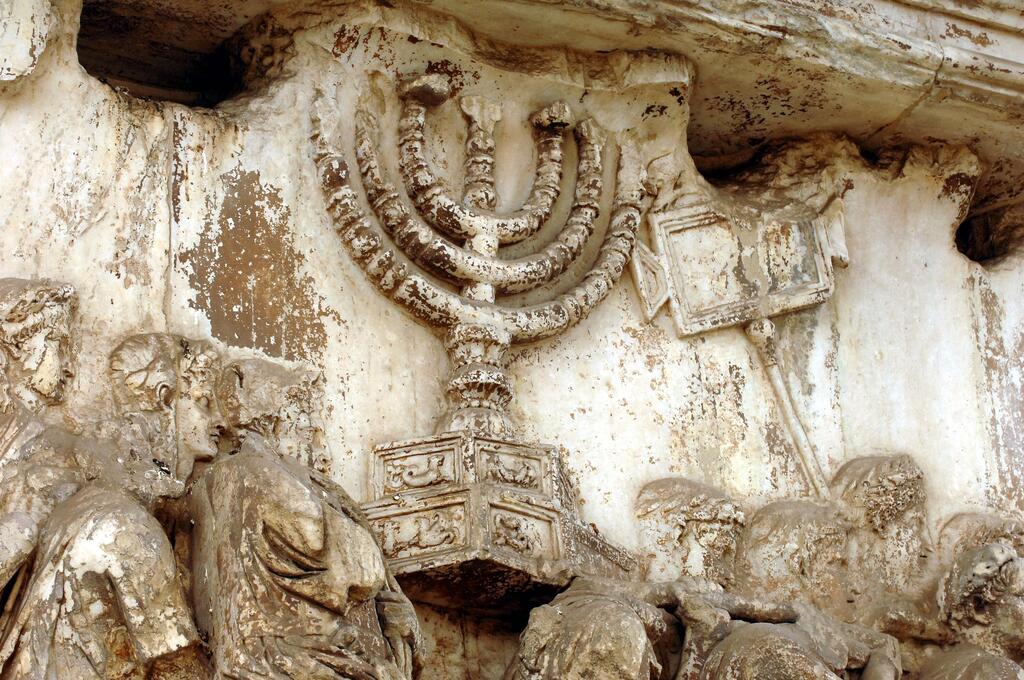
Dvira pointed to Josephus’ famous account of the Romans looting the vessels and displaying them in a victory procession in Rome, an event immortalized in the relief on the Arch of Titus. The enormous amount of booty taken from Jerusalem helped finance the construction of the Colosseum and the Temple of Peace in Rome, where the seven-branched menorah and the Table of Showbread were displayed.
“Over the years, all trace of these treasures disappeared,” Dvira said. “They may have been melted during the fire that destroyed the Temple of Peace in 191 CE, or deliberately melted down because of the value of their precious metals.
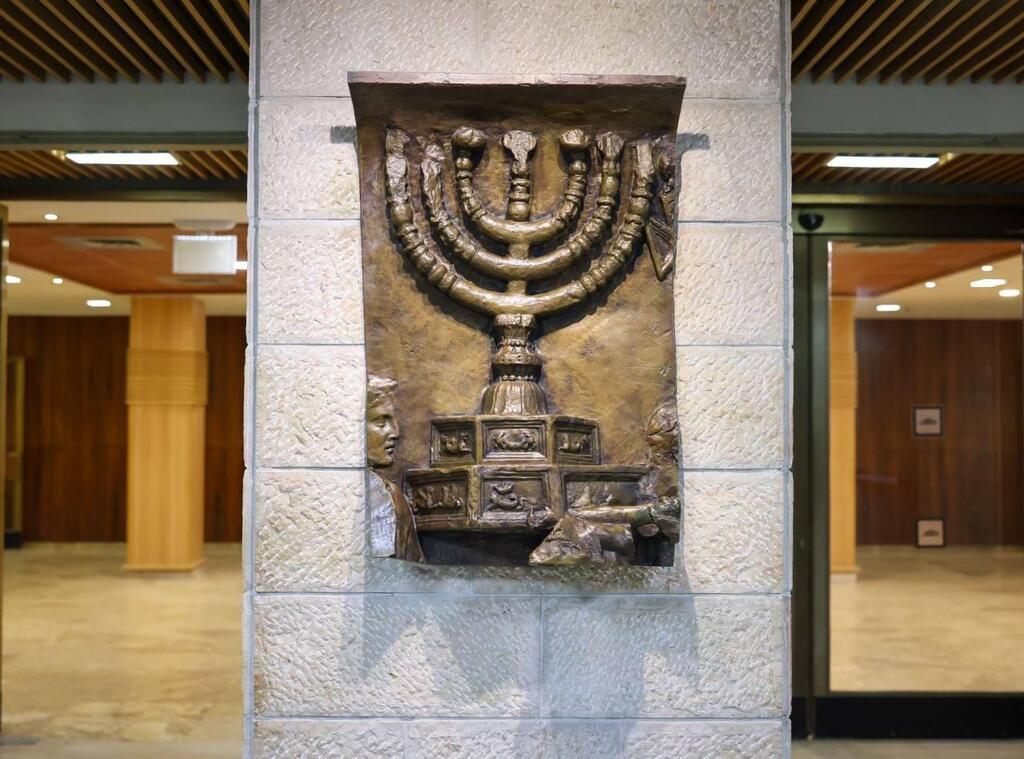
Relief of the Temple menorah at the entrance used by Knesset members
(Photo: Noam Moskowitz/Knesset Spokesperson’s Office)
“The descriptions by the sixth-century Byzantine historian Procopius, according to whom the Temple vessels were taken by the Vandals to Carthage, later returned to Roman hands and were eventually sent back to Jerusalem, do not appear reliable.”
What about the claim that the Catholic Church possesses them?
“If that were the case, the Church would probably display them as decisive proof of its claim that Christianity is the legitimate heir to the divine covenant with the people of Israel,” Dvira said.
He noted that the Ark of the Covenant vanished after the destruction of the First Temple and does not appear in the lists of plunder taken to Babylon. “It is entirely possible that the Ark and additional vessels were hidden in advance in secret tunnels beneath the Temple Mount, as mentioned in rabbinic sources,” he said.
“At the same time, it is important to note that most of the pits and underground spaces known to us today on the Temple Mount apparently date from the Second Temple period or later, and were accessible to the different rulers of the site over the centuries. We have evidence of additional spaces that are not documented in the literature, and there appear to be many more that could be discovered through a comprehensive scientific survey of the Temple Mount.”
What are the chances that remains of the Temple vessels will be found through the Temple Mount Sifting Project?
“There is no such expectation, both because of the historical circumstances and because of the nature of the sifting work,” Dvira said. “The project focuses almost exclusively on tiny finds and small fragments of larger objects, many of which have not yet been deciphered.
“If objects directly connected to Temple worship are discovered, they will probably be items such as the seal impression belonging to a priest of the House of Immer, which was found during the sifting.
“In my view, the most important discovery of the project is the general public that comes to take part in the work of uncovering and saving these finds. I hope the government will also take an interest in the project and help fund this enormous undertaking, which until now has been financed solely through private donations.”
The mystery that became a novel
Researcher and scientist Dr. Simcha Ehrlich transformed the mystery of the Temple vessels into a historical novel titled Shimon and Genseric. Shimon, one of the story’s two central protagonists, is a fearless Jewish warrior who sets out on a journey to locate the missing Temple vessels.
“The book is based on extensive historical research that I conducted,” Ehrlich told ynet. “After the destruction of the Second Temple in 70 CE, the Temple vessels were brought to Rome and displayed in the Temple of Peace, which was completed by Emperor Vespasian. Together with his son Titus, he suppressed the Great Jewish Revolt against Rome.”
At what stage did the Catholic Church enter the story?
“In 393 CE, Christianity was declared the sole religion of the Roman Empire,” Ehrlich said. “At that point, in my estimation, the Christian Church took custody of the Temple vessels and hid them in a large basilica on Vatican Hill.
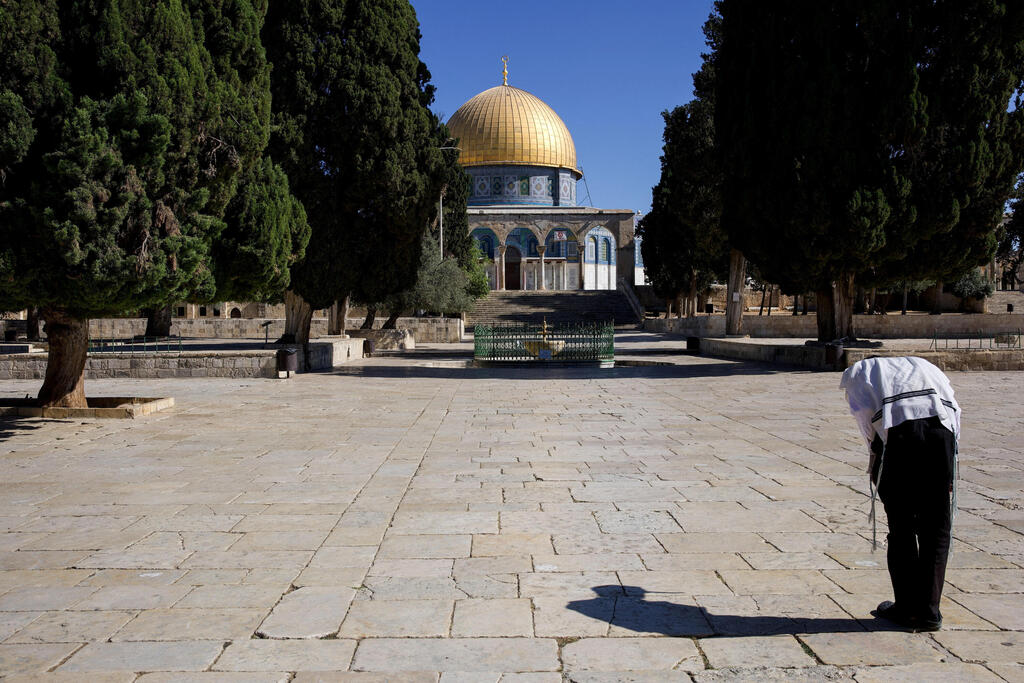
The Temple Mount
(Photo: REUTERS/Naama Stern)
“The building had been donated to the Church by the Roman Emperor Constantine, who had ordered its construction around 70 years earlier above what was believed to be the burial place of Saint Peter.”
Ehrlich’s novel also features Genseric, king of the Vandals, an East Germanic people who became one of the Roman Empire’s greatest threats during the fifth century. “In 455 CE, he plundered Rome and took everything of value,” Ehrlich said.
“Seventy-nine years later, the Byzantines conquered North Africa from the Vandals. The historian Procopius, who described the conquest, wrote that the Byzantines took the Temple vessels from Carthage, the Vandal capital, displayed them in a victory procession in Constantinople and later transferred them to Jerusalem.
“I wrote the book against the backdrop of these events, with Shimon embarking on a daring quest for the Jewish people’s most sacred treasure. It is not merely a literary invention, but a plot based on one of the most fascinating historical mysteries of the ancient world and supported by historical sources.”
Where, in your assessment, are the Temple vessels today?
“I believe the Temple vessels are currently in Jerusalem, most likely in one of the underground tunnels beneath the Temple Mount,” Ehrlich said.
“There are Jewish traditions stating that the vessels are indeed there, and Rabbi Meir Yehuda Getz, the rabbi of the Western Wall, made a well-known attempt to search for them in 1981. The effort was thwarted by the Arabs, and no similar attempts have been made since.”