


Against the backdrop of the ceasefire — and with a special contribution from Israel’s high-tech sector — the March of the Living organization announced that a delegation from Israel will, after all, travel to Poland this year to take part in the march. The decision comes two weeks after the group said it was canceling this year’s delegation due to the war.
At the last minute, organizers succeeded in assembling a limited delegation of Holocaust survivors, aged 90 to 100, made possible by donations from 26 Israeli high-tech companies and venture capital funds. In total, some 7,000 participants from dozens of countries are expected to take part in the march, which will be held between the Auschwitz and Birkenau extermination camps. Among the participants will be former hostages Omri Miran and Agam Berger. The two will light the State of Israel torch together with Holocaust survivor Irene Shashar and Rabbi Shmuel Slotky, whose two sons were killed on October 7 while defending Kibbutz Alumim.
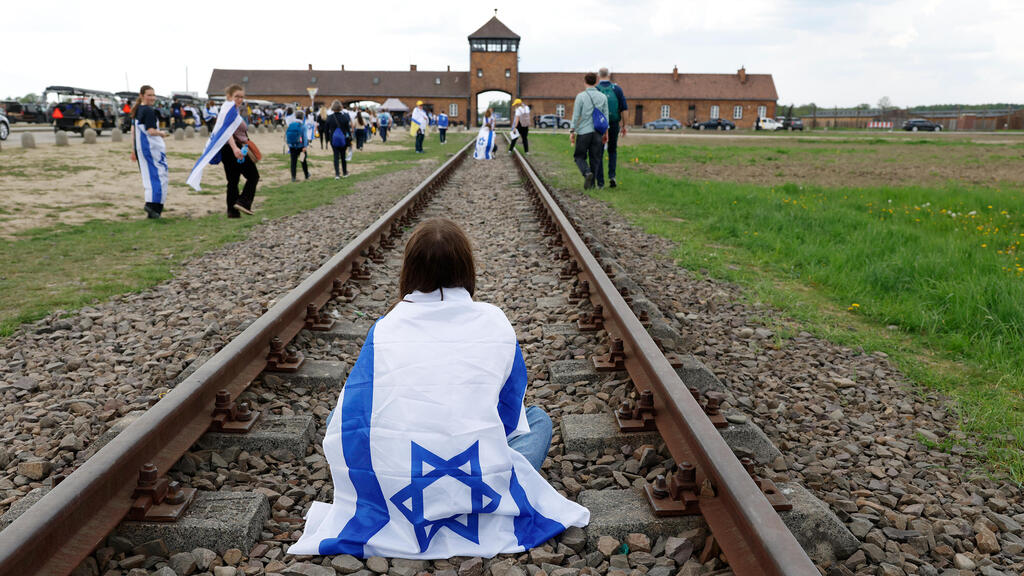
This year’s march will be held under the theme of combating antisemitism, which has surged to unprecedented levels since October 7. Israeli Jewish Congress President Sylvan Adams will lead the march alongside survivors of 2025 shooting attacks: Eva Weitzen, a survivor of the Hanukkah massacre at Bondi Beach in Sydney, Australia, in which 15 people were murdered, including her husband Tibor Weitzen and her close friend Edith Brutman, as well as Holocaust survivor Alex Kleitman and 10-year-old Matilda; Yoni Finlay, who was wounded in a Yom Kippur attack at a synagogue in Manchester, UK; and two employees of the Israeli consulate in Washington, who survived a shooting in which their colleagues Sarah Milgrim and Yaron Lischinsky were killed.
However, the participation of about 1,500 additional attendees from Israel was canceled due to uncertainty over ensuring their safe departure and return. Among them were 50 Holocaust survivors and their families who were slated to lead the march, along with hundreds from the high-tech delegation to the March of the Living, as well as an October 7 delegation from the Menomadin Foundation including former hostages and bereaved families, families from the IDF Widows and Orphans Organization, members of the Jewish National Fund’s leadership and board, a TikTok creators delegation and a delegation from El Al.
“Hatred of Jews is raising its ugly head. We will march to turn memory into a clear commitment to action, and to say in a loud voice: we will not bow our heads to antisemitism," Adams said.
Homes of dozens of Holocaust survivors damaged during the war with Iran
More than 50 Holocaust survivors’ homes were damaged by missile attacks from Iran and Lebanon during Operation Rising Lion. Many others faced gaps in protective infrastructure and difficulty reaching shelters during the fighting. The Authority for the Rights of Holocaust Survivors in the Prime Minister’s Office said thousands of calls were made to survivors in affected areas and along the northern border to assess their needs during the war.
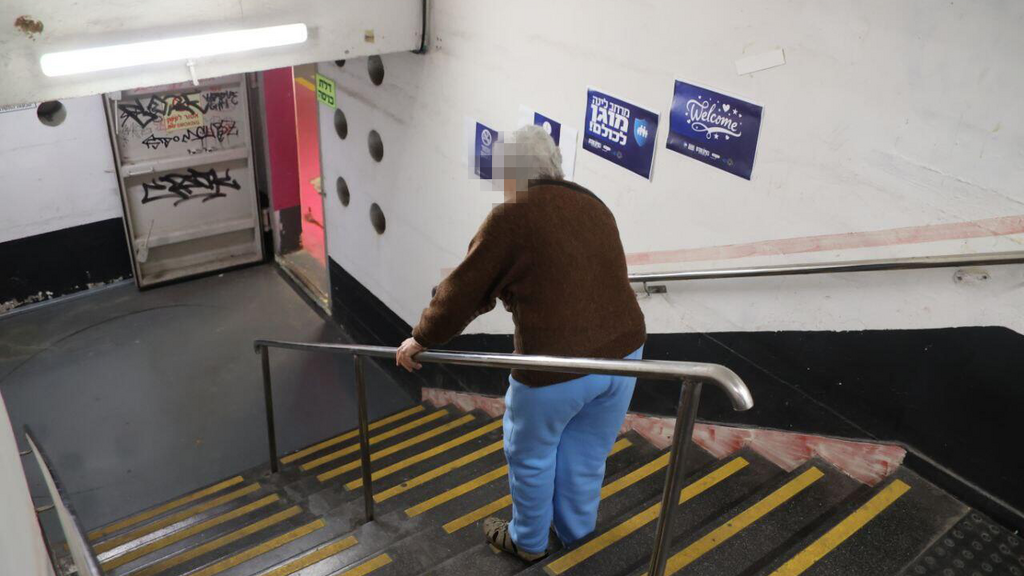
n elderly woman in the Dizengoff Center parking lot in Tel Aviv, which became a shelter during current conflict
(Photo: Motti Kimchi)
ERAN, Israel’s emotional first aid organization, has been operating a dedicated hotline for older adults, including Holocaust survivors. The organization reports a sharp rise in calls during the war — about 11,000 inquiries during the conflict alone, compared with roughly 3,200 over an entire year. About half of the callers described dealing with loneliness, while the rest focused on depression and emotional distress, anxiety, trauma and loss, as well as coping with disability and illness.
The organization described a call from a Holocaust survivor who spoke of her fear when sirens sound — as her caregiver goes down to the shelter while she remains alone. “A Holocaust survivor called us and said she contacted her local municipality and asked what she should do, since the shelter is several hundred meters from her home, and the answer she received was: ‘You need to run to the shelter,’” said ERAN CEO David Koren. “That left her with a terrible sense of helplessness.” Such calls, he said, are also difficult for hotline volunteers. “What can you say to a person like that, other than to be with them? These conversations are heartbreaking. It’s very hard.”
According to the organization’s data, only about 2% of calls focused on financial distress. Data from the Authority for the Rights of Holocaust Survivors show that about one-third of Holocaust survivors are eligible for income supplements from Israel’s National Insurance Institute. Only some of those defined as Holocaust survivors qualify for a monthly stipend, while refugees and victims of antisemitic persecution receive an annual grant of several thousand shekels.