

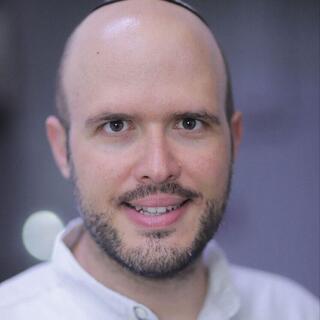
The encounter with the new reality facing Australian Jews became clear less than an hour after we left Sydney Airport, following a 22-hour flight via Abu Dhabi. On a street near our hotel, Ella Billa, a local resident, heard us speaking Hebrew and stopped. Her eyes filled with tears. She asked excitedly whether we had come from Israel, and when she learned that President Isaac Herzog was in the city on a five-day visit to meet members of the Jewish community, stand by them in their difficult hour and demand security guarantees from the Australian government, she asked to share her feelings. “My grandparents survived the Holocaust. My mother survived as a little girl. I never imagined this would happen here, that my grandchildren would have to deal with this,” said Nora.
Two months have passed since the horrific massacre during first-night Hanukkah celebrations attended by hundreds of local Jews at the city’s famous Bondi Beach. The wound is still raw. “In one week, we had 15 funerals here,” she said, glancing around to see who might be listening. She revealed a gold necklace bearing the Hebrew word “Chai,” life, tucked under her shirt, and described a suffocating atmosphere. “The pro-Palestinians here are very aggressive. You can’t convince them. They refuse to acknowledge the facts. The government is choosing a side, and we are disappointed. Penny Wong needs to wake up. The response should have come the day after October 7, not now.”
Until two months ago, Australia was the place people escaped to from the news. At the famous beach, the water remains clear and surfers have returned, but on the promenade near the bridge from which the terrorists launched their killing spree, memorial signs stand for the 15 people murdered in cold blood and the dozens wounded. Helicopters hover overhead. Thousands of police officers patrol on foot. Dozens of motorcycles and security vehicles accompany the official convoy, which bears no visible Israeli flags.
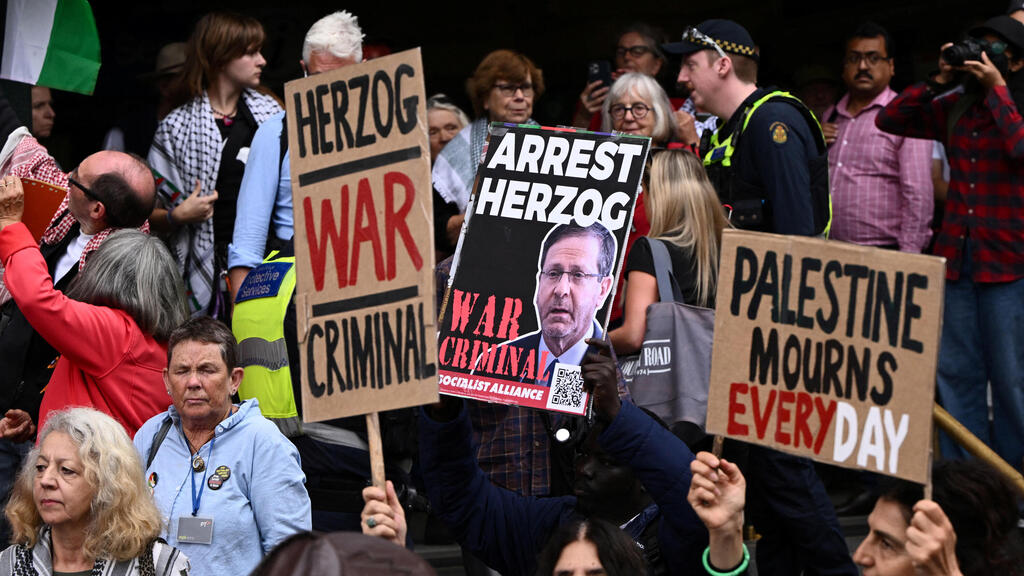
Pro-Palestinian demonstrators in the streets of Sydne
(Photo: AAP/Joel Carrett via Reuters)
When Herzog arrived at the temporary memorial to lay stones brought from Jerusalem, alongside Jewish Agency Chairman Doron Almog and World Zionist Organization Chairman Yaakov Hagoel, local security officials told me that not since the 2000 Sydney Olympics had the city faced such a large and complex security operation. We did not hear the crowds of protesters shouting “Arrest Herzog.” The municipality activated emergency security protocols that allowed it to block a march planned by leaders of the boycott Israel movement and pro-Gaza activists.
Every member of the Jewish community we met, young and old alike, said the attack caught them completely by surprise, but did not emerge from a vacuum. It was the direct result, they argue, of a policy of containment lasting two years and intensifying since October 7. According to a report by the World Zionist Organization, Australia has experienced a surge of hundreds of percent in antisemitic incidents this year. Some 1,654 events were recorded in just a few months. Schools were vandalized, institutions set on fire, and Jews in Sydney and Melbourne began concealing identifying symbols.
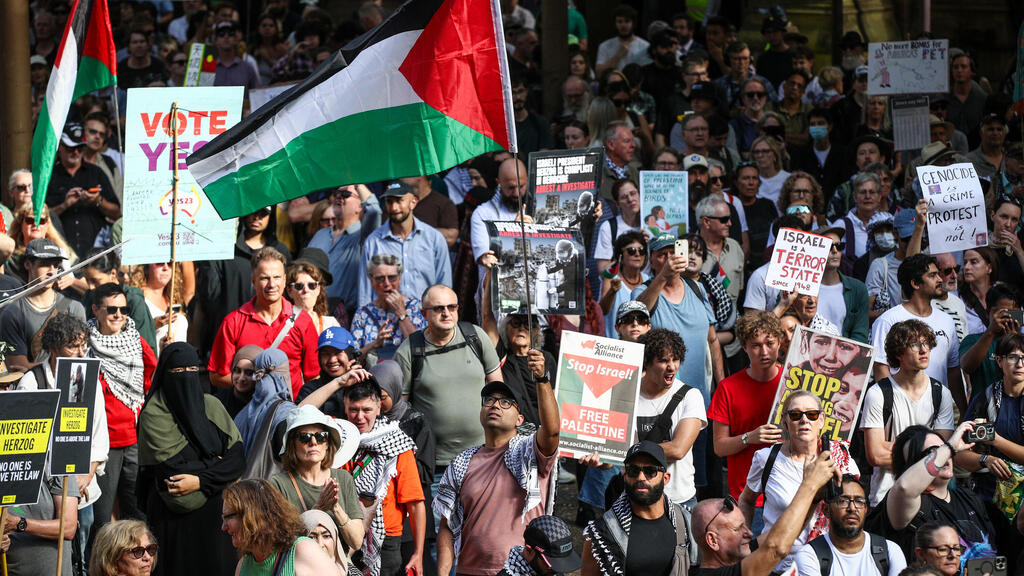
(Photo: Lisa Maree Williams/Getty Images)
At the center of the criticism stands Prime Minister Anthony Albanese. As leader of the Labor Party, critics say, Albanese is captive to cynical political calculations. Australia is home to about 1 million Muslims, many of whom live in key electoral districts in western Sydney and Melbourne and traditionally vote for his party. They are joined by far-left activists and progressive movements that have cast Israel as the embodiment of evil. In an effort to survive politically, Albanese chose to equivocate. After the massacre, he offered a muted response: “Governments are not perfect, I am not perfect, I did my best.” In practice, he did not attend any of the 15 funerals. In Parliament, when asked this week to condemn calls for an intifada, he refused and said the temperature needed to be lowered.
Even before Herzog met Albanese, Menachem Mendel Ritter, a Chabad high school student in the city, was unconvinced. “I don’t think it will help. Albanese is not suddenly going to change his skin,” he said. “The biggest problem is that ordinary Australians are simply indifferent. They don’t understand that they, the terrorists and their supporters, can do this to them, to any Australian. But they prefer to live quietly.”
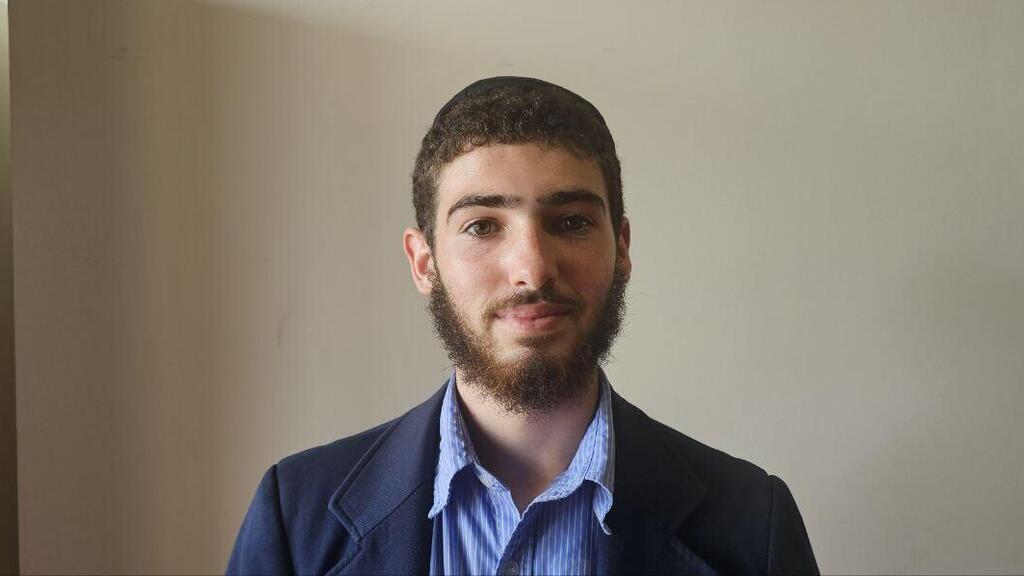
Menachem Mendel Ritter
(Photo: Yair Krauss)
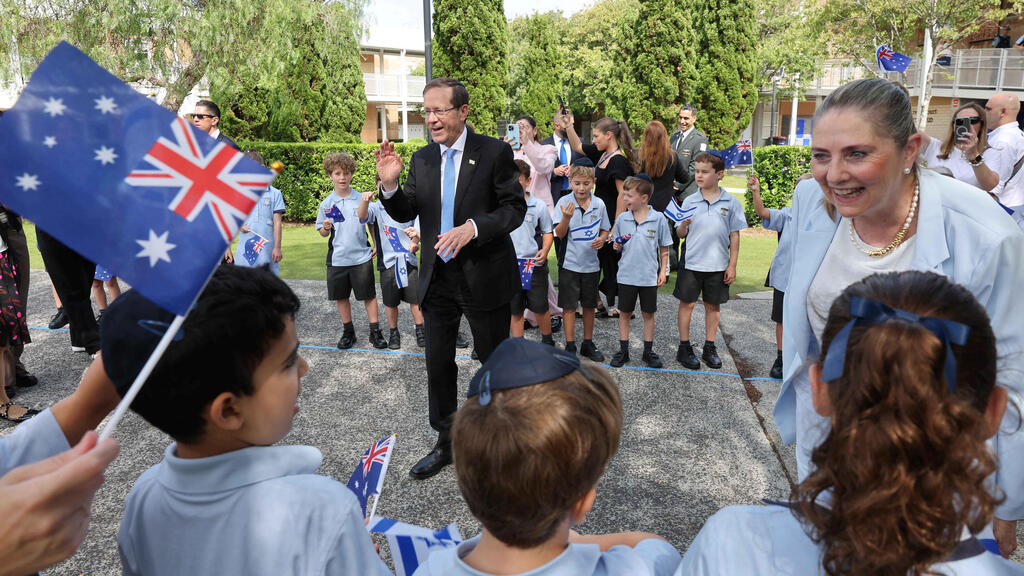
After an emotional reception in which Herzog and his wife Michal walked between rows of 400 children waving Israeli and Australian flags, they entered the Jewish Moriah College. They heard testimony from students who were at the beach during the attack and answered questions from students and teachers. Among them was Israeli teenager Isaac Vanunu, known as Zak, the son of a Jewish National Fund emissary to Australia. On December 18, he celebrated his bar mitzvah at the Bondi Pavilion on the day of the attack. What was meant to be the happiest moment of his life turned into a nightmare. “My friends lifted me up on a chair. I was surfing over the crowd. Then we heard the shots,” he recalled. “My dad said he actually heard the sound of the rifle being cocked. We all ran to hide in the kitchen.”
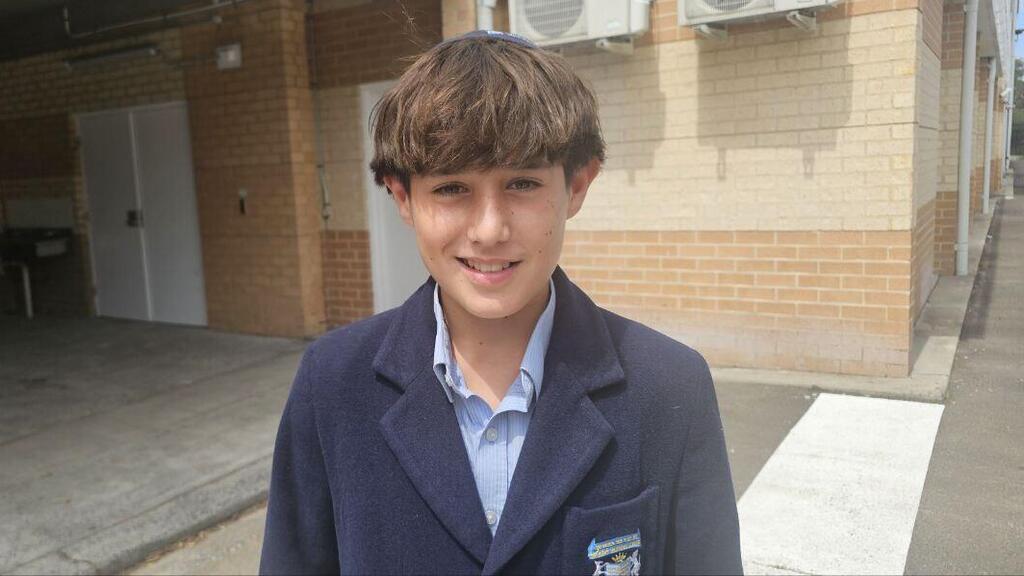
Zak Vanunu
(Photo: Yair Krauss)
Just 40 meters away, a gunman carried out a massacre. Thirteen-year-olds hid under industrial sinks. “For my friends, it was the first time they were dealing with terror. One friend hid in a freezer and couldn’t get out. An adult rescued him, and he’s still traumatized,” Zak said. “But for me, it felt like something I thought I had left behind in Israel chased me across the ocean.” Despite the trauma, he insisted on a message of resilience. “Seeing more than 120 of us, proud Jewish kids, coming back to dance, it showed me that no matter what happens, our community stays strong.”
Rebbetzin Chani Wolf of Sydney’s Great Synagogue described a community in shock. “For weeks we were terrified,” she said. “We are a community still deep in trauma. We saw October 7 in Israel, and two months ago we experienced our own October 7.”
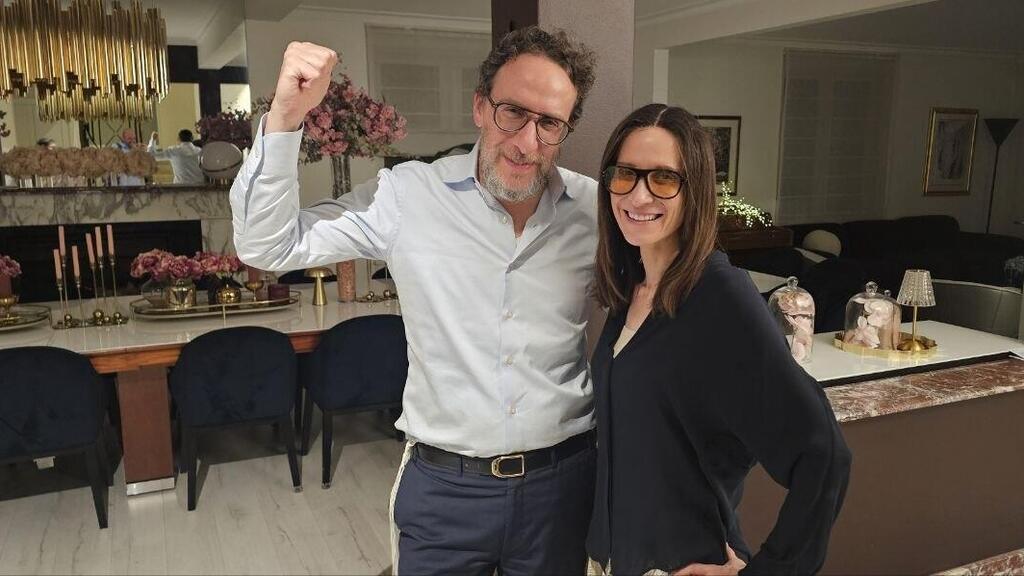
Rabbi Levi and Rebbetzin Chani Wolf
(Photo: Yair Krauss)
Her husband, Rabbi Levi Wolf, sought solace in unity. “There’s a saying that antisemitism is bad for the Jews but good for Judaism. Hundreds of people are coming to synagogue whom we’ve never seen before, and the community needs each other more than ever.”
Chris Reason, a senior correspondent for Channel Seven and one of Australia’s most respected veteran journalists, analyzed the circumstances behind the eruption of hatred against Jews. He said it stems from Australia’s anguish over Palestinian suffering in Gaza. He calls it the “pub test,” what the average Australian thinks while drinking a beer after work. “Most will say Israel and Netanyahu’s government have gone too far,” Reason explained. “They look at the statistics of the number killed in Gaza versus the number killed in Israel and say it has to stop. That’s why we saw so many middle-class people at these protests.”
When asked about what many see as a double standard toward Israel, Reason acknowledged the disparity. Russia’s rampage in Ukraine, the slaughter of Iranian regime opponents and the destruction of Kurdish communities in Syria did not send people into the streets here or trigger violent attacks against their communities in Australia. Only when Israel defends itself do synagogues in Melbourne become targets. “None of that compares to what the Jewish community is going through right now,” Reason admitted. “When I asked my Jewish neighbor how she was feeling, she burst into tears. She’s afraid to leave the house. She asked me, ‘Why is the media so against us?’ The community truly feels the country, and especially the Albanese government, has let them down.”
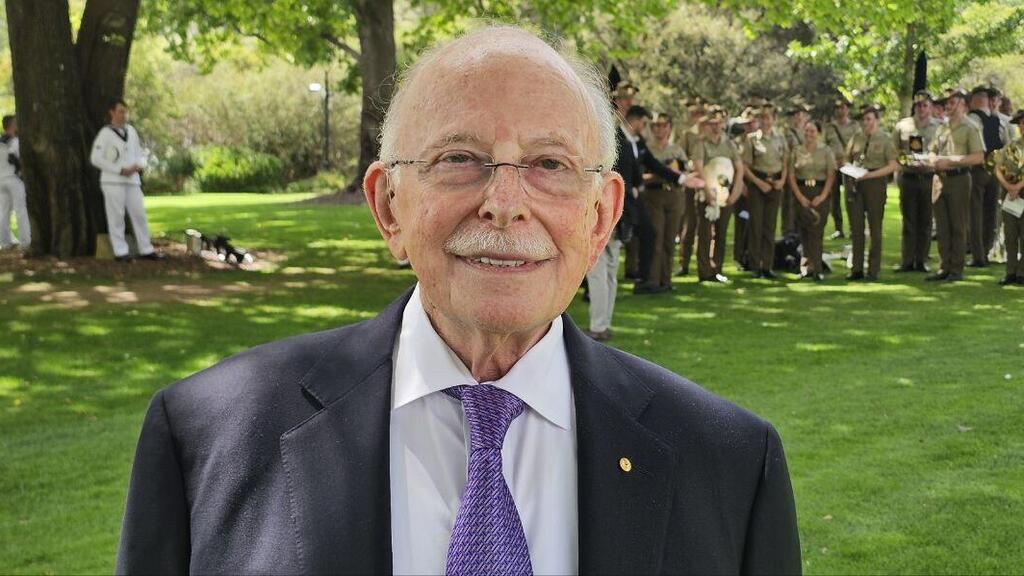
Mark Leibler
(Photo: Yair Krauss)
At the official reception for Herzog at Government House, he was welcomed with full honors. Mark Leibler, a senior community leader and former president of the Zionist Federation, stood on the palace lawn just as he had 40 years earlier when he accompanied President Chaim Herzog, Isaac Herzog’s father, on a similar visit. The difference, he said, was profound. “The security back then was nothing compared to today,” he said. “This enormous eruption of antisemitism came as a complete shock to Jewish leaders. It was always simmering beneath the surface, but now it’s out.”
The summit meeting between Herzog and Albanese was tense. Albanese sought to balance competing pressures. He posed for photographs with Herzog to avoid friction with the United States and Israel, expressed sympathy and appreciation, yet signaled conciliatory messages to his political base and the Muslim minority.
During a visit to a Chabad house, Albanese moved among bereaved families, listened to the Kaddish and read out names, but remained silent. He did not want to utter a wrong word that might anger his hosts. “Albanese understands the issue,” Herzog told Yedioth Ahronoth after the meeting. “He made serious mistakes, certainly regarding recognition of a Palestinian state and changes to the line on Jerusalem. I feel they want to make amends.”
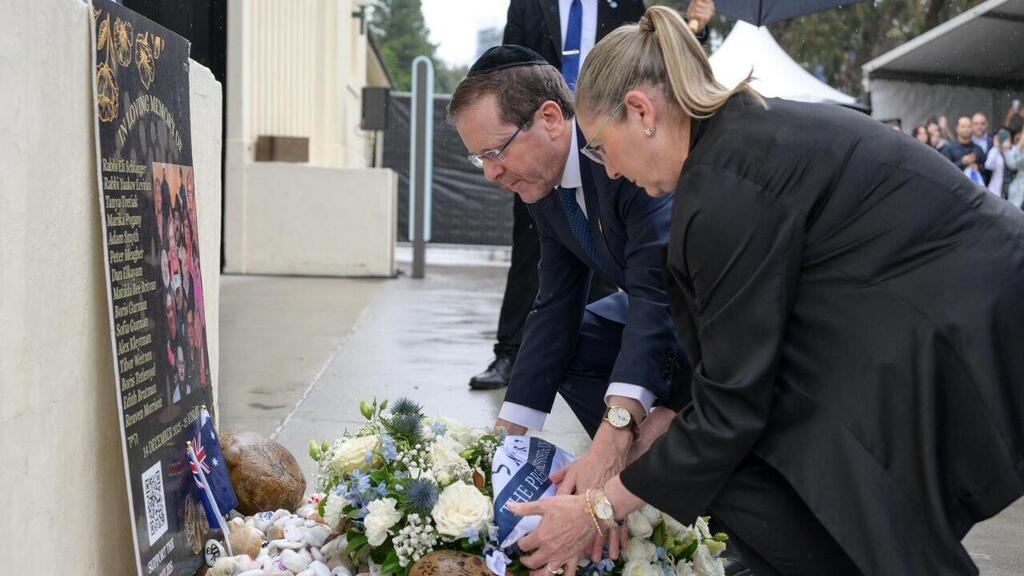
President Isaac Herzog leaves wreath and stones from Jerusalem at the Bondi Beach memorial
(Photo: Maayan Toef/ GPO)
Herzog projected optimism. “The fact that after two years of attempts to erase Israel from the map, Israeli flags are flying here on official buildings, that is a huge victory over the protesters.”
Will this awakening lead to increased immigration of Australian Jews to Israel? Hagoel tempered expectations. “I don’t see an airlift from Australia to Israel,” he said. “People are living under a fog. They are waiting to see where the government is headed.” The real concern, he acknowledged, is the growing phenomenon of hiding Jewish identity and retreating underground. “Our fear is mezuzahs being taken down from doorposts. Jews are afraid to walk around with Jewish symbols, and within years assimilation expands and many lose their Jewish identity.”