

Haredi rabbis are speaking out against a new phenomenon in Safed: Haredi female bus drivers. The rabbis have issued a letter, titled “For the Salvation of Safed,” denouncing the trend.
The letter states that “we have heard of a new phenomenon taking place in our city, in which Haredi women serve as drivers in public transportation.” They argue that many great rabbis have generally forbidden women to drive vehicles - considering it a severe breach of modesty standards, and said that it was inconceivable that women would “descend a few more rungs” to serve as public‑transport drivers. The rabbis described the work as “degrading,” asserting it was inappropriate even for non-Jewish women and “certainly not for a Haredi woman.” According to them, few people would accept such “degrading work,” and it represents a grave violation of all Torah and modesty boundaries.

Signatories include dozens of rabbis, among them a prominent community rabbi in Tiberias, the head of the prestigious Jerusalem yeshiva Porat Yosef, and senior members of the Shas party’s Council of Torah Sages. The letter began as a local initiative in Safed but quickly gained traction among national‑level religious leaders. They described the situation as a “serious breach in the vineyards of the House of Israel,” adding that “anyone able to prevent this serious stumbling block will be blessed.”
The Transportation Ministry responded that it is unaware of any widespread phenomenon of Haredi women working as public‑bus drivers. However, given a severe driver shortage — estimated at around 5,000 drivers — any additional workers are considered essential. The shortage has already negatively impacted service quality, including buses running late, lower frequency and degraded passenger experience. Harsh working conditions, including violence against public‑transport staff, have caused dozens of drivers to quit in recent weeks. Bus companies are recruiting aggressively, including from women.
The job today is carried out in segregated driver compartments separated from passengers by glass partitions and payment machines scattered throughout the bus — meaning Haredi women working in this role have minimal direct contact with passengers, reducing religious concern over modesty.
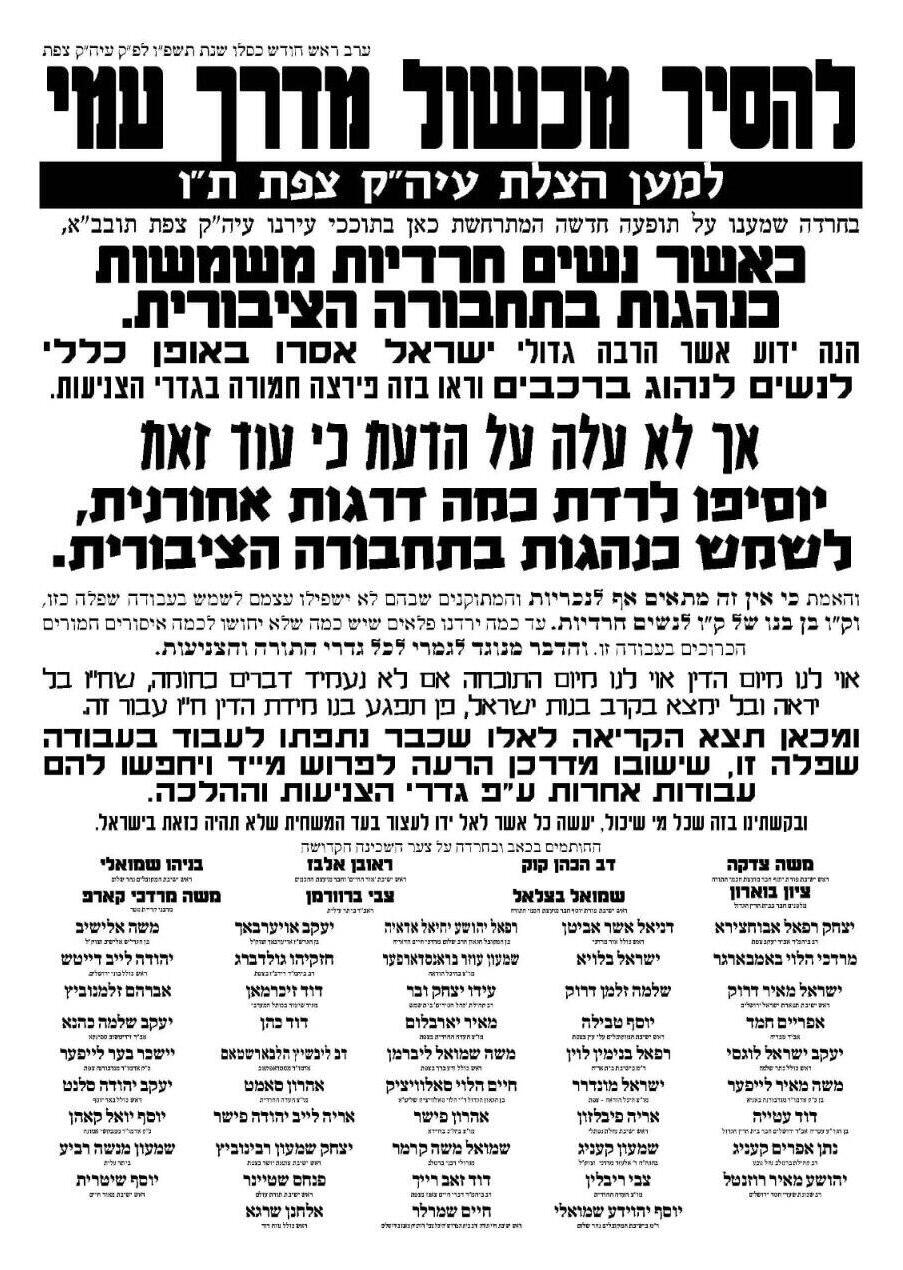
The rabbi's letter against female Haredi bus drivers
Yael Yechieli, director of the 5050 initiative of the Centers for Social Justice, defended the female bus drivers. “Haredi women are creating tremendous change — they studied and learned to become bus drivers, took the wheel in their hands. And what do the rabbis do? They come out against them and try to humiliate them. Our future depends also on these Haredi women, and now is the time to support them. I hope we’ll see this revolution also in the leadership of the country.”
In the Knesset, lawmaker Merav Michaeli responded pointedly to the rabbis’ letter: “Wow, rabbis — you’re so hysterical, reacting emotionally to everything. Maybe you’d better stay home and raise your children? Because it doesn’t seem like you’re capable of confronting reality.”