

In the opening of Exodus, "Avodah" (service/work) is synonymous with oppression. The Egyptians subjected the Israelites to labor with "rigor" (b’farech) - Sisyphean labor that lacks purpose and serves only to crush the spirit. This "Avodah" was not about building; it was about subjugation.
The mission of Moses is framed as a struggle over the definition of "Avoda". God’s demand to Pharaoh is consistent: "Let My people go, that they may serve Me (ve-ya’avduni)". This highlights a cognitive revolution: the transition from being "slaves to Pharaoh" to "servants of God". In the Ten Commandments, this shift is codified. The prohibition of idolatry is framed as a rejection of false service, while the Sabbath sets a divine limit on labor. By commanding "Six days you shall labor (ta’avod)", the Torah transforms work from an endless state of being, into a structured activity that respects human dignity.

This week’s portion, Parshat Terumah, introduces a new peak in this evolution: the move from weekly normal work to voluntary contribution. God commands, "Take for Me a contribution (terumah); of every man whose heart makes him willing". Unlike the forced labor of Egypt, the construction of the Tabernacle relied entirely on the "willing heart" (nediv lev), and the "wise heart" (hacham lev).
The people’s enthusiasm was so great that they brought more than was required. This demonstrates that freedom and personal will are far more powerful motivators than compulsion. In the Tabernacle project, "Avodah" becomes an expression of the free human soul.
This conceptual shift is reflected in the Torah’s language. In the latter half of Exodus, the frequency of the root A.V.D. (to serve/work) drops sharply. Avoda is replaced by the word Melacha - craft or creative work, and La’vod - to work - is replaced by the root A.S.A. - to make or to do. These are the terms used in the Genesis account of Creation. And from here on, once we reach the daily service in the Tabernacle at the book of Leviticus, the language of mandated "work" or “avoda” totally disappears, replaced by the voluntary language of "offerings."
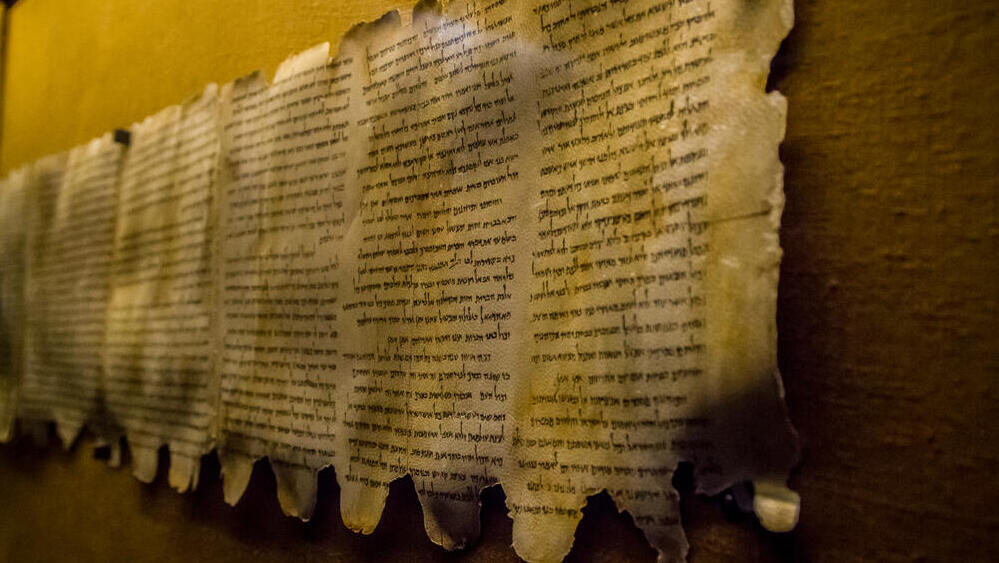
Fragment from the Dead Sea Scrolls
(Photo: alefbet/Shutterstock)
In the book of Deuteronomy Moses is called "Eved Hashem" (Servant of God), but right after the Torah praises Moses for the "strong hand" he showed before all Israel - a reference, according to Rashi, to his independent decision to break the tablets. This act of agency, later validated by God, represents the pinnacle of human freedom within divine service. So Moses was called “Eved Hashem” because of his total devotion to the mission of freedom.
The AI era and the future of work
The Artificial Intelligence revolution presents a modern parallel to these biblical themes. For generations, "work" was often defined by physical or routine mental labor. Today, AI is taking over these functions, shifting the value of human labor toward "agency" - the ability to direct, create, and lead.
The danger of this era is the potential for new social divides. If AI skills are not democratized, we risk creating a class of "masters of agents" alongside those left behind by technology. We must ensure that the "wise-hearted" of our generation of all sectors of society are equipped with the tools to master this new "Melacha"
In light of these principles, national policy should prioritize investment in infrastructure and human capital over mere transfer payments. Economic growth is driven by the "willing heart" of entrepreneurs and creators. Just as the Tabernacle was funded by voluntary contributions rather than heavy taxation, the spiritual and cultural dimensions of society flourish best through the freedom to realize one's capabilities. A freedom that is effective only if everyone has genuine and practical access to the relevant tools.
Relying on the state to manage all aspects of life can lead to a form of "bureaucratic servitude". Instead, the state’s role is to provide the technological and educational foundations for the "infrastructure of creation" which enables every individual to contribute meaningfully.
The concluding words of the Creation story - "which God created to do further (la’asot)" - remind us that the world was left unfinished for us to complete. Whether through the physical Tabernacle or the digital frontiers of the 21st century, our task is to move from the "labor" of necessity to the "creation" of choice. By fostering a society of "willing hearts" and "agency", we fulfill the ultimate goal of the Exodus: a nation of free individuals serving a higher purpose through their unique talents.
First published: 08:35, 02.20.26