


Massive Russian attacks on civilian infrastructure in Kyiv have sharply worsened the humanitarian situation in the city in recent days. Hundreds of thousands of homes are without electricity, heating and running water, forcing many residents to leave Ukraine’s capital.
Despite the war and deteriorating conditions, Israeli diplomats and local embassy staff are continuing to operate as usual and are even receiving visitors at the embassy. Most Israeli envoys are living in apartments without reliable electricity, and often without heating or water. With outside temperatures dropping to around −18 °C, the lack of heating indoors means people must wear heavy coats inside their homes. A few days ago, Consul Keti Nahshon was stuck for three hours in the cold elevator of her building during a power outage.
“This winter in Kyiv is the hardest since the war began," said Israel’s ambassador to Ukraine, Michael Brodsky. "The destroyed infrastructure and extreme cold could turn Kyiv into a ghost town. Nevertheless, we are holding on and doing our best to fulfill our role and provide assistance to Israelis and Jews in Ukraine.”
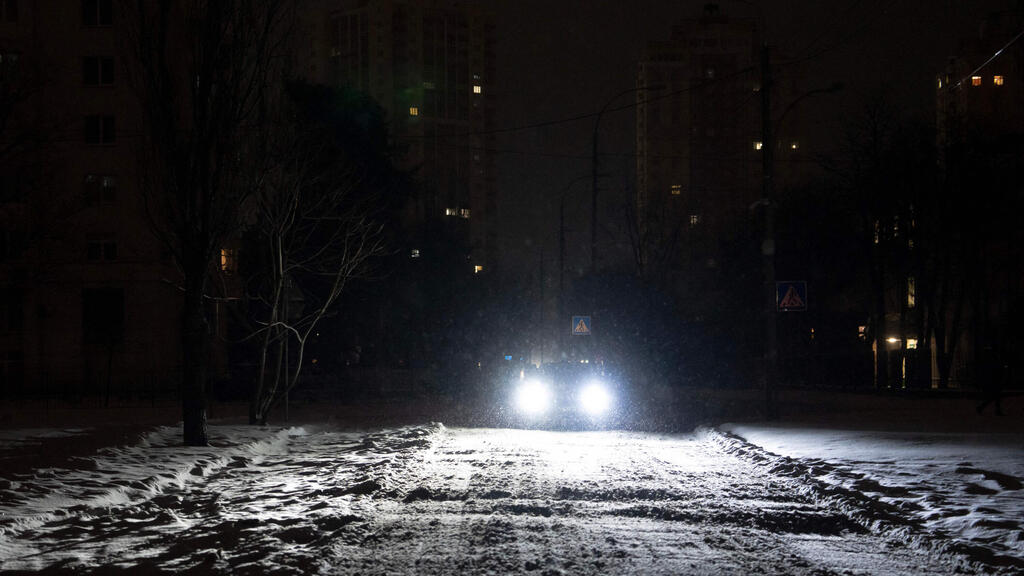
Because of the conditions, officials considered delaying the return to school. In practice, however, parents without heating at home have preferred to send their children to educational institutions, where heating systems are working. Still, Kyiv residents report heavy strain on the power grid and disruptions to public transportation.
The city government said emergency services are operating under full emergency protocols. Infrastructure workers are running mobile heating stations to provide warmth to essential facilities, including medical centers, maternity wards and community centers, while energy crews work to restore power and heat to residents’ homes.
Kyiv’s mayor called the combined assault one of the most painful attacks yet, striking critical infrastructure facilities in the capital. “Anyone who can temporarily leave the city for a place with electricity and heating is advised to do so,” he said.
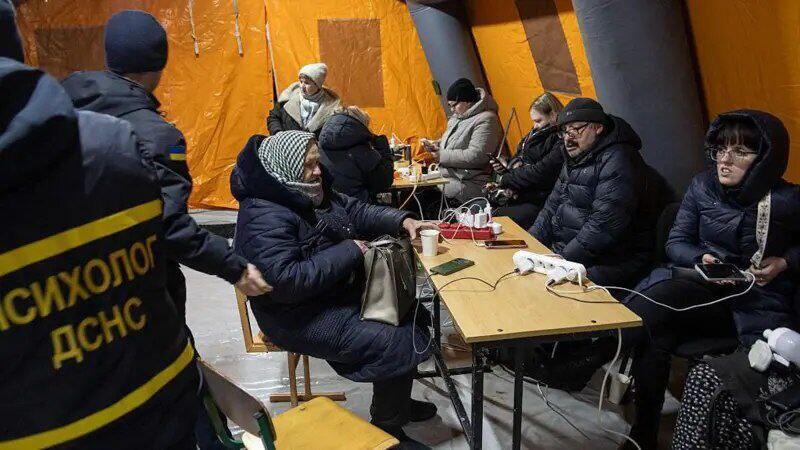
A resilience center in Kiev where residents an warm up and charge phones
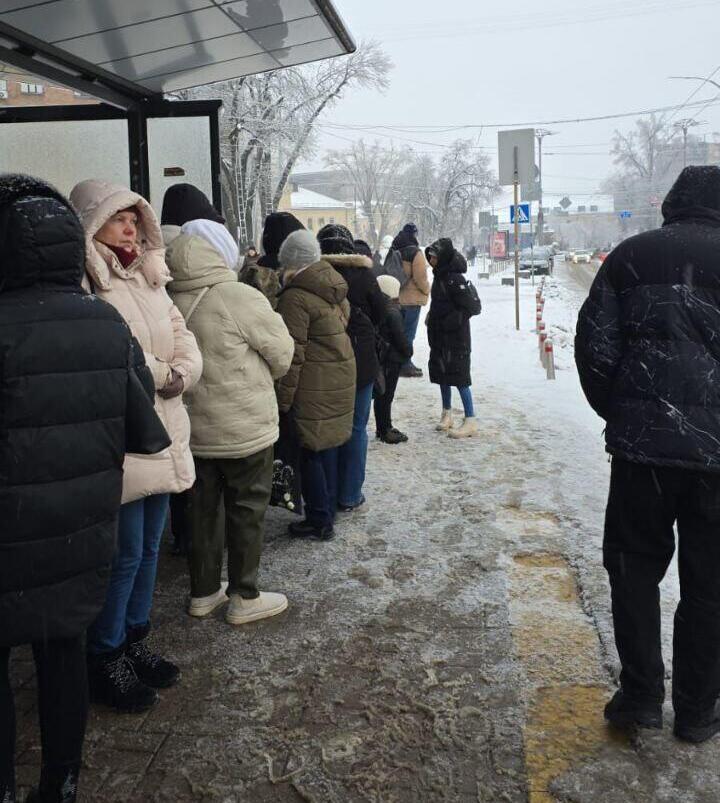
Disruptions to public transportation as well
Millions live in the Kyiv region, and many are now in darkness and extreme cold. Welfare authorities warn of a real danger to thousands of lives, especially among the elderly, children and those without access to generators.
Ukrainian reports identified the impact of a Russian hypersonic ballistic missile, the Oreshnik, as part of a broad wave of strikes that included hundreds of drones and dozens of missiles fired at targets across the country. At least four people were killed in Kyiv.
In recent days, Jewish community centers and schools have received fuel for generators and life‑saving emergency supplies through the Chabad network in Ukraine (JRNU), which is running an emergency campaign to save the lives of Jews and communities in Kyiv and other cities.
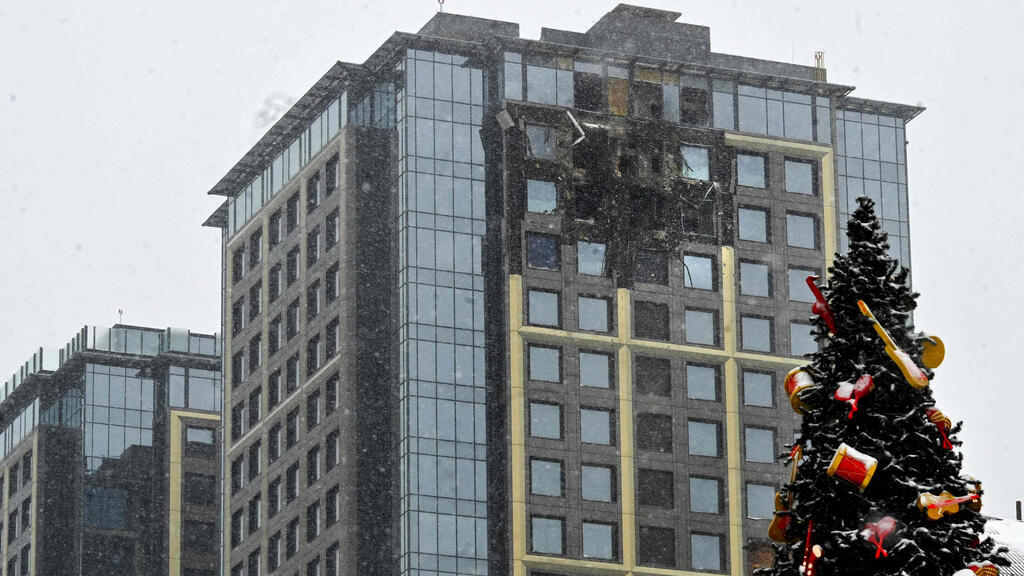
Building in Kyiv, Ukraine hit by Russian rocket
(Photo: Sergei Supinsky / AFP)
In addition, Jews without heating have been evacuated to the Or Avner education village in Zhytomyr, where heating systems are operational. “There are residents in intolerable conditions in their homes, suffering from extreme cold and darkness every night,” one rabbi in Kyiv said. “This aid is truly life‑saving, in every sense of the word. The combination of war and terrible cold is catastrophic, and we pray for better days.”
Rabbi Simcha Levenharts , the Chabad emissary in the capital, added: “The Jewish communities serve as points of warmth and light in the cities of Ukraine. Jews can come here to eat, drink something warm, charge their phones and sit in a warm room.”