


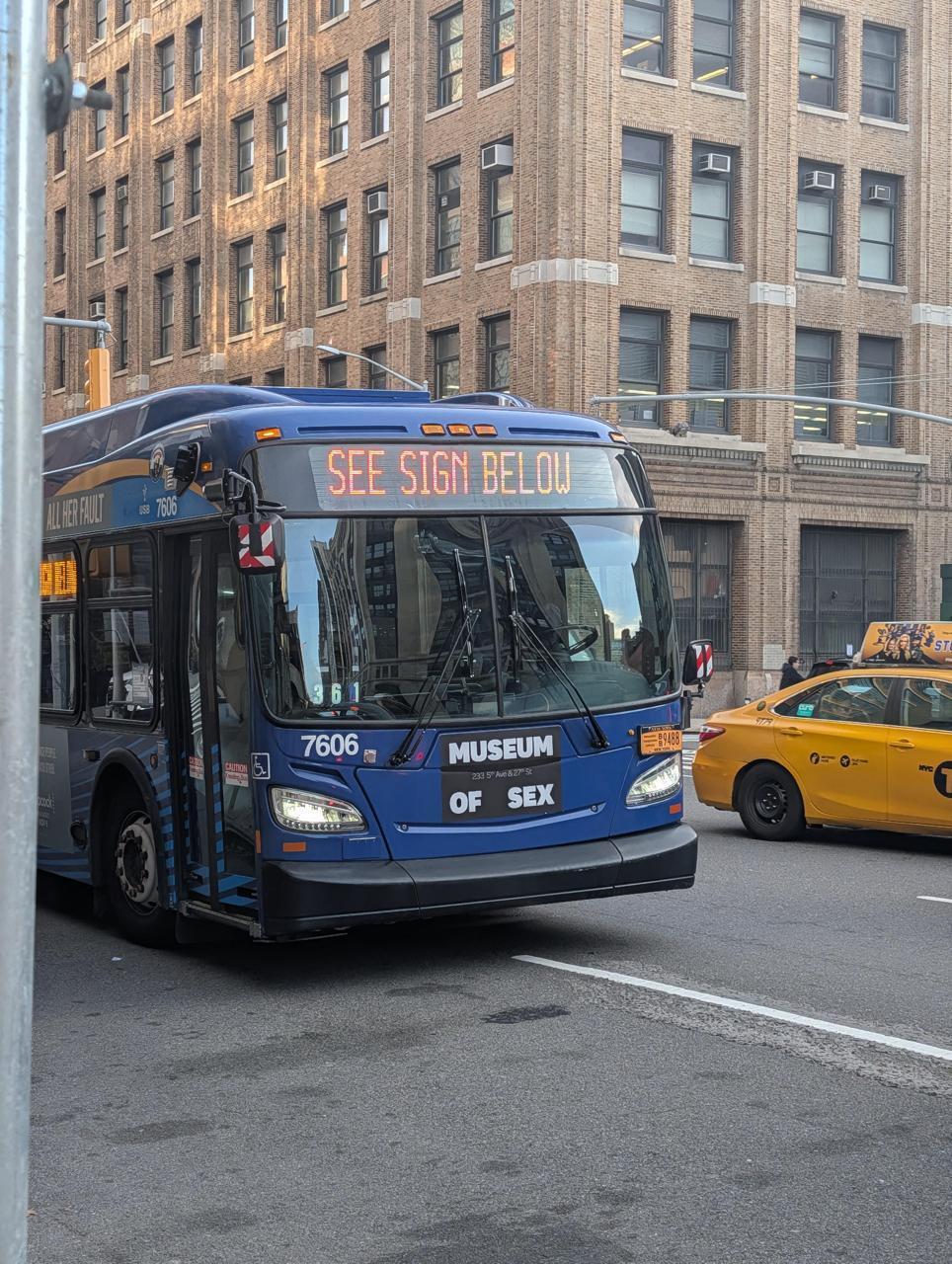
Representatives of New York’s Hasidic community are demanding that the Metropolitan Transportation Authority immediately remove advertisements for the Museum of Sex displayed on public buses across the city.
At a public hearing held by the MTA board, rabbis and Hasidic activists argued that the colorful ads severely harm their way of life and force adults and children to encounter offensive content in public space.

MTA Chair Janno Lieber, who is Jewish, acknowledged during the hearing that the ads, which have been displayed for nearly six months, have at times caused friction and even attacks on bus drivers by angry Hasidic residents. But he said American law prevents the agency from censoring advertisers.
Rabbi Abraham Zimmerman, a representative of the Rabbinical Alliance of North America, told those present at the hearing that Jewish law prohibits men and adults from looking at advertisements that encourage sexuality and draw them toward sex.
He said the community feels deeply harmed when such signs are “forced” on passersby in the street.
“It is very hurtful and frustrating that ads like this are thrown in our faces,” Zimmerman said. “We urge you and ask you, please, please, do not place ads like these that offend thousands of law-abiding citizens who simply want to raise their children in an environment protected from such content.”
Opponents of the ads, including a representative of the transit workers’ union, complained that an institution open only to people 18 and older is advertising itself on buses used by children traveling to school.
Rita Friedman, a city resident and daughter of Holocaust survivors, said she was disgusted by the ads for the Manhattan museum, which has operated since 2002. She said the exposure harms her family’s ability to preserve moral values.
(Photo: Social Media)
“I urge you to end this disgrace. No more obscene ads,” Friedman said.
Another Hasidic activist, Bernard Frishman, argued that the campaign could have been rejected on the grounds of preventing harm to minors, similar to restrictions on advertisements for alcohol, cigarettes or gambling.
“These ads humiliate us,” he said. “They cheapen the image of the city.”
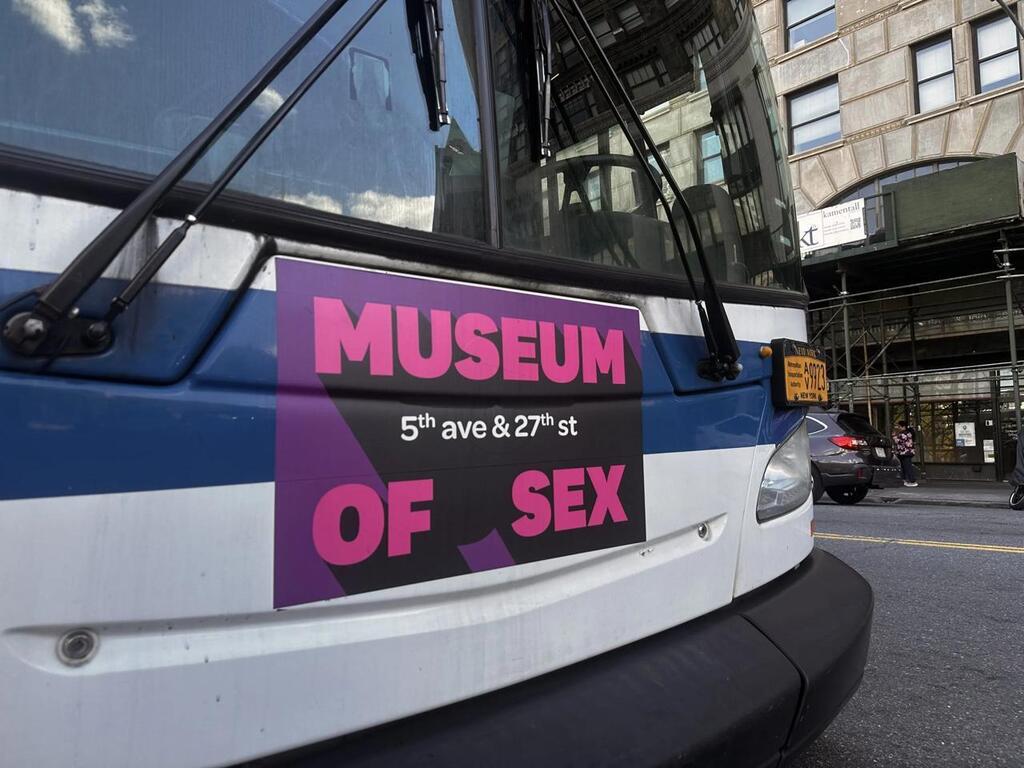
MTA policy bans advertisements for strip clubs or sexually themed products, but allows general brand advertising that does not describe sexual activity. In this case, the ad includes only the word sex.
“I understand the hearts of these people because they have a different standard and we do not like to offend anyone, but we operate in a world of First Amendment constraints,” Lieber said.
According to Lieber, following passenger complaints, the MTA asked the museum to include its physical address on the ads, and the museum agreed to add its location to prevent the false impression that the bus itself was offering a “mobile erotic show.”
(Photo: Social Media)
This is not the first time public transportation ads in New York have drawn opposition from the city’s Orthodox Jewish community.
In 2015, former city councilman David Greenfield led a campaign against subway ads for plus-size women’s clothing brand Lane Bryant, which appeared on trains serving the Hasidic neighborhoods of Midwood and Borough Park in Brooklyn.
The MTA, whose advertising revenue grew to $183 million last year, is trying to balance the need to increase its budget with cultural sensitivities in a metropolis with a growing Hasidic population.
“While the authority should do everything it can to generate revenue, it should not do so in a way that harms so many young people and parents,” Zimmerman said.