

You may know the words shalom, toda and slicha, but none of that prepares you for the first time a complete stranger calls you achi. Relax: you haven't suddenly discovered a long-lost brother. Achi — literally “my brother” — is Israel’s all-purpose “bro,” “dude” or “my friend.”
The slang every new oleh needs to know
(Video: Yaron Brenner)


Then there’s achla when something is great, basa when something goes wrong, balagan when everything goes wrong, and the indispensable sababa when everything is just fine. And when fine isn't enthusiastic enough? Upgrade to sof haderech or chaval al hazman. Congratulations: you're already sounding considerably less like Google Translate.
Then come the expressions that reveal whether you truly understand Israeli life. Someone tells you something completely unrealistic? Atah chai b’seret — you're living in a movie. Someone expects you to accept a ridiculous deal? Ma pitom! And whatever happens, don't be a freier — the dreaded Israeli sucker who pays too much, waits quietly or fails to negotiate.
Need to get moving? Yalla. Need everyone to move now? Nu, yalla! Want to skip the nonsense and get to the point? Tachles. Even ordering coffee has its own vocabulary: forget cappuccino and ask for a hafuch. Why is it called “upside down”? As India might say: don't ask too many questions. You're Israeli now.
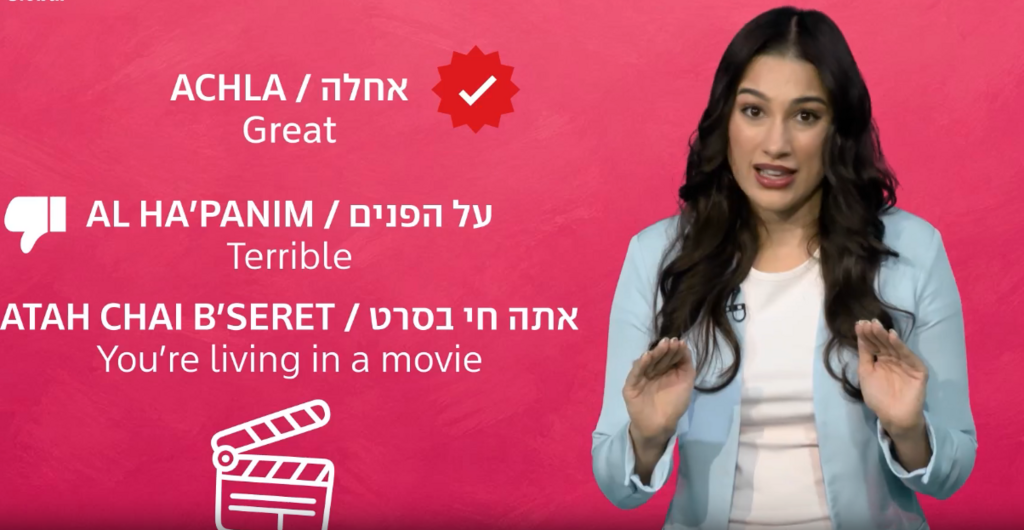
(Photo: Screenshot)
And eventually you will reach the highest level of Israeli fluency: yalla bye. It can mean goodbye, we're done, I've got somewhere to be, or this conversation should have ended half a minute ago.
That's the thing about making aliyah: learning Hebrew helps you understand the language, but learning the slang helps you understand the people. From achi to yalla bye, mastering Israeli isn't really about perfect grammar. It's about knowing when something is achla, when life is a balagan — and when to shrug, say sababa, and keep going.
First published: 14:43, 09.08.26