

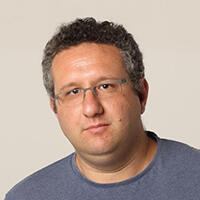
Australian resident Adriana Turk walked into the arrivals hall at Ben Gurion Airport this week with her arms outstretched and tears in her eyes. Waiting for her was Raanan Gidron, a man she had never met but had spent months hoping to find.
The two embraced for a long time as Turk repeatedly told him, “So here’s my long-lost cousin. Here you are.”
Gallery
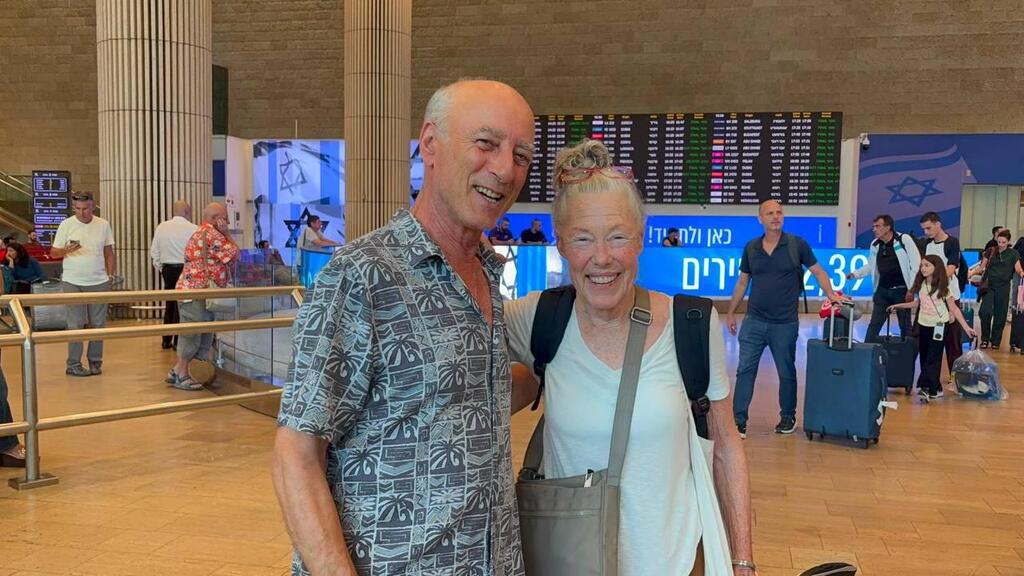
Adriana Turk and Raanan Gidron reunite at Ben Gurion Airport. ‘I found wonderful people on the other side of the world’
(Photo: MyHeritage)
For Turk, 74, the meeting marked the culmination of a deeply personal search for relatives she had believed were lost forever in the Holocaust.
Born in New Zealand and now living in the Australian coastal town of Merimbula, Turk grew up knowing very little about the European family of her father, Hans. He had left the Netherlands for New Zealand in the 1930s and rarely spoke about the life or relatives he had left behind.
“He never talked about his life before he emigrated,” Turk told ynet. “Everything I knew about his past in Europe came from the little information my mother gave me.”
Growing up with a Jewish father and Christian mother, Turk said religion played little role in the family home and she never felt firmly rooted in a particular ethnic or religious community.
“I always thought to myself that if there is a God, how could he allow a person like Hitler to do what he did?” she said.
Her father arrived in Auckland from Amsterdam in 1937 after friends warned him that he needed to flee Europe. He settled in New Zealand and later met Turk’s mother, who was Christian.
Turk said she later learned that her mother had wanted to convert to Judaism for her father, but he refused. “He said he didn’t want his children to be Jewish in case there were pogroms against Jews again and something bad happened to us,” she said.
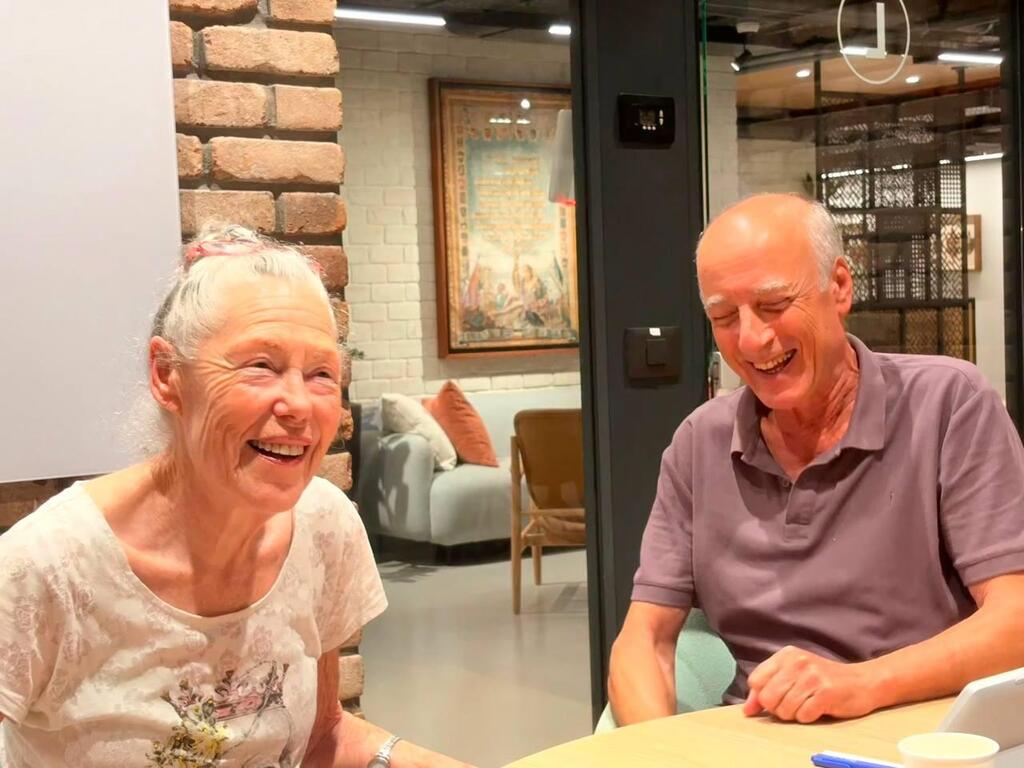
Adriana Turk with Raanan Gidron. ‘I have five second cousins in Israel. How lucky am I?’
(Photo: MyHeritage)
Although Turk retained little connection to Jewish religious life, questions about her family history never entirely disappeared. They became much more urgent after Christmas 2024, when her younger brother died of a drug overdose, leaving her without close family.
“My brother’s death was very difficult for me,” she said. “I was in a very dark place because I was left alone without close family, and I was looking for somewhere to belong. Luckily, I found wonderful people on the other side of the world who are also my cousins.”
Turk said the deadly attack at Bondi Beach in Sydney in December ultimately pushed her to begin searching seriously for the family she had never known. She turned to genealogy company MyHeritage, bought a DNA kit and was stunned to discover that relatives from her grandmother’s family had survived.
“The attack created a lot of antisemitism in Australia, and I live somewhere without a large Jewish community,” she said. “When I started telling friends that I might fly to Israel to visit my relatives, there was a lot of concern because of the security situation. They told me, ‘Don’t go.’”
But Turk was determined. “I felt I had to,” she said. “I jokingly told myself, look, at your age you have to die somewhere, maybe in Israel. But the truth is that I came here to fill the void left by spending most of my life without family.”
Footage from the Bondi Beach attack
(Video: Eliyahu Ben Zion)


Sitting beside her as she told her story was Gidron, from Kibbutz Kfar Nehemia in northern Israel, her second cousin whom she had met in person for the first time only days earlier. Their fathers were cousins. Turk’s grandmother and Gidron’s grandfather were siblings, and both were murdered in the Holocaust.
After World War II, Gidron said, his father tried to establish contact with Turk’s father, but the latter never responded and the two branches of the family remained separated. “Today I’m angry with my father for not answering him,” Turk said. “I could have known these wonderful people earlier. I have five second cousins in Israel. How lucky am I?”
A family connection restored
After Turk received her DNA results and was connected with relatives in Germany, MyHeritage researchers began examining her family tree in greater depth. Their genealogical research eventually revealed that she also had relatives in Israel, including Gidron.
“I didn’t know about Adriana,” he said. “I knew my father had relatives around the world, in Germany, Brazil and the United States, but I didn’t know about the Australian side of the family.”
Gidron said he had spent years trying to reconstruct the family tree himself. His father died in 1989, while his mother died nine years ago. “She worked on a family tree with me before she died, but we didn’t know the Australian side,” he said. “Now we are bringing our memories back to life, along with the affection between us as second and third cousins.”
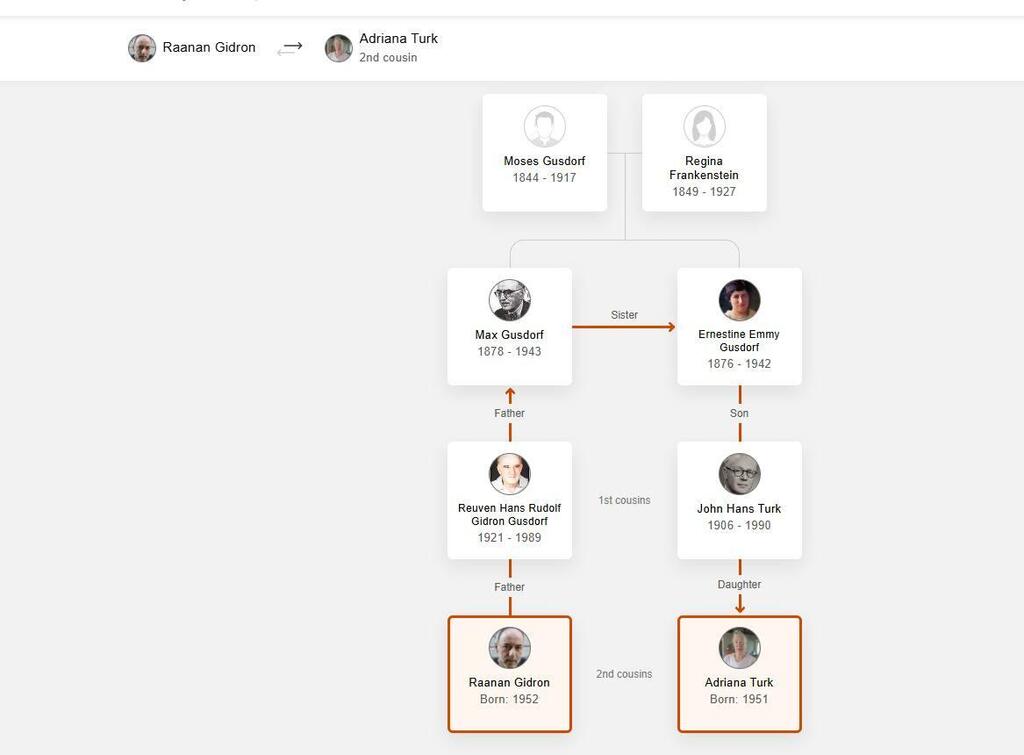
The family connection between Adriana Turk and Raanan Gidron
(Photo: MyHeritage)
After discovering relatives in Germany, Turk initially planned to travel there to meet them. Gidron urged her to add Israel to the trip. If she was already traveling so far, he told her, she should come and meet her Israeli relatives as well. She agreed, arriving in Israel from Germany on Saturday.
“In a very short time, I’ve met two different parts of my extended family, in Germany and Israel,” she said with a smile. “When I look at the family in Israel, I can see my father’s face in them.”
“This meeting is like group therapy,” she said. “They’re fascinating, they cook wonderfully and, above all, they have to accept me because I’m part of their family by blood.”
“It’s not just a blood connection, it’s a direct line between the hearts,” Gidron said. “I’m sure it’s important for you and for us to know that we are part of something within this much bigger thing. After all, every society begins with a family, doesn’t it?”
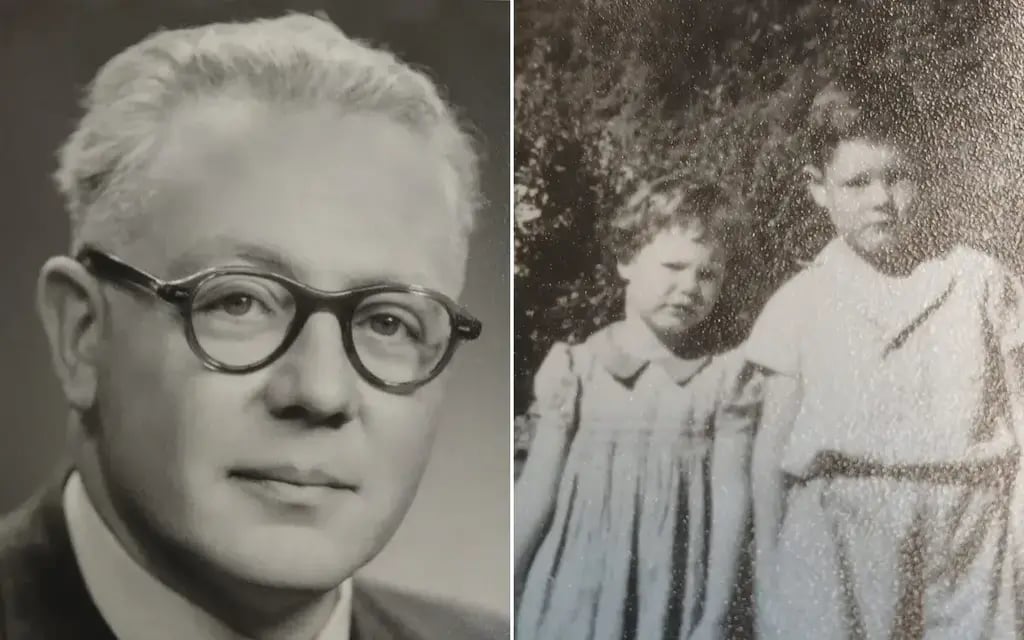
Adriana Turk as a child with her brother, alongside a photo of their father
(Photo: MyHeritage DNA)
Turk said she has treasured every encounter with her newly discovered relatives since arriving in Israel. “It feels wonderful to be loved and to fall in love with my family,” she said. “Since I landed, I’ve been crying from emotion, but I’m crying less than I did before in Australia.”
“For the first time here, I can cry with other people about the Holocaust, and there are new colors in my world,” she added. “My connection to the world has changed, and it won’t be the same after this visit because even at 74, I’ve learned new things about the world and about family.”
The reunion is unlikely to end when Turk returns home. Her relatives in Israel already have an open invitation to visit her in Australia, and she suspects the younger members of the family may take her up on it.
“I care for animals such as kangaroos and wallabies in Australia, so they’re always welcome to come visit and pet them,” she said. “This new family is healing me. It’s something rare.”