


Forty-seven new immigrants of Persian origin from New York’s Mashhadi Jewish community arrived in Israel last week and settled in Ra’anana.
“We are part of a line of Jews who were exiled from Canaan to Babylon long ago,” one of them said. “Now it is time to make aliyah and raise my children as Israelis.”
The reception at Ben Gurion Airport
(Video: Shaul Golan)


Another 28 immigrants from the Syrian Jewish community in the United States are expected to arrive in the city later this month.
The summer quiet on Kinneret Street in Ra’anana was interrupted for about half an hour when a bus pulled onto the small street and three large families stepped out. They unloaded everything they had brought with them from the United States and slowly carried their belongings into apartments in a newly completed building.
Only once they were standing inside their empty new homes could they finally lower their heart rates.
“That’s it. We did it. We made aliyah,” Ariel Dilamani said emotionally, leaning against the doorway of one of the rooms in the family’s new apartment. Four hours earlier, around 100 Israelis had gathered in Ben Gurion Airport’s arrivals hall, to welcome these new immigrants, singing as these families walked toward them.
Israeli flags seemed to be everywhere, along with broad smiles from those waiting to welcome the Persian community members arriving from New York.

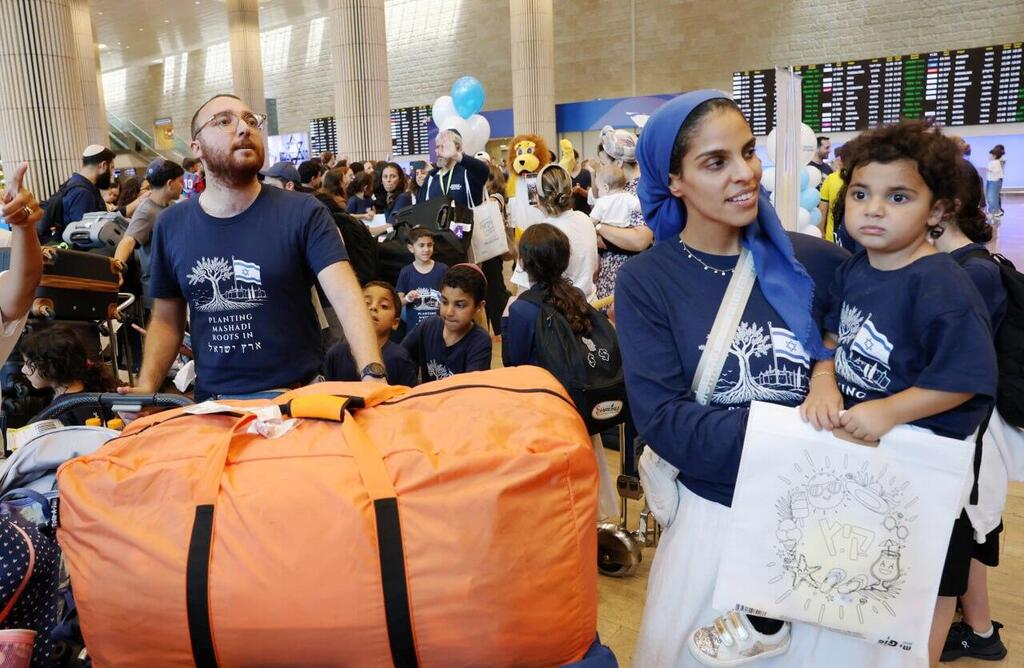
New immigrants take their first steps in Israel
(Photo: Shaul Golan)
Among them were Noya Hankin, Tehila Hadari and Lian Rabbi, who spent 2023 doing Sherut Leumi (Israel’s National Volunteer Service) working with the community.
“They’re incredibly excited about the aliyah,” Hankin said after traveling from the Jordan Valley to welcome a family with whom she had kept in contact. “I think the awakening came after the war, and I’m so happy this day has finally arrived because we spoke to them about this for years. I can barely breathe from excitement.”
When the four families, comprising 47 new immigrants, emerged into the crowd, the emotion was difficult to contain.
“It’s so surreal,” said Dilamani, 33, who arrived with his family. “Less than an hour ago I was in the middle of prayer. During the prayer they called me to receive my Israeli ID, so I got it while still wearing tefillin.”
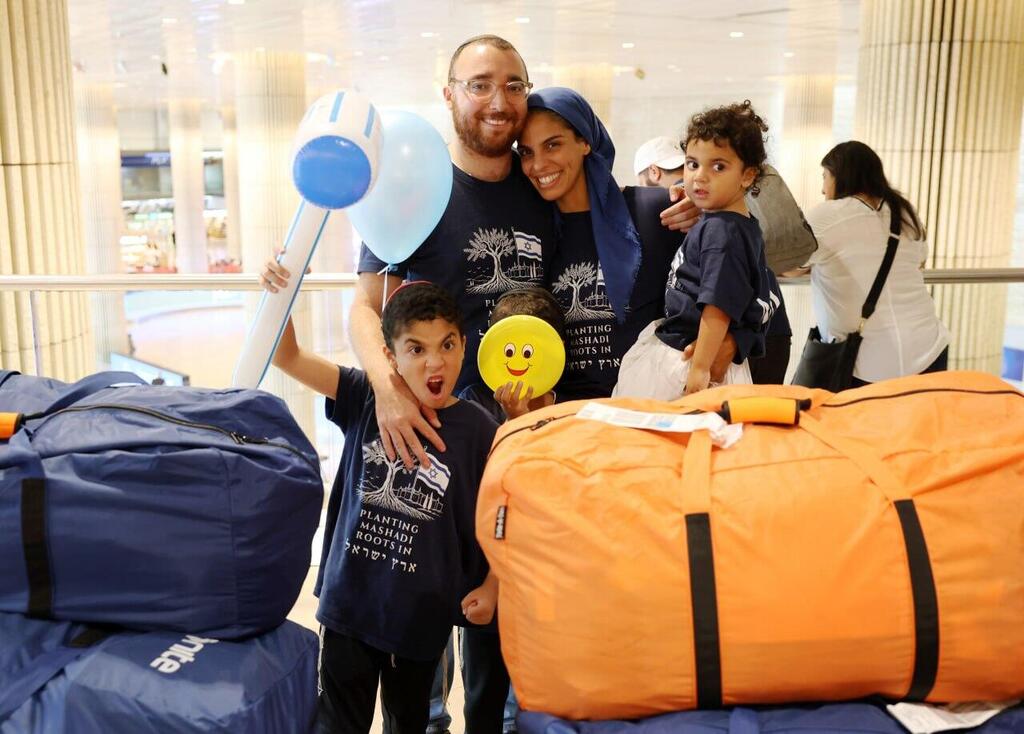
The Dilamani family at Ben Gurion Airport; for them, Israel is a prize
(Photo: Shaul Golan)
His friend from the community, Jordan Karmily, 42, who made aliyah with his wife and six children, appeared overwhelmed by the reception.
“I’m feeling every emotion right now,” he said. “All my life, my family talked about doing this and it always seemed far away. But we reached a point where we could no longer avoid the desire to move to Israel. We felt that either we do it together as a community or we stay in exile and complain.”
What frightens him now that he is in Israel? Not the security situation.
“I think more about the simple things, like making a living or whether my children will find their way here,” Karmilysaid. “It excites me to think that I will raise my family in Israel as Jews. All Jews need to understand that the exile is over and it is time to come home.”
Together makes it easier
Karmily does not use the word “exile” casually. It is a recurring theme in the group’s decision to make aliyah.
The new immigrants all belong to the Mashhadi Jewish community, whose members trace their history back through ancient Jewish exiles, including the Assyrian exile of 722 BCE and the Babylonian exile of 586 BCE.
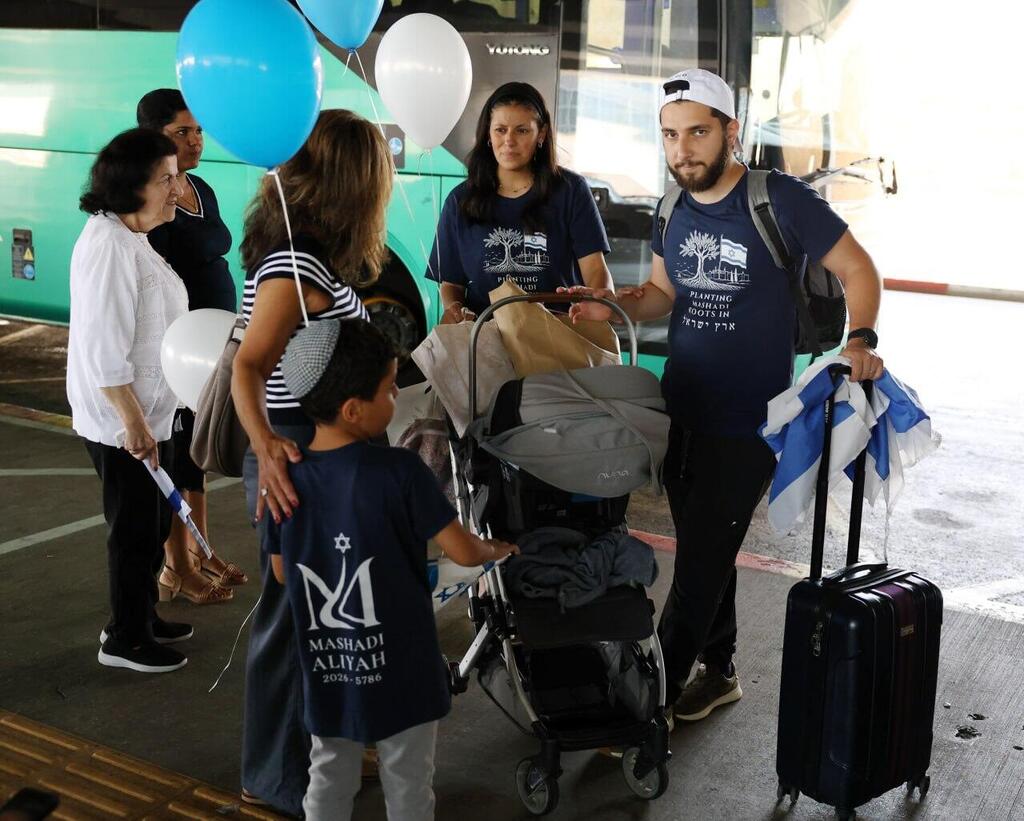
Getting organized near the buses
(Photo: Shaul Golan)
In 1979, with the beginning of Iran’s Islamic Revolution, the families of these immigrants fled to New York, where they built a close-knit Persian Jewish community while preserving traditions drawn from both Persian and Babylonian Jewish culture.
“You could say we have returned from the Babylonian exile,” Dilamani said. “Once you understand that Israel is the home of the Jewish people, you understand that you need to make aliyah.”
Most of them are far from strangers to Israel. Many spent family vacations here from childhood. Dilamani himself served in the IDF as a lone soldier for 14 months.
All of them, it seems, had at some point wanted to make the move but lacked the courage to do so. This time, with a significant portion of the community moving together, they said it became easier.
“I visited Israel many times,” said Karmily, one of the community leaders who helped push the initiative forward. “But I never made it my home, and that was a hole in my heart for years. It became a hole that could not be filled unless we made aliyah.”
Karmily said he personally did not experience antisemitism in New York, although he acknowledged that it exists. Nor does he attribute the decision to move primarily to hostility toward Jews in the city with the largest Jewish population outside Israel.
“It was simply a decision we had to make,” he said. “Did October 7 show me, at least, that people from my nation could be sitting in shelters while I lived my life in New York? Yes. That felt wrong to me. Deep down, I think these three years of war actually helped bring us to the decision to make aliyah.”
Seen through Israeli eyes, the group’s story can appear counterintuitive.
At a time when Israel is counting the number of people leaving the country, some because of repeated rounds of conflict with the Iranian axis, members of a community whose roots are in Iran and who over the years became an influential force in New York chose to move in the opposite direction.
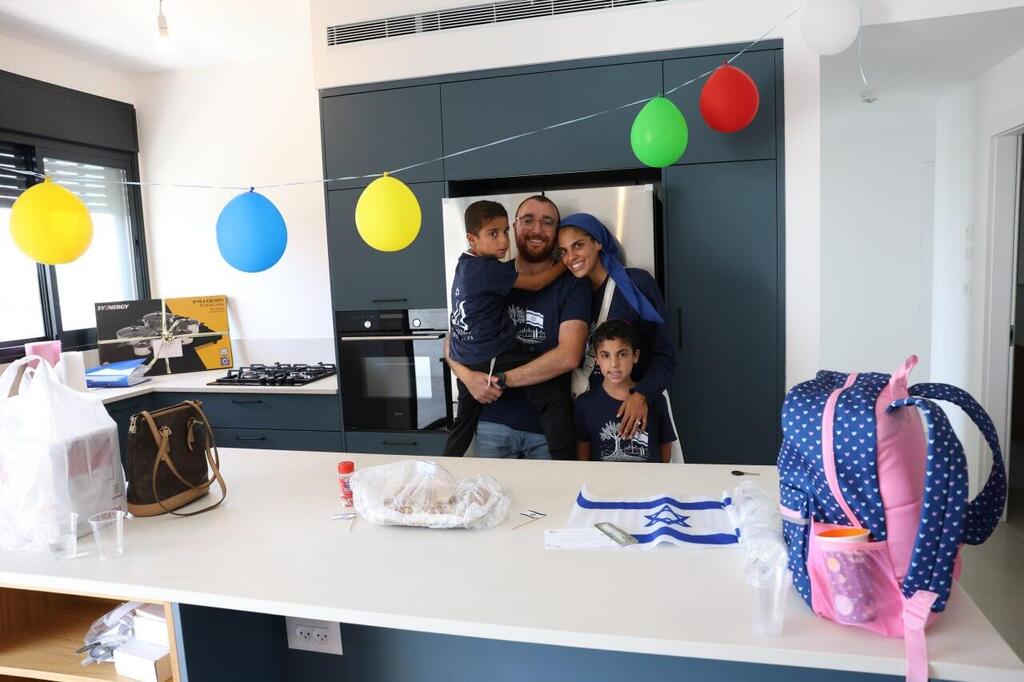
Settling into their new apartment in Ra’anana
(Photo: Shaul Golan)
“Everyone in the community helped everyone else prepare for aliyah,” Karmily said. “In the past, individuals from the community moved here, but this time everyone pushed one another and eventually we did it together.
“We would say to the person next to us, ‘If you can do it, then I can do it too.’ We met organizations like Israela and, of course, Nefesh B’Nefesh. We even made a preliminary trip to Israel a year ago and visited several places to decide where to live.”
They eventually chose Ra’anana.
Dilamani said the choice was largely practical. Karmily saw something deeper.
“We saw that it was a city very similar to our city in the United States,” he said. “It has Israelis and also many English speakers. Everyone had different ideas about where we should live as a community, but I think Ra’anana created the least resistance.”
‘Not everyone found it easy’
Although the families describe a largely positive aliyah process, the reality was not entirely seamless.
Some members of their tight-knit community questioned the decision. After all, it is not every day that affluent New Yorkers pack up their lives and embark on such a dramatic move, especially with children involved.
“We are a very closed community, and for some people it was not easy to accept our decision,” Karmily said. “But I think over time we changed their minds.
“It certainly wasn’t easy, for example, to separate grandparents from their grandchildren. Some people told me at first that it was irresponsible, and I understand what they mean. But in life, you have to make decisions while thinking ahead.”
Dilamani said some feared the move could fracture the community, but once the idea gained momentum, there was no turning back.
“We are very Zionist in our community, and I understand that when the moment actually arrives, something new can be frightening,” he said. “But we felt we had to do it.
“There may be people who say this is crazy, but I look at life differently. There are inspiring people and there are people who are not. Some see this country as a curse, and I see all the beauty it has to offer. It is a privilege for us to live here and, as I have said before, we are just a small part of the chain that began with Abraham.”
And in Israel in 2026, where people have repeatedly been arrested on suspicion of spying for Iran, there is an obvious question hanging in the air.
The new immigrants laugh when it is raised, quickly brushing it aside.
“I know where my heart is, and it is with Israel,” Karmily said. “This country could be at war with any country and I will always stand with it because I am Israeli, officially as of today.”
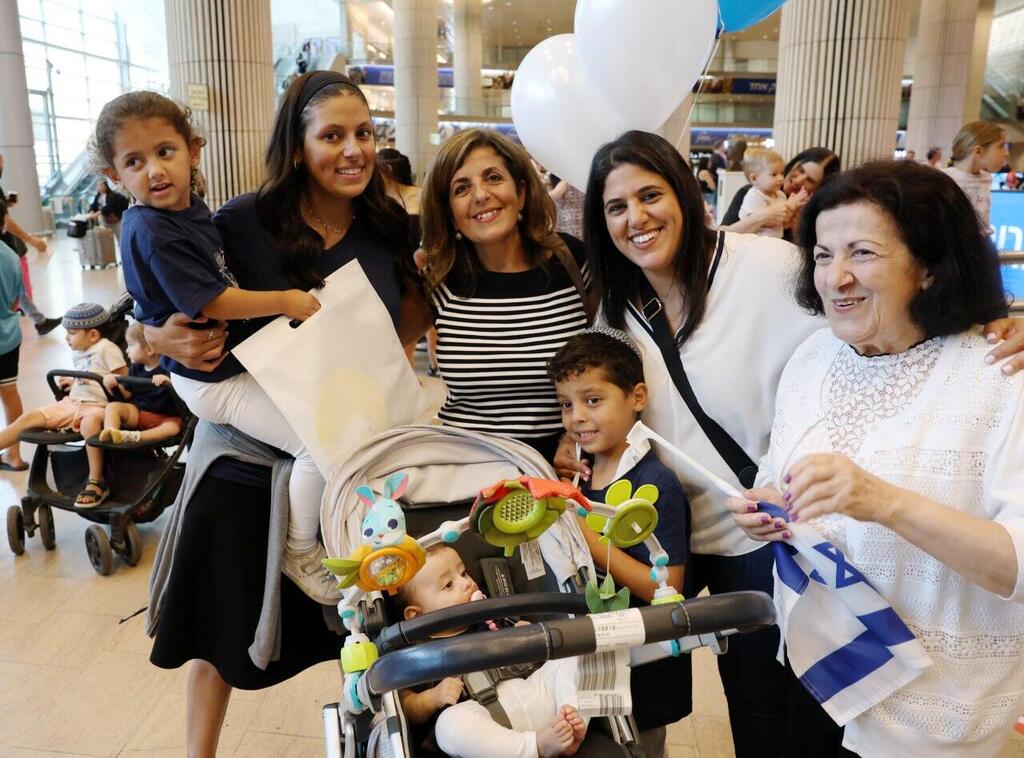
Smiles at Ben Gurion Airport
(Photo: Shaul Golan)
Dilamani agreed. “The Islamic Republic is not the same Iran my parents left, so it is easy for me to say that of course I support Israel.”
What do they hope will happen now that they are Israelis?
“It would be nice if one day we could take off from Ben Gurion Airport and fly to Tehran,” Karmily said. “I would love to go there and see where my parents grew up.”
The families made aliyah with assistance of Nefesh B’Nefesh, in cooperation with Israel’s Ministry of Aliyah and Integration, the Jewish Agency for Israel, Keren Kayemeth LeIsrael, and Jewish National Fund-USA.
Naftali Derovan, head of Nefesh B’Nefesh’s Aliyah Guidance Division, said the decision to move together carried particular significance.
“The decision of these seven families to make Aliyah together and choose Israel as their home is both visionary and deeply meaningful,” he said. “They remind us that while Aliyah is often a deeply personal decision, it can also be a communal one. In this case, these families are bringing the strength and spirit of their close-knit community with them to Israel.”
“We are excited to continue providing them with the professional support and resources they need to integrate successfully, build their lives here, and truly feel at home in Israel,” Derovan added.
Ra’anana Mayor Chaim Broyde also welcomed the new residents.
“We warmly welcome the new families joining our community and are deeply moved by this inspiring step, which embodies Zionism and faith,” he said.
“Ra’anana is proud to be one of Israel’s leading cities in the absorption of new immigrants, serving as a home to olim from dozens of countries and bringing together diverse communities.”
“We embrace the new olim and are committed to providing them and their children with the support they need to integrate, thrive, and feel at home in Ra’anana,” he added. “I wish the families a smooth transition into their new lives, and assure them that we will be there to support them every step of the way.”