


Following a ynet investigation revealing that most grants from the Ministry of Immigration and Absorption are allocated to ultra-Orthodox and religious organizations, a special session was held Wednesday by the Knesset Committee on Immigration, Absorption and Diaspora Affairs.
The data show that millions of shekels were transferred to ultra-Orthodox and religious nonprofits, while organizations representing immigrants from the former Soviet Union received no funding. It was also revealed that the ministry’s support budget for nonprofits rose from 3 million shekels in 2024 to 8 million shekels in 2025.
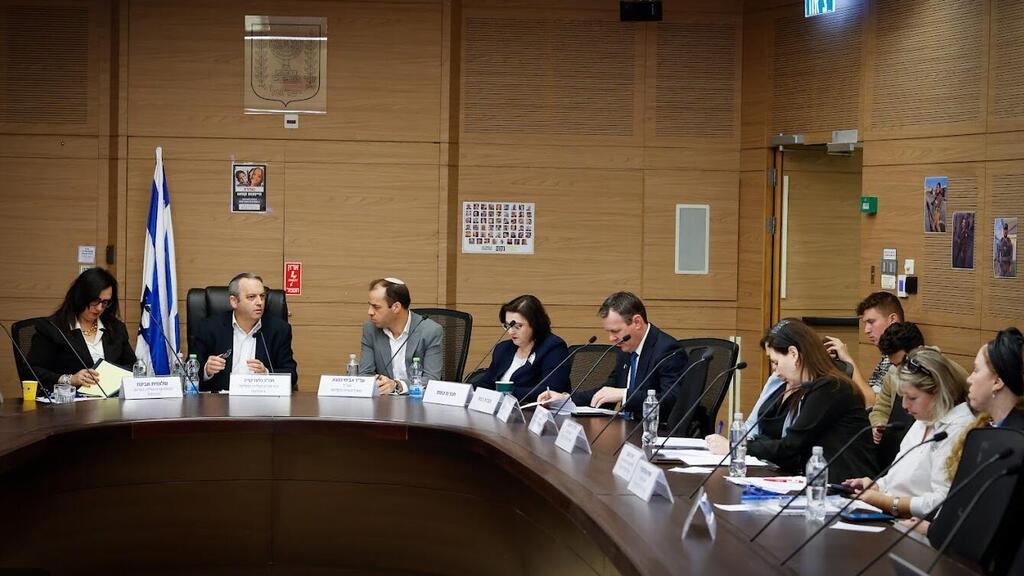
The discussion at the Knesset Immigration and Absorption Committee
(Photo: Noam Moskowitz, Knesset Spokesperson’s Office)
Alex Rif of the “One Million Lobby” organization said during the discussion that 85% of the groups receiving funding focus on Jewish identity, while no support was provided to organizations engaged in documenting Jewish heritage and heroism. Representatives of additional nonprofits argued that the support criteria prevent organizations from receiving funding from more than one government ministry, even when the sums involved are small.
Committee chairman MK Gilad Kariv of the Labor party said: “The increase in the budget should be welcomed, but its actual results must be examined. The central question in funding is the outcome. When reviewing the 2025 criteria and their implementation, it becomes clear that in certain areas a flaw has emerged. It is important that all sectors of Israeli society take part in immigrant absorption, but a situation in which about 50% of the funding is directed to organizations with a specific religious-sectoral character does not accurately reflect the distribution of civil society efforts and indicates a problematic bias in the drafting of the criteria.”
Kariv, who pledged to hold an additional discussion on the issue, added: “It is unacceptable that in practice the representative organizations of immigrant communities were the most significantly harmed in the transition from the 2024 criteria to those of 2025. Representative immigrant organizations should be a separate category for funding. The bulk of the budget should be directed toward individual assistance for immigrants — such as helping them exercise their rights, providing guidance and resolving concrete problems — rather than toward identity-based activities, important as they may be.”
MK Evgeny Sova of Yisrael Beiteinu also called for a review of the funding criteria. “Immigration and absorption budgets are meant to assist immigrants, not to finance religion-and-state agendas,” he said. “I will not accept a situation in which a new immigrant receives the message that he is ‘not Jewish enough’ and needs to be brought closer. The money must go to welfare, language instruction, housing and employment.”
Sova added: “The current scoring mechanism primarily rewards stronger organizations, while Zionist nonprofits working on the ground receive no funding. There are immigrants who rely on food baskets. During the coronavirus pandemic I worked to secure food vouchers for immigrants who received no assistance because of language barriers and address issues. Before distributing political budgets, ensure that people can live with dignity.”
MK Tania Mazarsky of Yesh Atid said during the session: “From my personal experience as an immigrant who was placed at a Passover Seder in a religious setting without understanding what it meant and was simply told what to do, I only later understood that integration into Israeli society also depends on familiarity with history and tradition. Such a process is important for new immigrants, but it must be done in an accessible, respectful and effective way that creates genuine connection and a sense of belonging.”
Immigration and Absorption Ministry Director General Adv. Avichai Kahana responded to the criticism, saying: “There is no and has never been any policy discriminating against immigrants from the former Soviet Union or other communities. On the contrary, this is a correction of accumulated distortions over many years. In a broad survey we conducted, involving about 25,000 immigrants, 52% reported dissatisfaction with their social connections in the community, and 34% said their children lack sufficient social ties. These findings require investment in community connection and social resilience, alongside continued close dialogue with representative organizations.”