


“National-Haredi Judaism is an active, extreme messianic movement that threatens our future,” Dror Greenblum, a historian of the Jewish people, says unequivocally as he launches his new book, “A Time of Miracles — The Response of Hardal Rabbis to October 7.” (Hardal is an acronym in Hebrew for nationalist Haredi Jews within Israel's religious Zionist community.
Greenblum says this as someone who himself grew up in the religious Zionist community.
“I grew up in religious Zionism and, although I later left it, it is part of me. But the places the rabbis of the Hardal stream are heading trouble me deeply. After October 7, I felt an urgent need to expose, document and research their worldview,” he explained.
Gallery
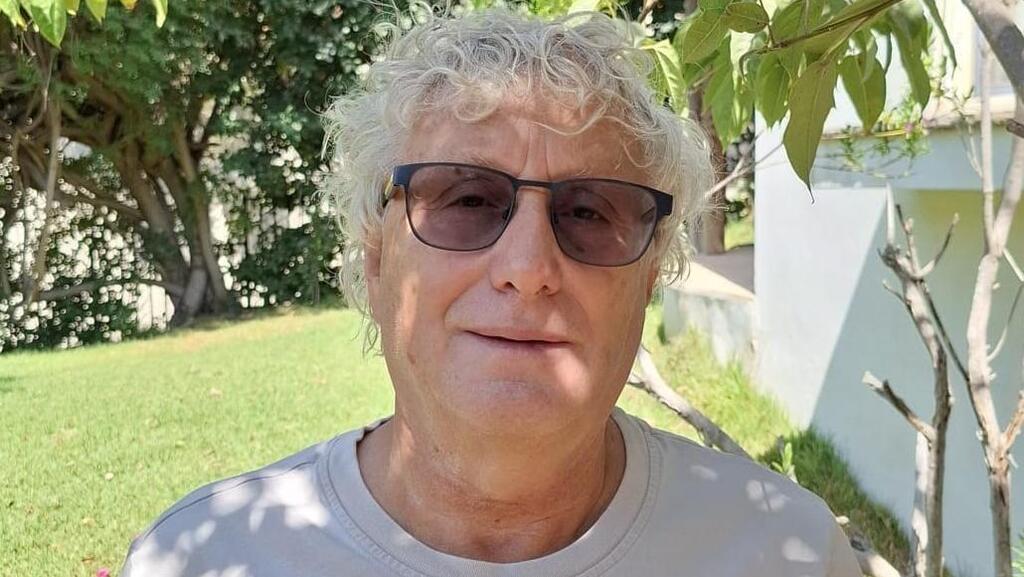
Dr. Dror Greenblum exposes the thought of the national Haredi community
(Photo: Hillel Greenblum)
A redemptive outlook among rabbis also existed in the years after the founding of the state and after the Six-Day War and, in a very different context, after the Holocaust.
“Rabbi Zvi Yehuda Kook said piercing and shocking things after the Holocaust, calling it ‘a cruel divine operation of separation from exile ... an operation that brings the people to sever themselves from exile and return to the Land of Israel, the place of our life.’”
And what happened after October 7?
“Many Hardal rabbis claimed they knew exactly what the divine plan was and that the October 7 massacre was necessary in order to unite the people and return it to a redemptive process from which there is no turning back. Rabbi Haggai Lundin published an article for Arutz Sheva in the summer of 2025 whose title says it all: ‘The War That Came at Exactly the Right Time.’
“He describes how, in his view, God prepared us for lockdowns and disruptions during the coronavirus pandemic, and afterward ‘for dealing with deep-state forces, developing communications systems and a consciousness of national resilience, the beginnings of replacing elites in critical systems.’ According to him, all of this then led to the Iron Swords War. The elimination of the ring of fire around Israel, bringing military, civilian and psychological preparedness to its maximum point.’”
“He knows how to explain the redemption plan in detail and even argues that one should ‘weep from so much light.’ But the time when Rabbi Lundin was weeping from happiness was when dozens of hostages were wasting away in Hamas tunnels, soldiers were being killed every day in battle and the Gaza Strip lay in ruins with tens of thousands dead.”
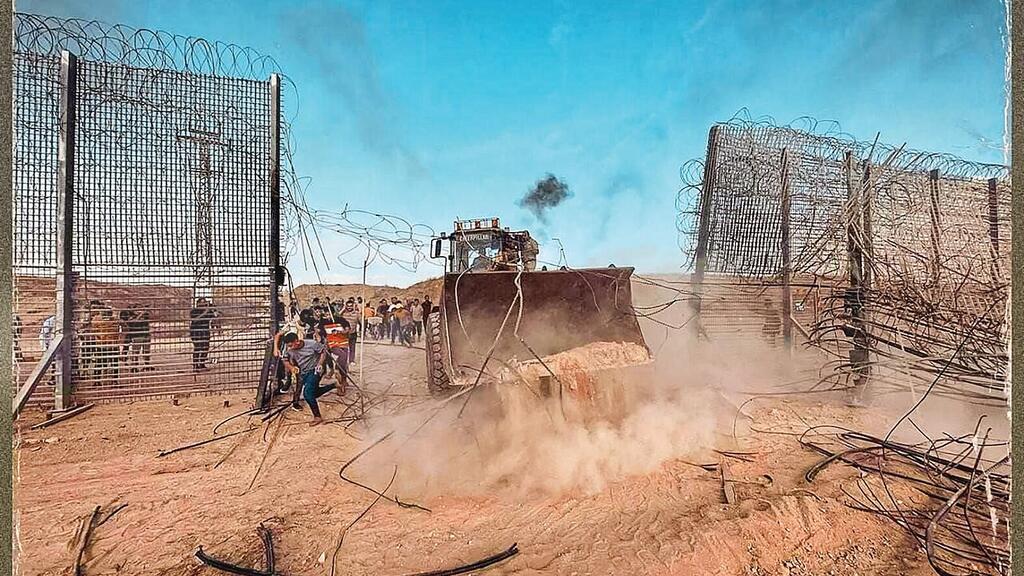
Gaza border fence breached on October 7
And what, in your view, is the proper religious response to the October 7 massacre?
“The only religious response that can exist in the face of such horrors is ‘And Aaron was silent,’ after his two sons died. In the quotations I bring in the book, I found no hesitation, uncertainty or even a little humility among the Hardal rabbis in the face of a chaotic reality. There is no recognition of human limitations or of the inability to give meaning to every event and decipher it solely through the lens of ‘the Messiah is at the door.’
“In my view, the intensity of this absolute certainty will surprise even people who are convinced they know Hardal Judaism well.”
The messianic language is out in the open
For many years, Greenblum managed community centers on behalf of the Israel Association of Community Centers while also teaching voluntarily at pre-military academies. About a year ago, he retired. Today he works as an organizational consultant and mentor to nonprofit-sector executives and also devotes time to researching trends and processes within religious Zionism.
His book explains that national-Haredi Judaism, known in Hebrew by the acronym Hardal, began in Jerusalem in the early 1970s, when students from Mercaz Harav Yeshiva, one of religious Zionism’s flagship institutions, sought to create separate educational frameworks for boys and girls for their children.
They established the Noam school, which later became a network of educational institutions, as well as the Ariel youth movement.
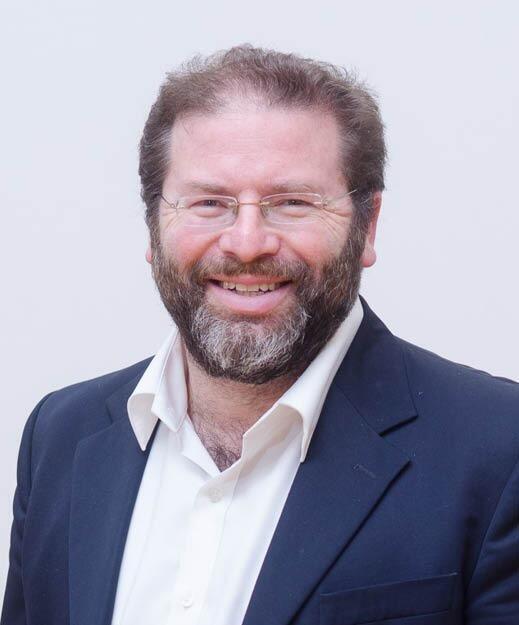
Rabbi Haggai Lundin explains the plan of redemption in detail
“These processes caused a profound shock and a major rupture within religious Zionism,” the book, published by Schocken, asserts. “Hardal Judaism began by raising the banner of modesty, demanding separation between boys and girls and increasingly stringent standards in halakha and religious lifestyle, alongside the growing incorporation of active, practical messianism.”
You focus on concern over Hardal rabbis and their redemptive worldview, but you know well that after the Six-Day War and the liberation of the Western Wall, even some secular left-wing intellectuals felt a messianic awakening.
“My previous book was 'From the Bravery of the Spirit to the Sanctification of Power: Power and Bravery in Religious Zionism 1948–1967.' It dealt with the development of attitudes toward power in the early years of the state. Religious Zionism did indeed experience messianic eruptions from time to time, especially around the establishment of the state and after the Six-Day War, but religious Zionist thinkers maintained a degree of restraint.
“The analysis of reality as messianic was very general and remained within the dimension of redemption unfolding through natural processes. It did not spill over into the apocalyptic realm.
“Expressions were indeed heard, some of them similar to those heard today, but there was no messianic language and there were no structured systems of study devoted to messianism. Those gradually developed in the study halls of Mercaz Harav and its branches over the years. But after October 7 they erupted with great force. The Hardal eruption moved almost entirely into the realm of overt messianism. There is no longer any concealment behind the curtain. Everything is open and spelled out in detail.”
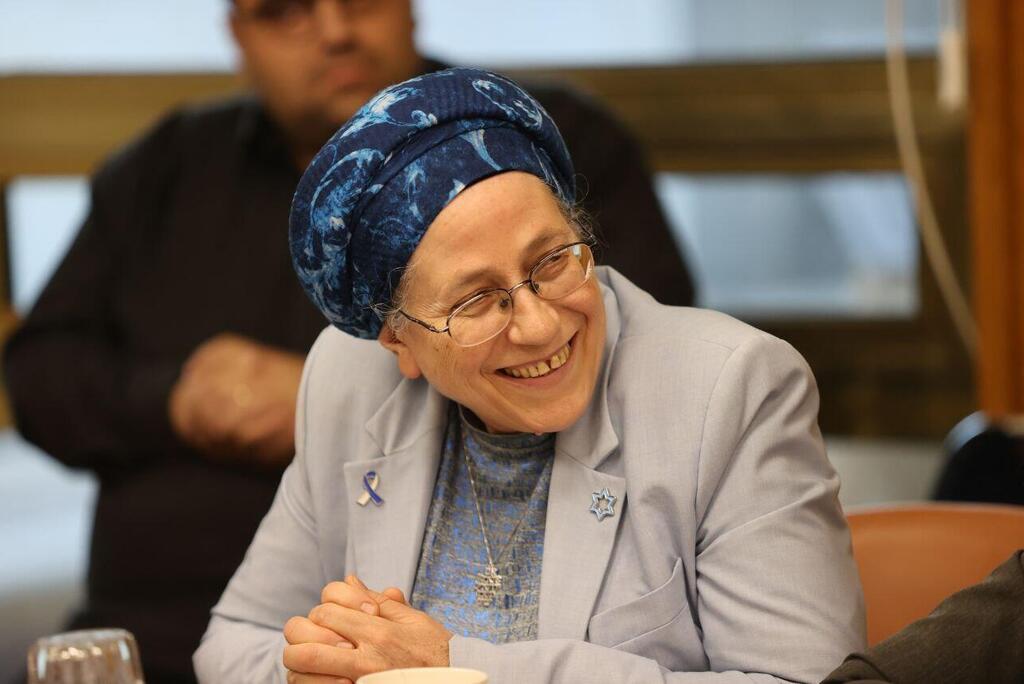
Government Minister Orit Struck used the term 'a time of miracles' to refer to to Jewish construction in the West Bank, not the war
(Photo: Alex Kolomoisky)
The phrase “a time of miracles,” which became the title of the book, was used by Minister Orit Struck in reference to Jewish construction in the West Bank, not the war.
“She said it during a visit to one of the settlements and presented a miraculous reality that now makes it possible to advance construction as well. At its core, that is exactly the Hardal interpretation — here is the proof that everything is planned down to the smallest detail.”
Not just natural anger after October 7
Greenblum cites rabbis comparing Gaza residents to Amalek or arguing that there are supposedly no innocents in Gaza. As one example he quotes Rabbi Oury Cherki, who said at an online conference held by the Olamot Institute on April 6, 2024: “They are all considered the enemy, and there are no innocents ... in war, you strike the whole.”
Another quotation is from Rabbi Shmuel Eliyahu, chief rabbi of Safed and a member of the Chief Rabbinate Council, from an interview with Rabbi Aviad Gadot on the Torat Lechima website in November 2023. “On the first day there should have been 50,000 dead there, and on the second day as well, until they return everyone ... You have to use the language they understand, otherwise they will not understand,” he said.
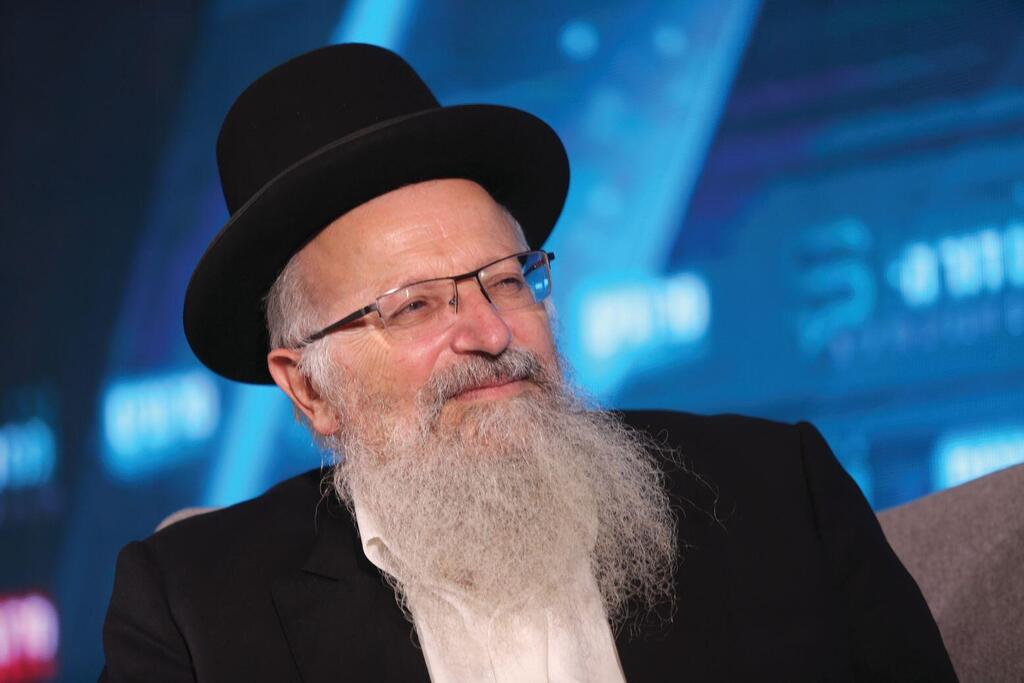
Rabbi Shmuel Eliyahu: 'You have to use the language they understand'
(Photo: Alex Kolomoisky)
Greenblum also notes that Rabbi Eliyahu Mali, head of the Shirat Moshe Yeshiva in Jaffa and a student of Rabbi Zvi Yehuda Kook, said in a video published on the yeshiva’s website and later deleted that, according to Jewish law, soldiers must follow IDF orders. But he then said this was an obligatory war and explained the halakhic principle: “The law is: You shall not leave alive anything that breathes. If you don’t kill them, they will kill you.”
Asked about babies, he answered: “The same thing.”
The book also includes a quotation attributed to Rabbi Dr. Eliyahu Zini, who is not only the uncle of Shin Bet chief David Zini but also president of the Or V’Yeshuah hesder yeshiva and advanced yeshiva, who told Arutz Sheva in December 2023 that “true moral conduct ... means inflicting maximum harm on the enemy without any consideration.”
Faced with these quotations, Greenblum was asked why he ignores similar statements by public figures who are not Hardal and who made harsh and blunt remarks about the Gaza Strip in the days after the October 7 massacre. Are those people also Hardal, messianic rabbis?
“No, and it has nothing to do with messianism,” he replied. “A large portion of the quotations from Hardal rabbis that I cite are from 2024-2025, and some are even from this year. This is a systematic doctrine of cruel wartime morality.
“If these things had been said immediately after the massacre, in a moment of rage, fury and helplessness that all of us experienced, and if there had been no continuation or deepening of them, I would be much calmer.”
“From October 8 onward, I was in the Gaza border communities as part of my work with the community centers organization,” he added. “I saw terrible things, and like many people I walked around with rage I could not contain. Horrible thoughts also passed through my own mind. Across Israeli society, people said harsh things in those days, and that is natural. But later, I and others began to ask whether we wanted to be like Hamas.”
There is another way
It is important to Greenblum to show that there are other ways of dealing with the necessity of war, including within religious society.
“That is exactly why I also present in the book the words of Rabbi Yuval Cherlow, one of the leading rabbis of religious Zionism, who has dealt with ethics and the morality of war for years,” he said.
Cherlow is identified with the more liberal circles of religious Zionism, far removed from the Hardal worldview.
“On October 9, just two days after the massacre, he gave his students at Orot Shaul Yeshiva a lesson dealing with the laws of war. On Oct. 31, 2023, he appeared on Liat Regev’s podcast on Kan News and emphasized that war is a reality in the world to which halakha and Jewish thought respond. It is not a product of the Torah world. It is part of the world’s ‘way of the land,’ and rules must be set for it.
“That distinction is important, because in the Hardal worldview war at this time is sanctified, and in the eyes of some rabbis it is the be-all and end-all. Israel’s soldiers are the operational arm of the divine plan, and from this it follows that their war is, by definition, moral. Its morality is determined by its essence. This is the position that permits deviation from the rules of natural morality, rejection of international laws of war and harsh criticism of the IDF’s ethical code.”
According to Greenblum, “Rabbi Cherlow, by contrast, does not give war such meanings. He sees war as a necessary evil that must be bounded and restricted. Jewish wartime morality ‘adheres’ to the rules of war established by the nations, and if there is moral progress, such as the various Geneva Conventions, then that is a proper moral development that the Torah world supports.
“Rabbi Cherlow asked whether there were any moral limitations in the wars of the Bible and answered that there were no limitations — that was how the world behaved and so did the people of Israel. But the world progressed, morality developed or changed and we are bound by that.
“The idea of the world’s moral progress is rooted in the thought of Rabbi Abraham Isaac Kook, and it forms the basis of Rabbi Cherlow’s position.”
Greenblum says he feels obligated to warn the public about the religious outlook of Hardal rabbis.
“Who appointed you to interpret the ways of God? That is my claim against the Hardal rabbis. My book seeks to document, expose and warn that there is active messianism here among the Jewish people,” he said.
“Throughout the generations, we remember the disastrous consequences that followed messianic eruptions. For example, the Sabbatean movement, which tore the Jewish people apart from within, and many years earlier, the Bar Kokhba revolt.
“After Rabbi Akiva declared Bar Kokhba to be the Messiah-king, the Jerusalem Talmud in Tractate Ta’anit describes how Rabbi Yohanan ben Torta stood before him and said: ‘Akiva, grass will grow from your cheeks and still the son of David will not come.’
“We all remember how the Bar Kokhba revolt ended and how disastrous its consequences were. Rabbi Yohanan ben Torta’s warning is a warning for all generations against extreme and active messianism that declares that the time of our redemption has arrived and that the Messiah is at the door.”