

Nine years after his death, Nobel Peace Prize laureate and author Elie Wiesel is being commemorated by the United States Postal Service with a new stamp in its Distinguished Americans series, recognizing him as one of the most influential moral voices of the 20th century.
The stamp features Wiesel’s portrait alongside one of his most enduring lines: “The opposite of love is not hate, it’s indifference.”
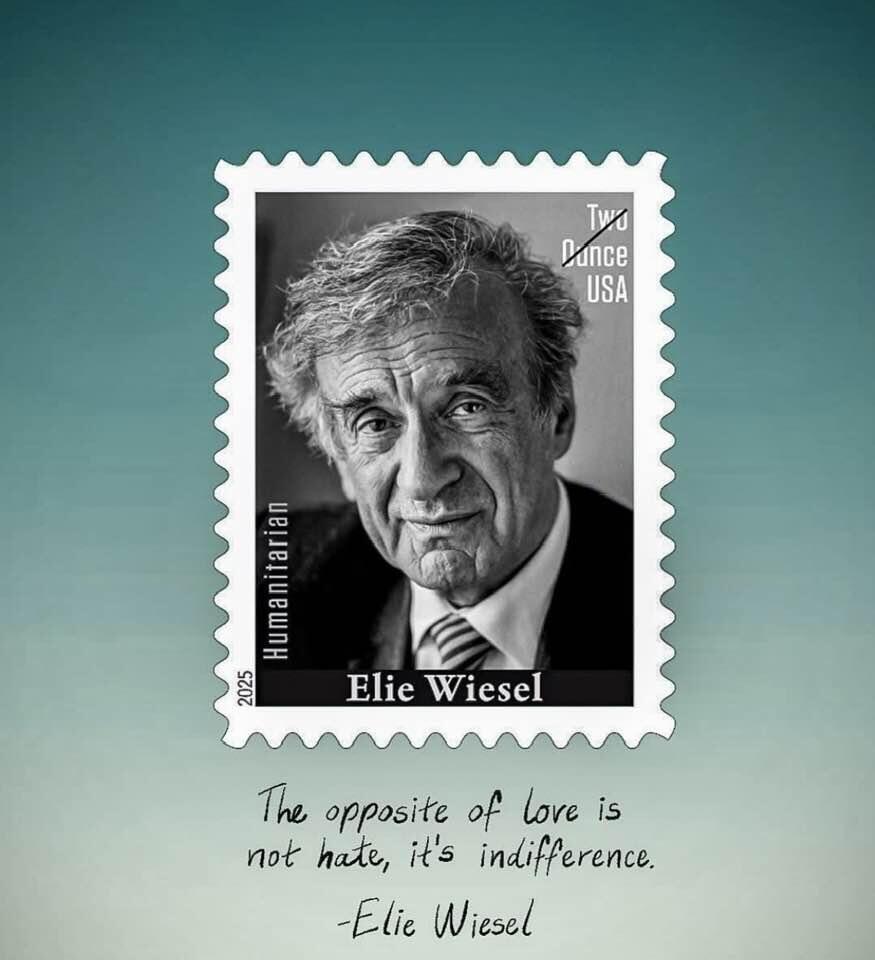
Wiesel, celebrated in the U.S. as a defender of human dignity and conscience, authored 47 books, including Night, his searing testimony of surviving the Holocaust. More than 2.5 million American students read the memoir each year. He also became a global lecturer and writer against oppression, warning relentlessly of the dangers of silence in the face of persecution.
Born in Sighet, in Romania’s Transylvania region, Wiesel grew up in an Orthodox Jewish family. His parents and younger sister were murdered in Nazi camps, while he and two older sisters survived.
Over his lifetime, Wiesel received nearly every top civilian honor America confers, among them the Presidential Medal of Freedom, the Congressional Gold Medal, the Medal of Liberty and the National Humanities Medal. In 1986, he was awarded the Nobel Peace Prize for his unwavering fight against hatred and genocide.

Elie Wiesel with President Barack Obama
(Photo: Reuters)
His impact was so lasting that Congress passed the Elie Wiesel Genocide and Atrocities Prevention Act in his name, cementing his legacy as a champion of human rights.
Israel and the Jewish people, he often said, were his greatest pride. His life’s work, grounded in memory and morality, continues to serve as a guiding light for future generations.
- Dr. Rappel served as post-doctoral fellow at the Elie Wiesel Center and worked on the Elie Wiesel archive at the Howard Gotlieb Archival Research Center