


Italy, led by Prime Minister Giorgia Meloni, has been among the major European Union governments resisting sweeping economic and diplomatic measures against Israel, even as Rome has supported some targeted sanctions against violent West Bank settlers and Israeli National Security Minister Itamar Ben-Gvir. Criticism at home of Meloni’s approach to Israel, however, has intensified amid the wars in Gaza and Lebanon and developments in the West Bank.
Now Israel and antisemitism have moved to the center of another political confrontation. Italy’s parliament is preparing for a final vote on legislation adopting the working definition of antisemitism formulated by the International Holocaust Remembrance Alliance, or IHRA, after months of debate.
The definition, adopted by the IHRA in 2016, has been endorsed in various forms by dozens of governments and institutions. Much of the controversy surrounding it concerns examples of when anti-Zionist or anti-Israel rhetoric can cross into antisemitism, including denying the Jewish people the right to self-determination, denying Israel’s right to exist and applying standards to Israel not demanded of other democratic states.
The IHRA text also explicitly states that criticism of Israel comparable to criticism directed at any other country cannot be regarded as antisemitic.
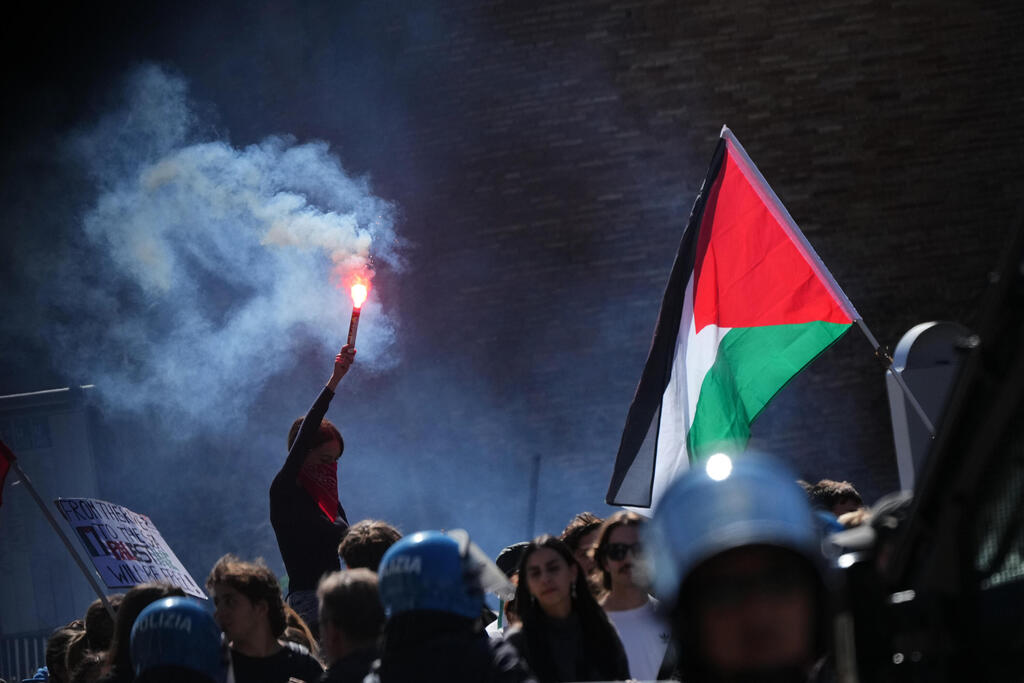
The issue has become especially combustible in Italy as pro-Palestinian demonstrations and harsh criticism of Israel have grown. Many protesters and political figures have accused Israel of genocide in Gaza and criticized the Meloni government for failing to take stronger action against Jerusalem.
Opposition warns over criticism of Israel
The Democratic Party, Italy’s main center-left opposition force, is expected to vote against the legislation. It boycotted a preliminary committee vote Wednesday ahead of the bill’s final consideration.
Party officials argue that the legislation could make legitimate criticism of Israel and Prime Minister Benjamin Netanyahu vulnerable to accusations of antisemitism.
A Democratic Party source told Reuters that the party regarded the version of the IHRA definition incorporated into the legislation as politically divisive and called on Meloni’s governing coalition to amend the wording.
The legislation itself states that political criticism, freedom of expression, assembly and association remain protected under Italy’s constitutional principles.
Critics nevertheless argue that adopting the IHRA definition and its accompanying examples into law could have a chilling effect on pro-Palestinian activism and blur the distinction between Jewish communities and the policies of the Israeli government.
The Democratic Party has so far avoided formally describing Israel’s actions in Gaza as genocide, unlike other parties on the Italian left, including the Greens and Left Alliance and the populist Five Star Movement. Individual Democratic Party figures, however, have used the term and accused Israel of war crimes.
The broader political discourse over Israel has become increasingly bitter, while Italian Jewish organizations have raised concerns over a parallel rise in antisemitic incidents and hostility toward Jews.
The word “Zionism” itself has increasingly become a term of abuse in parts of the Italian left. When the Senate approved an earlier version of the legislation this year, most Democratic Party senators abstained, although several voted in favor.
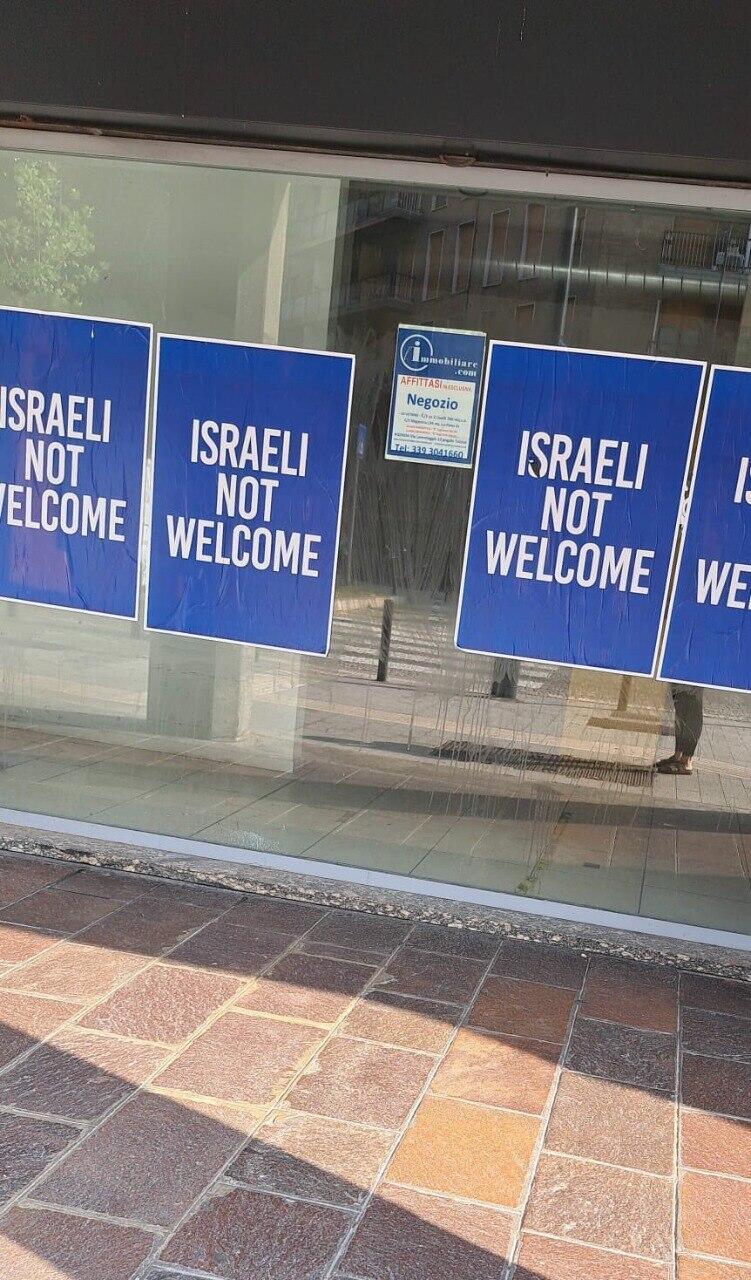
Signs posted about a year ago in several areas of Milan
(Photo: X)
“We are calling on the coalition to listen to our appeals and change this divisive definition, making it absolutely clear that those who criticize the actions of the Israeli government cannot be accused of antisemitism,” Democratic Party lawmaker Chiara Braga said.
Jewish voices challenge the party
Emanuele Fiano, a Jewish Democratic Party politician, son of an Auschwitz survivor and head of the party’s Left for Israel faction, sharply criticized his party’s decision not to support the legislation.
“I will not accept the fight against antisemitism being portrayed as an obstacle to criticism of Benjamin Netanyahu’s government, the Israeli military or settler violence,” he said.
Liliana Segre, an Italian Holocaust survivor, senator for life and one of the country’s most prominent public figures, also expressed dismay at the political divide.
She said she found it difficult to understand how parties could split over an issue as fundamental as combating antisemitism.
Segre, who has also criticized Netanyahu’s government, argued that adopting the IHRA definition does not prevent criticism of Israel.
Italy’s Jewish community has broadly welcomed Segre’s call for adoption of the definition, stressing that the measure does not prohibit criticism of Israeli governments.
Several Jewish public figures associated with the left and radical left, however, have backed calls to amend the bill to ensure that criticism of Israel or anti-Israel political positions cannot be criminalized.
Antisemitic incidents rise sharply
Supporters of the legislation say stronger measures are necessary against the backdrop of a sharp increase in antisemitism since the Hamas-led October 7, 2023 attack on Israel and the Gaza war that followed.
The Milan-based CDEC Foundation’s Observatory on Antisemitism recorded 963 antisemitic incidents in Italy in 2025, up from 241 in 2022. Of the 2025 total, 643 occurred online and 320 involved incidents in the physical world.
The figures have heightened anxiety within Italy’s Jewish community as parliament prepares to decide whether the IHRA definition should become part of Italian law, turning a debate over how to fight antisemitism into a broader confrontation over Israel, Zionism and the boundaries of legitimate political criticism.