


President Donald Trump is personally lobbying Congress to make daylight saving time permanent across the United States, reviving a long-running debate that has drawn opposition from Orthodox Jewish groups, sleep experts and some industries.
The proposal, known as the Sunshine Protection Act, would eliminate the practice of changing clocks twice a year and keep the country on daylight saving time year-round.
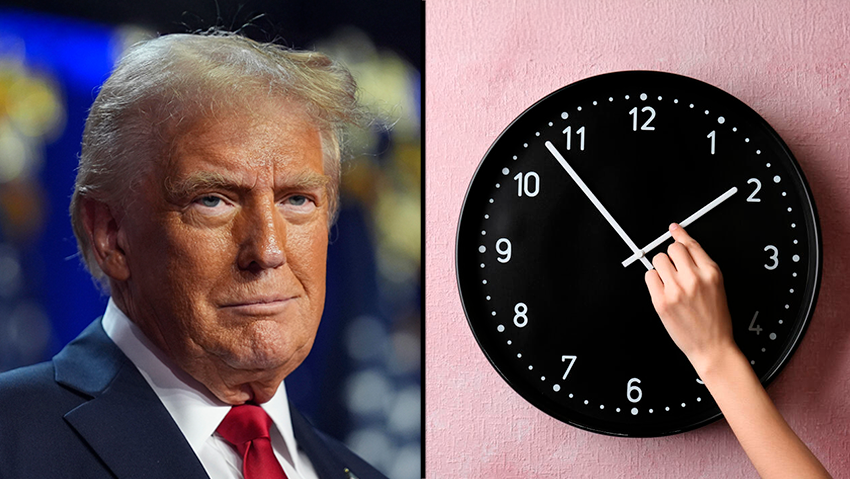
Several lawmakers said they recently received unexpected phone calls from Trump urging support for the measure. Republican Sen. Josh Hawley said Trump called him and asked whether he still supported the idea. “Yeah, I do, I think it’s a great idea,” Hawley recalled telling the president.
Trump has argued that changing the clocks wastes resources and disrupts children's sleep schedules. He has said permanent daylight saving time would give Americans “a longer, brighter day.”
“It would be a very nice WIN for the Republican Party,” Trump said in a social media post.
The effort scored an early victory when the House Energy and Commerce Committee approved the measure by a vote of 48-1. The lone dissenter, Democratic Rep. Nanette Barragán, warned about the health effects of dark winter mornings.
The initiative has also received backing from Elon Musk, who previously headed the Department of Government Efficiency, or DOGE, and has encouraged Trump to pursue the issue.

(Photo: Shutterstock)
The strongest organized opposition has come from Orthodox Jewish organizations, which say permanent daylight saving time in winter would push sunrise to very late hours in some parts of the country.
In Detroit, for example, the sun would not rise until 9:16 a.m. during parts of the winter. Under Jewish law, morning prayers are traditionally recited after sunrise, meaning observant Jews could be forced to pray during working hours.
Rabbi Zalman Gorevitz, director of the Chabad center at West Virginia University, said the change could limit employment opportunities for observant Jews. Avi Motzen, Agudath Israel of America's director of government affairs in Washington, has led lobbying efforts against the legislation.
According to Motzen, some lawmakers have reconsidered their positions after learning about the religious implications and concerns about children traveling to school before daylight.
The United States experimented with permanent daylight saving time in 1974 during the energy crisis, but the policy quickly became unpopular and was repealed. Synagogues struggled to assemble prayer quorums before work, while parents complained about children going to school in darkness.
Many physicians and sleep specialists also support ending the clock changes but favor permanent standard time instead. They argue that while switching clocks disrupts sleep and circadian rhythms, permanently dark mornings could create health problems by reducing exposure to morning sunlight, which plays an important role in regulating the body's internal clock.
Farmers and airlines have also expressed concerns. Republican Sen. Tom Cotton, who previously blocked similar legislation, said farmers could spend “three, four, even five hours” working before sunrise.
Airlines worry that permanent daylight saving time could complicate coordination with countries that continue changing clocks seasonally and require costly adjustments to scheduling and reservation systems.

Trump playing golf
(Photo: Christopher Furlong/Getty Images)
Supporters of the measure include lawmakers from Florida and businesses in the entertainment and leisure industries, particularly the golf industry, which stands to benefit from longer evening daylight. Trump is an avid golfer and owns golf courses across the country.
Rep. Vern Buchanan said most Americans prefer having an extra hour of daylight in the evening.
“Everybody feels basically the same way,” he said in an interview. “I say everybody — most people … want to see that extra hour in the evening.”
Despite the committee vote, passage remains uncertain. The Senate unanimously approved a similar measure in 2022, but it stalled in the House.
This time, however, Trump's direct involvement has turned the issue into a test of loyalty for many Republicans.