


A medieval silver kiddush cup has become the most expensive Jewish ceremonial object ever sold, fetching $4 million at a Sotheby’s auction in New York.
The record-setting sale broke the previous record of $1.6 million set in 2014 by the Rothschild Torah Ark, and drew international attention from museums and collectors of Judaica.
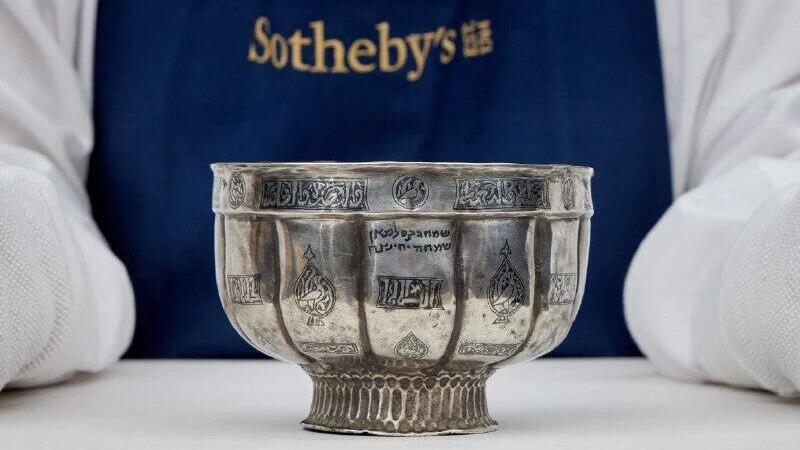
The object, dubbed the “Cup of Joy”, was purchased by the Toledo Museum of Art in Ohio, which called the acquisition a milestone in expanding its global collection. “This extraordinary object deepens our ability to tell a more expansive and inclusive story of human creativity,” said the museum’s director and CEO, Adam Levine. The cup will go on public view when the museum’s newly reinstalled galleries open in 2027.
Sotheby’s identified the silver vessel as the earliest known kiddush cup, used in Jewish ritual to bless wine on the Sabbath and festivals. It dates to the 11th or 12th century and is believed to have originated in the historic region of Khorasan, which spanned parts of modern-day Afghanistan and Iran along the Silk Road. Standing just 3.5 inches tall, the cup bears both Hebrew and Arabic inscriptions, an exceptionally rare pairing that reflects cultural exchange between Jewish and Muslim communities a millennium ago.
The Hebrew engraving reads, “Simcha son of Salman. Simcha, may he live for eternity.” The Arabic inscription circles the rim with blessings of wealth, health and joy, repeating the word for “joy” twice—a detail that Sotheby’s specialists believe intentionally mirrors the Hebrew name Simcha. Experts cited the use of vine-leaf motifs and Arabic benedictions characteristic of Central Asian silversmithing in the 11th century as evidence of its origin in a Khorasan workshop.
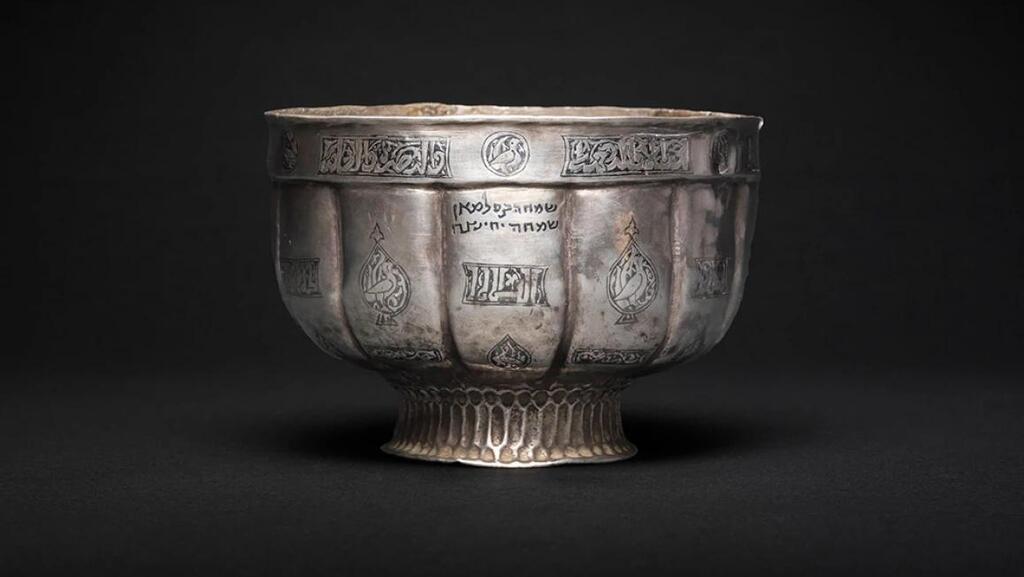
The cup, about 1,000 years old
(Photo: Sotheby’s)
The auction house said the piece “represents the richly intertwined histories of Islamic artistry and Jewish tradition,” and scholars emphasized its exceptional survival: very few medieval silver ritual objects remain intact, as most were buried or melted down during invasions and upheavals, including the Mongol conquests.
The cup surfaced from a private European family collection around 1956 and had never been publicly exhibited before it appeared earlier this year at Sotheby’s London, where it was shown briefly during Islamic and Middle Eastern Art Week. It was then offered in New York as a dedicated single-lot auction with a presale estimate of 3 to 5 million dollars.
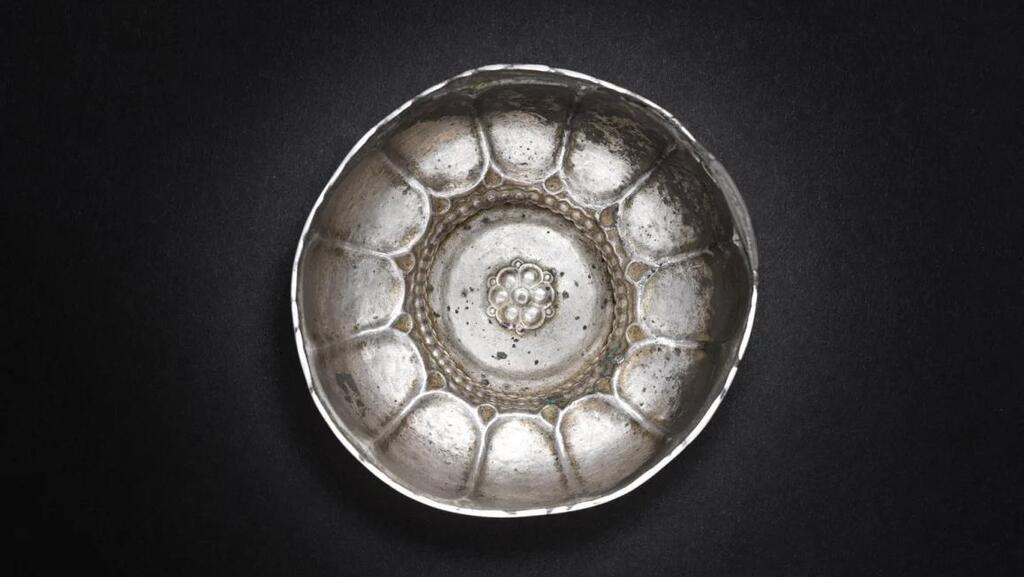
The world’s pldest kiddush cup
(Photo: Sotheby’s)
The museum’s acquisition marks a rare moment in the art world where Judaica has entered a major U.S. institution’s permanent collection through a headline-making sale. The Toledo Museum of Art, founded in 1901, has in recent years sought to diversify its holdings and interpret its collection through global connections rather than geographic or religious boundaries. Levine said the cup will help “illuminate new connections across cultures and deepen visitors’ understanding of the global forces that have shaped artistic expression over time.”
Sotheby’s senior Judaica specialist Sharon Liberman Mintz said that the discovery and sale of the “Cup of Joy” are also reshaping the field of Jewish art history: “It’s not only a beautiful survival but also evidence of Jewish presence and participation in the artistic life of medieval Central Asia.”