

At a synagogue in Budapest, the capital of Hungary, Noam, a Nahal reconnaissance soldier who recovered from a serious head wound, stood to recite a prayer for the welfare of IDF soldiers. In his heart, he also carried a personal prayer for the recovery of his teammate, A., who was wounded in the same serious incident and is still undergoing rehabilitation at the hospital.
From the front row of the women’s section, Eva Berger, 91, who was born and raised in Hungary, watched him with emotion. As a 10-year-old girl, she lost her entire extended family, who were murdered in the Holocaust; only her parents and she, their only daughter, survived.
“I was lucky, we were not in the ghetto. We hid, moving from house to house every two or three days, and I did not understand at all what was happening,” she said, recalling the home where she lived before they fled. “It was opposite a large hospital, where they brought all the wounded soldiers from the war. That is what I saw as a child.”
After Noam, himself the grandson of a Holocaust survivor, finished the prayer, she said: “It hurts, and it is also amazing, to see a young man like that, who was wounded and is still defending the State of Israel.”
It was not the first time I met Noam, 22. The previous time was at Sheba Medical Center at Tel Hashomer, when he arrived with his teammates from Team Z1 of the Nahal reconnaissance unit to visit A., the most seriously wounded soldier from the incident.
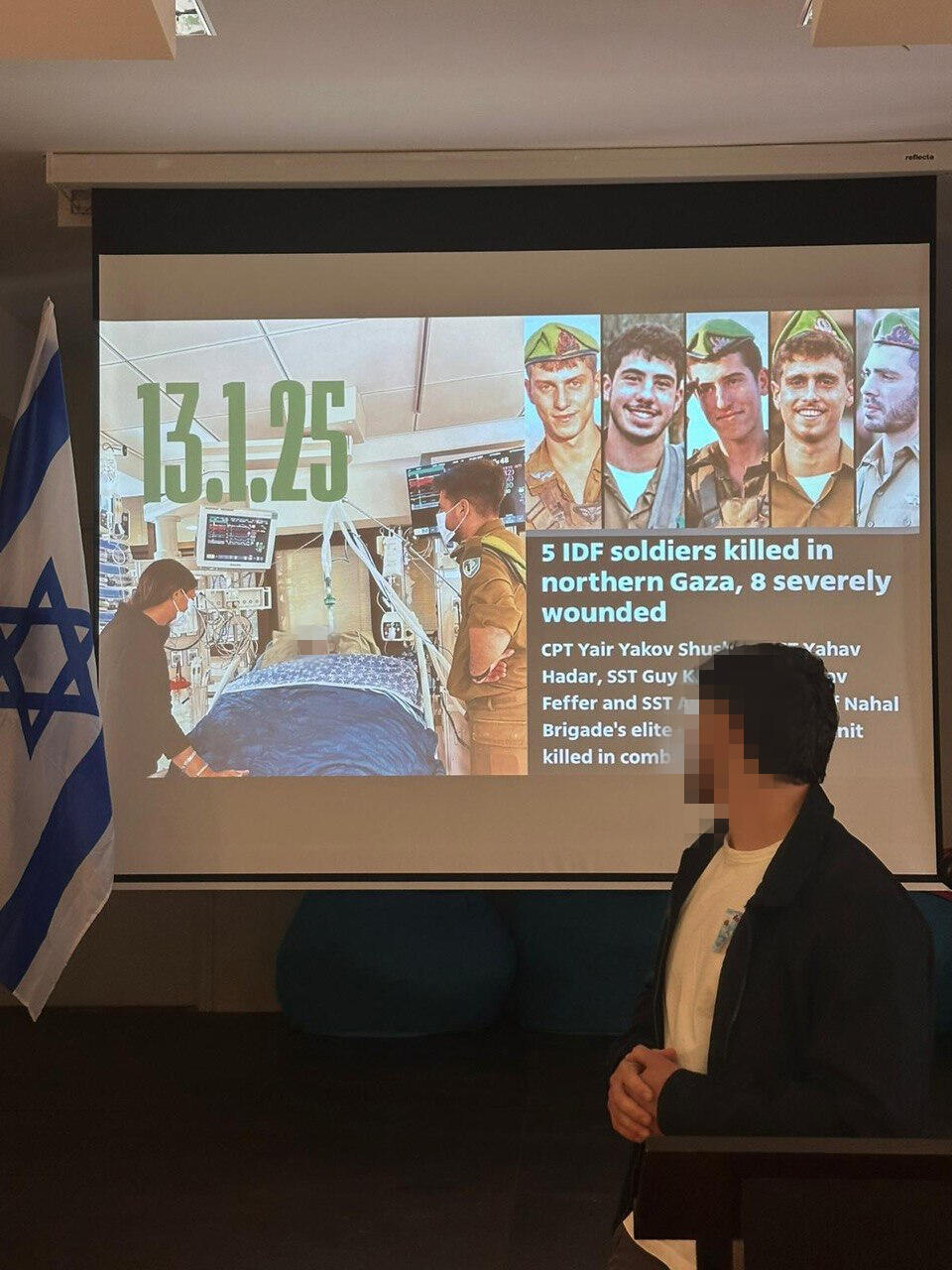
In the incident, which took place in Beit Hanoun on Jan. 13, 2025, when the building where the force was operating exploded, the team lost its commander, Captain Yair Yakov Shushan, and four other soldiers: Staff Sgt. Yahav Hadar, Staff Sgt. Aviel Wiseman, Staff Sgt. Guy Karmiel and Staff Sgt. Yoav Feffer.
This year, Noam joined the Jewish Agency’s “Shlichim in Uniform” delegation to share with members of the Jewish community in Budapest the journey he and his fellow soldiers went through together, from their enlistment in August 2022, through their training and completion of the course after a year and four months, to the ground maneuver in the Gaza Strip.
He came to tell them about his own injury and rehabilitation, and that of seven other comrades wounded in the serious incident; about his decision to return to the unit as soon as he could, to complete his regular service; and about the memory of his five fallen friends, whose names he carried with him on every stage where he spoke and in every meeting he attended.
“They walk with us, they are a source of strength for us. We remember them and their five families, with whom we have become one big family,” he said. “And we remember A., who is coping with a serious head wound and is still fighting to return to his life.”
At the Shabbat meal after the prayer service at the synagogue, Noam said: “This is not my story or the team’s story. It is the story of the State of Israel, of the Jewish people around the world. The best example of that is this synagogue and this community, which has grown and developed, and it moves me so much to see it. That is the spirit of the Jewish people.”
The next day, at the Jewish Agency center in Budapest, Noam met Itay, the bereaved brother of Sgt. 1st Class Matan Polyboda, who was killed in a training accident during his course in the Shayetet 13 naval commando unit in 1996.
“We were shattered,” Itay said, describing the painful loss of his beloved brother. “I understood that I had to treat my shattered soul, my heart that had been broken into pieces. With his help, I rebuilt myself. In the process I went through, his soul was woven into the new Itay. Matan is with me all the time.”
Noam and Itay had already met at a Memorial Day ceremony in which Noam took part, and where Itay, as he does every year, came to speak and light a torch. It was then that Itay discovered that Noam had fought on the same team as Yahav Hadar, the son of his childhood friend.
“This is a brotherhood of fighters. Those who have experienced these things can communicate with understanding,” Polyboda said of the connection that was formed with Noam.
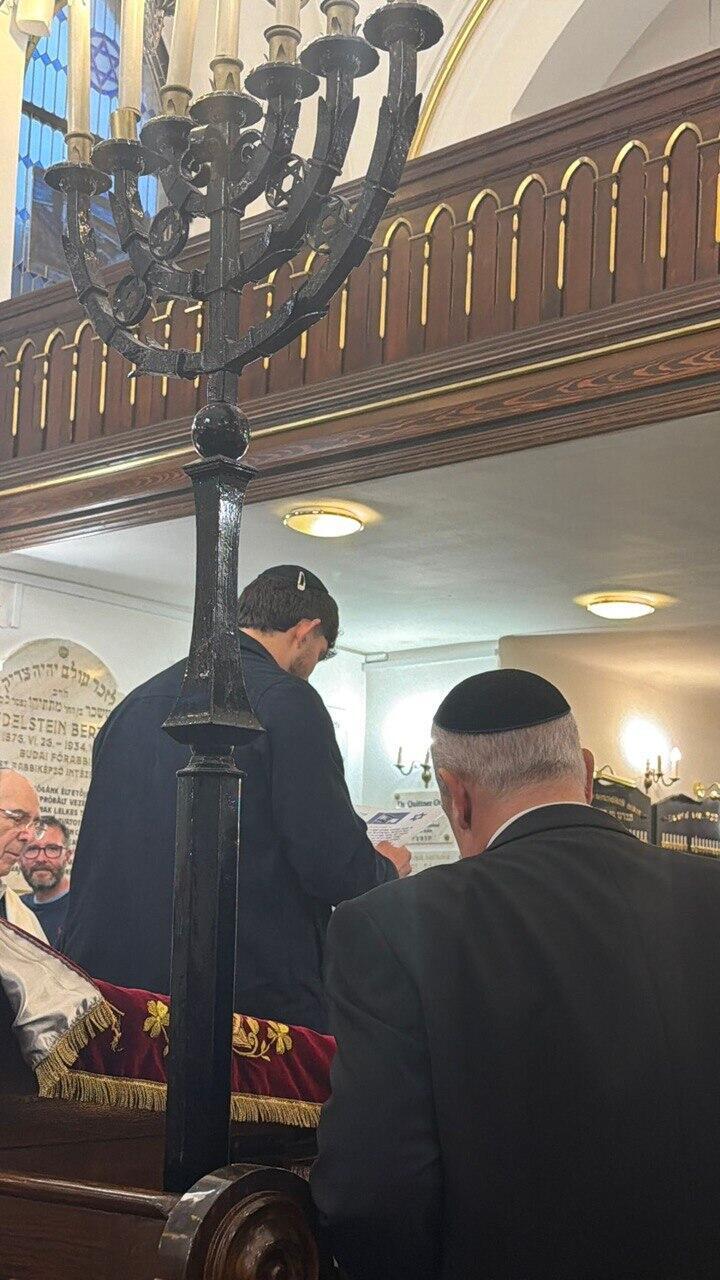
Noam recites a prayer for the welfare of IDF soldiers at a Budapest synagogue
As someone who works to strengthen the resilience of the Jewish community in Budapest and in Israel, Itay spoke about his decision to live in Hungary. “Our real mission is to back Israel. Not to be inside, but from here, to support the country in every way, and our support is very meaningful,” he said.
At the end of the meeting, Noam continued to a conversation with Jewish teenagers living in Budapest. After sharing his story, he was asked whether he would choose to enlist as a combat soldier even if he knew he would be wounded in battle.
“I would do it again and again. That is why we enlisted in the army, to contribute as much as possible. If I could do more, I would do more,” he replied confidently.
“I am glad the Jewish identity in the community is so strong. The fact that you call yourselves ‘the Zionist group’ is very moving. It gives support to those who live in Israel, knowing that there is also a strong Jewish community abroad. That is what keeps us all together.”
Delegations to 74 communities worldwide
Noam is one of 130 male and female soldiers who took part this year in the Jewish Agency’s “Shlichim in Uniform” initiative. During the complex days between Holocaust Remembrance Day and Independence Day, the delegation, initiated by Jewish Agency Chairman Maj. Gen. (res.) Doron Almog, set out for the fourth year.
The delegation is part of the “Kiruv Levavot” initiative, in cooperation with the IDF Ground Forces, the Defense Ministry’s Department of Families, Commemoration and Heritage, and the Class Action Fund.
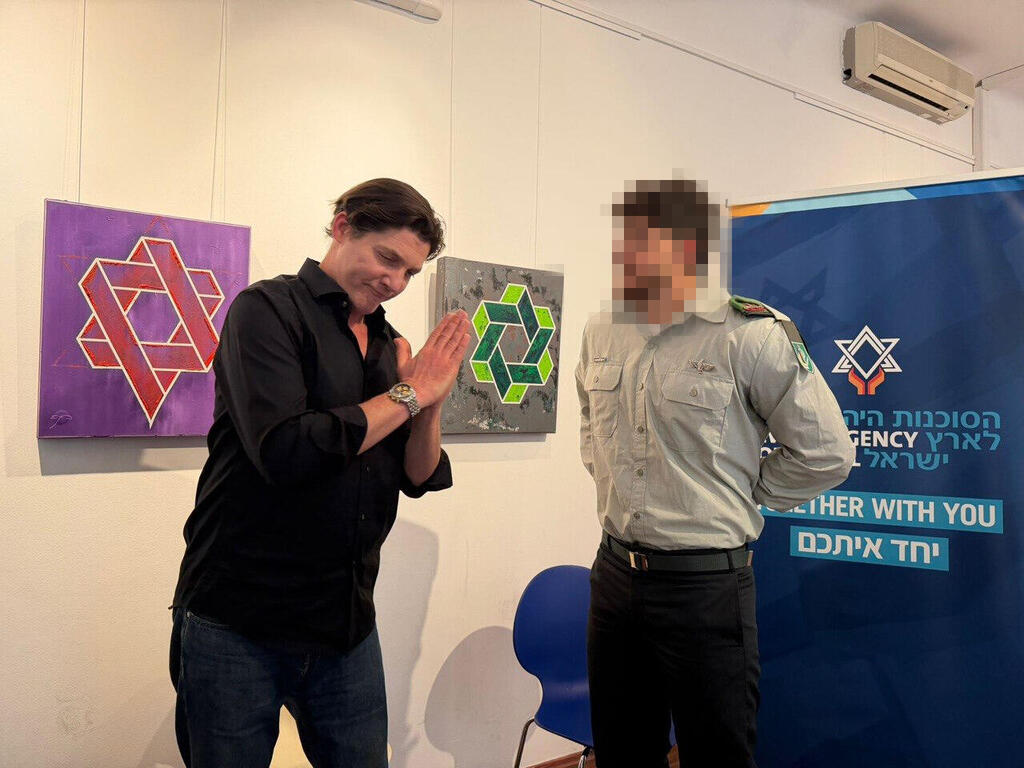
Noam at one of the delegation meetings
Eighty-eight men and 42 women traveled in 54 delegations to 74 Jewish communities, 42 in the United States and 32 elsewhere around the world. They met with more than 60,000 people in all, with the aim of sharing personal stories from the war and strengthening ties with Jews in the Diaspora who are facing rising antisemitism.
“The delegation expresses more than anything the spirit and pride of us as a people,” Almog said. “Our male and female soldiers go out to Jewish communities around the world and bring with them the beating heart of the State of Israel — the human face of courage, responsibility and hope. It is a painful, moving, unifying and healing encounter. An encounter that rebuilds the sense of mutual responsibility, which is the foundation of our existence.”
This year’s delegation included 50 career soldiers, 61 reservists and 19 soldiers in mandatory service, with the vast majority of participants wounded in the Swords of Iron war. The group included a unique breakdown of 15 new immigrants, 12 lone soldiers, 11 casualty officers, 10 doctors, four members of local rapid response teams, four paramedics and three resilience officers.
Almog addressed the unusual approval for the delegation to travel during this period.
“In wartime, and in an unprecedented way, the IDF allowed 130 male and female soldiers to go to Jewish communities around the world, underscoring the importance of the connection with world Jewry as a national mission of the highest order,” he said.
Closing a circle in Germany
Master Sgt. (res.) Rachel Bayer, 27, also took part in the initiative, leaving April 19 for a delegation to Germany, where her grandparents were born.
The two, evangelical Christians, chose to come to Israel in 1972 and were among the founders of Zedakah, a nursing home in Ma’alot and a guesthouse for Holocaust survivors in Shavei Zion.
“It is a story of faith, not from a place of atonement. They believe in God, wanted to show love to the people of Israel and acted out of a sense of mission,” Bayer said. “We always spoke German at home, and we never hid that this is our origin. But we are also Israelis in every sense.”
When she grew up, Bayer chose to enlist in a combat track.
“I had not known female combat soldiers before, but I understood that I loved the field and wanted to contribute as much as possible,” she said. In 2017, she was assigned to serve as a fighter in a search and rescue unit, and served as a combat medic. “It was the most meaningful service I could have asked for,” she said.
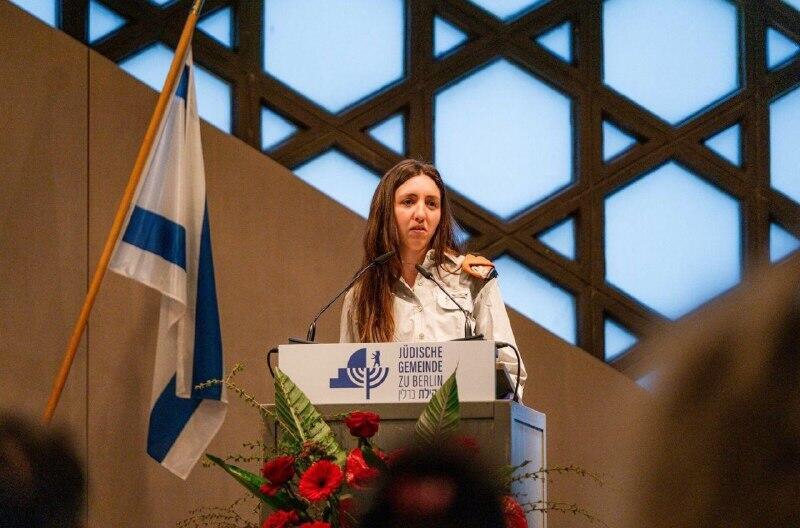
Rachel Bayer in Berlin
(Photo: Nicolai Froundjian)
The rest of the Bayer siblings also set themselves the goal of completing meaningful military service. “All the credit goes to our parents, that is the education we got at home,” Rachel said proudly.
After her in the family are Odelia, who enlisted one draft cycle after her in exactly the same combat track, and C., who served in an elite unit. Both now report for reserve duty. The youngest son, A., is currently serving as a combat soldier in the Paratroopers Brigade. Between them was Urija, who served as a fighter in the Maglan unit and fell in the war.
Sgt. First Class Urija Bayer was wounded Dec. 14, 2023, in an explosive device blast in the southern Gaza Strip. Seven other soldiers were wounded in the serious incident.
“I was in a reserve duty rotation. My father called and said Urija had been wounded. On the way, I did not understand what his condition was, but I was most afraid of a head injury. As a medic, I know the consequences,” Rachel said.
The family surrounded Urija as he fought for his life. “Intensive care is a surreal experience. I call it a waiting room for heaven. Some leave it, and some continue on,” she said.
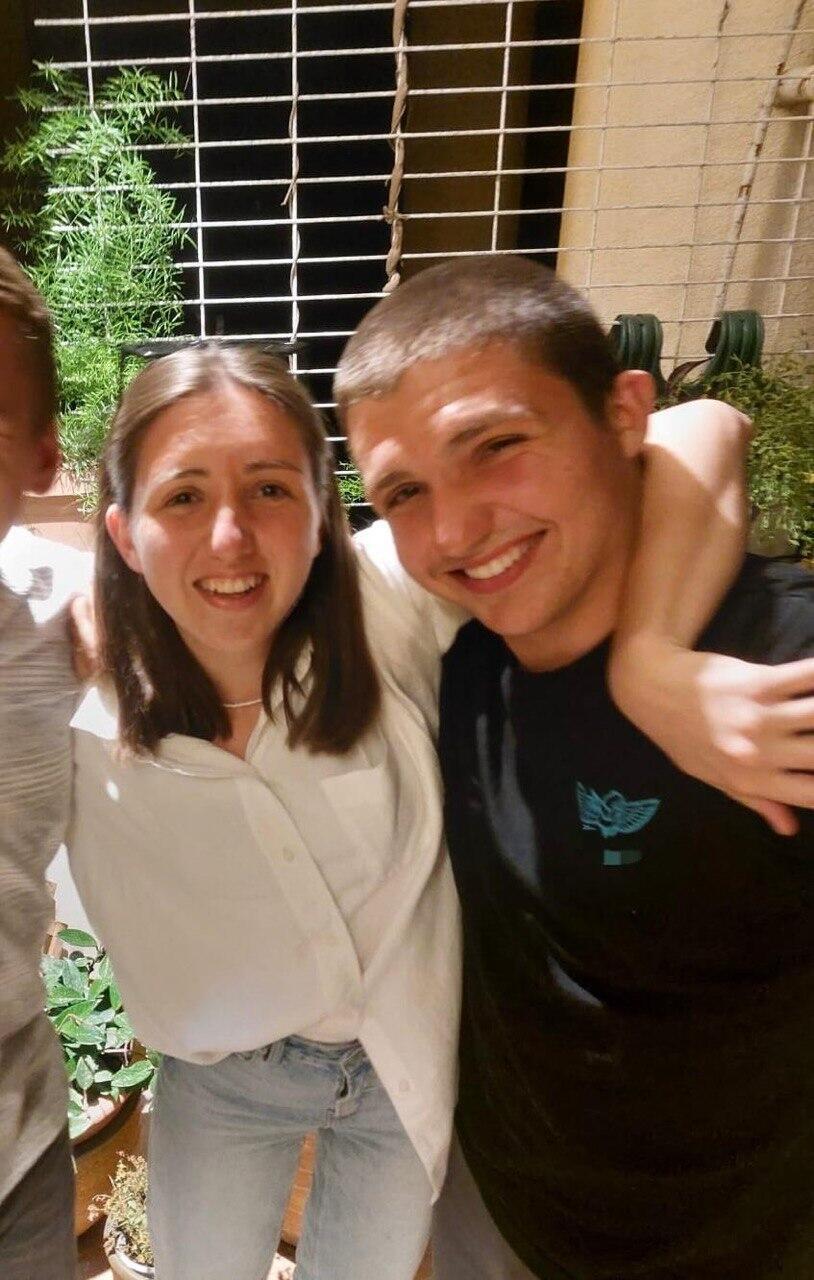
Rachel Bayer and her late brother, Urija
After three days, Urija died after being declared brain dead.
“It was a time of grace. At that time, it was not obvious that we would have someone to bury. We had a farewell, to give thanks for the time with Urija, 20 years that we were privileged to have him as a brother,” his bereaved sister said painfully.
She remembers their final meeting well. “During the first ceasefire, he came out of Gaza, and I remember the hug he gave me, strong and good,” she said.
Bayer spoke with longing about her younger brother, who had been “quiet and introverted,” but began to flourish after his pre-army academy and enlistment in the IDF. “In the unit, he really shone. He was happy there. His team became his family,” she said.
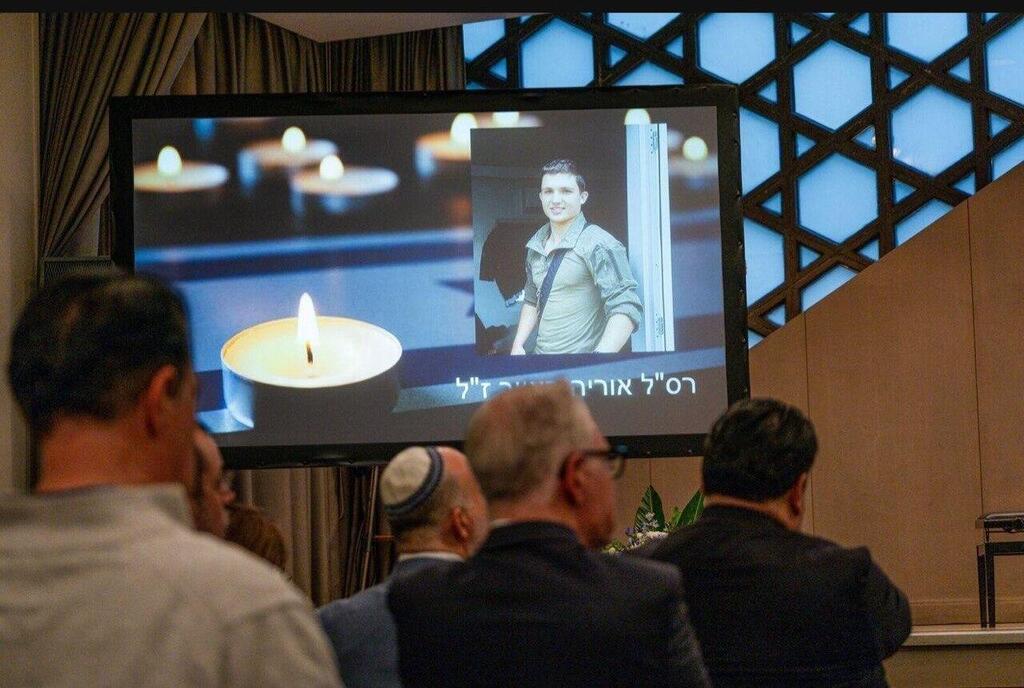
Rachel Bayer presents a photo of her late brother, Urija, during a lecture in Berlin
(Photo: Nicolai Froundjian)
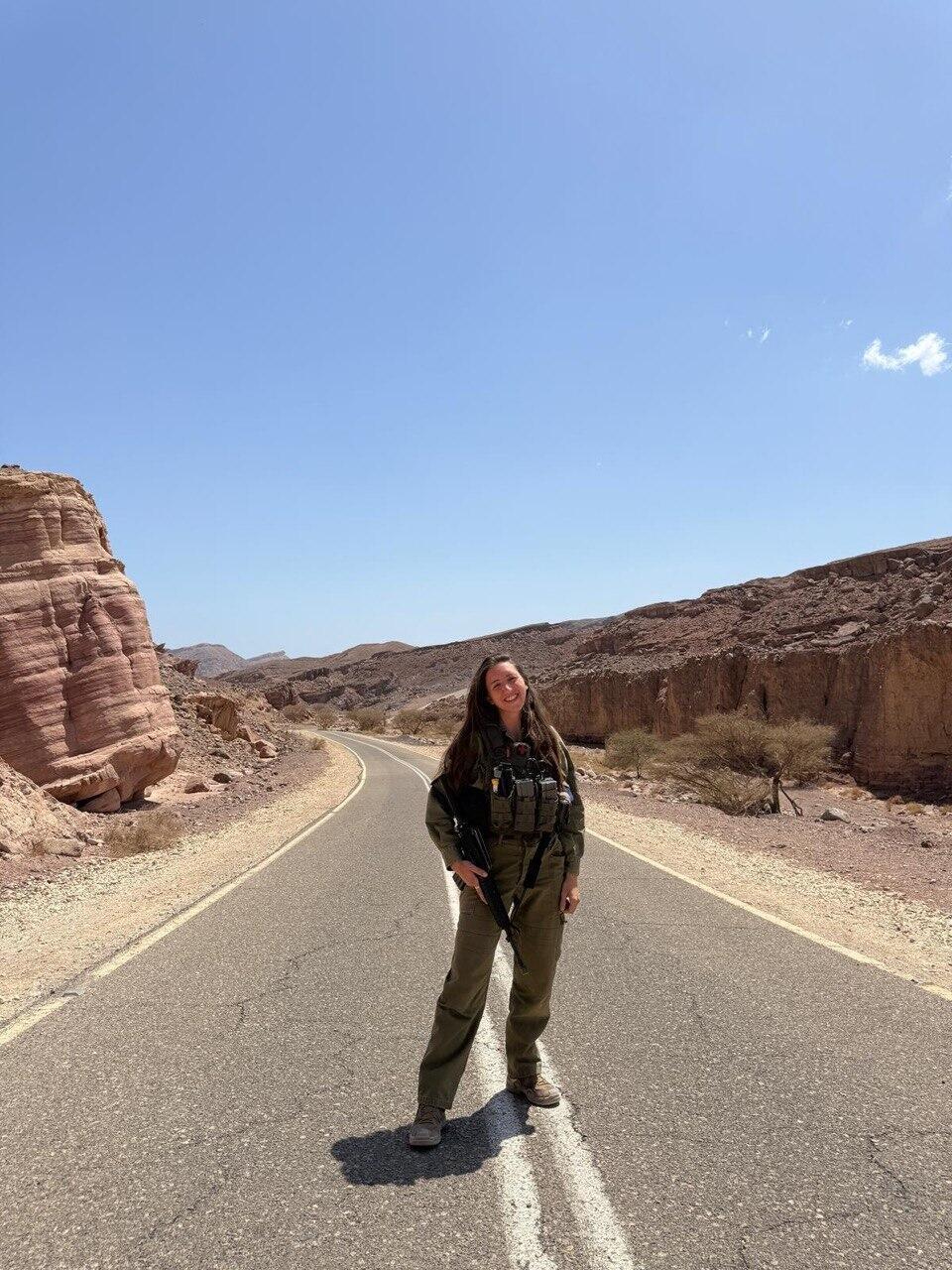
Rachel Bayer during her military service
Her decision to join the delegation this year, even at the cost of being absent from the cemetery on Memorial Day, was clear to her.
“I do not need Memorial Day to remember my brother. I remember him every day. To be in Germany, with my family story, is more of a return for me,” she explained. “My grandparents would never have believed I would stand here in an IDF uniform.”
She came to the meetings with the Jewish community in Germany with a clear message: “Do not forget the wounded, who are still fighting to return to life, and their families, who devote their lives to their recovery.”
After returning from the delegation, and alongside her medical studies at Ben-Gurion University, Bayer reported for her sixth round of reserve duty.
Summing up the experience, she said: “It is incredible to see what Jews abroad are doing for their community. I understood how important it is to strengthen ties with them from Israel. Jews around the world have a very significant role, and meeting them gave me a broader picture of what they are coping with, which, like the reality in Israel, is also very complex.”