

At a time when rising antisemitism has left many Jews in the United States increasingly concerned about their safety, a group of wounded Israeli soldiers visiting Los Angeles found a reception markedly different from the hostility dominating headlines.
Eight IDF veterans brought to Southern California by Belev Echad, a nonprofit supporting wounded Israeli soldiers, spent eight days exploring the city and meeting members of its Jewish community. Despite the occasional sight of pro-Palestinian demonstrators and supporters displaying flags of the Iranian Islamic Republic around Los Angeles, the soldiers said their own experience was overwhelmingly positive.
Wounded IDF soldiers receive warm welcome in Los Angeles
(Video: Belev Echad)


"Unlike what we hear in the news, we did not experience any antisemitism," said Yonatan Lieberman, 22, a former Golani Brigade soldier who led the delegation. "We are having the best time. The Jewish community here in LA has wrapped us with love and support."
The contrast was particularly striking against the backdrop of heightened tensions surrounding Israel and the war in Gaza, which have fueled demonstrations and concerns about antisemitism across the United States.
For Lieberman, however, the warm reception was hardly unexpected.

"We got so much love. It wasn't that surprising because the Jewish community here loves Israel, loves Israeli soldiers," he said.
At the homes they visited, he recalled, entire families welcomed the group with enthusiasm.
"Every house we come to — the kids, the parents — they have the same reaction of, 'Whoa! We want to love you, we want to give you more appreciation,'" he said.
"We're here to process what we've been through and receive recognition. When that recognition comes from complete strangers, you suddenly feel important. You begin to understand what you've experienced and the magnitude of it. I think that's the first step toward healing."
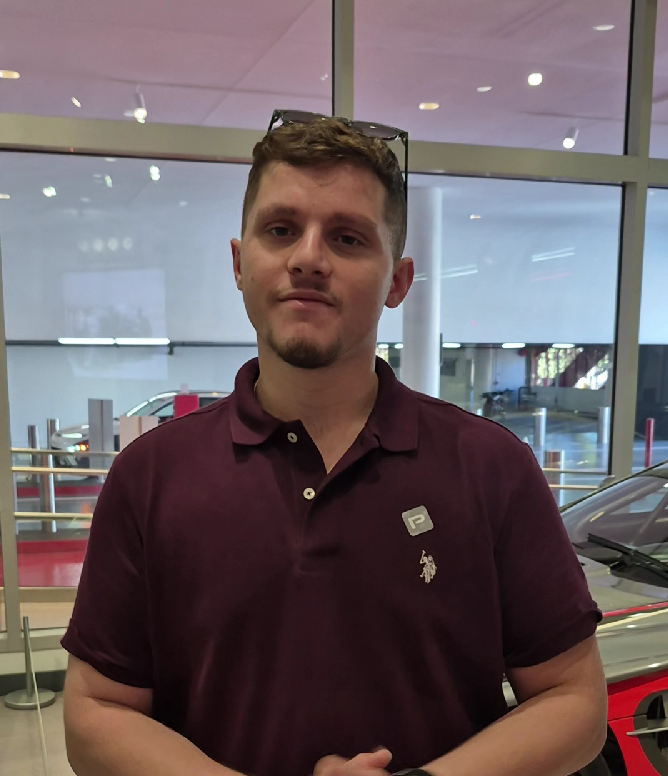
Yonatan Lieberman
(Photo: Ilan Levinsohn)
The delegation's itinerary included visits to Universal Studios Hollywood, the Petersen Automotive Museum and other Los Angeles attractions, alongside gatherings with local Jewish families and community members.
For Lieberman, who served in the Golani Brigade's 51st Battalion and developed post-traumatic stress disorder following his wartime service, the trip carried an additional personal significance.
Having previously participated in a Belev Echad delegation as a wounded soldier himself, he returned this time as its leader, responsible for seven fellow veterans navigating their own paths to recovery.
"I personally struggle with PTSD from the war," he said. "I am here today leading this delegation with another seven soldiers. So for me, that is incredible."
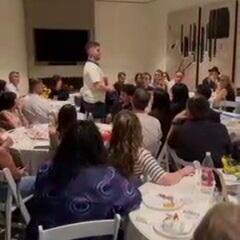
A wounded Israeli soldier addresses members of the Los Angeles Jewish community during a gathering held as part of an eight-day rehabilitation retreat organized by Belev Echad
(Photo: Belev Echad)
Not long ago, Lieberman said, even traveling abroad seemed beyond his reach, much less taking responsibility for an entire group.
"I didn't think that I would be able to lead a delegation, let alone go on a delegation," he said.
While the broader debate over Israel and antisemitism continues to divide communities across the United States, Lieberman said the soldiers' experience in Los Angeles was defined not by confrontation, but by gratitude and solidarity.
"The people here are doing incredible work. They make the soldiers feel appreciated, that they matter, that what they went through meant something. They make them feel they're not invisible," he said.
"When I came here a year and a half ago, I was in a very bad place in my life. When I returned to Israel, I came back with the energy to live, to succeed and to build a better future."
- The writer was a guest of Belev Echad.